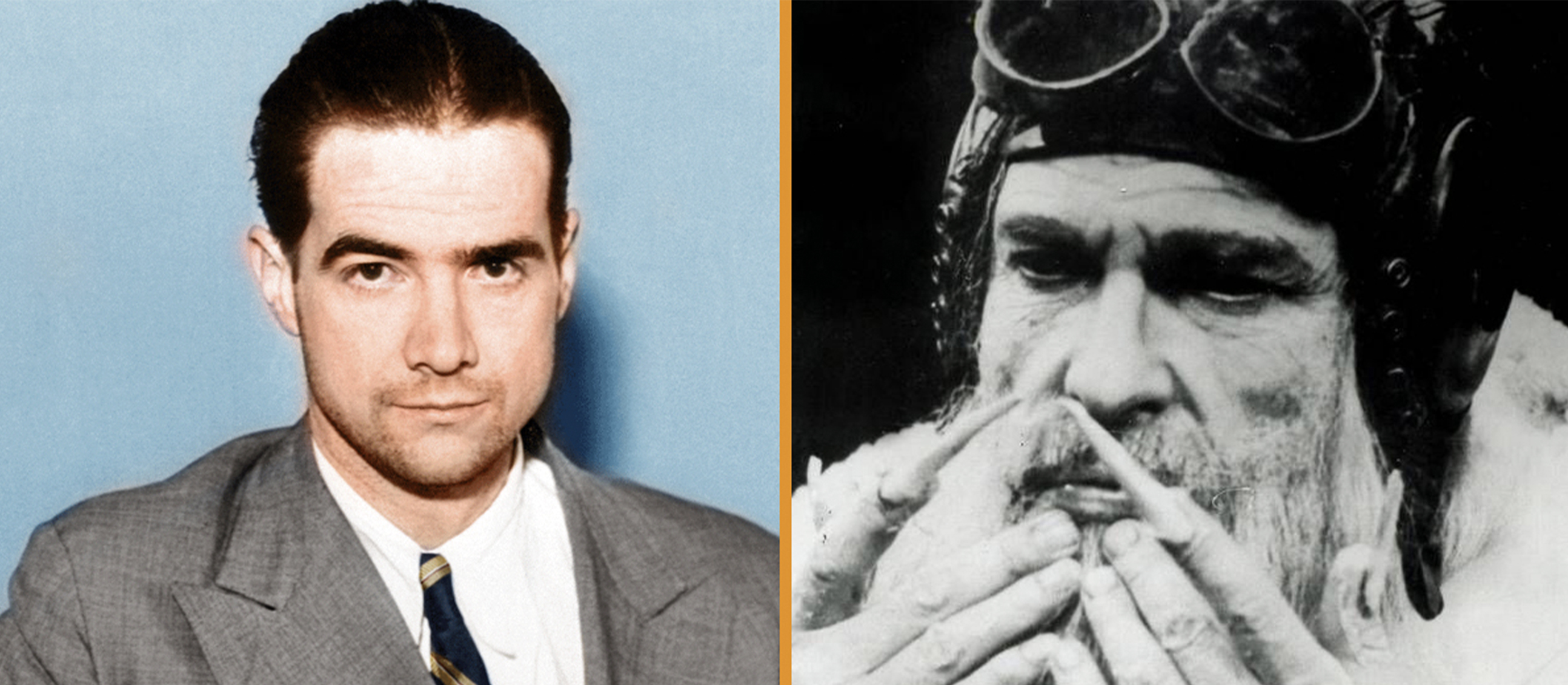
The Life of Howard Hughes: A Legacy of Innovation, Ambition, and Mystery
The life of Howard Hughes was defined by a relentless pursuit of record-breaking aviation, high-stakes filmmaking, and industrial dominance, eventually eclipsed by a reclusive struggle with obsessive-compulsive disorder. As a billionai...
The life of Howard Hughes was defined by a relentless pursuit of record-breaking aviation, high-stakes filmmaking, and industrial dominance, eventually eclipsed by a reclusive struggle with obsessive-compulsive disorder. As a billionaire polymath, he revolutionized commercial flight with TWA and shaped the Golden Age of Hollywood before retreating into total isolation.
Contents
As we mark the 50th anniversary of his passing in 2026, the legacy of Howard Robard Hughes Jr. remains a central pillar of American industrial history. Born in December 1905, Hughes did not merely inherit wealth; he leveraged the profits of his father’s tool company to fund a series of audacious ventures that frequently defied the technological and social norms of the 20th century. To understand Hughes is to examine the intersection of brilliant engineering, extreme financial risk, and the fragile nature of the human psyche under the weight of immense fame.
The Foundation of a Fortune: The Hughes Tool Company
The story of Howard Hughes begins with his father, Howard Hughes Sr., who patented the two-cone roller bit during the Texas oil boom. This invention allowed for drilling through hard rock that previously stymied exploration. When his father died in 1924, an 18-year-old Howard Hughes Jr. took the extraordinary step of having himself declared a legal adult to bypass guardianship laws and take full control of the Hughes Tool Company.
This move was the first indicator of the younger Hughes's lifelong refusal to be managed by others. He didn't just sit on the board; he used the company as a "cash cow" to fund his more speculative interests in California. By the 1930s, the tool company held a near-monopoly on specialized drilling bits, providing Hughes with a steady stream of capital that reached into the millions of dollars annually—a staggering sum at the time. This financial independence allowed him to ignore traditional bank loans and investor demands, giving him the freedom to fail and succeed on his own terms in Hollywood and aviation.
Conquering the Silver Screen: The Hollywood Era
In the mid-1920s, Hughes moved to Los Angeles, determined to make a name for himself in the burgeoning film industry. While many saw him as a "rich kid" playing with cameras, he quickly proved his mettle as a producer. His early films, such as Two Arabian Knights (1927), won an Academy Award, but it was his obsession with aviation that led to his most ambitious project: Hell’s Angels.
The production of Hell’s Angels (1930) was legendary for its cost and complexity. Hughes spent millions of dollars—an unheard-of amount during the onset of the Great Depression—to assemble the world’s largest private air force. He acted as the lead director and even flew some of the stunts himself when hired pilots deemed them too dangerous. The film was originally shot as a silent movie, but when "talkies" became the standard mid-production, Hughes scrapped much of the footage and reshot it with sound, further ballooning the budget.
Following this success, Hughes continued to push boundaries with Scarface (1932), which faced significant censorship battles due to its violence, and The Outlaw (1943), which challenged decency standards of the era. By 1948, he had purchased a controlling interest in RKO Pictures, one of the "Big Five" studios. His management of RKO, however, was chaotic. His perfectionism and habit of micro-managing every script and casting decision led to the studio’s eventual decline, yet his influence on the "Star System" and the technical scale of cinema remained undeniable.
Aviation Pioneer: Pushing the Limits of Physics
While Hollywood offered fame, aviation offered Hughes a sense of purpose. In 1932, he formed the Hughes Aircraft Company. He wasn't just a financier; he was a gifted engineer and a world-class pilot. He designed and flew the H-1 Racer, in which he set a new world landplane speed record of 352 mph in 1935.
His most notable aviation achievements include:
- The 1938 Around-the-World Flight: Hughes and a small crew flew around the globe in just 91 hours, shattering the previous record held by Wiley Post. Upon his return, he was treated to a ticker-tape parade in New York City.
- Transcontinental Records: He repeatedly set records for flying across the United States, proving the viability of long-distance air travel.
- The H-4 Hercules (Spruce Goose): Born from a World War II need for a massive transport ship that didn't use strategic materials like aluminum, this wooden aircraft remains the largest wingspan plane to ever fly. Though it flew only once in 1947, it proved Hughes's theories on heavy-lift aerodynamics.
Perhaps his most significant contribution to the industry was his acquisition of Trans World Airlines (TWA). Hughes pushed the company to adopt the Lockheed Constellation, an aircraft that pioneered pressurized cabins and faster-than-ever commercial routes. This move essentially helped usher in the era of modern global air travel, making TWA a dominant force in the industry for decades.
The Turning Point: The 1946 XF-11 Crash
The trajectory of Howard Hughes’s life changed forever on July 7, 1946. While test-piloting the XF-11 reconnaissance plane, a mechanical failure caused the aircraft to crash into a residential neighborhood in Beverly Hills. Hughes was pulled from the burning wreckage with a crushed chest, a collapsed lung, and numerous broken bones.
Surgeons did not expect him to survive. During his recovery, he designed a specialized hospital bed to help him move despite his injuries, a precursor to the modern adjustable bed. However, the physical trauma necessitated the use of heavy painkillers. Many historians and biographers point to this crash as the catalyst for his subsequent addiction to codeine and the exacerbation of his Obsessive-Compulsive Disorder (OCD). The chronic pain he suffered for the rest of his life contributed heavily to his withdrawal from public view.
The Las Vegas Years and the Descent into Seclusion
By the late 1960s, the "Invisible Man" of American industry had moved into the penthouse of the Desert Inn in Las Vegas. When the hotel management tried to evict him to make room for high rollers, Hughes simply bought the hotel. This began a buying spree where he acquired the Sands, the Frontier, the Castaways, and the Silver Slipper.
Hughes’s presence in Las Vegas changed the city's trajectory. Before his arrival, the Strip was largely controlled by organized crime. Hughes's corporate ownership brought a veneer of legitimacy and paved the way for the "corporate" Las Vegas we recognize in 2026. However, while he was making massive business deals, he was living in a darkened room, refusing to see anyone but a small group of aides known as the "Mormon Mafia." He became obsessed with germ avoidance, often wearing tissue boxes on his feet and using paper towels to handle objects.
Comparison of Howard Hughes's Major Business Interests
| Entity | Primary Industry | Hughes's Role | Lasting Impact |
|---|---|---|---|
| Hughes Tool Co. | Oil & Gas | Owner/CEO | Funded all other ventures via specialized drill bits. |
| RKO Pictures | Entertainment | Majority Shareholder | Produced classics; eventually collapsed under his management. |
| TWA | Aviation | Majority Owner | Pioneer in pressurized cabins and transcontinental flight. |
| Hughes Aircraft | Defense/Aerospace | Founder | Developed advanced radar, satellites, and the H-4 Hercules. |
| HHMI | Medical Research | Founder | Created one of the world's largest private philanthropic organizations. |
The Howard Hughes Medical Institute (HHMI)
One of the most misunderstood aspects of Hughes's life is his relationship with the Howard Hughes Medical Institute. Founded in 1953, the institute was originally seen by critics as a tax shelter for the profits of Hughes Aircraft. However, regardless of the initial motivation, the HHMI evolved into one of the most prestigious and well-funded medical research organizations in the world.
Today, the HHMI supports hundreds of world-class scientists and has been involved in breakthroughs ranging from genetic mapping to cancer research. It serves as the enduring, positive shadow of a man whose personal life was often shrouded in darkness. By detaching the aircraft company’s profits and placing them into a charitable trust, Hughes inadvertently ensured that his wealth would continue to serve humanity long after his business empire was dismantled.
Frequently Asked Questions
Why was Howard Hughes called "The Spruce Goose" pilot?
The "Spruce Goose" was a nickname given by the press to the H-4 Hercules, a massive flying boat built primarily of birch (not spruce) due to wartime metal rations. Hughes hated the nickname. He flew the plane for approximately one mile on November 2, 1947, in Long Beach, California, to prove to a skeptical U.S. Senate that the aircraft was flight-worthy. More information on the H-4 can be found via the Smithsonian National Air and Space Museum.
How much was Howard Hughes worth?
At the time of his death in 1976, his estate was valued at roughly $1.5 billion to $2 billion. Adjusted for inflation in 2026, this would equate to a multi-billion dollar fortune comparable to today’s top tech titans. Because he died without a clear, valid will, his estate was the subject of legal battles for years.
What caused Howard Hughes's mental decline?
Modern medical analysis suggests Hughes suffered from severe Obsessive-Compulsive Disorder (OCD). This condition was likely worsened by the neurological effects of multiple plane crashes (including the 1946 XF-11 disaster) and a long-term dependency on painkillers. His isolation further intensified his symptoms, leading to his legendary eccentricities.
How did Howard Hughes die?
Hughes died on April 5, 1976, while in flight from Acapulco, Mexico, to a hospital in Houston, Texas. His body was in such a state of neglect—malnourished, with long hair and nails—that the FBI had to use fingerprints to formally identify him. The cause of death was officially recorded as kidney failure.
Did Howard Hughes have any children?
No, Howard Hughes had no children. He was married twice—first to Ella Rice and later to actress Jean Peters—but both marriages ended in divorce. His lack of a direct heir led to the complex legal disputes regarding his massive fortune and the eventual distribution of his assets among various cousins and the HHMI.
Final Recommendation: Exploring the Hughes Legacy
For those interested in the technical and industrial history of the United States, Howard Hughes represents a unique case study in the power of unchecked ambition. To truly understand his impact, a visit to the Evergreen Aviation & Space Museum in McMinnville, Oregon, where the original Spruce Goose is preserved, is highly recommended.
Furthermore, studying the history of TWA offers deep insights into how modern commercial aviation was built. While Hughes the man became a figure of tragedy and isolation, Hughes the innovator remains a visionary who saw the future of flight, film, and medicine long before his peers. His life serves as a cautionary tale of how brilliance, when untethered from personal well-being, can lead to both immense achievement and profound personal loss.
Image Gallery