How Do Spike Strips Work? Mechanics, Types, and Law Enforcement Use
Spike strips, technically known as tire deflation devices (TDDs), work by puncturing a vehicle's tires with hollow steel or plastic quills. As a vehicle drives over the device, these quills detach from the strip and embed in the rubber...
Spike strips, technically known as tire deflation devices (TDDs), work by puncturing a vehicle's tires with hollow steel or plastic quills. As a vehicle drives over the device, these quills detach from the strip and embed in the rubber, allowing air to escape in a controlled manner. This systematic deflation prevents sudden blowouts, enabling the driver to maintain enough control to slow down and stop safely rather than crashing at high speed.
Contents
The Engineering of Tire Deflation: Why They Work
The primary objective of a spike strip is not to destroy a tire instantly, but to force a "controlled" deflation. If a tire were to explode or shred instantly—as often happens in cinematic portrayals—the vehicle would likely lose all traction, causing the driver to lose steering control and potentially roll the vehicle. In a high-speed pursuit, a rollover represents a significant risk to the suspect, the officers, and innocent bystanders.
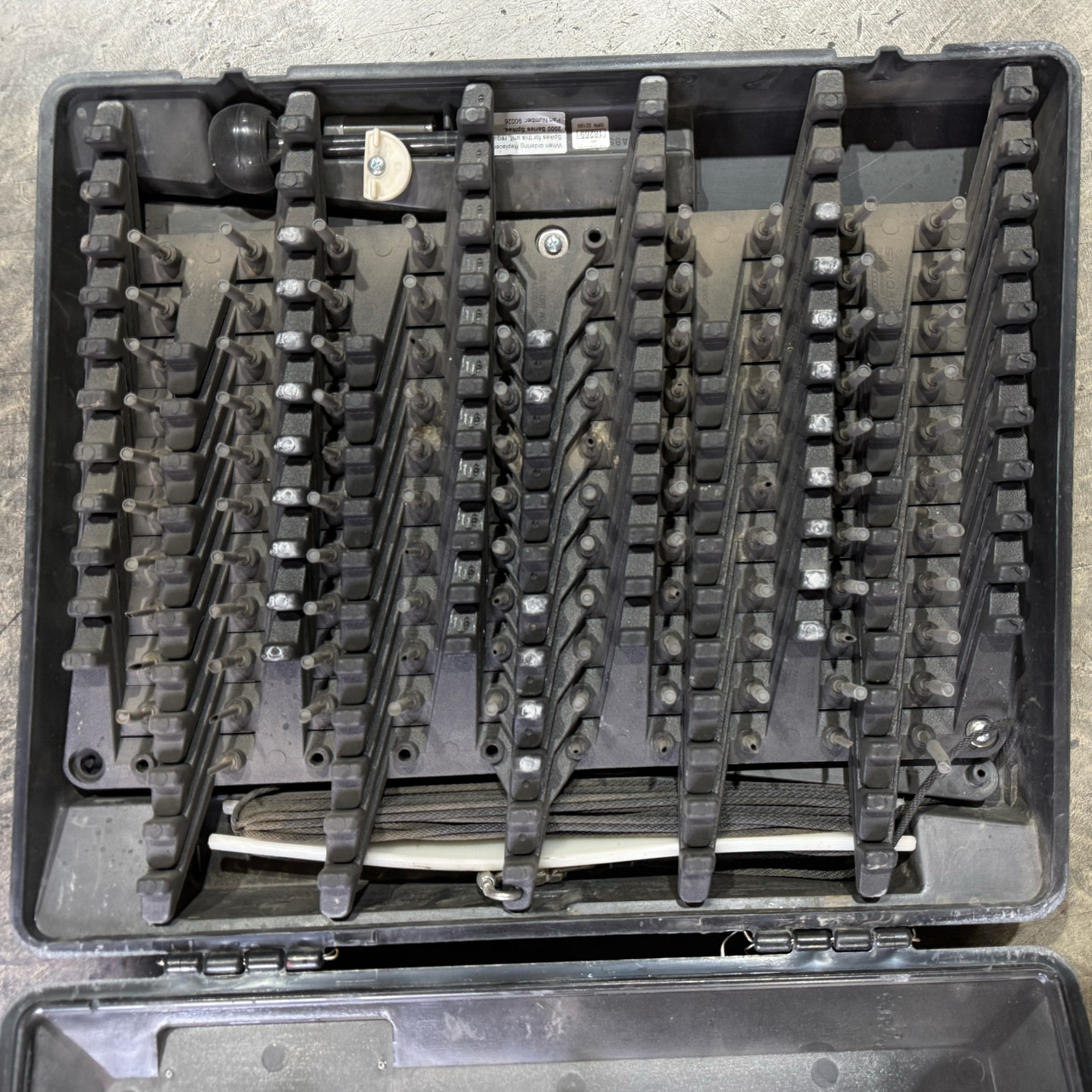
To achieve controlled deflation, modern spike strips utilize hollow spikes or quills. When the tire rolls over the strip, the weight of the vehicle drives these spikes through the tread and into the air chamber. Because the spikes are hollow, they act like straws. Once they detach from the base of the strip and remain embedded in the tire, they provide a constant exit path for the pressurized air.
On average, a tire struck by a TDD will deflate over a period of 15 to 30 seconds. This window is critical; it is long enough for the driver to feel the change in handling and decelerate, but short enough to end a pursuit within a mile or two of the deployment site. By the time the tire is completely flat, the vehicle is usually traveling at a much lower velocity, making it easier for law enforcement to perform a "box-in" maneuver or for the driver to surrender.
Different Types of Spike Strips
While "spike strip" is the common term, the technology has evolved into several distinct designs, each with its own deployment method and mechanical philosophy.
1. The Accordion-Style Strip (e.g., Stinger)
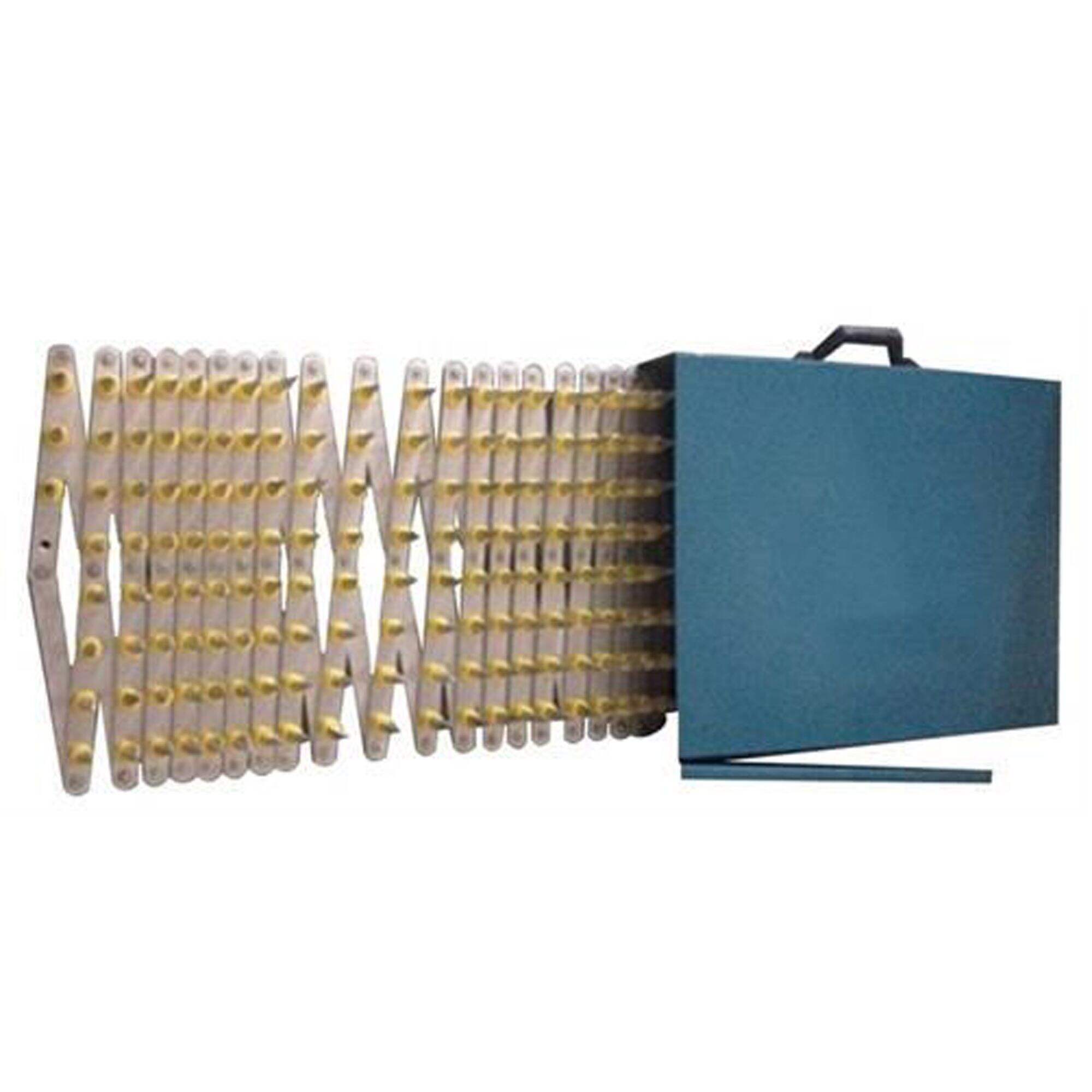
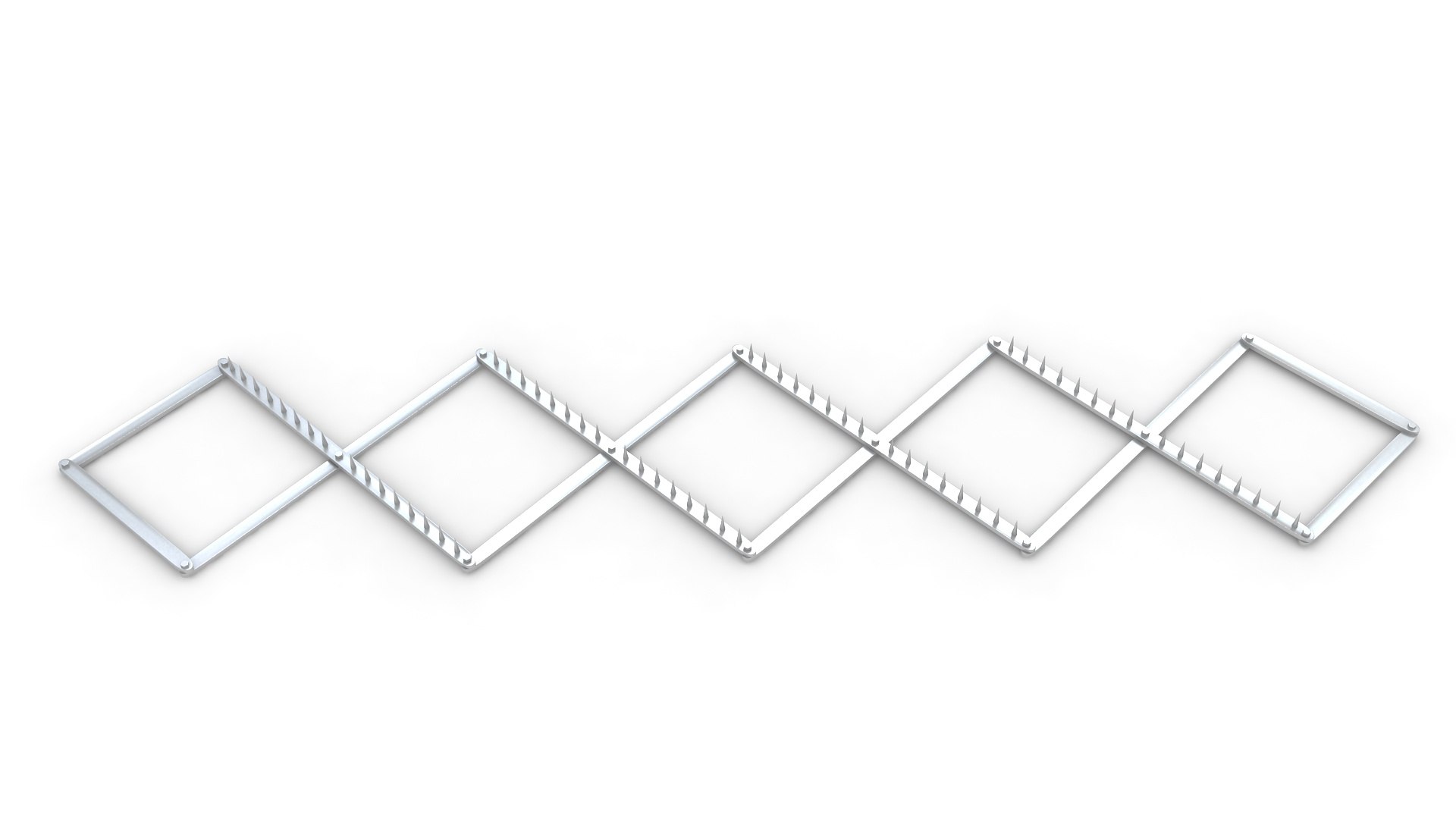
This is perhaps the most recognizable version. It consists of a series of metal or high-strength plastic slats connected by hinges. When retracted, it fits into a compact carrying case. When needed, an officer throws the device across the road, and it expands like an accordion. These devices typically feature hundreds of stainless steel spikes angled to ensure they penetrate the tire regardless of the direction of travel.
2. The Stop Stick
The "Stop Stick" brand utilizes a different form factor. Instead of a flat strip, it is a triangular-shaped rod filled with Teflon-coated quills. These rods are lightweight and can be thrown or slid across the pavement. The triangular shape ensures that no matter how the device lands, one side of spikes is always facing upward. The Teflon coating on the quills reduces friction, allowing them to slide into the tire casing more easily before detaching from the internal housing.
3. Remote-Deployed Systems
In 2026, many urban departments have transitioned toward remote-deployed systems to increase officer safety. These units are often pre-installed in the roadway or attached to the front of stationary patrol vehicles. With the press of a button, the strip can be launched or expanded across a lane in milliseconds. This removes the officer from the "danger zone"—the area near the road where they are vulnerable to being struck by the fleeing vehicle or trailing patrol cars.
4. Vehicle-Mounted Retractable Devices
Some specialized pursuit vehicles are now equipped with "on-board" tire deflation systems. These are mounted to the front bumper of a lead patrol car. If the officer can get close enough to the suspect's rear tires, they can deploy a small, localized spike mechanism directly under the wheels. This is high-risk and requires specialized training, but it eliminates the need for stationary roadblocks.
Comparison of Popular Tire Deflation Devices
| Feature | Accordion (Stinger) | Stop Stick | Remote-Deploy (NightHawk) |
|---|---|---|---|
| Form Factor | Collapsible Metal/Plastic | Triangular Rod | Launcher/Base Unit |
| Spike Material | Stainless Steel (Hollow) | Teflon-Coated Steel | Steel or Composite |
| Deployment | Manual Throw/Pull | Manual Throw/Slide | Remote Control |
| Recovery | Manual Cord Retraction | Manual Cord Retraction | Auto-retract or Cord |
| Primary Advantage | Wide road coverage | Lightweight & Portable | Maximum Officer Safety |
| Common Use | Wide Highways | Urban Streets | High-Risk Checkpoints |
Tactical Deployment and Officer Safety Protocols
Deploying a spike strip is one of the most dangerous maneuvers an officer can perform. According to the National Institute of Justice, many officer fatalities during pursuits occur not from crashes, but from being struck while standing on the side of the road to deploy or recover tire deflation devices.
To mitigate these risks, departments follow strict tactical protocols:
- The Danger Zone: Officers are trained to find "hard cover," such as a bridge abutment or a large tree, rather than standing behind their own patrol car. If the suspect sees the strip, they may swerve toward the officer or lose control and strike the patrol vehicle.
- Targeting: The goal is to hit only the suspect's tires. This requires the deploying officer to have perfect timing. They must throw the strip after the lead pursuit cars pass and retract it before the trailing pursuit cars reach the location. Most strips are attached to a high-strength nylon cord, allowing the officer to "yank" the device back across the road in a split second.
- Location Selection: Strips are rarely deployed on curves or near steep embankments. The ideal location is a straight stretch of road with clear visibility, giving the suspect a chance to see that their tires are gone and choose to stop rather than careening off a cliff or into oncoming traffic.
Legal and Ethical Framework: The 4th Amendment
The use of spike strips is considered a seizure under the Fourth Amendment of the U.S. Constitution. The landmark Supreme Court case Brower v. County of Inyo (1989) established that using a physical barrier (like a roadblock or spike strip) to stop a vehicle constitutes a seizure because it is a "governmental termination of freedom of movement through means intentionally applied."
Because it is a seizure, the use of TDDs must be "objectively reasonable" under the circumstances. Law enforcement agencies maintain strict "Use of Force" policies that dictate when spike strips can be used. Generally, they are reserved for:
- Felony suspects who pose an immediate threat to the public.
- Drivers who are clearly intoxicated and incapable of stopping.
- Situations where the danger of continuing the pursuit outweighs the danger of the tire deflation itself.
Effectiveness and Limitations
While highly effective, spike strips are not a "magic bullet" for ending pursuits. There are several scenarios where they may fail or have limited impact:
- Run-Flat Tires: Many modern luxury vehicles and high-performance cars are equipped with run-flat tires. These tires have reinforced sidewalls that can support the vehicle's weight even with zero air pressure. While spike strips will still puncture these tires, the driver may be able to continue at speeds of 30–50 mph for several miles.
- Self-Sealing Tires: Some newer tire technologies involve an internal gel layer that instantly seals small punctures. While the hollow quills of a spike strip are designed to stay in the hole to prevent this, a lucky driver might still maintain enough pressure to evade capture briefly.
- Heavy-Duty Vehicles: Semi-trucks and armored vehicles have significantly thicker tire casings and multiple axles. A standard spike strip may not have enough quills or sufficient quill length to reach the inner air chamber of a commercial truck tire.
- Extreme Speeds: At speeds exceeding 120 mph, the physics of a tire hitting a spike strip become unpredictable. The force is so great that the tire may disintegrate entirely, leading to the very rollover that the "controlled deflation" design is supposed to prevent.
The Future of Pursuit Management in 2026
As of 2026, technology is shifting toward "non-kinetic" vehicle stopping methods. While spike strips remain the standard due to their low cost and reliability, many agencies are integrating GPS-tagging projectiles (like StarChase). Instead of deflating tires, an officer can shoot a GPS tracker onto the suspect's vehicle, allowing helicopters and dispatchers to track the car while ground units back off, reducing the need for high-speed chases and spike strip deployments altogether.
Additionally, some advanced spike systems now utilize "smart" quills that transmit a signal back to the officer's cruiser the moment they are struck, providing an immediate confirmation of a successful hit even in low-visibility conditions.
FAQ: Common Questions About Spike Strips
Do spike strips work on motorcycles? Most law enforcement policies strictly prohibit the use of spike strips against motorcycles. Because motorcycles rely on two-wheel balance, a sudden loss of tire pressure is almost guaranteed to result in a crash, which is considered "deadly force."
Can you buy spike strips as a civilian? In most jurisdictions, possession of professional-grade tire deflation devices is restricted to law enforcement and authorized security agencies. While some "tire spikes" are sold for private driveway security, they are often stationary and must be used with extreme caution to avoid legal liability for property damage or injury.
What happens if a regular car hits a spike strip by accident? If a civilian vehicle accidentally hits a strip (due to officer error or a sudden lane change), the tires will deflate just as a suspect's would. In such cases, the municipality or state agency is typically liable for the cost of new tires, towing, and any secondary damage to the rims or vehicle.
How much do spike strips cost? A standard manual deployment kit, such as a Stop Stick or Stinger, typically costs between $400 and $900 per unit. Remote-controlled or permanent roadway systems can cost upwards of $5,000 to $10,000 depending on the installation requirements.
Are they effective against semi-trucks? They can be, but it often requires multiple "strikes" or specialized heavy-duty strips with longer, wider quills. Most standard police strips are optimized for passenger vehicles and light trucks.
Practical Recommendation
For those interested in public safety or law enforcement training, it is essential to recognize that spike strips are tactical tools that require significant training to use safely. If you find yourself in a situation where police are deploying these devices, the most important action is to slow down and move over as far as possible from the deploying officer. Never attempt to drive over a strip yourself to "help" or to see how it works; the damage to your vehicle will be immediate, and the risk of being caught in the pursuit "danger zone" is life-threatening.
Image Gallery