What Is Bocephus? The Story Behind Hank Williams Jr.’s Famous Nickname
Bocephus is the widely recognized nickname of American country music singer, songwriter, and multi-instrumentalist Hank Williams Jr. Bestowed upon him as an infant by his father, the legendary Hank Williams Sr., the name originated fro...
Bocephus is the widely recognized nickname of American country music singer, songwriter, and multi-instrumentalist Hank Williams Jr. Bestowed upon him as an infant by his father, the legendary Hank Williams Sr., the name originated from a ventriloquist’s dummy used by Grand Ole Opry comedian Rod Brasfield.
Contents
While the name began as a childhood moniker, it eventually evolved into a distinct musical persona. For fans of country music, "Bocephus" represents more than just a nickname; it symbolizes the transition of Randall Hank Williams from a child performer living in his father's shadow to an independent, "Outlaw Country" icon who blended southern rock, blues, and traditional country into a unique, rebellious sound.
The Origins: A Grand Ole Opry Connection
To understand what Bocephus is, one must look back to the late 1940s and the culture of the Grand Ole Opry. In 1949, when Randall Hank Williams was born, his father was already one of the biggest stars in music. Hank Williams Sr. was known for his sharp wit and his deep connections to the traveling variety shows of the era.
Among the performers at the Opry was a comedian named Rod Brasfield. Brasfield’s act frequently featured a ventriloquist’s dummy named Bocephus. When Hank Sr. looked at his newborn son, he reportedly remarked that the infant bore a resemblance to the wooden dummy. From that point on, the nickname stuck.
While many family nicknames fade as a child enters adulthood, Bocephus became an integral part of the Williams family lore. It served as a term of endearment that connected the son to the father he would lose at the age of three. However, as Randall grew older and began his own music career, the name took on a secondary, more complex meaning.
The Evolution of the Bocephus Persona
The career of Hank Williams Jr. is often divided into two distinct eras: the early years of imitation and the later years of the Bocephus persona.
The Early Years: Randall Hank Williams
Starting in the late 1950s and throughout the 1960s, Hank Jr. was marketed by his mother, Audrey Williams, as a "clone" of his father. He performed his father’s hits, wore his father’s clothes, and sang in the same mournful, honky-tonk style. During this period, he was rarely called Bocephus by the public; he was simply the "heir to the throne." This era was defined by commercial success but personal dissatisfaction, as Randall struggled to find his own creative voice while burdened by the immense legacy of "The Lovesick Blues" singer.
The Turning Point: 1975 and Ajax Mountain
The birth of the modern "Bocephus" identity is inextricably linked to a near-fatal accident. On August 8, 1975, while climbing Ajax Mountain in Montana, Williams fell nearly 500 feet. The fall resulted in catastrophic facial and skull fractures. The recovery required multiple reconstructive surgeries and years of rehabilitation.
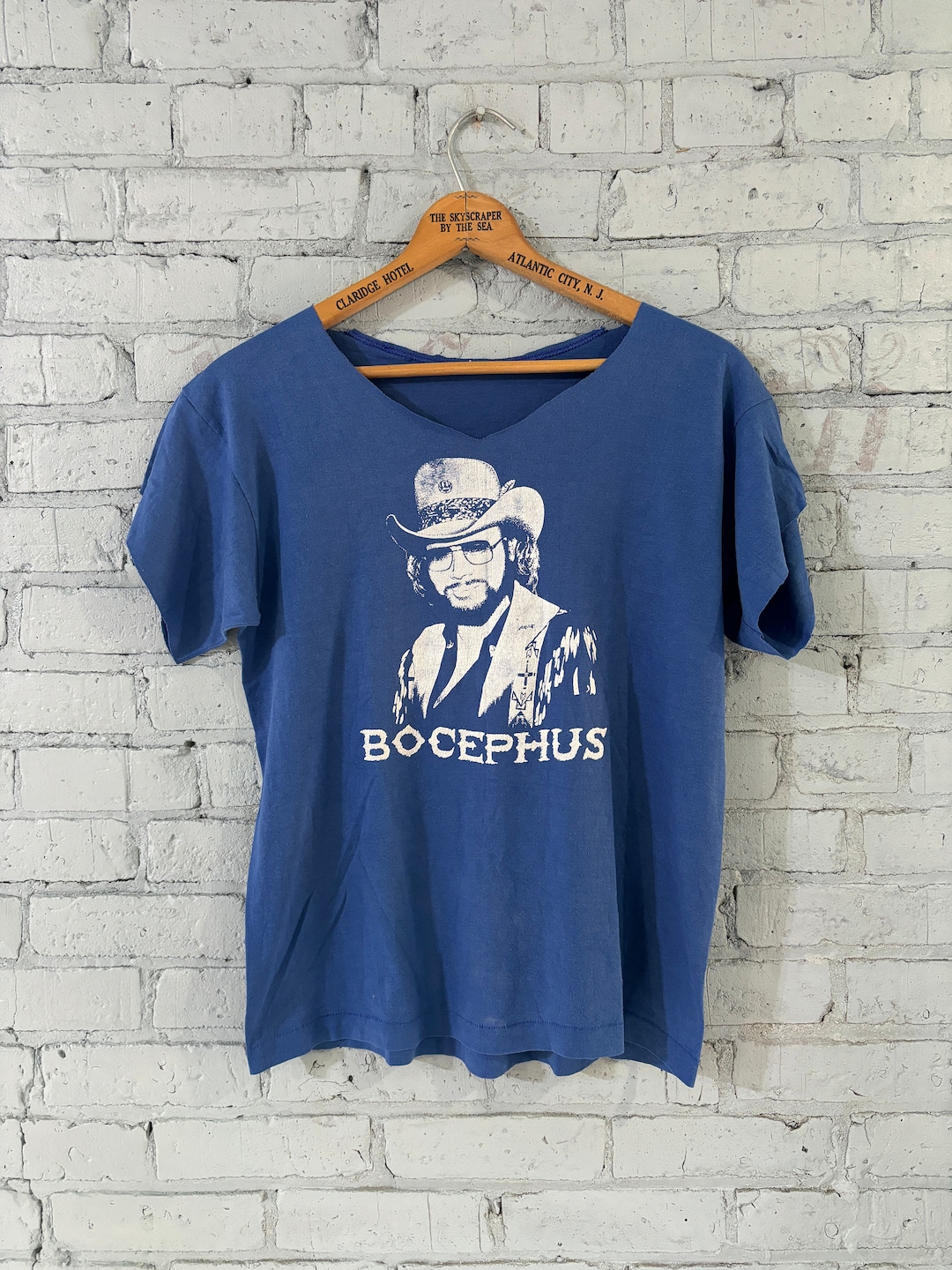
This event was a literal and figurative breaking point. During his long recovery, Williams decided to stop imitating his father. When he returned to the stage, he looked different—sporting a full beard, dark sunglasses, and a cowboy hat to hide the scars from his surgeries. This "new" look became the visual trademark of Bocephus. Musically, he moved away from pure country and leaned heavily into Southern Rock influences, collaborating with artists like Toy Caldwell and Charlie Daniels.
Bocephus as a Cultural Icon
By the late 1970s and 1980s, Bocephus was no longer just a nickname; it was a brand. Songs like "Family Tradition" explicitly addressed his need to break away from the expectations placed on him, while "A Country Boy Can Survive" solidified his status as a voice for the working class and the rural American South.
The persona is characterized by:
- Defiance: A refusal to cater to Nashville’s "clean-cut" industry standards.
- Musical Versatility: Bocephus is known for playing the guitar, fiddle, banjo, and piano with equal proficiency during live sets.
- Outlaw Spirit: Aligning with the Outlaw Country movement alongside Waylon Jennings and Willie Nelson.
- Commercial Power: Between 1979 and 1992, he released 21 gold or platinum albums.
Comparison of the Two Eras
The following table illustrates the shift from the "Randall Hank" era to the "Bocephus" era, showing how the nickname eventually came to define his most successful years.
| Feature | The Early Era (1960s – Mid-1970s) | The Bocephus Era (Late 1970s – Present) |
|---|---|---|
| Primary Genre | Traditional Country / Honky-Tonk | Southern Rock / Outlaw Country / Blues |
| Visual Style | Nudie Suits (Rhine-stone), Clean Shaven | Beard, Sunglasses, Cowboy Hat |
| Public Image | The Son of Hank Williams (Legacy Act) | The Independent Rebel (Bocephus) |
| Key Albums | Your Cheatin' Heart (Soundtrack) | Hank Williams Jr. and Friends, Habit forming |
| Key Themes | Heartbreak, Loss, Imitation | Self-Reliance, Rebellion, Southern Pride |
| Musical Tone | Melodic and Polished | Gritty, Loud, and High-Energy |
Bocephus and Monday Night Football
For many Americans outside of the country music sphere, the name Bocephus became synonymous with the NFL. In 1989, Hank Williams Jr. adapted his hit song "All My Rowdy Friends Are Coming Over Tonight" into the theme song for Monday Night Football.
The opening line, "Are you ready for some football?" became one of the most famous catchphrases in sports history. His association with the NFL lasted for over two decades (with a brief hiatus), further cementing the Bocephus name into the broader American cultural consciousness. During this time, "Bocephus" was often used by announcers and fans alike to refer to the singer, acknowledging him as a fixture of Monday night entertainment.
Influence on Modern Country Music
As of 2026, the influence of the Bocephus persona remains a cornerstone of the country music industry. He paved the way for the "bro-country" and "hick-hop" genres that emerged in the 21st century by blending rock sensibilities with country storytelling. Artists from Eric Church to Jason Aldean have cited the Bocephus era as a primary influence on their stage presence and sound.
His ability to maintain a dedicated fan base—known for the ubiquitous "Bocephus" bumper stickers and hats—demonstrates the longevity of the brand. In 2020, his legacy was further validated when he was inducted into the Country Music Hall of Fame, an honor that recognized both his individual contributions and his success in carrying forward the Williams family name while carving out his own distinct niche.
Frequently Asked Questions
What does the word "Bocephus" actually mean?
Etymologically, the name "Bocephus" does not have a formal definition in the English language. It was a nonsense name used for a ventriloquist's dummy. Some suggest it may have been a play on the name of Alexander the Great's horse, Bucephalus, but this was never confirmed by Rod Brasfield or Hank Williams Sr. In the context of the mid-20th century, it was simply a humorous-sounding name for a comedic character.
Is Hank Williams Jr. still called Bocephus?
Yes, the nickname remains his primary moniker in 2026. While his official name is Randall Hank Williams, his merchandise, fan clubs, and social media presence frequently use the Bocephus name. It has become a permanent part of his professional identity.
Why did Hank Williams Sr. choose that specific name?
Hank Sr. was a fan of the Grand Ole Opry's comedy sketches. He reportedly found the dummy Bocephus to be a memorable character and thought the name was a fitting, slightly mischievous nickname for his son. It was common in that era for rural families to use unique, sometimes eccentric nicknames for children.
What is the song "Family Tradition" about in relation to Bocephus?
"Family Tradition" is perhaps the most important song in the Bocephus catalog. Released in 1979, it served as a manifesto for his new identity. In the lyrics, he asks, "Why do you drink? Why do you roll? Why must you live out the songs that you wrote?" He answers by explaining that his rebellious lifestyle and musical shift are simply his way of continuing a "family tradition" of independence, even if it looked different from his father’s path.
Does the name have any political or social connotations?
Over time, Bocephus has become associated with conservative Southern culture, rural pride, and the "Outlaw" lifestyle. Because Hank Williams Jr. has been vocal about his political views, the nickname is often used by supporters as a shorthand for a specific set of traditional, small-town American values and a "don’t tread on me" attitude.
Next Steps for Fans and Researchers
To truly understand the impact of the Bocephus persona, listeners should explore the transition point in his discography. The 1975 album Hank Williams Jr. and Friends is widely considered the moment the persona was born, featuring a more collaborative and experimental sound.
For those interested in the historical roots of the name, archives from the Grand Ole Opry and the Country Music Hall of Fame provide extensive documentation on Rod Brasfield and the early career of Randall Hank Williams. Exploring these primary sources offers a deeper look into how a simple joke from a comedy act became one of the most powerful brands in music history.
Image Gallery