Darius Rucker and the Politics of Country Music: Navigating Race, Neutrality, and Advocacy
Darius Rucker approaches politics in country music through a strategy of diplomatic non-partisanship paired with targeted personal advocacy. While traditionally avoiding partisan campaign endorsements to maintain music as a unifying sp...
Darius Rucker approaches politics in country music through a strategy of diplomatic non-partisanship paired with targeted personal advocacy. While traditionally avoiding partisan campaign endorsements to maintain music as a unifying space, Rucker has increasingly used his platform to address systemic racism, historic inequality, and institutional inclusion within Nashville’s country music industry.
Contents
The Landscape of Political Expression in Country Music
Country music has long maintained a complex relationship with political discourse. Historically rooted in working-class themes, southern heritage, and storytelling, the genre’s commercial mainstream has frequently rewarded political conformity or silence, while penalizing explicit dissent. The legacy of the 2003 controversy involving The Chicks (formerly the Dixie Chicks)—who faced widespread radio blacklists and fan backlash after criticizing the U.S. invasion of Iraq—established an unwritten rule in modern Nashville: vocal partisan commentary carries high commercial risk.
For decades, the industry standard dictated that country artists maintain a politically neutral persona to avoid alienating distinct segments of their fan base. This dynamic created an environment where mainstream country performers avoided overt political alignment during concert tours, media appearances, and album releases. However, national cultural debates regarding social justice, political polarization, and identity have challenged this status quo, pushing artists to clarify their stances on civic issues.
Understanding how Darius Rucker navigates these expectations requires examining both his background as the frontman for the multi-platinum 1990s pop-rock group Hootie & the Blowfish and his historic transition into mainstream country music in 2008. Rucker entered Nashville not only as a seasoned rock performer but also as the first Black artist to achieve a No. 1 country single since Charley Pride in 1983. This distinct position placed Rucker at the center of ongoing conversations surrounding race, politics, and genre boundaries.
Darius Rucker’s Core Philosophy: Music as a Non-Partisan Space
Throughout his career in country music, Rucker has publicly advocated for keeping party politics out of his live performances and recorded songs. His fundamental philosophy treats live entertainment as a unifying environment intended to transcend political divisions rather than reinforce them.
Darius Rucker's Advocacy Philosophy
Non-Partisanship in Songwriting & Performances
- Focuses concerts on entertainment and shared community.
- Avoids partisan campaign endorsements or stage commentary.
Target-Driven Social Advocacy
- Addresses systemic racism and historical representation.
- Speaks publicly on racial justice in the music industry.
Constructive Engagement & Industry Inclusion
- Mentors emerging Black, Indigenous, and People of Color artists.
- Promotes dialogue on diversity within Nashville institutions.
In media interviews, Rucker has consistently noted that his audiences include individuals across the entire political spectrum. Rather than using the stage as a political platform, he structures his concerts around shared emotional experiences. This approach aligns with a traditional country music strategy that prioritizes listener retention and broad appeal across rural, suburban, and urban demographics.
However, Rucker’s commitment to non-partisanship does not equate to complete silence on societal topics. Instead, he maintains a clear boundary between partisan electoral politics—such as endorsing specific candidates or political parties—and human rights issues, including racial equality and civil rights advocacy.
The Shift in 2020: Addressing Systemic Racism and Personal Experience
The year 2020 marked a notable shift in how Darius Rucker publicly addressed race and social justice within country music. Following the murder of George Floyd and the global conversations regarding racial equity, Rucker moved beyond his previous reserve to speak candidly about his personal experiences with racism in both his personal life and professional career.
In high-profile national interviews, including appearances on NBC's TODAY show, Rucker acknowledged that he had spent years attempting not to "make waves" regarding race when transitioning into the country genre. He shared personal accounts of encountering subtle and overt racism early in his country music career, ranging from radio programmers expressing skepticism about playing a Black artist to racist comments encountered on tour.
Rucker’s public statements during this period highlighted several core areas:
- Acknowledging Personal Experience: Detailing the racial barriers he faced during his early radio promotion tours in 2008, despite his established global stardom with Hootie & the Blowfish.
- Supporting Black Lives Matter: Expressing explicit support for the movement's focus on racial justice and police reform, characterizing it as a humanitarian concern rather than a partisan political debate.
- Encouraging Industry Self-Reflection: Calling on Nashville record labels, country radio programmers, and award bodies to actively dismantle institutional barriers for emerging Black country artists.
By framing civil rights and anti-racism as non-partisan humanitarian topics, Rucker challenged the notion that discussing racial equity within country music constitutes inappropriate political commentary.
Comparative Stances on Public Issues in Modern Country Music
Artists within modern country music utilize varying approaches to political expression, ranging from absolute neutrality to outspoken partisan activism. The following matrix illustrates how Darius Rucker's approach compares with other major figures in the genre.
| Artist | Primary Approach to Politics | Focus Topics & Advocacy | Commercial & Industry Impact |
|---|---|---|---|
| Darius Rucker | Non-partisan neutral performance; selective civil rights advocacy | Racial equity, historical inclusion, youth charities, veteran support | Maintained broad mainstream radio success while establishing leadership on diversity in Nashville. |
| Willie Nelson | Progressive advocacy; candid political statements | Environmentalism, small farm support, cannabis legalization, Democratic candidates | Built a durable, counter-culture legacy that transcends traditional genre boundaries. |
| The Chicks | Explicit progressive dissent; high-profile commentary | Anti-war statements, feminist advocacy, critique of conservative leadership | Faced major country radio boycotts in 2003; successfully transitioned to alternative/pop touring models. |
| Jason Aldean | Right-leaning commentary; conservative cultural themes | Gun rights, traditionalist values, critiques of liberal policies | Strong support from conservative fan bases; faced airplay rollbacks and public debate over controversial music videos. |
| Maren Morris | Outspoken progressive commentary; social media activism | LGBTQ+ advocacy, gender equity in radio programming, anti-racism | Highly regarded by progressive audiences and critics; distanced herself from mainstream country institutions in 2023. |
Navigating Race and Diversity in the Country Music Industry
Darius Rucker’s career reflects the ongoing challenges faced by Black musicians in country music, a genre historically shaped by African American musical traditions—such as the banjo and blues phrasing—yet dominated commercially by white performers and executives throughout the 20th and early 21st centuries.
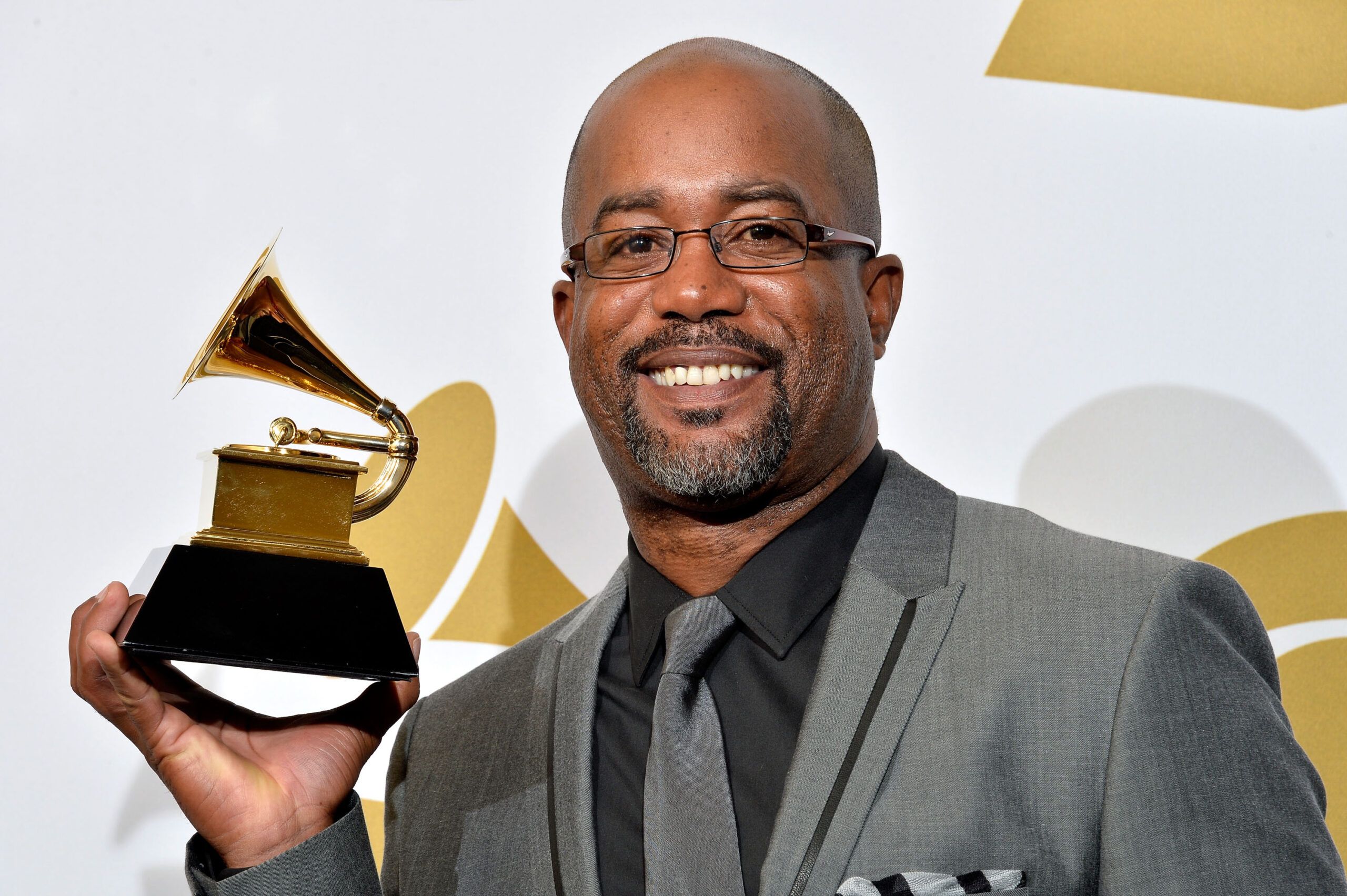
When Rucker released his country debut single, "Don't Think I Don't Think About It," in 2008, he faced significant industry skepticism. While Charley Pride had broken barriers in the 1960s and 1970s, very few Black artists had achieved mainstream country airplay in the intervening decades. Rucker’s subsequent success—achieving multiple No. 1 hits, winning a Grammy Award for Best Country Solo Performance for "Wagon Wheel" in 2014, and becoming a member of the Grand Ole Opry in 2012—helped pave the way for a new generation of Black country artists, including Kane Brown, Mickey Guyton, Jimmie Allen, and Chapel Hart.
Timeline of Key Milestones in Rucker's Country Career:
- 2008: Releases debut country single "Don't Think I Don't Think About It" (Reaches No. 1)
- 2009: Wins CMA New Artist of the Year Award
- 2012: Inducted into the Grand Ole Opry
- 2014: Wins Grammy Award for "Wagon Wheel"
- 2020: Speaks publicly on national television regarding systemic racism in country music
Rucker has consistently supported younger artists of color navigating Nashville's ecosystem. Rather than adopting a militant posture toward industry executives, he uses his established reputation to advocate for increased radio play, festival slots, and executive representation for minority artists.
Handling Controversy: Accountability and Forgiveness
Rucker’s approach to political and social friction within country music was further illustrated during the 2021 controversy involving country singer Morgan Wallen, who was filmed using a racial slur. The incident sparked national debate over racism, radio airplay suspensions, and accountability in the Nashville music industry.
When asked publicly about the incident, Rucker expressed deep disappointment while advocating for a balanced response that combined clear accountability with the possibility of education and redemption:
- Direct Condemnation: Rucker clearly stated that the language used was unacceptable and damaging to the progress of inclusion in the country genre.
- Emphasis on Education: He stressed the importance of meaningful education regarding racial slurs over simple public relations apologies.
- Advocacy for Growth: Rucker resisted calls for permanent cancellation, emphasizing that true progress requires allowing individuals to learn from mistakes and demonstrate genuine behavioral change.
This nuanced stance reflected Rucker’s broader strategy: maintaining firm moral boundaries against discrimination while keeping pathways open for dialogue and reconciliation within the country music community.
Strategic Guidance for Navigating Social Issues in Commercial Arts
For arts administrators, music executives, and public performers navigating political commentary in culturally conservative or polarizing spaces, Darius Rucker’s career offers several practical lessons:
1. Separate Core Values from Partisan Endorsements
Maintain a clear distinction between broad humanitarian values (such as equity, community support, and respect) and partisan campaign politics. This allows public figures to stand up for fundamental civil rights without alienating listeners based on political party affiliation.
2. Build Commercial Equity Before Driving Industry Change
Rucker established his reputation in country music through consistent chart performance, strong songwriting, and extensive touring before taking a prominent public role on sensitive social issues. Demonstrating professional excellence and economic viability provides a stable foundation when addressing institutional barriers.
3. Focus on Systemic Inclusion Over Personal Conflict
When addressing industry shortcomings, center the discussion on structural access—such as playlist inclusion, executive hiring, and artist development—rather than engaging in personal disputes on social media. Constructive critique yields longer-term institutional changes than short-lived online debates.
Frequently Asked Questions
Is Darius Rucker affiliated with a specific political party?
Darius Rucker has intentionally avoided registering public affiliations with or endorsing specific political parties. He maintains a non-partisan public profile, choosing not to perform at political campaign rallies or endorse candidates during presidential or local elections.
How did Darius Rucker address racial issues in country music in 2020?
In 2020, following national racial justice protests, Rucker gave several national interviews detailing his personal encounters with racism during his country career. He publicly supported the Black Lives Matter movement, spoke out against systemic racism, and urged the Nashville music industry to increase opportunities for Black artists.
Has Darius Rucker faced backlash for his social or political views?
Compared to artists who engage in partisan commentary, Rucker has experienced minimal commercial backlash. Because he frames his advocacy around anti-racism, charity, and civil rights rather than candidate endorsements, he has largely preserved his broad appeal across diverse fan bases while advocating for social change.
What was Darius Rucker's stance on the Morgan Wallen controversy?
Rucker expressed disappointment over Wallen's use of a racial slur, stating that such language has no place in music or society. However, he also emphasized the importance of accountability combined with forgiveness, advocating for education and personal growth over permanent industry banishment.
How has Darius Rucker impacted diversity in Nashville?
As one of the most successful Black artists in country music history, Rucker helped demonstrate the commercial viability of diverse performers in the modern country market. His success helped pave the way for artists like Kane Brown, Jimmie Allen, and Mickey Guyton, and he frequently mentors emerging artists of color.
Practical Takeaway: The Unifying Power of Nuanced Advocacy
Darius Rucker's career demonstrates that political engagement in music does not require total polarization or rigid silence. By maintaining a clear boundary between party politics and civil rights, Rucker has built an enduring career while fostering progress within country music.
For observers, artists, and industry professionals, Rucker’s approach highlights the value of nuanced advocacy: leveraging professional credibility to foster diversity, speaking plainly against racial injustice, and keeping the focus on music's ability to bring diverse communities together.
Image Gallery