The History and Evolution of the Manchester United White Jersey
The Manchester United white jersey is a storied element of the club’s visual identity, serving as a frequent and iconic alternative to the traditional red home kit. While red dominates the club's history, white has consistently appeare...
The Manchester United white jersey is a storied element of the club’s visual identity, serving as a frequent and iconic alternative to the traditional red home kit. While red dominates the club's history, white has consistently appeared as the primary color for away shirts, symbolizing moments of tactical evolution, historical milestones, and the aesthetic transition of football kit design across the 20th and 21st centuries.
Contents
Origins and Early Usage of White Kits
The use of white as a secondary or alternative color for Manchester United dates back to the early decades of the club. In the era before standardized away kit regulations, teams often wore white jerseys when a clash occurred with their opponents' primary colors. Unlike the iconic red, which cemented itself as the home standard during the club’s formative years, white provided a clean, professional aesthetic that remained a staple for traveling squads.
During the mid-20th century, specifically the post-war era, the white shirt became a frequent choice for away matches. It was often paired with black or white shorts, creating a minimalist look that stood in stark contrast to the aggressive red home kit. This period was characterized by functional designs—heavy cotton fabrics, long sleeves, and simple collars—prioritizing durability over the complex branding seen in the modern era.
The 1968 European Cup and the Legacy of White
One of the most significant moments involving the white jersey occurred during the club's 1968 European Cup victory. While the team famously wore blue in the final against Benfica, the route to the final and the broader European campaign during the late 1960s saw Manchester United frequently utilize white away kits. This era marked a psychological shift; white began to be associated with prestige and international competition.
By the 1970s and 1980s, the white kit became more than just a functional necessity. It began to be treated as a design statement. As kit manufacturing moved toward commercialization, the white jersey allowed designers to experiment with trim colors—most notably the red and black accents that define the "United" brand. This experimentation ensured that even when away from Old Trafford, the identity of the club remained unmistakable.
Design Evolution: From Cotton to Performance Fabric
The transition from natural fibers to synthetic performance materials in the 1990s drastically changed the appearance of the white jersey. Manufacturers like Umbro and later Nike and Adidas introduced moisture-wicking technology, which altered the way white fabric looked under stadium floodlights.
- 1990s Era: This decade saw the introduction of complex patterns, sublimated graphics, and oversized collars. The white away kits of the late 90s, particularly those featuring subtle shadow patterns, are highly sought after by collectors.
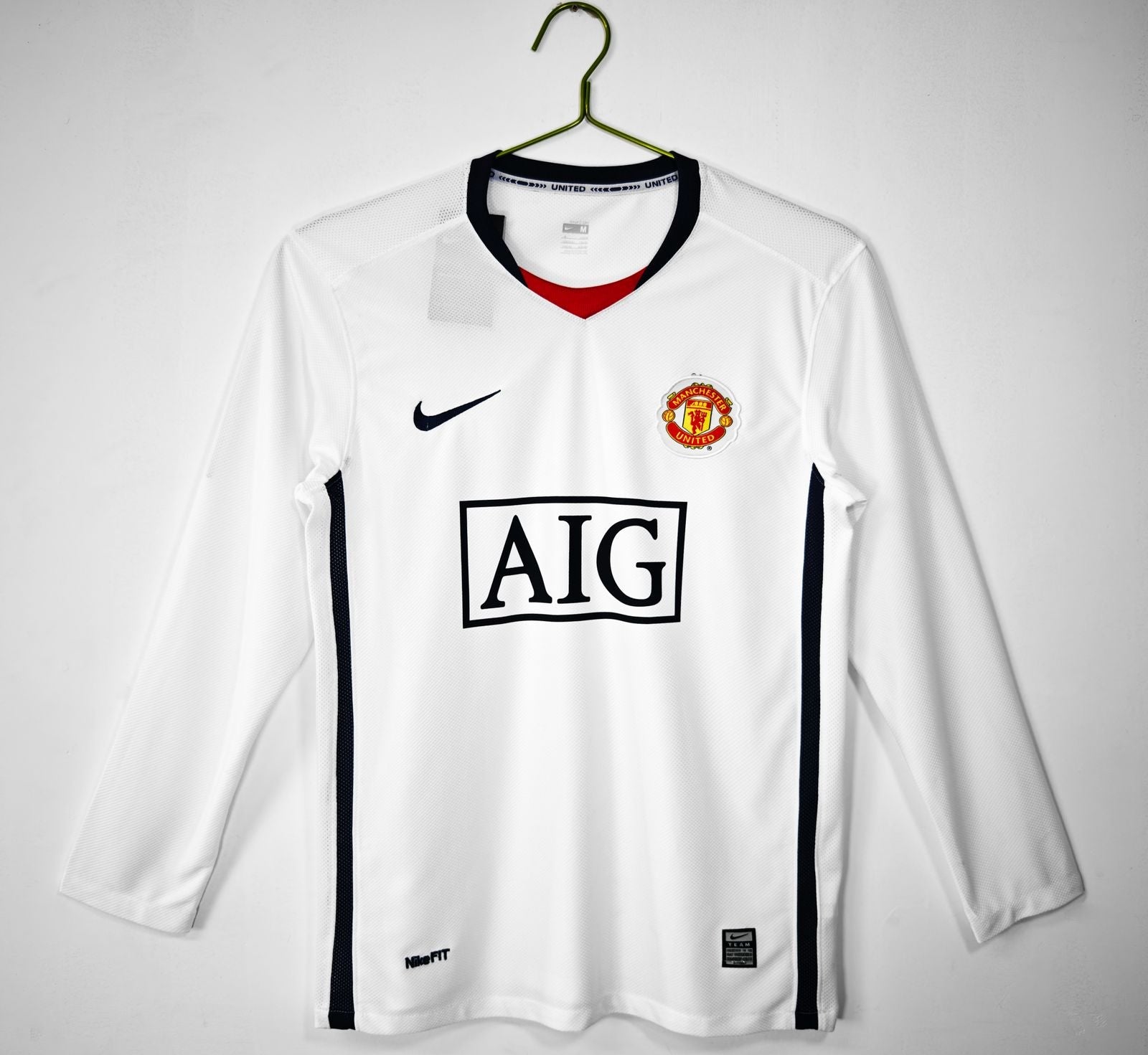
- 2000s and 2010s: The shift toward "engineered" kits saw the white jersey become a high-tech garment. The focus moved to ventilation zones, lightweight mesh, and integrated sponsor logos (such as the long-standing partnership with AIG and Chevrolet).
- Modern Era (2020–2026): By 2026, the white jersey represents a fusion of heritage and high fashion. Current designs prioritize sustainable recycled materials, maintaining the crisp, clean look while incorporating subtle design cues that pay homage to historical patterns from the 1950s and 1960s.
Comparing Iconic White Jersey Features
Throughout its history, the construction and design of the Manchester United white jersey have varied to meet the demands of the sport and the trends of the time.
| Era | Primary Material | Design Focus | Typical Trim Colors |
|---|---|---|---|
| 1950s–1960s | Heavy Cotton | Durability & Utility | Black or Red |
| 1980s–1990s | Polyester/Acrylic | Branding & Patterning | Red, Black, Yellow |
| 2000s–2015 | Synthetic Mesh | Ventilation & Fit | Navy, White, Red |
| 2016–2026 | Recycled Polyester | Sustainability & Tech | Minimalist/Monochrome |
The Role of Technology in Modern Kit Design
Modern Manchester United white jerseys, as seen in the 2026 collection, are defined by advanced textile engineering. The integration of high-performance yarns is essential for players performing at elite levels. These jerseys are designed to minimize drag and improve airflow.
Beyond performance, the "white" itself has evolved. Designers now use different shades of white—off-white, cream, or bright optic white—to differentiate seasonal offerings. This helps the club satisfy the demand for lifestyle wear; a white jersey is often viewed as more versatile for casual settings than the more vibrant red home kits.
Common Misconceptions Regarding Away Colors
A common misunderstanding is that white has always been the definitive "second color." In reality, Manchester United has rotated through blue, yellow, and black as primary away colors throughout its history. However, white holds a unique position as a "classic" alternative. When fans reflect on the history of the Manchester United white jersey, they are often remembering specific decades of success where the white kit served as a lucky charm or a symbol of tactical discipline on the road.
FAQ
Why does Manchester United use a white jersey as an away kit? White provides a high-contrast visual against various home kits in the Premier League and European competitions. Historically, it was adopted for its clean look and ability to showcase the club’s red and black trim effectively.
Are the modern white jerseys different from the older versions? Yes. Modern versions produced in 2026 are made from high-tech recycled polyester, focusing on sustainability and athletic performance, whereas older versions were often made of cotton or heavier, less breathable synthetic blends.
Is there a specific "famous" white jersey in United history? Many fans identify the white kits of the late 1960s and the early 2000s as particularly iconic due to the success the team enjoyed while wearing them in crucial European and domestic fixtures.
How should a fan care for a modern white jersey? To maintain the brightness of a white jersey, wash it in cold water with similar colors and avoid high-heat tumble drying, which can damage the adhesive on sponsor logos and the technical properties of the fabric.
Where can the official history of these kits be verified? The club’s official museum at Old Trafford houses an extensive archive of kits used throughout their history, serving as the primary record for verifying historical designs and their respective eras.
Practical Next Steps for Collectors
If you are looking to acquire a historic Manchester United white jersey, always verify the authenticity of the "official" tag or the manufacturer’s mark (e.g., the specific logo style for Umbro or Adidas). For collectors of modern 2026 kits, ensure you are purchasing from the official club store or an authorized retailer to receive the current, authentic performance fabric rather than an unauthorized replica. Researching the specific season's aesthetic against verified club photography is the best way to avoid misidentified items in the secondary market.
Image Gallery