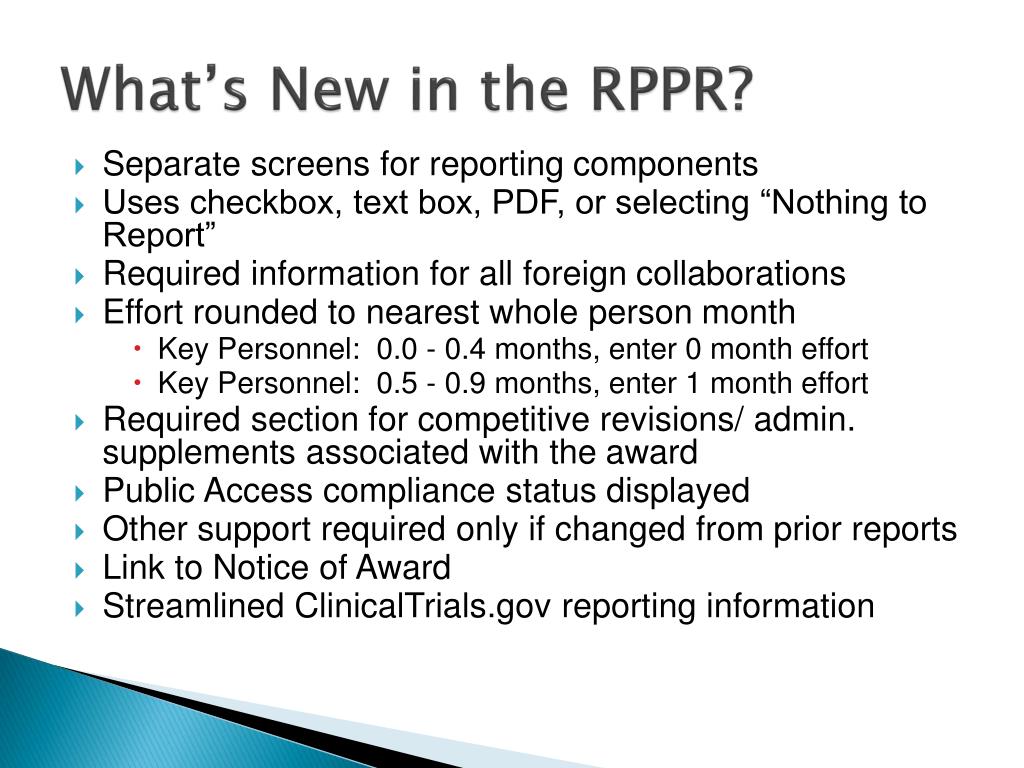
Understanding the NIH RPPR Due Dates: A Guide for Research Administrators
The Research Performance Progress Report (RPPR) is the mandatory annual reporting tool for National Institutes of Health (NIH) grant recipients. Generally, the RPPR is due at least 45 days before the next budget period start date. For...
The Research Performance Progress Report (RPPR) is the mandatory annual reporting tool for National Institutes of Health (NIH) grant recipients. Generally, the RPPR is due at least 45 days before the next budget period start date. For multi-year funded awards, the report is submitted annually on or before the anniversary of the budget/project start date.
Contents
The Role of the RPPR in NIH Stewardship
The National Institutes of Health requires the RPPR to track the progress of federally funded research and ensure compliance with administrative requirements. By mandating these reports, the NIH can verify that investigators are meeting their stated research objectives, managing funds appropriately, and addressing essential ethical requirements, such as those related to human subjects or animal welfare.
Understanding your specific due date is critical because missing an RPPR deadline can result in a suspension of funding, delays in the processing of the next year’s budget, or even the termination of the grant. As a recipient, you must monitor your Notice of Award (NoA) carefully, as it serves as the definitive legal document outlining the reporting obligations specific to your project.
Determining Your Specific RPPR Due Date
While the NIH provides general guidance, the "due date" can vary based on the type of award and the specific terms listed in your NoA.
- Standard Non-Competing Continuation Grants: For most grants, the RPPR is due 45 days prior to the start date of the next budget period. If your budget period begins on July 1, your RPPR must be submitted by May 17.
- Multi-Year Funded (MYF) Awards: For awards where the entire budget is provided upfront, the RPPR is due annually on or before the anniversary of the project start date.
- Fellowships (F Awards): These follow a specific cycle, generally due two months before the anniversary of the start date of the current appointment.
- Final RPPRs: These are distinct from annual reports and are due within 120 days of the project end date.
It is a common misconception that all NIH grants follow a universal calendar year. Because NIH grants start on various dates throughout the year, each project operates on its own unique "fiscal cycle." You should map these dates in your institutional research management software as soon as a Notice of Award is received.
Key Factors Impacting RPPR Submission
Several operational factors influence your ability to meet these deadlines effectively. Before you begin the submission process, verify the following prerequisites:
- eRA Commons Access: Only the Principal Investigator (PI) or a designated Signing Official (SO) can submit the RPPR. Ensure that your institutional eRA Commons accounts are active and that the PI has the correct role assigned.
- The Notice of Award (NoA): Always check Section III (Terms and Conditions) and Section IV (Reporting) of your NoA. Some grants may have specialized reporting requirements that supersede standard deadlines.
- Administrative Lead Time: While the report is "due" 45 days before the start date, your institution’s Office of Sponsored Programs (OSP) likely requires the report to be submitted to them internally weeks in advance of the NIH deadline. Always factor in internal institutional review timelines.
Comparing Report Types and Requirements
The complexity of your report depends on the grant mechanism. The following table illustrates the general expectations for common report types:
| Report Type | Submission Window | Primary Focus |
|---|---|---|
| Annual RPPR | 45 days before budget start | Progress against specific aims |
| Interim RPPR | When an application is pending | Bridges the gap between project end and renewal |
| Final RPPR | 120 days after project end | Accomplishments and publication summary |
| Multi-Year RPPR | Annually by start date anniversary | Cumulative project progress |
Common Pitfalls and Troubleshooting
Even experienced administrators occasionally encounter friction with the RPPR system. Being proactive is the best way to mitigate these risks.
The "Locked" Report If you are unable to edit your RPPR, verify if the report has been "routed" to the Signing Official. Once a report is submitted to the SO for approval, it is locked for the PI. If changes are required, the SO must send the report back to the PI within the eRA Commons interface.
Missing Publications The NIH Public Access Policy requires that all peer-reviewed articles resulting from NIH-funded research be deposited in PubMed Central (PMC). If your RPPR includes publications that are not compliant with this policy, the system may flag an error. Ensure your MyNCBI bibliography is up to date and that all publications have a valid PMC ID (PMCID) before starting the RPPR.
Section G.1 (Special Reporting Requirements) Some awards require additional reports, such as those related to Inclusion of Women and Minorities or Human Subjects Education. Ensure these data collections are finalized well before your due date. Calculating inclusion data is often the most time-consuming part of the report; start this section early.
Strategic Planning for RPPR Compliance
To ensure you never miss a deadline, implement a standard operating procedure (SOP) within your lab or department.
- The 90-Day Warning: Set a calendar alert for 90 days before the RPPR due date. This serves as a "soft" reminder to start gathering data, checking for pending publications, and reviewing financial reports with your department’s grant administrator.
- The 60-Day Review: Meet with your team to review the "Accomplishments" section. Ensure that you have clear documentation of project milestones, changes in personnel, and any significant deviations from the original scope of work.
- Institutional Deadline: Treat your internal institutional deadline (which should be 10-15 business days prior to the official NIH deadline) as the "real" due date. This provides a buffer for technical glitches, system downtime, or unexpected administrative review requests.
Frequently Asked Questions
What happens if I miss the RPPR deadline? Missing the deadline can result in the automatic suspension of your grant account. This stops the drawdown of funds and may delay the issuance of the next year’s Notice of Award, creating a cascading effect that impacts laboratory operations and payroll for staff.
Can I request an extension for my RPPR? Extensions are rarely granted and are reserved for extreme, documented emergencies. If you foresee a major issue preventing submission, contact your NIH Program Official and Grants Management Specialist immediately. Do not wait until the day of the deadline to communicate these issues.
Does the RPPR need to be submitted by the PI or the institution? While the PI prepares the scientific content, the final submission to the NIH must be made by the Signing Official (SO) in eRA Commons. This is a formal institutional submission, signifying that the university or research center accepts responsibility for the report's contents.
How do I handle budget changes in the RPPR? If your spending significantly deviates from the original budget, or if you are requesting a carryover of unobligated funds, ensure this is clearly documented in the budget section. If a formal "Prior Approval" request is required by your specific NoA, do not rely solely on the RPPR to communicate this; submit a separate formal request to the Grants Management Specialist.
What is the difference between an Interim and Final RPPR? The Interim RPPR is used when a PI has submitted a renewal application. It functions as the annual progress report until the renewal is either funded or definitively rejected. The Final RPPR is only submitted when there is no intention to renew the project.
Final Recommendation
The most effective way to manage your NIH RPPR obligations is to treat the process as a continuous loop of data collection rather than a "once-a-year" event. Maintain an active MyNCBI profile, ensure your eRA Commons credentials are up to date, and establish a clear communication rhythm with your institutional Signing Official. By prioritizing administrative readiness alongside your scientific output, you ensure that your research remains eligible for uninterrupted federal support.
Image Gallery