Ladder Life Insurance: How AI-Driven Underwriting Accelerates Coverage in 2026
Ladder Life Insurance utilizes proprietary artificial intelligence and automated underwriting engines to provide near-instant life insurance decisions. By replacing traditional, weeks-long manual reviews and medical exams with real-tim...
Ladder Life Insurance utilizes proprietary artificial intelligence and automated underwriting engines to provide near-instant life insurance decisions. By replacing traditional, weeks-long manual reviews and medical exams with real-time data analysis of prescription history, motor vehicle records, and health databases, Ladder allows eligible applicants to secure up to $8 million in term coverage in minutes.
Contents
The life insurance industry has historically been defined by its friction. For decades, the standard procedure for obtaining a policy involved lengthy paper applications, physical nurse visits for fluid samples, and a manual review process that could stretch from thirty to sixty days. As of 2026, the landscape has shifted toward digital-first solutions, with Ladder Life Insurance standing at the forefront of this transformation. By leveraging AI to streamline risk assessment, the company has effectively dismantled the barriers that previously discouraged younger, tech-savvy consumers from seeking financial protection.
The Evolution of Underwriting: From Manual to Algorithmic
To understand how Ladder makes coverage faster, one must first understand the "underwriting" process. Underwriting is the method by which an insurance company assesses the risk of insuring a specific individual and determines the appropriate premium. In the traditional model, this was a human-centric task. An underwriter would manually cross-reference an applicant’s medical records, lifestyle choices, and family history.
Ladder’s AI-driven approach replaces this manual "triage" with an algorithmic engine. When a user submits an application through Ladder’s platform, the AI immediately begins a multi-point data ingestion process. Instead of waiting for a doctor’s office to mail physical records, the system queries secure digital databases to build a comprehensive risk profile in seconds. This shift from reactive data collection to proactive digital verification is the primary reason Ladder can offer a decision in the time it takes to brew a cup of coffee.
How Ladder’s AI Engine Processes Risk in Real-Time
The speed of Ladder’s platform is not merely a marketing claim; it is a result of deep integration with third-party data providers and internal machine learning models. The AI does not guess—it verifies.
Data Ingestion and Verification
When an applicant provides their Social Security number and personal details, the AI engine connects to several key data sources:
- MIB (Formerly Medical Information Bureau): A database of previous insurance applications and reported medical conditions.
- Prescription History Databases: Services like Milliman IntelliScript or LexisNexis Risk Solutions provide a chronological look at medications, which serves as a proxy for underlying health conditions.
- Motor Vehicle Records (MVR): Analyzing driving history to identify high-risk behaviors, such as DUIs or excessive speeding violations.
- FCRA-Compliant Consumer Data: General lifestyle data that helps refine the risk bucket without requiring a physical interview.
Algorithmic Decisioning
Once the data is retrieved, Ladder’s proprietary algorithms compare the applicant’s profile against millions of data points and historical actuarial tables. The AI identifies patterns that indicate either high or low mortality risk. If the applicant falls within the "clean" parameters defined by the system, the engine issues an immediate approval. This "straight-through processing" (STP) is the gold standard of modern insurtech, allowing for a seamless transition from application to active policy.
Bypassing the Medical Exam: The "No-Exam" Advantage
For many, the most significant deterrent to getting life insurance is the medical exam. Traditional policies often require a "paramed" visit, where a medical professional records height, weight, blood pressure, and takes blood and urine samples.
Ladder uses AI to offer "fluidless" underwriting for a vast majority of its applicants. Because the AI can "see" an applicant’s health history through their digital footprint, the physical exam becomes redundant for those who meet specific health and age criteria. In 2026, Ladder offers coverage up to $8 million, and while higher coverage amounts or complex health histories might still trigger a request for more information, a significant portion of users can bypass the needle entirely. This is a critical component of making coverage "faster," as it removes the logistical hurdle of scheduling and attending an in-person appointment.
Flexibility Through the "Laddering" Feature
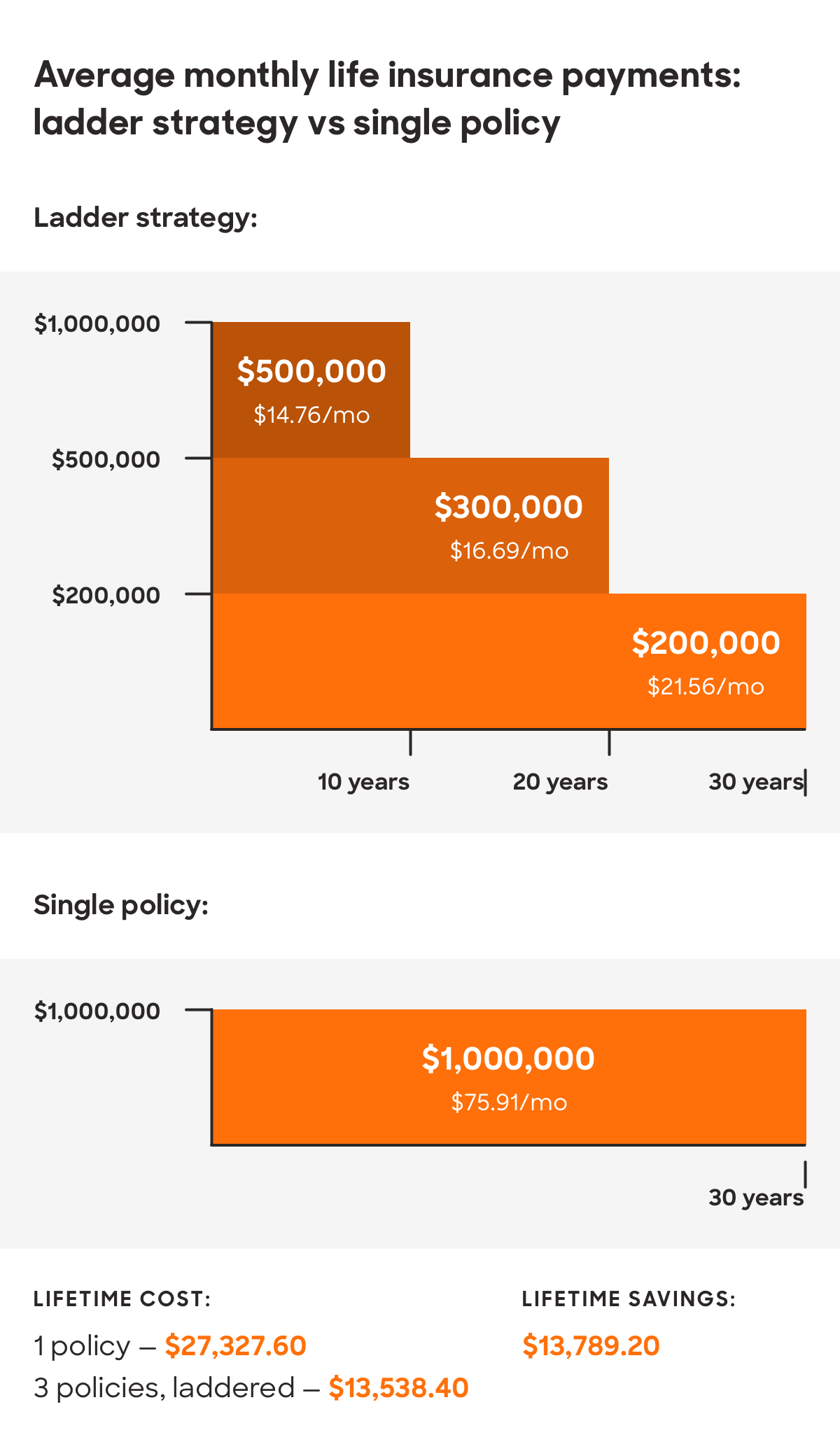
While the AI handles the speed of the initial application, Ladder also addresses the "speed" of policy management. Life insurance is rarely a static need; as mortgages are paid down or children grow up, the amount of coverage needed fluctuates.
Ladder’s digital architecture allows policyholders to "ladder up" or "ladder down" their coverage instantly through their dashboard.
- Laddering Down: If a policyholder realizes they have over-insured themselves or their financial liabilities have decreased, they can reduce their coverage online. This immediately lowers their premium without the need for new paperwork or agent intervention.
- Laddering Up: If an individual needs more coverage (e.g., they had another child or bought a more expensive home), they can apply to increase their benefit. The AI engine re-evaluates the request, often providing an instant decision on the additional coverage.
Comparing Ladder to Traditional Life Insurance Models
The following table illustrates the operational differences between Ladder’s AI-centric model and the legacy systems still used by many traditional carriers in 2026.
| Feature | Ladder Life Insurance (AI-Driven) | Traditional Insurance Carriers |
|---|---|---|
| Time to Decision | Instant to a few minutes | 3 to 8 weeks |
| Application Process | 100% Digital / Mobile-First | Paper-based or Agent-mediated |
| Medical Exam | Often waived via digital data | Usually required for most applicants |
| Underwriting Logic | Real-time algorithmic analysis | Manual review by human underwriters |
| Policy Flexibility | Instant online adjustments | Requires riders or new applications |
| Maximum Coverage | Up to $8 Million | Varies (often higher, but slower) |
| Primary Audience | Tech-savvy, healthy to moderate risk | High-risk or complex estate needs |
Technical Security and Ethical AI Considerations
Entrusting personal medical and financial data to an AI engine requires robust security protocols. Ladder operates under strict regulatory oversight and utilizes enterprise-grade encryption to protect applicant data. Furthermore, the AI models are designed to be compliant with the Fair Credit Reporting Act (FCRA) and state-specific insurance regulations, ensuring that decisions are based on objective, verifiable data rather than biased or non-transparent variables.
In 2026, the transparency of AI in insurance is a major focus for regulators. Ladder ensures that if an applicant is declined by the automated system, the reasons are communicated clearly, often allowing the applicant to provide manual documentation if the digital records were incomplete or incorrect. This human-in-the-loop backup ensures that while the process is fast, it remains fair.
Potential Limitations of AI-Driven Coverage
While AI makes coverage faster for most, it is not a universal solution. Certain factors can still slow down the process or result in a referral to a human underwriter:
- Complex Medical Histories: If the AI detects significant chronic illnesses (e.g., active cancer, severe heart disease), it may not be able to issue an instant approval.
- Age Thresholds: Generally, AI-driven "instant" coverage is most effective for applicants between the ages of 20 and 60. Older applicants may still face more rigorous traditional underwriting.
- High-Risk Hobbies: Applicants involved in professional racing, BASE jumping, or other extreme sports may trigger a manual review to assess the specific risks involved.
- Inconsistent Data: If there is a significant discrepancy between what an applicant reports and what the digital databases show (e.g., a non-smoker whose prescription history includes smoking cessation aids), the AI will flag the application for manual verification.
Why Speed Matters in Financial Planning
The speed provided by Ladder isn't just about convenience; it's about closing the "protection gap." Millions of families remain under-insured because the process of getting coverage is perceived as too difficult. By making life insurance as easy to buy as an e-commerce product, Ladder encourages proactive financial planning. When a consumer can secure a policy in the moment they are thinking about their family's future—rather than being forced into a month-long waiting period—they are far more likely to complete the transaction and secure their household's stability.
Frequently Asked Questions
Does AI-driven insurance cost more than traditional insurance?No. In many cases, it is more affordable. Because Ladder reduces the overhead costs associated with manual underwriting, nurse visits, and physical labs, those savings are often passed on to the consumer in the form of competitive premiums. However, the price is always based on your specific risk profile.
What specific data does Ladder’s AI look at?The AI primarily analyzes your medical history (via the MIB), your prescription history, your driving record (MVR), and your answers to the health questionnaire. It does not "spy" on your social media or use non-relevant personal data to determine your rates.
Is Ladder Life Insurance a legitimate company?Yes. Ladder is a licensed insurance agency. Their policies are issued by highly-rated carriers such as Allianz Life Insurance Company of North America or Fidelity Security Life Insurance Company. This ensures that while the technology is new, the financial backing comes from established institutions with "A" (Excellent) ratings from A.M. Best.
Can I still get coverage if I have a pre-existing condition?It depends on the severity. Ladder’s AI can handle many common conditions, such as well-managed high blood pressure or anxiety. For more severe conditions, the AI may either offer a higher rate or inform you that it cannot provide coverage, at which point you might need to seek a specialized high-risk carrier.
How does the "Laddering" feature affect my premium?When you "ladder down" (decrease coverage), your premium decreases proportionally and immediately. When you "ladder up" (increase coverage), your premium will increase based on your current age and the amount of new coverage added. This allows your policy to evolve alongside your financial life.
Is my data safe with an AI insurance company?Ladder uses AES-256 encryption and adheres to SOC2 type II security standards. They are required by law to protect your sensitive health and personal information, just like a traditional insurance company or a healthcare provider.
Final Recommendation
If you are a healthy individual between the ages of 20 and 60 seeking term life insurance, Ladder’s AI-driven platform is currently the most efficient way to secure coverage. To get started, gather your basic personal information and a summary of your health history, then complete the online application. If the AI approves you instantly, you can activate your policy immediately, ensuring your family is protected without the traditional weeks of waiting.
Image Gallery