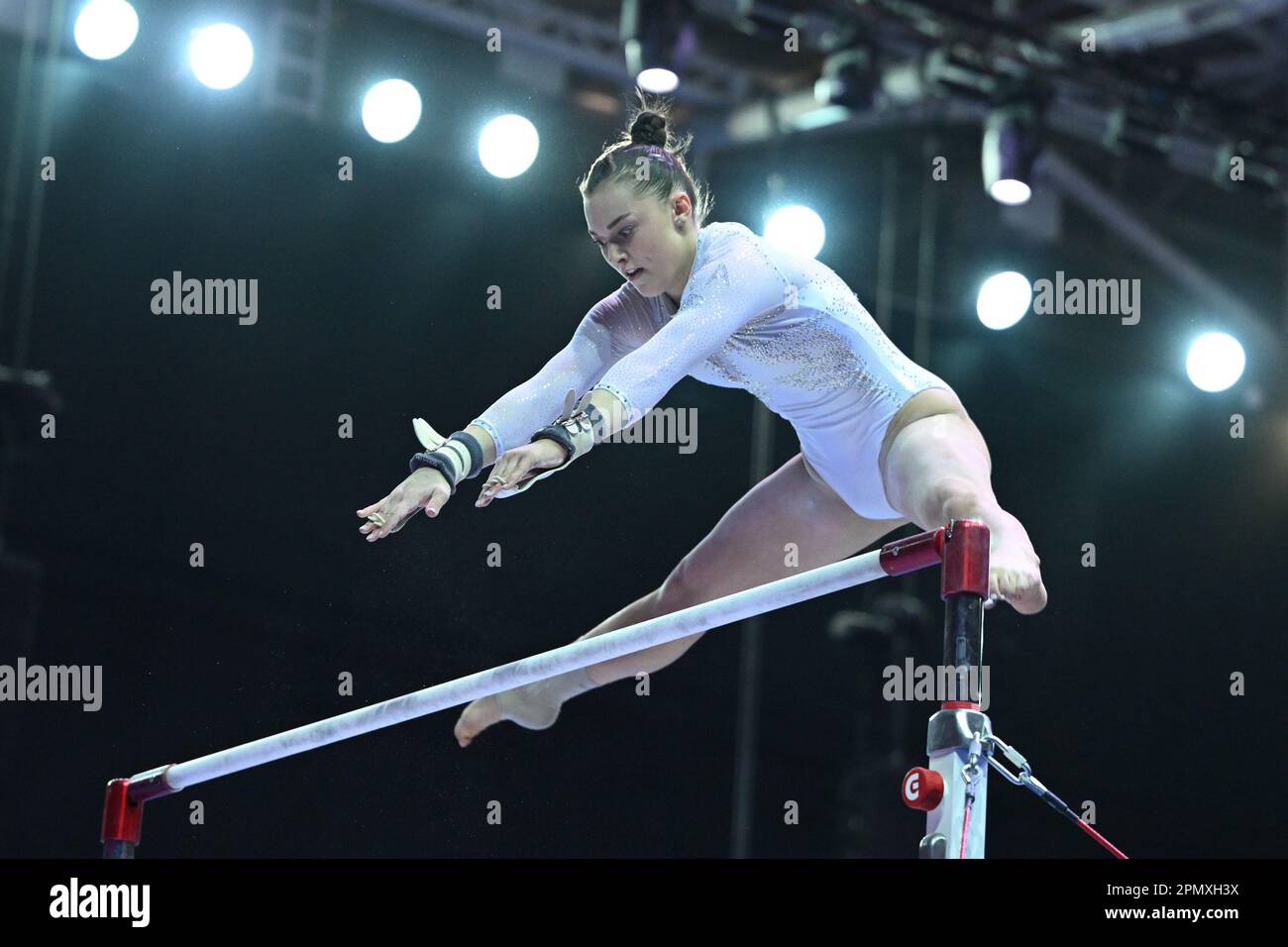
Giorgia Villa: An Athlete's Progression and Milestones in 2026
As of 2026, Italian artistic gymnast Giorgia Villa is 23 years old. Born on February 23, 2003, in Ponte San Pietro, Italy, Villa has transitioned from a promising youth prodigy into a seasoned veteran of the international gymnastics ci...
As of 2026, Italian artistic gymnast Giorgia Villa is 23 years old. Born on February 23, 2003, in Ponte San Pietro, Italy, Villa has transitioned from a promising youth prodigy into a seasoned veteran of the international gymnastics circuit, maintaining a significant presence in the sport through her technical consistency and resilience.
Contents
The Developmental Trajectory of Giorgia Villa
Giorgia Villa’s journey in elite gymnastics is marked by early successes that set a high standard for her later career. Her rise to international prominence began during her junior years, most notably at the 2018 Youth Olympic Games in Buenos Aires. Winning the gold medal in the all-around, as well as vault and floor exercise, established her as one of the most promising talents emerging from the Italian gymnastics system.
Transitioning to the senior level, Villa faced the dual challenges of navigating physical growth and the high-intensity training regimens required by the FIG (Fédération Internationale de Gymnastique) code of points. By the time she reached her early twenties, her approach to the sport had shifted from the raw, explosive energy of her youth to a more calculated, tactical performance style. At 23, in 2026, her role within the Italian national team has become one of leadership and stability. She acts as a mentor to younger athletes who are navigating their first quadrenniums, while she continues to manage the physical demands of high-level competition.
Key Milestones and Competitive Evolution
Understanding Villa’s career requires a look at the specific benchmarks that define elite athletic longevity. In the world of artistic gymnastics, the "peak" age is a subject of constant debate. Historically, gymnasts peaked in their mid-teens; however, the modern sport has seen a shift toward older athletes who balance experience with specialized training.
- Junior Dominance (2018): This period solidified her status as a foundational member of the Italian team. The success in Buenos Aires was not just a collection of medals but a validation of the technical foundation she built under her long-term coaches.
- Senior Maturity (2021–2024): These years were defined by managing international competition cycles. Even when facing injuries—a common reality for elite gymnasts—Villa maintained a presence in team selection processes, emphasizing her importance as a reliable team player.
- The 2026 Status: Now 23, Villa represents a generation of gymnasts who are redefining career length. Her focus has moved toward maintaining specific apparatus strength, particularly on the uneven bars and balance beam, where her technical precision remains competitive against the younger field.
Technical Specialization: The Uneven Bars
Throughout her career, the uneven bars have served as Villa’s signature apparatus. This event requires a specific combination of shoulder strength, timing, and spatial awareness that often matures with age. Unlike the vault, which relies heavily on raw power—an attribute that can fluctuate with age—the uneven bars rely on a gymnast's ability to maintain a connection between movements and to execute complex transitions with minimal energy loss.
In 2026, observers of the sport note that Villa’s routines emphasize "cleanliness" and execution (the E-score in the FIG code). While some younger gymnasts might push for higher difficulty (D-score) at the cost of form, Villa’s strategy involves balancing a respectable difficulty level with near-flawless execution. This approach is highly effective in team competitions, where consistency is often prioritized over individual risk-taking.
Navigating the Demands of Elite Gymnastics at 23
Being a 23-year-old elite gymnast involves a complex array of logistical, physical, and psychological requirements. At this stage of her career, Villa must manage a workload that differs significantly from that of a teenager.
| Factor | Teenage Competitive Focus | 23-Year-Old Competitive Focus |
|---|---|---|
| Training Volume | High volume, high frequency | Managed volume, recovery-focused |
| Injury Management | Reactive (treating injuries as they occur) | Proactive (prehab, nutrition, rest) |
| Technical Style | High difficulty (Risk) | High consistency (Execution) |
| Team Role | Rising talent / Specialist | Veteran leader / Tactician |
The shift from reactive to proactive injury management is perhaps the most critical factor for an athlete in 2026. This includes advanced nutritional planning, specialized physical therapy, and a modified training schedule that allows for longer recovery times between heavy apparatus work.
The Role of Italian Gymnastics Infrastructure
The progress of athletes like Giorgia Villa is deeply tied to the support systems provided by the Federazione Ginnastica d'Italia (FGI). The Italian national training center, often referred to as the Accademia Internazionale di Ginnastica, serves as the hub where athletes like Villa refine their skills.
In 2026, the facility utilizes advanced biomechanical analysis to help veteran athletes minimize joint stress. For a 23-year-old gymnast, these technological interventions are essential. By analyzing the forces applied to the wrists and ankles during dismounts, coaches can adjust landing techniques to preserve the longevity of the athlete’s career. This structural support is why Italy has seen a resurgence in its gymnastics program, with a pipeline that successfully transitions athletes from youth programs to the senior national team.
Frequently Asked Questions
1. Is 23 considered old for an elite gymnast? In the current landscape of gymnastics, 23 is considered a mature age, but it is no longer "old." Following the shift in the sport toward longer-lasting careers, many elite gymnasts are now competing effectively into their mid-twenties and beyond.
2. Which apparatus is Giorgia Villa’s strongest? The uneven bars remain her most consistent and strongest apparatus. She is widely recognized for her technical proficiency, clean lines, and ability to execute complex releases on the bars.
3. Does Giorgia Villa still compete at international events in 2026? Yes, as of 2026, she remains active in the sport. Her participation is often strategically planned to ensure she is at peak fitness for major team championships, prioritizing quality of performance over the sheer quantity of events.
4. What are the main challenges for a 23-year-old gymnast? The primary challenges include managing chronic training fatigue, maintaining the high difficulty levels required by changing code-of-points regulations, and balancing the psychological pressure of being a veteran leader on a team with younger, rising athletes.
5. How has the code of points affected her career? The FIG code of points is frequently updated, which forces athletes to adapt their routines every few years. For a veteran like Villa, this means constantly learning new connection requirements or adjusting her exercises to ensure they meet the latest difficulty criteria.
Future Perspectives and Recommendations
For fans and followers tracking the career of Giorgia Villa in 2026, the focus should be on her impact as a team member. In the current era, individual medals are often overshadowed by the collective success of the Italian team. Her value to the squad lies in her reliability in the qualification rounds and her ability to anchor the team during high-pressure finals.
If you are an aspiring athlete or a student of the sport looking to understand her trajectory, analyze her performance videos from 2023–2026. Notice how her movement patterns have evolved to prioritize efficiency over excessive repetitions. Following the official announcements from the Italian Gymnastics Federation remains the most reliable way to stay informed about her specific competition schedules, injury reports, and status within the national team rosters for upcoming international events.
Image Gallery