Understanding How Stanford University Transfer GPA Impacts Admission
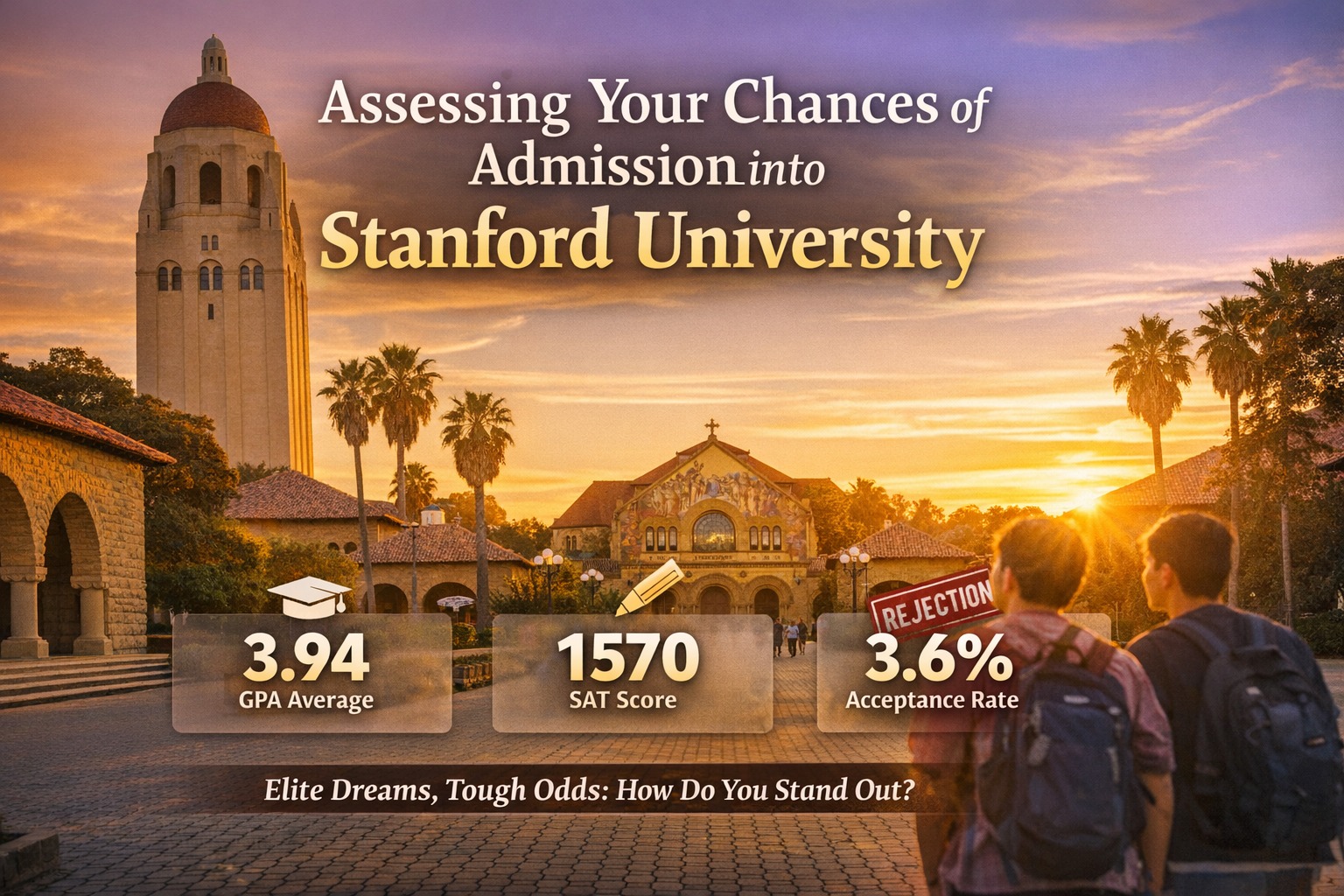
A competitive Grade Point Average (GPA) is a necessary threshold for transfer applicants at Stanford University, yet it does not guarantee admission. Because Stanford receives thousands of highly qualified applications each year for a...
A competitive Grade Point Average (GPA) is a necessary threshold for transfer applicants at Stanford University, yet it does not guarantee admission. Because Stanford receives thousands of highly qualified applications each year for a limited number of spots, the admission committee utilizes a holistic review process where academic excellence is the baseline, while extracurricular distinction, intellectual vitality, and personal essays serve as the primary drivers of the final decision.
Contents
The Role of Academic Metrics in Holistic Review
At highly selective institutions like Stanford, the admission process is "holistic." This means the committee evaluates the applicant as a complete individual rather than a collection of data points. While an exceptional GPA is essential, it acts as a gatekeeper metric. A high GPA confirms that a student is capable of handling the rigorous academic environment of the university, but it does not differentiate between the pool of applicants who all share similarly high marks.
For transfer students, the university focuses heavily on the rigor of the curriculum at the student's previous institution. An applicant who has maintained a 4.0 GPA in challenging, major-related coursework—such as advanced mathematics, laboratory sciences, or research-intensive humanities—is viewed more favorably than one who has earned a perfect GPA in a lighter, less demanding course load. The committee seeks evidence of "intellectual vitality," which is defined as a genuine, active, and ongoing engagement with learning that extends beyond the classroom.
Defining the Competitive Threshold
While Stanford does not publish a minimum GPA requirement for transfer applicants, the reality of the applicant pool is that successful candidates typically present a GPA near or at the top of their current institution’s grading scale. However, applicants should understand that "how" the GPA was earned is just as important as the number itself.
The committee examines the transcript for upward trends. A student who may have had a rough start in their first semester but has demonstrated a steady, consistent improvement in challenging courses shows resilience and academic growth. Conversely, a flat, stagnant GPA—even if high—may not convey the same level of intellectual ambition that the admissions team seeks.
Essential Components of the Transfer Application
Beyond the GPA, several other components weigh heavily on the final admission decision. If the GPA is the foundation, these elements are the structural pillars that support the application:
- The Personal Statement: This is the space where the applicant explains their motivation for transferring. Stanford looks for a compelling reason that goes beyond wanting a "better" school. Applicants should articulate why Stanford is the only place they can complete their specific academic and professional goals.
- Letters of Recommendation: These must come from professors who know the student well. The committee looks for qualitative feedback regarding the student's participation in class, curiosity, and potential for contributing to a research-driven environment.
- The "Intellectual Vitality" Essay: Stanford values students who pursue knowledge for the sake of learning. Whether this is through independent research, community service, or unique personal projects, showing a track record of initiative is vital.
- Extracurricular Involvement: The university looks for leadership and sustained commitment. A candidate who has had a significant impact on their current campus or community is often preferred over one who has a long list of minor, uncommitted memberships.
Comparison of Selection Criteria
The following table outlines how different components of the application contribute to the review process.
| Component | Primary Function in Review | Relative Weight |
|---|---|---|
| Cumulative GPA | Academic baseline and readiness | Essential / Gatekeeper |
| Course Rigor | Evidence of handling advanced material | High |
| Personal Statement | Contextualization of academic path | Very High |
| Instructor Evaluations | Verification of classroom impact | High |
| Extracurriculars | Demonstration of leadership and value | Moderate to High |
| Intellectual Vitality | Alignment with Stanford’s culture | Very High |
Common Misconceptions Regarding Transfer GPA
One of the most persistent myths in the transfer process is that a "perfect" GPA will automatically result in an offer of admission. In reality, thousands of applicants with near-perfect marks are denied annually. Stanford is not just looking for the smartest students; they are looking for specific types of contributors who will fit into the university’s unique, collaborative, and innovation-focused culture.
Another common misconception is that certain majors are "easier" to transfer into based on GPA. Admission to the School of Engineering, for example, is statistically as competitive as any other discipline. Regardless of the intended major, the expectation for academic excellence remains consistently high across all departments. If a student chooses a major simply because they believe it has lower standards for entry, the application often lacks the genuine passion and depth of preparation that is required for success in the Stanford admissions process.
Strategic Considerations for Prospective Transfers
If you are currently enrolled at another institution and aiming for a transfer, your strategy should focus on maximizing both your GPA and your academic profile:
- Prioritize Core Requirements: Ensure your current course schedule includes rigorous prerequisites that mirror the difficulty of those found in a research university.
- Engage with Faculty: Do not wait until the application season to build relationships. Attend office hours, participate in research opportunities, and seek mentorship. This ensures that when the time comes, your recommenders can speak specifically to your character and intellect.
- Document Your Impact: Keep a record of your contributions to campus life or external organizations. Quantifiable outcomes—such as the success of a club you led or the impact of a project you managed—are much more effective than vague descriptions of participation.
- Refine Your "Why": Be extremely specific about your academic interests. If you are interested in artificial intelligence, demonstrate that interest through courses, projects, and reading. If you are interested in climate policy, show how you have already begun exploring that field outside of your required coursework.
Frequently Asked Questions
Does Stanford care more about my high school GPA or my college GPA? Stanford focuses almost exclusively on your collegiate record as a transfer applicant. While your high school transcripts are required, your success in university-level coursework serves as the primary predictor of your future performance at the university.
Will a lower GPA in my first year ruin my chances if I improved later? Not necessarily. The admissions committee appreciates an upward trajectory. If you can demonstrate that you learned from early challenges and excelled in increasingly difficult coursework, this shows maturity and the ability to overcome obstacles.
Is it possible to be admitted with a GPA below a 3.8? Yes, it is possible, though statistically, the vast majority of admitted transfer students possess a GPA in the highest range. An applicant with a slightly lower GPA who has an extraordinary record of research, community impact, or overcoming significant adversity may still be considered.
Does being a veteran or a non-traditional student change the GPA expectations? Stanford values diverse life experiences. While academic readiness remains non-negotiable, the committee considers the context of your background. If you have been out of school for several years or have served in the military, your application is reviewed with an eye toward your unique life circumstances and the maturity you bring to the classroom.
Should I take extra classes to boost my GPA before applying? Taking extra, high-level courses to improve your GPA is a good idea if those courses are relevant to your major and demonstrate academic growth. However, do not take unnecessary, low-level courses merely to pad your transcript; the committee values depth and difficulty over a sheer quantity of credit hours.
Next Steps for Applicants
Before finalizing your application, conduct a thorough audit of your academic narrative. Ask yourself if your transcript tells the story of an engaged, curious, and resilient student. If your GPA is your strongest asset, ensure your essays and recommendations provide the necessary context to make that GPA meaningful. If your GPA is strong but not perfect, double down on the "intellectual vitality" portion of your application to demonstrate that your potential is not limited by a single number.
Finally, recognize that the transfer process is highly unpredictable. Use the application period as an opportunity to refine your goals and deepen your involvement in your current academic community; even if you do not end up at Stanford, the effort you put into becoming a more serious and engaged student will serve you well at whichever institution you complete your degree.
Image Gallery