Why Did the Netherlands Change Their Flag? The History of Red, White, and Blue
The Netherlands changed the top stripe of its flag from orange to red primarily due to 17th-century naval practicality and political shifts. Orange dye faded quickly to yellow at sea, whereas red offered superior visibility and permane...
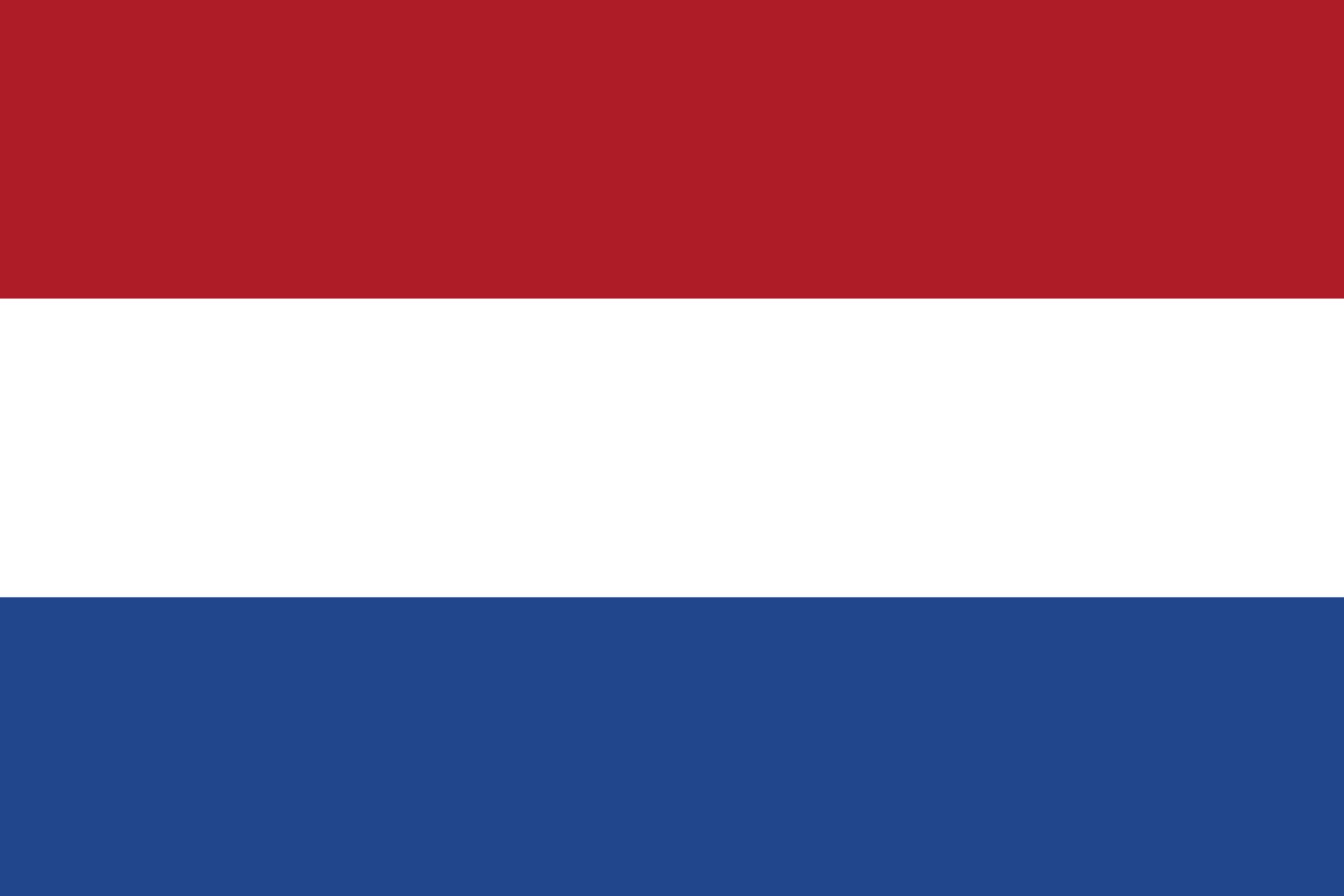
The Netherlands changed the top stripe of its flag from orange to red primarily due to 17th-century naval practicality and political shifts. Orange dye faded quickly to yellow at sea, whereas red offered superior visibility and permanence. In 1937, Queen Wilhelmina signed a Royal Decree officially establishing bright vermilion red, white, and cobalt blue as the legal national colors.
Contents
The Origins of the Dutch Flag: The Orange-White-Blue Prinsenvlag
To understand why the Netherlands changed its flag, one must first look at the original design and the historical crisis that brought it into existence. During the late 16th century, the Low Countries were engaged in the Eighty Years' War (1568–1648), a prolonged war of independence against Spanish Habsburg rule. The leader of this Dutch Revolt was William I, Prince of Orange (William the Silent).
As rebel forces organized resistance on land and sea, they needed a unifying banner to distinguish their vessels and regiments from the Spanish military. They adopted a tricolor flag featuring orange, white, and blue—colors derived directly from the livery of William of Orange.
- Orange: Represented the Principality of Orange, inherited by William I.
- White: Represented the struggle for liberty and civic freedoms.
- Blue: Represented the House of Nassau.
This banner became known as the Prinsenvlag ("Prince's Flag"). It was first recorded in use around 1572, when the Watergeuzen (Sea Beggars)—Dutch privateers acting on behalf of William of Orange—captured the port city of Brielle from Spanish control. For decades, the orange-white-blue tricolor served as the revolutionary symbol of the emerging Dutch Republic.
However, despite its strong patriotic associations with the founding father of the nation, the Prinsenvlag faced serious operational and political challenges that eventually led to its replacement.
Why Orange Turned to Red: Practical and Political Drivers
The transition from orange to red on the Dutch flag was not an abrupt, single event driven by a single decree. Instead, it was a gradual evolution during the 17th century, influenced by two distinct factors: maritime chemistry and political ideology.
Evolution of the Dutch Flag:
- [1570s–1630s] Prinsenvlag: Orange – White – Blue (Naval fading & political disputes)
- [1630s–1937] Statenvlag: Red – White – Blue (De facto standard used at sea & state)
- [1937–Present] Official Royal Decree: Bright Vermilion Red – White – Cobalt Blue
1. Naval Practicality and Dye Stability
During the 17th century—the Dutch Golden Age—the Dutch Republic established itself as the premier maritime power in Europe. Hundreds of merchant ships and naval vessels belonging to the Dutch East India Company (VOC), the Dutch West India Company (WIC), and the Dutch Navy traversed global trade routes.
For ships operating at sea, clear visual identification at a distance was a matter of survival. Naval commanders relied on flag colors to identify friendly ships, transmit signals, and signal national sovereignty. The orange dye used in the early 17th century proved completely unsuited for maritime environments:
- Chemical Instability: Orange dyes of the era were typically produced using natural vegetable ingredients, such as madder root mixed with yellow plant extracts or wood ash. These natural pigments reacted poorly to ultraviolet sunlight and salt air.
- Fading and Discoloration: After weeks at sea, the top orange stripe on Dutch flags rapidly faded into a pale yellow, dull tan, or dirty off-white. This made the flag look like a yellow-white-blue banner or, worse, a white flag of surrender.
- Superiority of Red Pigment: Red dyes—specifically those made from cochineal insects or processed madder root using improved mordants—were far more lightfast and resistant to weathering. Red stood out sharply against the gray skies and blue waters of the North Sea and Atlantic.
By the 1630s, naval shipyards and flag makers across Dutch ports like Amsterdam, Rotterdam, and Zeeland began routinely replacing the orange fabric with red fabric to ensure long-term durability aboard seagoing vessels.
2. The Political Battle: Statenvlag vs. Prinsenvlag
Alongside maritime logistics, political friction within the Republic of the Seven United Netherlands played a major role in sidelining orange.
The Dutch Republic operated under a unique, decentralized government structure characterized by an ongoing power struggle between two main political factions:
- The Orangists: Loyal to the House of Orange-Nassau, who sought to concentrate military and executive power in the office of the Stadtholder (a hereditary military leader drawn from the Princes of Orange).
- The States Faction (Republicans): Supported by wealthy merchant regents, particularly from the dominant province of Holland. They favored a decentralized republic governed by the States-General and sought to limit the monarchical ambitions of the Princes of Orange.
During the First Stadtholderless Period (1650–1672), following the premature death of Stadtholder William II, the Republican faction led by Grand Pensionary Johan de Witt gained control of the state. To diminish the political influence of the House of Orange, the States-General explicitly favored the red-white-blue flag, which became known as the Statenvlag ("State's Flag").
In 1664, the States of Holland officially resolved that the red-white-blue flag was the sole authorized banner of the province. While the Prinsenvlag was still flown by pro-Orangist factions and during times of Orangist restoration, the Statenvlag became the functional standard for international diplomacy and maritime trade.
The 1937 Royal Decree: Resolving the 20th-Century Ambiguity
Even into the early 20th century, the legal status of the Dutch flag remained surprisingly uncodified. While red, white, and blue had been the effective national standard for nearly three centuries, no official law or monarchical decree had definitively set the exact colors of the flag. This lack of legal precision allowed a heated debate to re-emerge in the 1930s.
The Rise of the NSB and the Flag Controversy
During the 1930s, the Nationaal-Socialistische Beweging (NSB), a Dutch fascist party led by Anton Mussert, adopted the historical orange-white-blue Prinsenvlag as their primary symbol. The NSB argued that the orange flag was the authentic, traditional national banner of the Netherlands and lobbied for its official restoration.
This political move created significant public confusion and alarm. Moderate politicians, historians, and citizens grew concerned that a fundamental national symbol was being hijacked by an extremist movement. The debate over whether the true national flag was orange-white-blue or red-white-blue reached a boiling point in the Dutch parliament and press.
Queen Wilhelmina’s Intervention
To end the ambiguity once and for all, Queen Wilhelmina signed a brief but decisive Royal Decree (Koninklijk Besluit) on February 19, 1937, while on holiday in Zell am See, Austria.
- "De kleuren van de vlag van het Koninkrijk der Nederlanden zijn rood, wit en blauw." *("The colors of the flag of the Kingdom of the Netherlands are red, white, and blue.")
Royal Decree of February 19, 1937 (Wilhelmina):
- Legal Codification of Red-White-Blue: Explicitly defined colors as bright vermilion red, white, and cobalt blue.
- Blocking Political Extremism: Stripped the fascist NSB of their claim to an official national flag.
This single sentence carried immense legal and political weight:
- It officially enshrined the centuries-old Statenvlag pattern as the sole national flag of the Netherlands.
- It stripped the fascist NSB of their attempt to alter state iconography.
- In 1958, exact chromatic standards were defined by ministerial regulations: the colors were formally designated as bright vermilion red, white, and cobalt blue.
Comparing the Prinsenvlag and the Modern Dutch Flag
To clearly see how the national flag evolved over four centuries, the following table breaks down the differences between the historical Prinsenvlag and the current official national flag.
| Feature / Metric | Historical Prinsenvlag | Modern Official Dutch Flag (Statenvlag) |
|---|---|---|
| Top Stripe Color | Orange (Oranje) | Bright Vermilion Red (Heldrood) |
| Middle Stripe Color | White (Wit) | White (Wit) |
| Bottom Stripe Color | Blue (Blauw) | Cobalt Blue (Kobaltblauw) |
| Historical Period | c. 1572 – 1650s (and revived sporadically) | c. 1630s – Present (Official decree in 1937) |
| Primary Driver for Design | Dynastic allegiance to William of Orange | Naval visibility, lightfastness, and Republican governance |
| Dye Performance at Sea | Poor (faded to yellow/white within weeks) | High (stable lightfast pigments under marine conditions) |
| Current Legal Status | Unofficial; controversial due to 1930s political associations | The sole official national flag of the Kingdom of the Netherlands |
| Primary Usage Today | Historical displays, vexillological study | State institutions, military vessels, civil display, international bodies |
Why Orange Remains the National Color of the Netherlands
Given that orange was removed from the official national flag, visitors to the Netherlands are often surprised by how dominant the color orange (Oranje) remains in Dutch culture today.
From the bright uniforms of Dutch national sports teams (such as the KNVB football team) to the sea of orange clothing worn on King's Day (Koningsdag), orange is undisputed as the national color of the Netherlands.
This apparent contradiction is managed through a specific heraldic tradition: the Oranjewimpel (Orange Pennant).
- ORANJEWIMPEL (Long, narrow orange streamer)
- RED STRIPE
- WHITE STRIPE
- COBALT BLUE STRIPE
The Protocol of the Oranjewimpel
When flying the national flag on specific occasions related to the Royal House of Orange-Nassau—such as King's Day (April 27) or royal birthdays—citizens and state institutions attach a long, thin orange streamer (Oranjewimpel) above the red-white-blue flag.
This protocol bridges the historical gap:
- The red-white-blue flag represents the sovereign state, the rule of law, and the unity of the entire nation.
- The orange pennant honors the historic bond between the Dutch people and the Royal House of Orange-Nassau.
On standard national holidays (such as Remembrance Day on May 4 or Liberation Day on May 5), the flag is flown without the orange pennant to maintain a strictly national focus rather than a royal one.
Flag Protocol and Display Rules in the Netherlands
The Netherlands maintains clear guidelines regarding how the official flag should be flown by public institutions, shipping vessels, and private citizens. While citizens are not legally penalized for minor flag misuse during national holidays, government agencies strictly adhere to rules issued by the Prime Minister's office.
Key Display Guidelines:
- Sunlight Rule: The national flag should generally not be flown between sunset and sunrise. If left hoisted at night, it must be illuminated clearly by artificial light.
- Flag Hoisting without Touches: The flag must never touch the ground or obstruct traffic when being raised or lowered.
- Half-Mast Protocol: On Remembrance Day (May 4), the flag is flown at half-mast from 18:00 until sunset to honor military personnel and civilians who died in conflicts since World War II. When lowering to half-mast, the flag is first hoisted to the peak of the mast before being lowered to the mid-point.
- Dimensions and Proportions: The official proportion of the Dutch national flag is 2:3 (height to width). The three horizontal stripes must be of strictly equal width.
Summary of Key Takeaways
The transformation of the Dutch flag from orange-white-blue to red-white-blue reflects a combination of practical engineering, political evolution, and legal clarification:
- Naval Pragmatism: Orange dye faded rapidly into yellow under salt air and harsh sunlight. Red dye provided superior contrast and weather resistance for 17th-century naval and merchant ships.
- Political Shifts: The 17th-century Republican movement (Statenvlag) preferred red to distance the nation's identity from the dynastic dominance of the House of Orange.
- 1937 Codification: Queen Wilhelmina issued a Royal Decree establishing bright vermilion red, white, and cobalt blue as the official national colors, settling historical disputes and blocking extremist political claims.
- Cultural Balance: The Netherlands preserved its historical connection to orange by establishing the Oranjewimpel (orange streamer) for royal celebrations, keeping orange as the cultural national color while using red-white-blue as the state emblem.
Frequently Asked Questions
Did the Netherlands change its flag because of Russia?
No. A common myth claims that Peter the Great of Russia copied the Dutch flag during his visit to the Netherlands in 1697, leading the Dutch to change their flag to avoid confusion. In reality, the Dutch navy had already shifted from orange to red several decades before Tsar Peter arrived in Western Europe. Tsar Peter did base the Russian flag on the Dutch tricolor, but the Dutch transition to red was driven by naval dye stability and domestic politics, not Russian influence.
Is the Prinsenvlag illegal in the Netherlands today?
The Prinsenvlag (orange-white-blue) is not illegal in the Netherlands, as Dutch law protects freedom of speech and expression. However, because it was adopted by the fascist NSB party during the 1930s and World War II, it carries strong political stigma. It is frequently associated with far-right movements and is rarely used in official or mainstream contexts.
How does the Dutch flag differ from the French flag?
While both national flags use red, white, and blue, their orientation, history, and proportions are distinct:
- The Dutch Flag: Features three horizontal stripes (red top, white middle, cobalt blue bottom) with a ratio of 2:3. It originated in the late 16th and 17th centuries.
- The French Flag (Tricolore): Features three vertical stripes (blue hoist, white center, red fly) with a ratio of 2:3. It was created during the French Revolution in 1789.
What is the exact difference between the Dutch flag and the Luxembourg flag?
The flags of the Netherlands and Luxembourg look almost identical at first glance, but they have key differences in shade and proportion:
- Dutch Flag: Uses a deeper cobalt blue and a bright vermilion red, with standard proportions of 2:3.
- Luxembourg Flag: Uses a lighter, sky blue (ciel) bottom stripe and a red top stripe, with proportions of either 3:5 or 1:2.
Why is orange still used by Dutch national sports teams if it is not on the flag?
Orange remains the national color of the Netherlands because of the ancestral House of Orange-Nassau. Dutch sports federations adopted orange uniforms in the late 19th and early 20th centuries as a patriotic symbol representing national unity and the founding royal dynasty, independent of the legal color specifications of the national flag.
Image Gallery