Limited Pay Whole Life vs. Single Premium: Why Multi-Year Funding Wins in 2026
The primary reason limited pay whole life insurance beats a single premium policy is the avoidance of Modified Endowment Contract (MEC) status. While a single premium policy triggers immediate taxation on withdrawals and loans, a limit...
The primary reason limited pay whole life insurance beats a single premium policy is the avoidance of Modified Endowment Contract (MEC) status. While a single premium policy triggers immediate taxation on withdrawals and loans, a limited pay policy funded via a Premium Deposit Account preserves the tax-free nature of the cash value while still allowing for lump-sum convenience.
Contents
Choosing between a single premium policy and a limited pay policy (such as a 10-pay or 15-pay) is a decision that dictates how you can interact with your capital for the rest of your life. In 2026, as interest rates and tax brackets continue to fluctuate, the structural efficiency of your life insurance policy is more critical than ever. For high-net-worth individuals and those utilizing the Infinite Banking Concept, the "pre-pay" strategy using a limited pay structure offers a level of liquidity and tax protection that a single premium policy simply cannot match.
Understanding the MEC Threshold: IRC Section 7702A
To understand why the limited pay structure is superior, one must first understand the "MEC" or Modified Endowment Contract. According to the Internal Revenue Code (IRC) Section 7702A, any life insurance policy entered into after June 21, 1988, must pass the 7-Pay Test to maintain its status as "life insurance" for tax purposes.
The 7-pay test determines whether the cumulative amount paid into the policy at any time during the first seven years exceeds the sum of the net level premiums that would have been paid on or before that time if the policy provided for paid-up future benefits after seven level annual premiums. When you purchase a Single Premium Whole Life (SPWL) policy, you are by definition failing the 7-pay test because you are paying the entire premium in a single year.
Once a policy becomes a MEC, it loses the favorable tax treatment of "first-in, first-out" (FIFO) accounting for withdrawals. Instead, it is taxed as "last-in, first-out" (LIFO), meaning any gains are withdrawn first and taxed as ordinary income. Furthermore, if you take a loan or withdrawal from a MEC before the age of 59.5, you are generally hit with a 10% IRS penalty on the taxable portion, similar to an early withdrawal from a 401(k) or IRA.
The Advantage of Limited Pay Whole Life
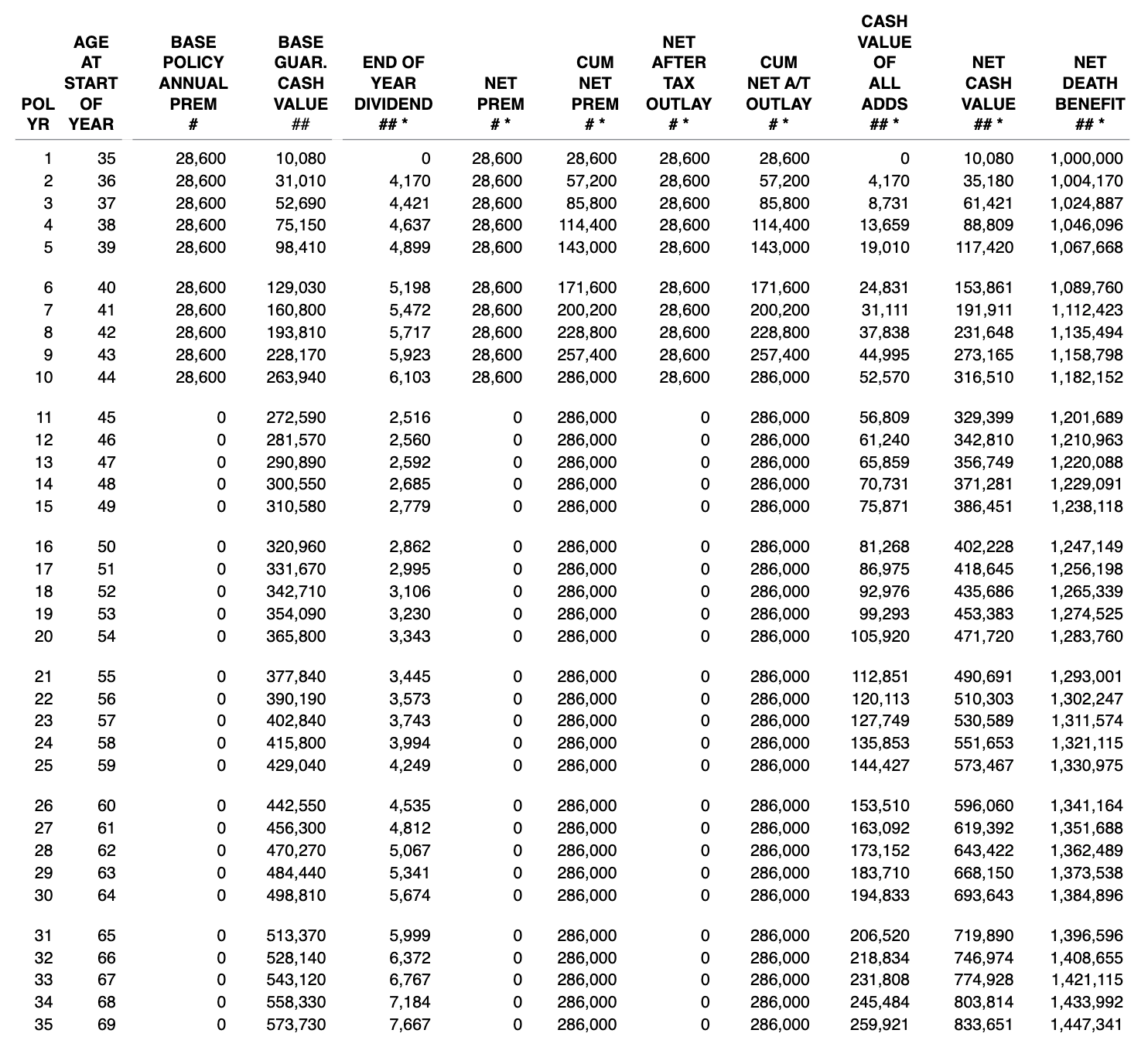
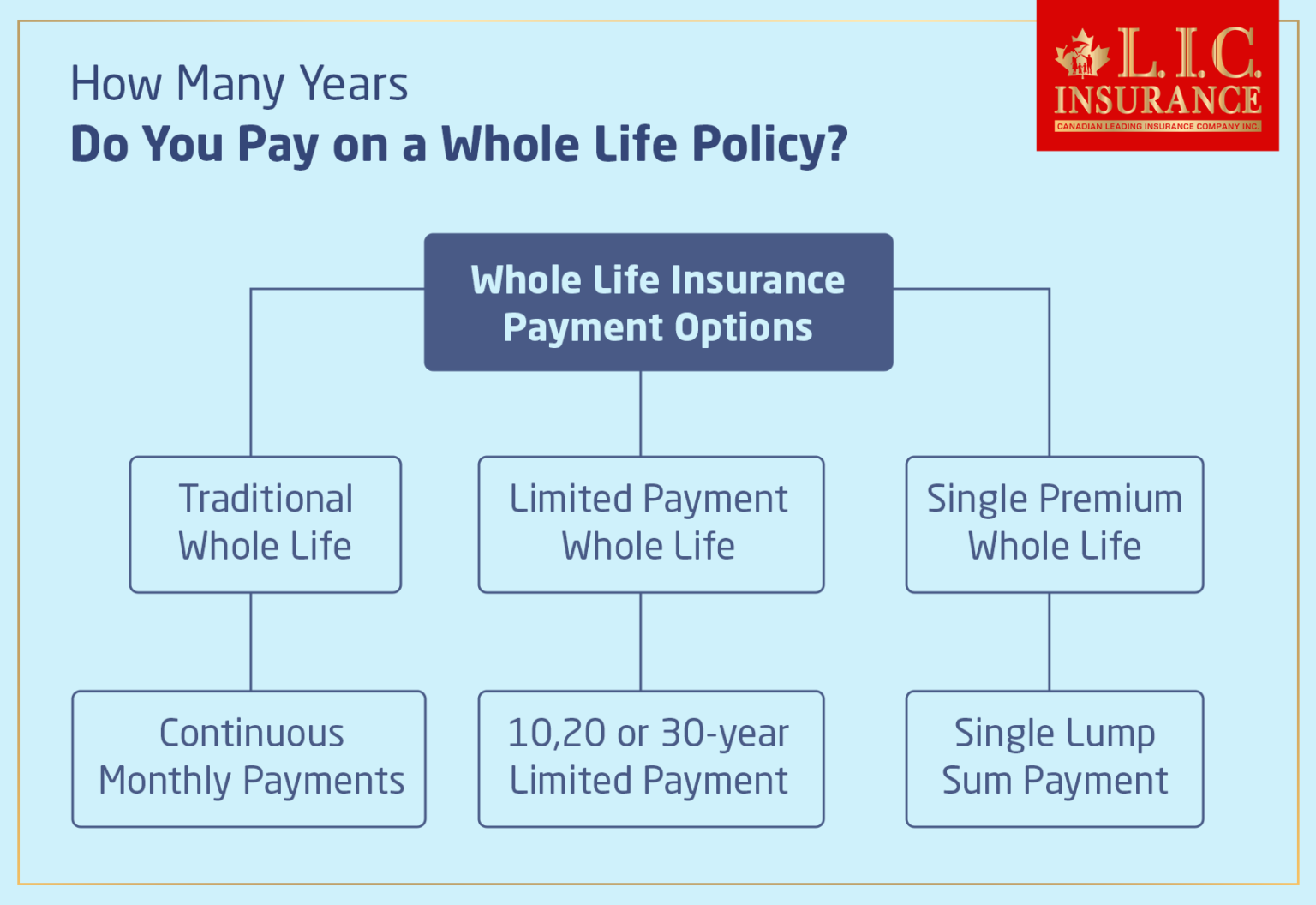
A limited pay policy is designed to be fully "paid up" after a specific number of years—commonly 10, 15, or 20. Because the premiums are spread out, the policy can be structured to stay below the 7-pay threshold, thus remaining a non-MEC.
Tax-Free Access to Capital
The hallmark of a non-MEC limited pay policy is how you access the cash value. Under current 2026 tax guidelines, policyholders can take loans against their cash value without triggering a taxable event. Because the loan is technically a lien against the death benefit rather than a direct withdrawal of the insurance company’s funds, it does not count as income. This allows for "tax-free" use of capital for real estate investments, business expansion, or retirement income.
FIFO Accounting
If a policyholder chooses to withdraw cash value rather than take a loan, non-MEC policies use FIFO (First-In, First-Out) accounting. This means you can withdraw your basis (the total amount of premiums you paid in) tax-free. Only after you have withdrawn every dollar of premium do you begin to touch the growth, which would then be taxed as ordinary income. In a single premium MEC, you are taxed on the growth from the very first dollar you touch.
The Premium Deposit Account (PDA): The "Pre-Pay" Secret
Many investors prefer the single premium model because they have a specific lump sum—perhaps from a business sale or an inheritance—that they want to move into a safe, growing asset immediately. They don't want the "hassle" of annual premiums.
This is where the Premium Deposit Account (PDA) comes in. A PDA allows a policyholder to deposit a large lump sum with the insurance company upfront. The insurer then automatically draws from this account to pay the annual premiums of a limited pay policy (like a 10-pay).
Benefits of the PDA Strategy:
- Discounted Premiums: Most insurers offer a "discount rate" on the funds held in the PDA. In 2026, these rates are often competitive with high-yield savings accounts or short-term bonds. This effectively reduces the total cost of the policy.
- MEC Avoidance: Because the money is moving from the PDA to the policy in annual increments over 7 or 10 years, the policy satisfies the 7-pay test. You get the "single premium feel" with "limited pay tax benefits."
- Asset Protection: In many jurisdictions, funds held within a life insurance contract or its associated accounts have significant protections from creditors, a benefit that varies by state but remains a cornerstone of private wealth planning.
Comparing Performance: Single Premium vs. Limited Pay
When evaluating these two options, it is helpful to look at the Internal Rate of Return (IRR) on both the cash value and the death benefit. While a single premium policy might have a slightly higher early-year cash value because all the capital is working from day one, the long-term utility is often lower due to the tax "drag" on any liquidity needs.
| Feature | Single Premium (MEC) | Limited Pay (10-Pay) via PDA |
|---|---|---|
| Tax Status | Modified Endowment Contract (MEC) | Non-MEC Life Insurance |
| Withdrawal Rule | LIFO (Gains taxed first) | FIFO (Basis withdrawn first) |
| Policy Loans | Taxable as income (to the extent of gain) | Tax-Free (regardless of gain) |
| 10% Tax Penalty | Yes (if taken before age 59.5) | No |
| Funding Flexibility | One-time lump sum only | Annual or Lump Sum (via PDA) |
| Death Benefit IRR | Usually lower over the long term | Usually higher due to compounding |
| Best For | Transferring wealth to heirs (no plan to spend) | Wealth building and retirement liquidity |
The Impact of the 2020/2021 7702 Changes
It is important to note that the technical landscape for these policies changed significantly following the Consolidated Appropriations Act of 2021, which updated the interest rate assumptions for Section 7702. As of 2026, these changes have allowed for higher premium-to-death-benefit ratios.
This means that today’s limited pay policies can "absorb" more cash more quickly than policies from a decade ago without becoming MECs. This further diminishes the need for single premium policies, as a 5-pay or 7-pay policy can now be engineered to be incredibly cash-efficient while retaining all the tax-free loan advantages of a standard whole life policy.
Practical Example: The Real Cost of Liquidity
Imagine an investor with $500,000.
Option A: Single Premium. They put $500,000 into a Single Premium Whole Life policy. Three years later, an investment opportunity arises, and they want to use $100,000. Because the policy is a MEC, and the $500,000 has grown to $540,000, that $100,000 withdrawal (or loan) is treated as $40,000 of taxable income and $60,000 of principal. If they are under 59.5, they pay ordinary income tax plus a $4,000 penalty.
Option B: 10-Pay with PDA. They put the $500,000 into a PDA to fund a 10-pay policy with a $50,000 annual premium. Three years later, they want to use $100,000. They take a policy loan against the available cash value. Because the policy is a non-MEC, the loan is 100% tax-free. There is no 10% penalty. The capital is deployed into the new investment, and the policy continues to grow as if the money were still there (if using a non-direct recognition company).
Frequently Asked Questions
Can I convert a Single Premium policy into a Limited Pay policy later?
No. Once a policy is issued as a MEC, it is generally "tainted" for life. You cannot "un-MEC" a policy by changing the payment structure later. This is why the initial design phase is so critical. You must decide at the time of application how the policy will be funded to ensure it meets your long-term liquidity goals.
Is the interest earned in a Premium Deposit Account taxable?
Yes. The "discount" or interest earned on the money sitting in the PDA is typically reported as taxable interest income (1099-INT) in the year it is applied to the premium. However, this is usually a small price to pay for the massive tax advantages of keeping the life insurance policy itself in a non-MEC status.
What happens to the PDA if I die before the 10 years are up?
In 2026, most insurance carriers structure their PDAs such that any remaining balance is paid out to the beneficiaries along with the death benefit. Some carriers may return the PDA balance to the estate. It is vital to check the specific PDA amendment of your contract to understand the beneficiary designations for the "side account."
Does the death benefit differ between these two structures?
Generally, a single premium policy will provide a larger initial death benefit for a given lump sum compared to the first year of a limited pay policy. However, as the limited pay policy is funded over time and dividends are used to purchase Paid-Up Additions (PUAs), the death benefit on the limited pay policy often catches up and eventually exceeds the single premium policy in the later years of the contract.
Why do some agents still recommend Single Premium policies?
Single premium policies are often marketed as "CD alternatives" for older clients who have no intention of ever touching the money. If the goal is purely to pass money to the next generation with a stepped-up death benefit and no need for lifetime liquidity, the simplicity of a single premium policy might be attractive. However, for anyone who wants to remain "their own banker," the limited pay structure is vastly superior.
Final Recommendation: Designing for Flexibility
For the majority of policyholders in 2026, the limited pay whole life policy funded via a Premium Deposit Account is the superior choice. It offers the best of both worlds: the ease of a one-time lump sum payment and the robust tax-free liquidity of a non-MEC life insurance contract.
When structuring your policy, work with a professional who understands the nuances of the 7-pay test and can model a 10-pay or 15-pay scenario against a single premium alternative. Ensure that the policy is designed with a high PUA (Paid-Up Additions) rider to maximize early cash value, and verify the current PDA discount rates available from highly-rated mutual carriers. In a world of increasing tax complexity, the flexibility to access your capital without an IRS "toll" is an advantage that far outweighs the minor administrative steps of a multi-year funding strategy.
Image Gallery