Comprehensive Guide to New York State Auto Insurance Rules (2026)
To legally operate a motor vehicle in New York, you must maintain a continuous auto insurance policy that meets specific state-mandated minimums: $25,000/$50,000 for bodily injury, $50,000/$100,000 for death, $10,000 for property damag...
To legally operate a motor vehicle in New York, you must maintain a continuous auto insurance policy that meets specific state-mandated minimums: $25,000/$50,000 for bodily injury, $50,000/$100,000 for death, $10,000 for property damage, and $50,000 in Personal Injury Protection (PIP). New York follows a "no-fault" system, requiring coverage to stay in effect as long as the vehicle is registered.
Contents
New York State auto insurance rules are among the most stringent in the United States. Managed by the Department of Financial Services (DFS) and enforced by the Department of Motor Vehicles (DMV), these regulations ensure that victims of motor vehicle accidents have access to immediate medical care and that drivers remain financially responsible for damages they cause. Navigating these rules requires understanding the interaction between liability limits, no-fault benefits, and the severe penalties associated with coverage lapses.
Mandatory Liability Coverage Limits
New York law requires every driver to carry liability insurance to protect other people in the event of an accident where the driver is at fault. These limits are often expressed as a series of numbers, such as 25/50/10, but New York adds a specific requirement for fatalities.
Bodily Injury and Death
New York is unique in that it mandates separate limits for injury and death. The minimum requirements are:
- $25,000 for bodily injury to one person in any one accident.
- $50,000 for bodily injury to two or more people in any one accident.
- $50,000 for death of one person in any one accident.
- $100,000 for death of two or more people in any one accident.
These limits represent the maximum amount your insurance company will pay to third parties for their medical expenses and legal claims against you. Given the high cost of medical care in 2026, many legal experts suggest that these minimums are insufficient for most asset-owning drivers, as any judgment exceeding these limits becomes the personal financial responsibility of the driver.
Property Damage Liability
The state requires a minimum of $10,000 for property damage per accident. This covers damage to another person’s vehicle, fences, storefronts, or other physical property. In an era where the average price of a new vehicle often exceeds $45,000, a $10,000 limit is frequently cited as a significant risk factor for drivers, potentially leaving them vulnerable to lawsuits if they total a late-model vehicle.
Understanding the New York No-Fault System
New York is one of a handful of "no-fault" insurance states. Officially known as the Comprehensive Motor Vehicle Insurance Reparations Act, this rule is designed to ensure that regardless of who caused the accident, injured parties receive prompt payment for "basic economic loss."
Personal Injury Protection (PIP)
Every NY policy must include a minimum of $50,000 in PIP coverage. This coverage follows the vehicle and provides benefits to the driver, passengers, and pedestrians injured by the vehicle. PIP covers:
- Medical Expenses: All "necessary" medical and rehabilitation costs.
- Lost Earnings: 80% of lost earnings from work, up to a maximum of $2,000 per month for up to three years.
- Household Help: Up to $25 per day for other reasonable and necessary expenses, such as hiring someone to perform household chores the injured party can no longer do.
- Death Benefit: A $2,000 death benefit in addition to the $50,000 PIP limit.
The Serious Injury Threshold
Because New York provides these immediate benefits, it limits the right to sue for "pain and suffering" unless the injuries meet a specific legal threshold. Under New York Insurance Law Section 5102(d), a "serious injury" includes dismemberment, significant disfigurement, bone fractures, loss of a fetus, or an injury that prevents the victim from performing their usual daily activities for at least 90 of the 180 days following the accident.
Uninsured and Underinsured Motorist Coverage
Despite strict enforcement, some drivers operate vehicles without insurance. To protect compliant drivers, New York mandates Uninsured Motorist (UM) Coverage.
Mandatory UM Coverage
Your policy must provide UM coverage for bodily injury at the same minimum levels as your liability coverage ($25,000/$50,000). This protects you, your family members, and your passengers if you are hit by an uninsured driver or a hit-and-run vehicle. It is important to note that mandatory UM only applies to accidents occurring within New York State and only covers bodily injury, not property damage.
Supplementary Uninsured/Underinsured Motorist (SUM)
While basic UM is mandatory, insurers are also required to offer SUM coverage. This expands your protection to include accidents occurring outside of New York and provides coverage when the at-fault driver has insurance, but their limits are lower than your SUM limits. As of 2026, drivers are automatically provided with SUM coverage equal to their bodily injury limits unless they specifically sign a waiver to opt for a lower amount or reject it.
The Role of the NYS DMV and Insurance Monitoring
New York utilizes an advanced electronic reporting system to track insurance compliance. The Insurance Information and Enforcement System (IIES) allows the DMV to receive real-time updates from insurance companies.
Electronic ID Cards and Verification
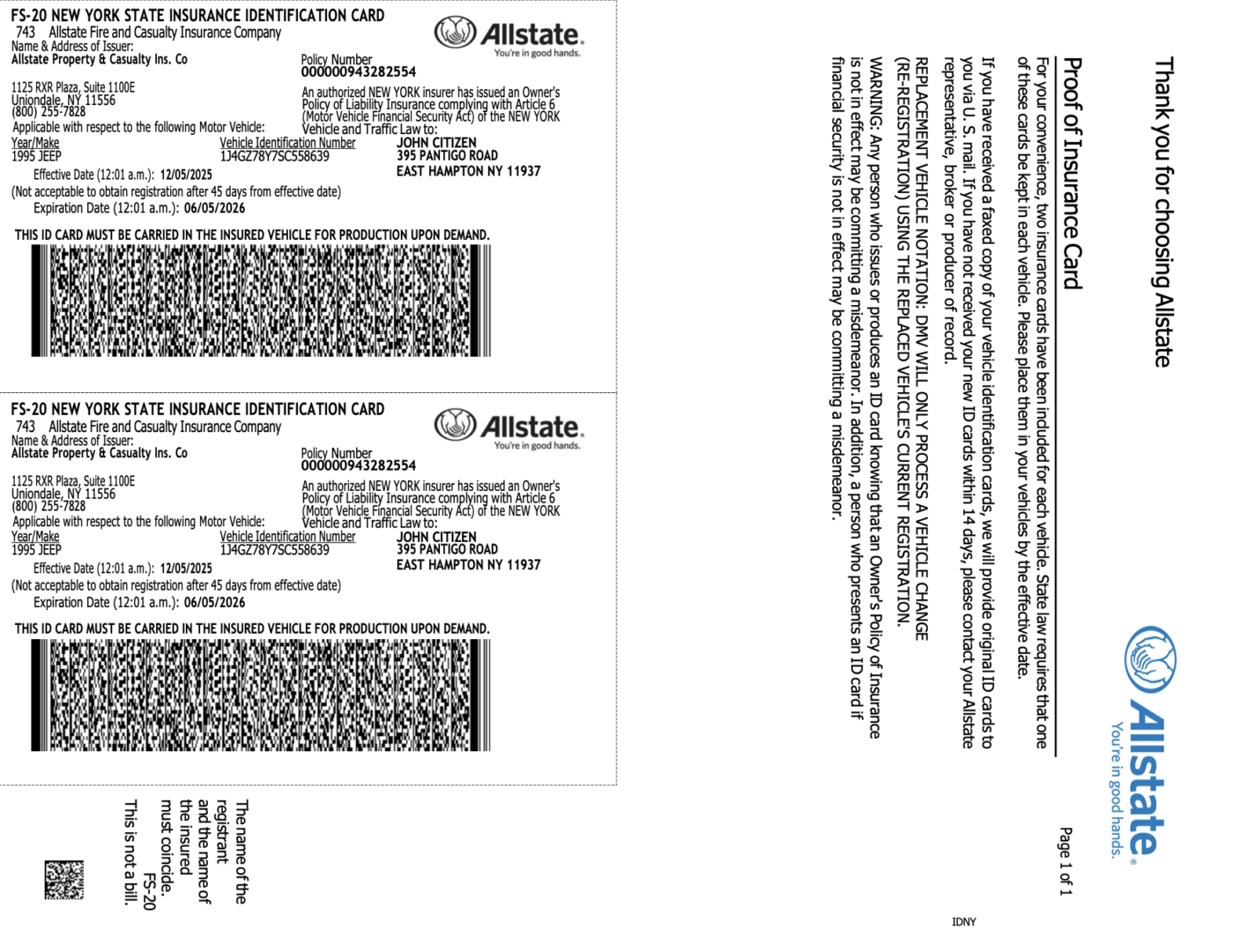
By 2026, New York has fully integrated electronic insurance identification cards. While paper cards are still valid, drivers may provide proof of insurance via smartphones or other electronic devices during traffic stops. The DMV requires insurance companies to issue these cards with a specific 2D barcode that allows law enforcement to instantly verify the policy's status through the IIES database.
Registration and Insurance Linkage
Insurance must be in the exact same name as the vehicle registration. If you have a business vehicle registered to a corporation, the insurance policy must also be in the name of that corporation. Discrepancies in naming can lead to the DMV flagging the vehicle for a "lack of insurance," which triggers a series of escalating penalties.
Consequences of Insurance Lapses
New York does not have a grace period for auto insurance. A lapse of even one day can result in significant legal and financial hurdles.
| Duration of Lapse | Civil Penalty (Fine) | Registration Status |
|---|---|---|
| 1–30 Days | $8 per day | Suspended for the number of days lapsed |
| 31–60 Days | $10 per day | Suspended for the number of days lapsed |
| 61–90 Days | $12 per day | Suspended for the number of days lapsed |
| Over 90 Days | Not applicable (Civil penalty no longer an option) | Revoked; license also suspended |
If a lapse exceeds 90 days, the driver generally cannot pay a civil penalty to "buy back" their registration. Instead, they must surrender their license plates, serve a suspension period equal to the lapse, and often pay a reinstatement fee. Furthermore, driving with a suspended registration is a misdemeanor in New York, which can lead to impoundment of the vehicle and a criminal record.
Factors Influencing Premiums and Rule Compliance
While the state sets the rules for coverage, it also regulates how insurance companies set their prices. The New York Department of Financial Services oversees rate filings to ensure they are not "excessive, inadequate, or unfairly discriminatory."
- Credit History: Unlike some states that have banned the practice, New York allows insurers to use "insurance scores" (derived from credit history) to help determine premiums, though they cannot be the sole basis for a denial of coverage.
- Driver Responsibility Assessment: Drivers who accumulate six or more points on their license within 18 months are required to pay a Driver Responsibility Assessment fee to the DMV. This is separate from insurance premiums but is a critical rule for New York motorists to follow to maintain their driving privileges.
- Defensive Driving Discounts: By law, New York insurers must provide a mandatory 10% reduction in the base rate of current liability and collision premiums for three years if the driver completes a DMV-approved Point and Insurance Reduction Program (PIRP).
Summary of Coverage Types
To ensure you are fully compliant with New York State auto insurance rules in 2026, refer to the following table comparing mandatory vs. optional protections.
| Coverage Type | Required by Law? | 2026 Minimum Limits | Purpose |
|---|---|---|---|
| Bodily Injury | Yes | $25k/$50k | Pays for others' injuries when you are at fault. |
| Death Liability | Yes | $50k/$100k | Pays for fatalities caused by your vehicle. |
| Property Damage | Yes | $10k | Pays for damage to others' property. |
| PIP (No-Fault) | Yes | $50k | Pays your own medical bills and lost wages. |
| Uninsured Motorist | Yes | $25k/$50k | Protects you if hit by an uninsured driver in NY. |
| Collision | No* | N/A | Pays for damage to your own car in a crash. |
| Comprehensive | No* | N/A | Pays for theft, fire, or glass damage. |
*Lenders usually require Collision and Comprehensive coverage for financed or leased vehicles.
Frequently Asked Questions
What happens if I move to New York from another state?
You must obtain a New York State insurance policy before you can register your vehicle at the DMV. New York does not recognize out-of-state insurance for vehicle registration purposes. You have 30 days to register your vehicle after becoming a resident. Ensure the policy is issued by a company licensed by the NYS Department of Financial Services.
Does NY insurance cover me if I drive into Canada?
Yes, most New York policies extend coverage to Canada. However, you should notify your insurer before traveling to ensure you have a "Non-Resident Inter-Province Motor Vehicle Liability Insurance Card," which is often required by Canadian authorities as proof of financial responsibility.
Can I cancel my insurance if I’m not driving the car?
Only if you surrender your license plates to the DMV before the insurance coverage ends. If you cancel the insurance while the plates are still in your possession, the DMV will consider it a lapse and begin the suspension process. Always keep your receipt (FS-6T) from the DMV plate surrender.
Are "Photo Inspections" still required in 2026?
Yes, for most vehicles, if you purchase Collision or Comprehensive coverage, New York law (Regulation 79) requires a physical photo inspection within a certain timeframe (usually 14 days) of the policy start date. Failure to complete this inspection will result in the automatic suspension of your physical damage coverage, though your liability coverage will remain intact.
How does the "Spousal Liability" rule work in NY?
As of recent updates leading into 2026, New York insurers are required to provide Supplemental Spousal Liability Insurance unless the policyholder opts out in writing. This coverage allows a spouse to sue their partner’s insurance policy for injuries caused by the partner’s negligent driving, which was previously excluded in many standard policies.
Practical Recommendation
To remain in compliance with New York State auto insurance rules, always ensure that your insurance coverage remains active for as long as your plates are in your possession. If you plan to sell your car or move out of state, surrender your plates to the DMV first before notifying your insurance agent to cancel the policy. For those seeking the best value, completing a PIRP (Defensive Driving) course every three years is the most effective way to satisfy state requirements while lowering your mandated premium costs.
Disclaimer: This information is for educational purposes and does not constitute legal or financial advice. Insurance laws are subject to legislative changes; consult the New York DMV or a licensed insurance professional for specific compliance inquiries.
Image Gallery