The Most Rare Beanie Boo Explained: A Collector’s Guide to Ultra-Limited Plushies
The rarest Beanie Boo is widely considered to be Bubblegum the Koala, specifically the 2009 first-generation UK version with solid black eyes. Other top-tier rarities include the "Original Seven" UK releases like Peanut the Elephant an...
The rarest Beanie Boo is widely considered to be Bubblegum the Koala, specifically the 2009 first-generation UK version with solid black eyes. Other top-tier rarities include the "Original Seven" UK releases like Peanut the Elephant and Cleopatra the Cat, which can fetch thousands of dollars in the 2026 secondary market when preserved in mint condition.
Contents
In the world of Ty Inc. collectibles, Beanie Boos represent a significant evolution from the traditional Beanie Babies of the 1990s. Launched in 2009, these plushies are characterized by their oversized, glittery eyes and soft, "marshmallow" texture. However, because the line has seen thousands of iterations, identifying the truly rare specimens requires a deep understanding of production history, regional exclusives, and tag generations. As of 2026, the market for these "Big Eye" plushies has stabilized, with serious collectors focusing on the elusive first-generation models that predated the global "sparkle eye" phenomenon.
The History of the Beanie Boo Launch (2009)
To understand why certain Beanie Boos are rare, one must look at the chaotic launch of the brand in 2009. Unlike Beanie Babies, which launched in the United States, Beanie Boos were initially released as a limited test run in the United Kingdom. This UK-first strategy meant that the very first production runs were significantly smaller than the subsequent global releases.
The first seven Beanie Boos, often referred to by enthusiasts as the "Original Seven" or "The Big Seven," featured solid plastic eyes rather than the sparkly, glitter-filled eyes that became the brand’s hallmark in 2010. These seven characters were:
- Bamboo (Panda)
- Bubblegum (Koala)
- Coconut (Monkey)
- Kiwi (Frog)
- Kooky (Cat)
- Peanut (Elephant)
- Waddles (Penguin)
Because Ty Warner decided to transition to glittery eyes almost immediately after the UK launch, the "solid eye" versions were only produced for a few months. This short production window, combined with the fact that they were only available in select UK retailers, makes them the "Holy Grails" for modern collectors.
Bubblegum the Koala: The "Holy Grail" Explained
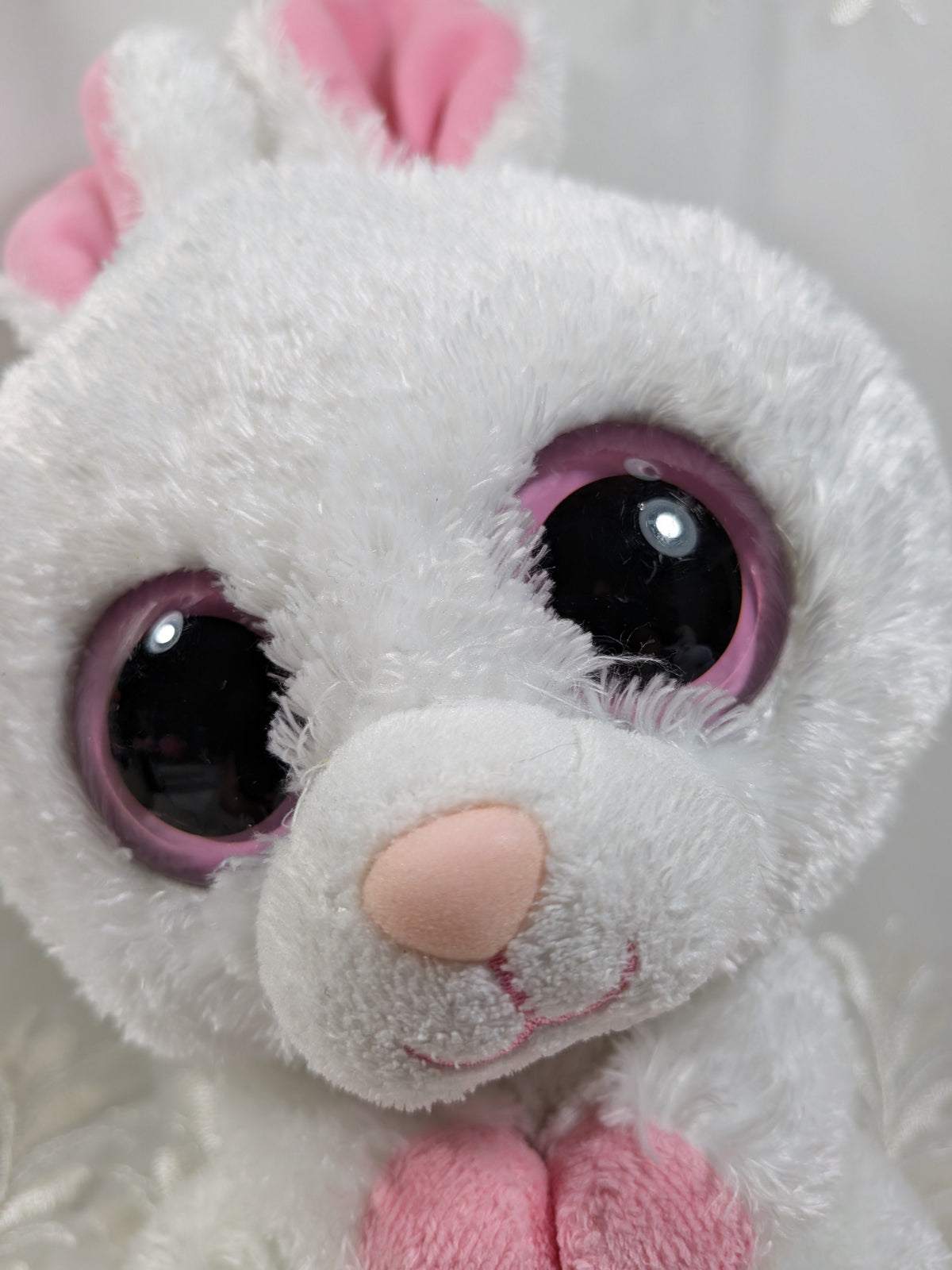
While all of the "Original Seven" are valuable, Bubblegum the Koala stands at the pinnacle of rarity. Bubblegum is a pink and white koala with large, solid black eyes and a felt-like nose.
The primary reason for Bubblegum’s rarity is a legal and branding dispute. Shortly after the initial release, Ty Inc. faced potential trademark issues or design overlaps that led to the swift retirement of the "Bubblegum" name and design. It was replaced by a similar koala named Kooky (though Kooky also exists in a rare solid-eye form). By the time Beanie Boos hit the US market in late 2009 and early 2010, Bubblegum had already vanished from store shelves.
In 2026, a mint-condition Bubblegum with its original "First Generation" heart tag can command prices exceeding $2,500 at auction. Collectors look for specific indicators:
- The Tag: A yellow and red heart tag that lacks the "Beanie Boos" logo found on later versions.
- The Eyes: Solid black plastic with no glitter or colored iris.
- The Tush Tag: A white label with red heart detailing, indicating early 2009 production.
Identifying the "Original Seven" and Their Value
The rarity of the Original Seven is not uniform. While Bubblegum is the most famous, others like Peanut the Elephant and Cleopatra (a later but equally short-lived cat) are nearly as difficult to find.
Peanut the Elephant (Light Blue)
Not to be confused with the famous Royal Blue Peanut Beanie Baby, the Beanie Boo Peanut is a light blue elephant with white inner ears. The rare version features the same solid black eyes as Bubblegum. Because elephants are a highly collectible sub-niche within the Ty community, competition for a 1st Gen Peanut is fierce.
Cleopatra the Cat
Cleopatra is a unique case. She was not part of the literal first seven but was released shortly after as a UK exclusive. She features a tan and brown tabby pattern. Cleopatra was retired almost as quickly as she was released, making her one of the rarest "non-original" Boos. Her rarity is compounded by the fact that many parents at the time didn't realize these toys would become collectible, leading to many Cleopatras being "well-loved" (and thus damaged) by children.
The Technical Anatomy of Rarity: Tags and Eyes
For a Beanie Boo to reach "top-tier" rarity in 2026, it must meet several technical criteria regarding its physical construction. Collectors use these markers to distinguish a $10 toy from a $1,000 investment.
Tag Generations (The "Hang Tag")
The "Hang Tag" (the heart-shaped cardboard tag attached to the ear) is the most critical factor.
- 1st Generation: These tags are smaller than modern ones and often do not have the "Beanie Boos" brand name in the classic bubble font on the front. They are highly susceptible to "tag creases," which can slash the value by 50% or more.
- 2nd and 3rd Generation: These introduced the sparkly eyes and the standardized branding. While still collectible, they do not reach the same price points as 1st Gen UK exclusives.
Eye Evolution
The transition from Solid Eyes to Sparkle Eyes occurred in late 2009. A Beanie Boo that normally has sparkle eyes (like Slush the Husky) found with solid eyes is usually a "transition" piece or a factory error, both of which are highly sought after. However, the true rarity lies in models that were never widely released with sparkle eyes before being retired.
Tush Tag Details
The "tush tag" is the fabric label sewn into the plush. For the rarest Boos, collectors look for "Handmade in China" or "Handmade in Indonesia" with specific 2009 date codes. If the tush tag says "2012" or later, even if the character looks old, it is a re-release and holds significantly less value.
Comparing the Rarest Beanie Boos (2026 Market Data)
The following table outlines the estimated value and identifying features of the most sought-after Beanie Boos currently recognized by the collector community.
| Name | Type | Key Rarity Feature | Estimated Value (Mint/Tag) |
|---|---|---|---|
| Bubblegum | Koala | 1st Gen UK, Solid Eyes | $2,000 - $3,500 |
| Peanut | Elephant | 1st Gen UK, Solid Eyes | $1,200 - $1,800 |
| Cleopatra | Cat | UK Exclusive, Short Run | $800 - $1,500 |
| T-Bone | Dog | 2010 Toy Fair Exclusive | $600 - $1,000 |
| Waddles | Penguin | 1st Gen UK, Solid Eyes | $500 - $900 |
| Bamboo | Panda | 1st Gen UK, Solid Eyes | $400 - $750 |
| Treasure | Unicorn | Limited Prototype/Event Run | $300 - $600 |
Toy Fair Exclusives: The Modern Rarity
Aside from the 2009 UK releases, a separate category of rarity exists for Toy Fair Exclusives. Every year, Ty Inc. attends major industry trade shows (like the New York Toy Fair) and often gives away limited-edition Beanie Boos to attendees and vendors.
These Boos are rare by design. They often have a special tag that says "Toy Fair" and the year of the event. For example, the 2010 T-Bone the Dog is a highly prized item because it represents one of the first "special event" Boos ever created. Because these were never sold in stores, their circulation is limited to the few hundred people who attended the event, making them a "guaranteed" rarity.
Common Mistakes in Identifying Rare Boos
Many amateur collectors believe they have found a fortune in a thrift store, only to realize they have a common re-release. Here are the most common pitfalls:
- Sparkle Eyes vs. Solid Eyes: Most people find the "sparkle eye" version of Coconut or Bamboo. While cute, these were produced in the millions and are generally worth less than $20. The rarity only applies to the solid black eyes.
- Tag Swapping: Some sellers attempt to take a 1st Gen tag from a damaged, common Boo and attach it to a newer plush. Authentic collectors check the plastic "barb" (the clear plastic string) to ensure it hasn't been tampered with or replaced with a standard retail tagging gun.
- Counterfeits: During the peak of the Beanie Boo craze, many "knock-off" brands produced toys with large eyes. Genuine Ty Beanie Boos will always have the "Ty" heart logo on the tush tag and the ear.
Expert Tips for Verification
If you believe you have discovered one of the "Original Seven," follow these steps to verify its authenticity:
- Check the Eye Depth: Authentic 1st Gen solid eyes are made of a heavy, high-quality plastic that is deeply set into the plush.
- Inspect the Fur Texture: Early 2009 Boos used a slightly different "mink" fabric than the "velvety" fabric used in the 2015–2026 era.
- Validate the Poem: Unlike Beanie Babies, the earliest Beanie Boos did not always have poems inside their tags. A 1st Gen UK tag is often blank on the left side or contains only the name and style number.
- Weight and Stuffing: Original Boos often have a slightly heavier "pellet" count in their base compared to the more fluff-heavy versions produced later for mass-market retail.
FAQ
Why are the UK versions rarer than the US versions? The UK release served as a "pilot program." Ty Warner often tested products in smaller markets to gauge interest. Because the design was tweaked (changing to glitter eyes) before the massive US launch, the original "pilot" versions remain the rarest.
Does a missing tag mean the Beanie Boo is worthless? Not worthless, but the value drops significantly—often by 80% to 90%. For a high-end rarity like Bubblegum, a "naked" plush (no tags) might still sell for $100-$200 to a "collector on a budget," but it will never reach the four-figure sums of a tagged version.
Are there any rare Beanie Boos from 2020 to 2026? While most modern Boos are mass-produced, certain "Store Exclusives" (like those for Walgreens, Claire’s, or specific European theme parks) have limited production runs. However, they rarely reach the value of the 2009 originals because the collecting community is now more aware, and more people keep them in mint condition, preventing a supply shortage.
How do I safely store a rare Beanie Boo? To preserve value in 2026, use a "Tag Protector" (a clear plastic case for the heart tag). Store the plush in a dust-free, UV-protected environment. Sunlight is the enemy of rare plushies, as it fades the vibrant pinks of Bubblegum or the deep blues of Peanut.
Practical Recommendation for Collectors
If you are looking to invest in rare Beanie Boos in 2026, focus your search on verified collector forums and high-end auction houses rather than general marketplaces. Always request high-resolution photos of both sides of the hang tag and the tush tag. Given the high values involved, purchasing "certified" or "graded" plushies—where a third-party expert has verified the condition and authenticity—is the safest way to ensure your investment is sound. For those just starting, the "Original Seven" remain the safest bet for long-term value retention.
Image Gallery