Workers Compensation Death Benefits for Children in Texas: A 2026 Guide
In Texas, when a parent's life is tragically lost due to a work-related injury or illness, their surviving children are entitled to weekly financial support through workers' compensation death benefits. Managed by the Texas Department...
In Texas, when a parent's life is tragically lost due to a work-related injury or illness, their surviving children are entitled to weekly financial support through workers' compensation death benefits. Managed by the Texas Department of Insurance, Division of Workers' Compensation (DWC), these benefits provide 75% of the deceased worker's average weekly wage to help replace lost household income.
Contents
The loss of a parent is an emotionally devastating event that often brings immediate financial instability. Texas workers' compensation laws are designed to provide a safety net for the dependents of deceased workers, ensuring that children can continue their education and maintain their standard of living. However, navigating the bureaucratic requirements of the Texas Division of Workers’ Compensation (DWC) requires an understanding of specific eligibility windows, filing deadlines, and benefit distribution formulas.
As of 2026, the statutory framework remains rooted in the Texas Labor Code, but administrative rates and procedural nuances continue to evolve. Understanding how these benefits are calculated, how they are split between surviving family members, and when they expire is critical for guardians and legal representatives managing the affairs of a minor child.
Eligibility Requirements for Children in Texas
Not every relative of a deceased worker qualifies for death benefits. Texas law specifically defines who counts as a "child" for the purposes of workers' compensation. This definition includes biological children, legally adopted children, and in many cases, stepchildren who were dependent on the deceased worker at the time of the fatal incident.
Minor Children Under Age 18
The most straightforward category of eligibility is for children under the age of 18. These children are automatically considered legal dependents. They are entitled to receive benefits regardless of their living situation at the time of the parent's death, provided the parent-child relationship is legally recognized. Benefits for these individuals continue until they reach their 18th birthday, at which point payments may cease unless they meet specific extension criteria.
Full-Time Students Up to Age 25
Texas recognizes that many young adults remain financially dependent on their parents while pursuing higher education. If a child is enrolled as a full-time student in an accredited educational institution (such as a college, university, or vocational school), they may continue to receive death benefits until they reach age 25.
To maintain this eligibility, the student must provide regular proof of enrollment to the insurance carrier. If a student drops below full-time status or withdraws from school, their benefits will terminate. It is the responsibility of the guardian or the student to update the DWC and the insurance company regarding their academic status to avoid overpayment penalties or sudden cessation of funds.
Children with Physical or Mental Disabilities
For children who are physically or mentally disabled to the extent that they are unable to support themselves, Texas law allows for the indefinite continuation of death benefits. There is no age cap for a "handicapped" child, as defined by the Texas Labor Code. To qualify for this extension, medical evidence must be provided to the DWC demonstrating that the disability existed at the time of the worker's death and prevents the child from achieving financial self-sufficiency.
Calculating the Benefit Amount
The total amount of death benefits available is 75% of the deceased employee’s Average Weekly Wage (AWW). The AWW is typically calculated by looking at the worker's earnings in the 13 weeks prior to the injury or illness. However, this amount is subject to state-mandated maximums and minimums that the DWC adjusts every October.
The Benefit Split: Spouses and Children
When a worker dies, the 75% benefit is not distributed as a single lump sum to one person but is shared among eligible beneficiaries. The most common scenario involves a surviving spouse and one or more children.
- Split Distribution: If there is a surviving spouse and one or more children, the benefit is split 50/50. The spouse receives half of the weekly benefit, and the children share the remaining half equally.
- Sole Beneficiaries: If there is no surviving spouse, the eligible children share 100% of the benefit amount equally. Conversely, if there are no children, the spouse receives the full amount.
- Impact of Remarriage: In Texas, if a surviving spouse remarries, they receive a two-year lump sum payment, and their weekly benefits then cease. Crucially, the children’s portion of the benefit may increase at this point, as the share previously allocated to the spouse is redistributed to the eligible children.
Statutory Maximums as of 2026
It is important to note that even if a worker was a high earner, the insurance carrier is not required to pay more than the state maximum. For the 2026 fiscal period, beneficiaries should check the current DWC Maximum and Minimum Weekly Benefit Rates to understand the ceiling on their specific claim.
Filing a Claim for Death Benefits
Accessing benefits is not an automatic process. The legal representative of the children (usually a surviving parent or guardian) must take proactive steps to notify the state and the insurance carrier.
Step 1: Filing Form DWC-042
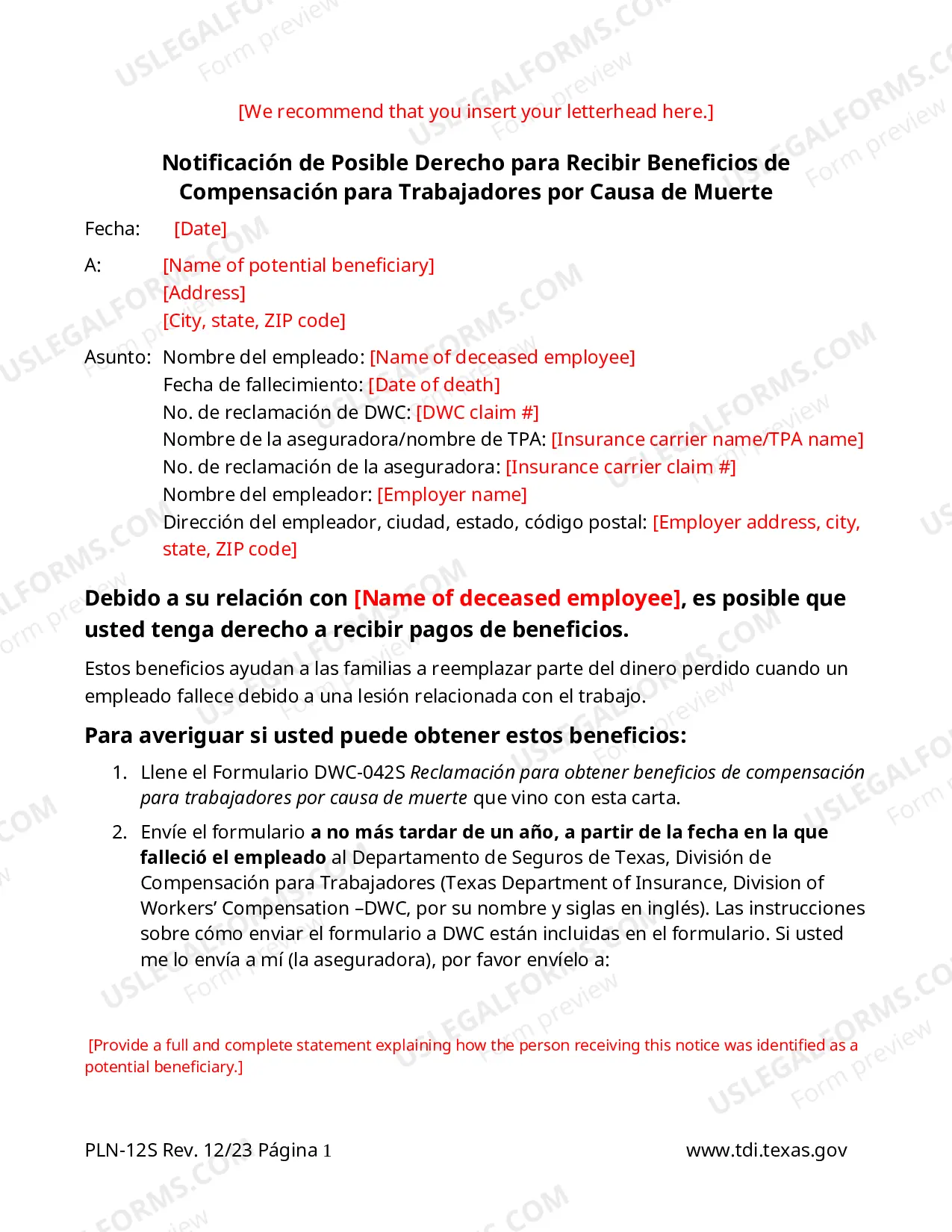
The primary document required is the DWC Form-042, titled "Claim for Workers' Compensation Death Benefits." This form must be filed with the Division of Workers' Compensation. It requires detailed information about the deceased worker, the employer, the nature of the fatal injury, and a list of all potential beneficiaries.
Step 2: The One-Year Deadline
Texas strictly enforces a one-year statute of limitations for death benefit claims. The claim must be filed within one year from the date of the worker's death. Failure to file within this window generally results in a forfeiture of benefits unless "good cause" can be proven for the delay. Given the complexity of proving good cause, immediate filing is always recommended.
Step 3: Providing Supporting Documentation
The insurance carrier will require evidence to verify the relationship between the deceased and the children. Necessary documents often include:
- Certified copies of birth certificates.
- Adoption decrees (if applicable).
- Marriage certificates (to establish the spouse's claim and the family unit).
- The worker's death certificate explicitly stating the cause of death.
- Medical records linking the cause of death to the workplace injury or occupational disease.
Burial Benefits and Immediate Assistance
In addition to weekly income replacement, the Texas workers' compensation system provides a burial benefit. As of 2026, the insurance carrier is liable for reasonable burial expenses up to $10,000. These funds are typically paid directly to the person who incurred the funeral costs or to the funeral home. This benefit is separate from the weekly death benefits and does not reduce the amount the children receive.
| Benefit Type | Recipient Eligibility | Duration | Amount |
|---|---|---|---|
| Minor Child Benefit | Children under 18 | Until age 18 | Share of 75% of AWW |
| Student Benefit | Full-time students 18–25 | Until age 25 or graduation | Share of 75% of AWW |
| Disabled Child Benefit | Children with total disability | Indefinite (Life of disability) | Share of 75% of AWW |
| Burial Benefit | Person paying for funeral | One-time payment | Up to $10,000 |
Common Challenges in Securing Benefits
While the system is designed to be self-executing, insurance carriers often dispute death benefit claims to limit their liability. Guardians should be prepared for potential hurdles.
Causation Disputes
The most common reason for denial is a claim that the death was not work-related. If a worker had a heart attack on the job or died from a respiratory illness, the carrier might argue that the death was due to a pre-existing condition rather than workplace factors. Proving causation requires rigorous medical testimony and evidence from experts.
Dependency Disputes
Sometimes, the carrier may question the dependency of a stepchild or a child who was not living with the worker. Under Texas law, biological children are presumed dependent, but for others, the guardian may need to provide tax returns or bank statements showing that the deceased worker provided significant financial support to the child.
Independent Contractor Misclassification
If the employer claims the deceased was an independent contractor rather than an employee, the family may be denied benefits entirely. Texas has specific tests for "right of control" to determine employment status. If the "employer" controlled the details of the work, the deceased was likely an employee, regardless of how they were labeled for tax purposes.
Frequently Asked Questions
Can a child from a previous marriage receive benefits?
Yes. Texas law treats all legal children of the deceased equally. The weekly benefit is shared among all eligible children, regardless of which household they reside in. If there are children from different marriages, the 50% or 100% share (depending on if there is a surviving spouse) is divided equally among all of them.
What happens if the child starts working while receiving benefits?
For minor children, employment does not affect their eligibility. For students aged 18 to 25, the primary requirement is maintaining full-time enrollment in school. As long as they remain a full-time student, earning an income from a part-time or full-time job typically does not disqualify them from receiving their portion of the workers' compensation death benefits.
Are these benefits taxable by the IRS?
Generally, workers' compensation death benefits are not taxable at the federal or state level in Texas. This means the 75% of the AWW provided to the children is usually "net" income. However, if a portion of the payment is considered interest due to delayed payments, that specific interest portion may be taxable. Consult a tax professional for specific 2026 tax year guidance.
How are benefits paid if the child is a minor?
Payments for minor children are typically made to the child's legal guardian (usually the surviving parent). In cases where no legal guardian exists or there is a dispute, the DWC may require the establishment of a management trust or the appointment of a guardian ad litem to ensure the funds are used for the child's welfare.
What if the worker died years after the initial injury?
If a worker suffers a compensable injury and later dies from complications of that injury (even years later), the children may still be eligible for death benefits. The key is proving a direct medical link between the original workplace injury and the ultimate cause of death.
Practical Recommendations for Guardians
If you are managing the affairs of children who have lost a parent to a work-related incident in Texas, your first priority should be securing the child's financial future.
- Immediate Notification: Notify the employer of the death immediately, even if they were already aware of the injury.
- Secure Records: Obtain several certified copies of the death certificate and the worker's recent pay stubs to ensure the Average Weekly Wage is calculated correctly.
- File Form DWC-042: Do not wait for the insurance company to offer benefits. File your claim with the DWC to start the official clock and preserve your rights.
- Seek Legal Consultation: Workers' compensation law in Texas is highly specialized. An attorney who focuses on DWC claims can help navigate disputes over causation or employment status, which are common in high-stakes death benefit cases.
- Monitor Student Status: For children nearing 18, ensure they understand the "full-time student" requirements to extend benefits to age 25. Collect enrollment verification forms before each semester begins.
The Texas workers' compensation system provides a vital lifeline, but it is a system governed by strict deadlines and specific legal definitions. By acting quickly and maintaining thorough documentation, you can ensure that the children of fallen workers receive the full measure of support the law intends.
Image Gallery