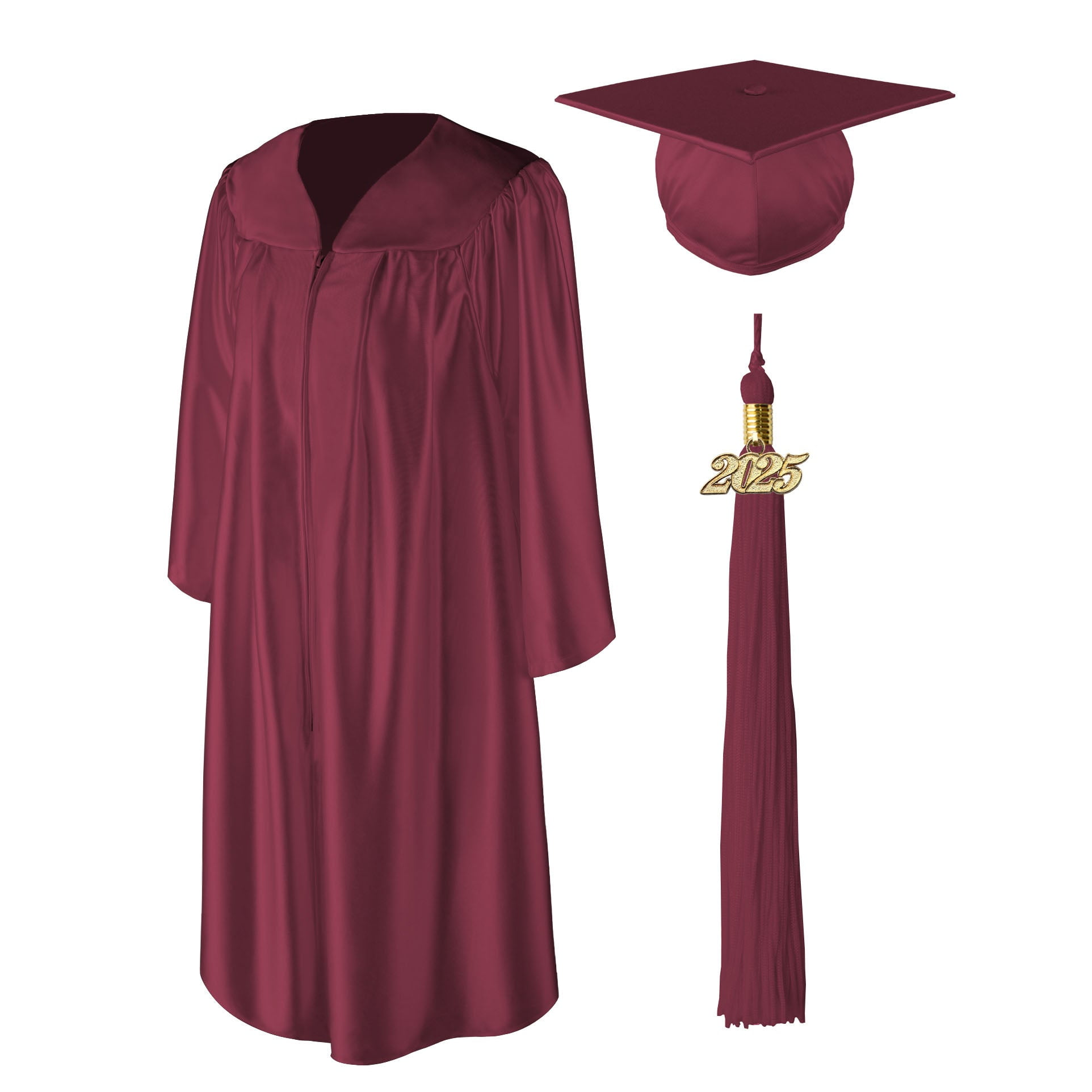
Complete Guide to the Master’s Degree Graduation Cap, Gown, and Hood
A Master’s degree graduation cap and gown set is a specialized form of academic regalia governed by specific design standards. Unlike undergraduate apparel, Master’s regalia features an oblong sleeve cut open at the wrist or forearm, a...
A Master’s degree graduation cap and gown set is a specialized form of academic regalia governed by specific design standards. Unlike undergraduate apparel, Master’s regalia features an oblong sleeve cut open at the wrist or forearm, a 3.5-foot academic hood trimmed with three-inch velvet indicating the field of study, and a standard black mortarboard cap.
Contents
Understanding Master's Academic Regalia
Academic regalia in the United States follows guidelines established by the American Council on Education (ACE) in its Academic Costume Code. First formulated in 1895 and periodically updated, this code ensures that an individual's academic achievement, discipline, and degree-granting institution are clearly identifiable during commencement ceremonies.
A complete Master’s degree ensemble consists of four distinct components:
- The Master’s Gown: A full-length black robe featuring unique oblong sleeves.
- The Master’s Hood: A three-and-a-half-foot fabric shell lined with university colors and bordered with velvet representing the specific academic discipline.
- The Cap: A standard four-sided mortarboard (or, in select institutions, a soft velvet tam).
- The Tassel: A silk or rayon tassel, typically black or matching the discipline's velvet color, worn on the left side throughout the ceremony.
While Bachelor’s attire is straightforward and Doctorate gowns feature heavy velvet bars and broad five-inch hood trims, Master’s regalia occupies a distinct middle ground. Understanding these structural details prevents ordering errors and ensures you adhere strictly to institutional guidelines on your graduation day.
Anatomy of the Master's Gown
The defining characteristic of a Master’s gown is its sleeve design. While a Bachelor’s gown features plain, pointed sleeves and a Doctoral gown features bell-shaped sleeves with three horizontal velvet bars, the Master’s gown uses an oblong sleeve (sometimes referred to as a "glove" or "pillow-pocket" sleeve).
- Master's Oblong Sleeve Structure:
- Upper Arm Entry (Shoulder)
- Wrist/Forearm Exit Opening (Arm extends here)
- Extended Oblong Fabric Tail (Hangs down vertically; closed square back, crescent cut)
Key Structural Features of the Gown
- Sleeve Tail: The rear portion of the sleeve extends downward in an oblong shape, ending in a square cut. The front of the sleeve features a smooth crescent-shaped arc cutout.
- Arm Exit Openings: Depending on the pattern manufacturer (such as Herff Jones, Jostens, or Oak Hall), the arm passes through an opening located either at the wrist or near the elbow bend, allowing the long tail to dangle freely behind the arm.
- Front Yoke and Pleating: Master’s gowns feature deep front pleating and a high, tailored yoke designed to support the additional weight of the academic hood without pulling backward.
- Closure Mechanism: A hidden front zipper runs from the lower neck to the lower torso, keeping the gown neatly closed over semi-formal or professional attire.
The Master's Hood: Colors, Dimensions, and Symbolism
The academic hood is the most symbolic element of graduate regalia. It indicates both the level of your degree and the precise field in which it was earned.
Dimensions and Fabric Cut
A Master’s hood measures 3.5 feet (42 inches) in total length. This distinguishes it from the 3-foot Bachelor’s hood and the 4-foot Doctoral hood. The exterior shell is constructed from black fabric matching the gown, lined with satin in the official school colors, and trimmed along the outer edge with velvet.
- Master's Hood Layout:
- Neckband (Fastens to front shirt button or gown loop)
- Black Exterior Shell (3.5 Feet Total Length)
- Inner Satin Lining (School Colors / Chevron)
- 3-Inch Velvet Border (Field of Study Discipline)
The Velvet Border (Degree Discipline)
The velvet trim along the edge of the hood is exactly three inches wide. The color of this velvet is standardized by the ACE Academic Costume Code to represent your major academic faculty:
| Academic Discipline / Degree Field | Official Velvet Color |
|---|---|
| Arts, Letters, Humanities (MA) | White |
| Business Administration, Commerce, Accountancy (MBA, MS) | Drab (Tan/Khaki) |
| Communications, Journalism | Crimson |
| Economics | Copper |
| Education (MEd, MAT) | Light Blue |
| Engineering (MS) | Orange |
| Fine Arts, Architecture (MFA) | Brown |
| Law (LLM) | Purple |
| Library Science | Lemon |
| Medicine, Surgical Specialties | Green |
| Music (MM) | Pink |
| Nursing (MSN) | Apricot |
| Philosophy (MA, MS) | Dark Blue |
| Public Administration, Foreign Service (MPA) | Peacock Blue |
| Public Health (MPH) | Salmon Pink |
| Science (MS) | Golden Yellow |
| Social Work (MSW) | Citron |
| Theology, Divinity | Scarlet |
Satin Lining (Institutional Colors)
The interior of the hood reveals silk or satin lining that displays the official colors of the degree-granting institution. If a university uses two colors, the secondary color is traditionally displayed as a diagonal chevron across the primary background color.
Comparing Regalia Across Academic Levels
Ordering the incorrect regalia level is a common mistake. The table below summarizes the technical specifications across degree levels to ensure you purchase or rent the correct items.
| Specification | Bachelor’s Degree | Master’s Degree | Doctoral Degree |
|---|---|---|---|
| Gown Sleeve Style | Long, pointed end; full arm coverage | Oblong tail with crescent cut; wrist/elbow opening | Full bell sleeve with 3 velvet bars |
| Gown Velvet Trims | None | None | 3 sleeve bars + front lapel panels |
| Hood Length | 3.0 Feet (36 inches) | 3.5 Feet (42 inches) | 4.0 Feet (48 inches) |
| Hood Velvet Width | 2 Inches | 3 Inches | 5 Inches |
| Cap Style | Mortarboard | Mortarboard (Standard) or Velvet Tam | Velvet Tam (4, 6, or 8-corner) |
| Tassel Position | Right side before conferring; move to Left | Left side throughout ceremony | Left side throughout ceremony |
| Tassel Material | Rayon thread | Rayon thread or Metallic | Gold Metallic Strand or Silk |
How to Properly Put On and Wear Master's Regalia
Wearing graduate regalia correctly requires securing the hood properly so it does not slip backward or choke the throat. Follow these step-by-step assembly instructions before entering the processional line:
Step 1: Put On the Gown
- Wear professional, light clothing underneath (the fabric retains body heat).
- Slip your arms through the gown sleeves, ensuring your hands exit through the wrist or elbow slits so the oblong sleeve tails hang downward.
- Zip the front zipper completely. The gown should sit balanced across your shoulders.
Step 2: Position the Hood Neckband
- Place the hood over your head with the velvet trim facing upward toward your chin and the long tail draped down your back.
- Locate the small fabric loop attached to the front point of the hood neckband.
- Anchor this loop over a shirt button, or pin it securely to the inside seam of your gown's front zipper. This prevents the weight of the hood from pulling the neckband against your throat.
Step 3: Fold Out the Hood Satin Lining
- Reach behind your back (or ask a colleague for assistance) and roll the lower half of the hood outward so the institutional satin colors are exposed.
- The velvet trim should remain visible along the top edge, while the satin lining flips outward to display the university colors clearly.
Step 4: Secure the Cap and Tassel
- Place the mortarboard flat on your head so the skull cap sits parallel to the floor, approximately one inch above your eyebrows. The deep point of the cap goes toward the back.
- Attach your tassel to the center button. Master's candidates who already hold a bachelor's degree generally wear their tassel on the left side throughout the entire processional and ceremony.
Renting vs. Buying Your Master's Cap and Gown
Graduate candidates can typically choose between renting from an institutional bookstore or purchasing an ensemble directly.
| Regalia Option | Key Characteristics |
|---|---|
| RENTAL REGALIA | • Lower upfront cost ($60–$110)• Standard synthetic polyester• Returned immediately post-commencement |
| PURCHASED REGALIA (STANDARD / SOUVENIR) | • Moderate cost ($90–$180)• Durable lightweight fabric; keep for photos & display |
| PURCHASED REGALIA (FINE CUSTOM / PROFESSIONAL) | • Higher cost ($300–$600+)• Custom tailoring, matte tissue-weight woven fabric, wool velvet• Essential for academics, faculty, and institutional staff |
When to Rent
Renting is ideal if you do not plan to work in academia, perform research presentations, or attend future academic ceremonies as faculty. Rentals are typically handled through major campus vendors like Herff Jones, Jostens, or Oak Hall.
When to Buy
Purchasing your regalia is recommended if:
- You plan to pursue a career in higher education, administration, or research where you will participate in annual convocations and commencements.
- You want to preserve the hood and gown as a personal heirloom or display item.
- Your university requires custom fabric colors (e.g., Harvard crimson, Columbia light blue, Stanford red) that standard rental fleets do not supply.
Sizing, Measuring, and Care Instructions
Determining Your Gown Size
Gown sizing is based on total height (with shoes) and chest/weight capacity:
- Height Measurement: Measure from the top of your head down to the floor wearing the dress shoes you intend to wear during graduation.
- Standard Gown Length: A properly fitted gown should hang to the mid-calf level (approximately 8 to 10 inches off the ground). It should never drag on the floor or sit above the knee.
- Plus / Full-Fit Sizing: If your chest measurement exceeds the standard sizing threshold (typically 48–50 inches chest circumference), select a "Plus Fit" or "Full Figure" size, which adds extra fabric volume across the shoulders and bust without increasing length.
Removing Wrinkles and Fabric Care
Academic regalia is usually shipped folded in plastic packages, resulting in noticeable creases.
- Steaming: The safest method to remove wrinkles is using a handheld fabric steamer on medium heat.
- Ironing Cautions: Direct ironing can melt synthetic polyester fabric. If using an iron, set it to the lowest synthetics/silk setting and place a damp pressing cloth between the iron and the gown.
- Hood Care: Never iron or steam the velvet trim directly on high heat, as this can flatten the nap of the fabric.
Frequently Asked Questions
Can I wear my Bachelor’s degree gown for a Master’s graduation?
No. A Bachelor’s gown lacks the oblong sleeves required for Master’s candidates and has a different collar construction. Wearing a Bachelor’s gown at a Master’s ceremony violates academic costume standards and prevents you from securing your Master’s hood properly.
On which side does a Master's degree tassel go?
Master's degree candidates place their tassel on the left side of the cap from the beginning of the ceremony. Because a Master's degree represents a post-baccalaureate achievement, candidates do not participate in the undergraduate "turning of the tassel" ritual from right to left.
What is the difference between an MA hood and an MS hood?
The outer black fabric shell and institutional inner lining are identical. The primary difference lies in the velvet border color: an Master of Arts (MA) hood uses White velvet, whereas a Master of Science (MS) hood uses Golden Yellow velvet.
Can Master’s candidates wear a velvet tam instead of a mortarboard?
At most universities, Master’s candidates wear a standard black fabric mortarboard cap. Soft velvet tams (4-corner, 6-corner, or 8-corner) are usually reserved for Doctoral graduates (PhD, EdD, JD, MD). However, some private institutions permit Master's graduates to wear a 4-corner black velvet tam if specified in their institutional guidelines.
How do I prevent my master's hood from pulling back against my neck?
Attach the elastic loop or fabric ribbon located at the front point of the hood to a dress shirt button or pin it securely to the inside front zipper of your gown. This transfers the weight of the draping fabric to your chest rather than pulling back against your throat.
Final Guidance and Next Actions
To ensure your commencement day proceeds smoothly, verify the following actions early in your final term:
- Confirm Your Degree Discipline: Check with your academic department to confirm the exact velvet color associated with your degree (e.g., verifying whether an MS in Analytics uses Golden Yellow or Drab).
- Review University Ordering Deadlines: On-campus bookstores and official vendor portals generally set ordering cutoffs 6 to 8 weeks prior to commencement day.
- Inspect Your Package Upon Delivery: Immediately unpack your regalia, inspect the hood lining for correct school colors, verify sleeve openings, and hang the gown to allow deep creases to relax before steaming.
Image Gallery