Auto Insurance in the Valley View Business Corridor: Commercial, Fleet, and Commuter Solutions
Securing auto insurance in the Valley View business corridor requires selecting policies tailored to high-density commercial traffic, fleet operation, and daily business commuting. Whether configuring commercial auto coverage for light...
Securing auto insurance in the Valley View business corridor requires selecting policies tailored to high-density commercial traffic, fleet operation, and daily business commuting. Whether configuring commercial auto coverage for light industrial fleets, adding Hired and Non-Owned Auto (HNOA) endorsements, or updating personal policies for business use, operators must align coverage limits with corridor-specific risk exposure and statutory standards.
Contents
Defining Auto Insurance Requirements in Commercial Corridors
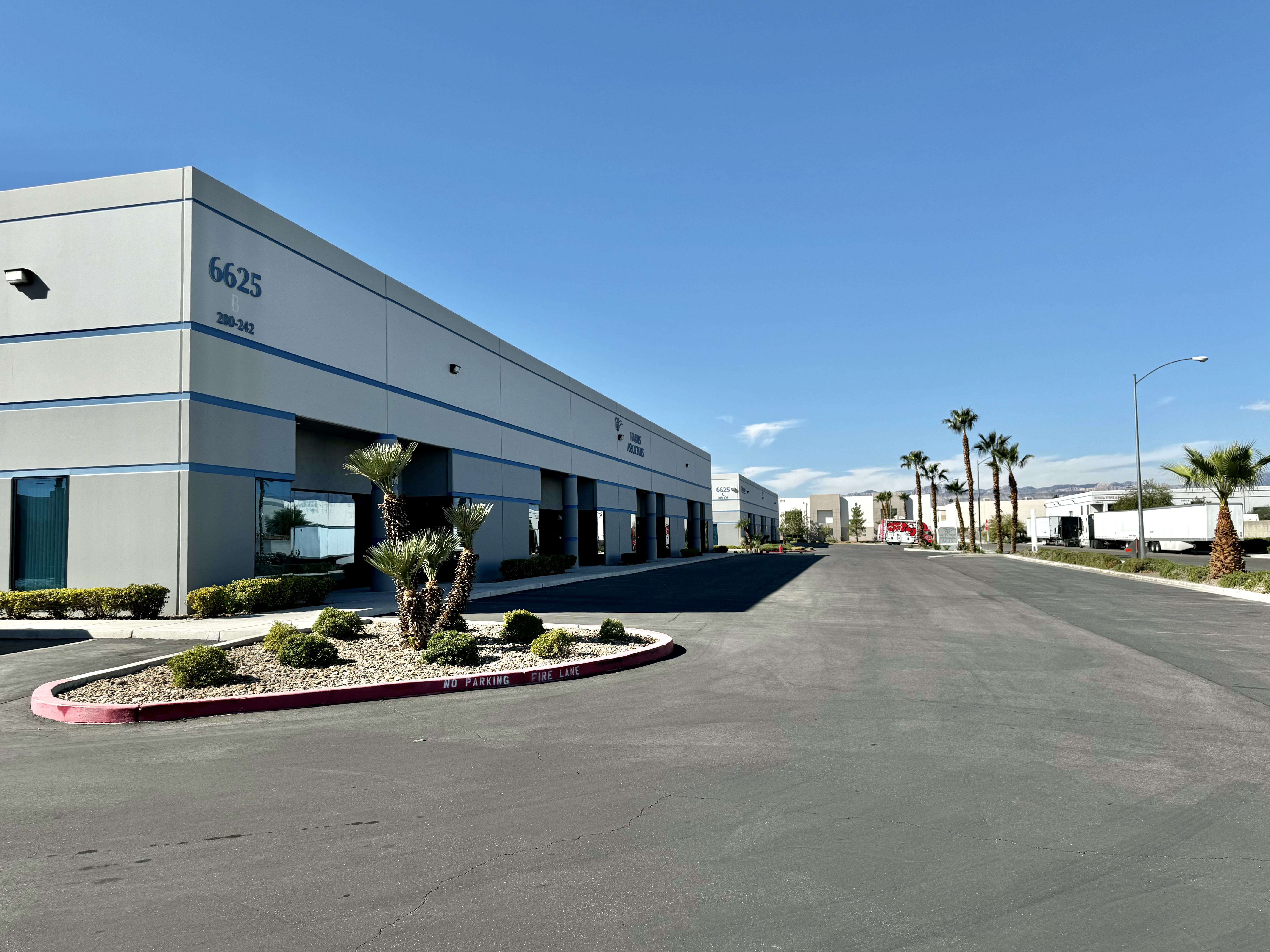
The Valley View business corridor serves as a primary arterial hub connecting industrial parks, retail centers, logistics warehouses, and professional office complexes. Because this zone experiences heavy mix-use traffic—ranging from semi-trucks and delivery vans to commuter sedans—insurance risk profiles in this area differ significantly from purely residential neighborhoods.
Navigating auto insurance in commercial zones requires understanding how insurers classify vehicle use, evaluate location-based risk, and calculate premiums based on traffic density and claim frequency.
- Vehicle Operation in Corridor
- Personal / Commute Use
- Standard Personal Policy
- Business-Use Endorsement
- Commercial / Fleet Use
- Commercial Auto Policy ($1M CSL)
- Fleet Policy + Telematics
- Personal / Commute Use
Personal Auto vs. Commercial Auto: Crucial Disambiguation
One of the most frequent coverage mistakes made by business owners, independent contractors, and employees in commercial corridors is misclassifying how a vehicle is used.
- Personal Auto Insurance: Designed exclusively for personal driving, commuting to and from a single workplace, and standard errands. Personal policies explicitly exclude coverage for commercial activities such as delivering goods, transport-for-hire, carrying tools between client sites, or allowing employees to drive personal vehicles for business errands.
- Personal Auto with Business-Use Endorsement: Suitable for professionals who use their personal vehicle to visit clients, travel between multiple job sites, or perform real estate showings, but do not transport heavy equipment, inventory, or paying passengers.
- Commercial Auto Insurance: Required for any vehicle owned by a business entity, registered to a corporation or LLC, or used primarily for commercial tasks such as freight hauling, service calls, construction trade transport, or multi-stop deliveries.
Failing to report commercial activity to a personal insurer can lead to immediate claim denial following an accident in a busy commercial corridor, leaving both the driver and business entity personally liable for property damage and bodily injury claims.
Essential Auto Insurance Coverages for Valley View Businesses
To achieve adequate protection while operating within a high-traffic business district, policyholders must structure coverage beyond minimum legal requirements. A well-constructed commercial or personal policy tailored for commercial corridor driving includes several core coverage layers.
Commercial Auto Liability Insurance
Auto liability coverage pays for third-party bodily injury and property damage when a driver is at fault in a collision. In commercial insurance, liability is typically structured in one of two ways:
- Combined Single Limit (CSL): Provides one lump-sum limit (such as $1,000,000) that applies to both bodily injury and property damage per accident. This offers flexible coverage depending on whether an accident causes severe bodily injuries or major property destruction.
- Split Limits: Sets separate maximum payouts for bodily injury per person, total bodily injury per accident, and total property damage (for example, $250,000/$500,000/$100,000).
For businesses operating in commercial corridors, commercial underwriters strongly recommend a $1,000,000 Combined Single Limit due to the high replacement values of commercial vehicles and potential litigation costs following multivehicle collisions.
Physical Damage Coverage: Comprehensive and Collision
Physical damage insurance protects business-owned or personal vehicles against direct physical loss regardless of fault.
- Collision Coverage: Pays to repair or replace the covered vehicle after a collision with another vehicle, guardrail, building, or stationary object, as well as vehicle rollovers.
- Comprehensive Coverage: Covers non-collision events common in high-traffic commercial zones, including theft, vandalism, falling objects, windstorm damage, fires, and windshield breakage.
Hired and Non-Owned Auto Liability (HNOA)
Hired and Non-Owned Auto (HNOA) liability coverage is critical for businesses whose employees use personal vehicles for work tasks, or for companies that rent vehicles for commercial operations.
- Non-Owned Auto Liability: Protects the business entity if an employee causes an accident while driving their personal vehicle to pick up office supplies, visit a bank, or meet a client. While the employee's personal policy acts as primary coverage, HNOA protects the employer against excess liability lawsuits.
- Hired Auto Liability: Extends liability coverage to vehicles the business rents, leases, or borrows for commercial operations.
Uninsured and Underinsured Motorist Protection (UM/UIM)
Commercial corridors experience elevated numbers of hit-and-run incidents and uninsured drivers. Uninsured/Underinsured Motorist coverage ensures that your business or personal insurance pays for bodily injury and resulting medical bills, lost wages, and rehabilitation if an at-fault driver lacks adequate insurance.
Statutory Minimums vs. Recommended Commercial Limits
Operating a vehicle in any commercial business corridor requires compliance with state financial responsibility laws. However, state legal minimum limits were created as absolute baselines and are rarely sufficient for commercial liabilities.
| Coverage Type | Typical State Minimum Requirement | Recommended Business Corridor Limit |
|---|---|---|
| Bodily Injury (Per Person) | $25,000 | $500,000 (or $1,000,000 CSL) |
| Bodily Injury (Per Accident) | $50,000 | $1,000,000 CSL |
| Property Damage (Per Accident) | $20,000 | $250,000 to $1,000,000 CSL |
| Commercial General Liability Umbrella | Optional | $1,000,000 to $5,000,000 excess |
| Hired & Non-Owned Auto (HNOA) | Optional | $1,000,000 CSL |
Note: Legal minimum requirements vary by state jurisdiction. Business operators should verify specific state statutes with a licensed commercial insurance broker.
Relying on minimum coverage limits in a commercial corridor presents severe financial risk. If a commercial delivery van causes an accident involving multiple passenger vehicles, property damage alone can easily exceed $100,000, while severe medical claims can rapidly top $500,000. If policy limits are exhausted, injured parties can pursue the company’s physical assets, receivables, and real estate.
Key Risk Factors and Rating Drivers in Commercial Corridors
Insurance underwriters use sophisticated actuarial models to determine auto insurance rates for vehicles operating within specific business corridors. Understanding these factors allows business managers and vehicle owners to take proactive steps to lower insurance overhead.
- Corridor Underwriting Rating Drivers
- Traffic & Zonal Risk
- Intersection density
- Theft/vandalism rates
- Daily traffic volume
- Fleet & Vehicle Data
- Gross Vehicle Weight
- Safety tech / Cameras
- garaging ZIP code
- Driver Records
- MVR screening
- Telematics scores
- Continuous training
- Traffic & Zonal Risk
1. Zonal Risk and Intersection Density
Commercial corridors feature high vehicle volume, frequent turning maneuvers into industrial parks, high density of curb cuts, and heavy pedestrian traffic. Underwriters evaluate ZIP codes associated with the Valley View corridor, pricing policies according to local claim frequency, traffic congestion metrics, and regional litigation environments.
2. Vehicle Weight Classes and Modifications
Commercial policies categorize vehicles by Gross Vehicle Weight Rating (GVWR):
- Light Duty (Under 10,000 lbs): Sedans, SUVs, pickup trucks, and small cargo vans.
- Medium Duty (10,001 – 26,000 lbs): Box trucks, flatbeds, and heavy-duty delivery vans.
- Heavy Duty (Over 26,001 lbs): Semi-tractors, dump trucks, and large concrete mixers.
Vehicles equipped with specialized equipment—such as hydraulic lifts, attached ladder racks, mounted refrigeration units, or commercial tool boxes—require specific policy endorsements to ensure physical equipment is fully covered against damage or loss.
3. Motor Vehicle Record (MVR) Screening
For commercial fleets, driver quality is one of the primary rate determinants. Insurance carriers require businesses to submit the driving records of all authorized employees. Drivers with records containing recent moving violations, at-fault accidents, or major offenses (such as DUIs or reckless driving) significantly increase insurance premiums across the entire fleet policy.
Detailed Comparison: Personal Business-Use, Commercial, and Fleet Auto Policies
Choosing the correct insurance structure depends on vehicle ownership, the number of vehicles, and operational risk factors.
| Feature / Dimension | Personal Policy with Business Endorsement | Dedicated Commercial Auto Policy | Commercial Fleet Auto Policy |
|---|---|---|---|
| Target Vehicle Count | 1 vehicle | 1 to 4 vehicles | 5+ vehicles |
| Policyholder Entity | Individual / Employee | Sole Proprietor, LLC, or Corp | Business Entity |
| Primary Vehicle Use | Commuting, sales visits, errands | Delivery, service calls, hauling | Commercial operations, logistics |
| Typical Liability Limit | $100k/$300k/$100k split limits | $1,000,000 Combined Single Limit | $1,000,000+ blanket CSL |
| Hired & Non-Owned Option | Not available | Optional add-on | Included or standard endorsement |
| Driver Flexibility | Named insured and listed household drivers | Listed employee drivers | Scheduled drivers + permissive user rules |
| Telematics Integration | Personal mobile apps (optional) | Commercial GPS & dashcam tracking | Enterprise fleet management suites |
Step-by-Step Process to Secure Optimal Auto Coverage
To establish compliant, cost-effective auto insurance tailored for business corridor operations, commercial policyholders and drivers should follow a structured procurement strategy.
Step 1: Conduct a Comprehensive Vehicle and Driver Audit
Catalog every vehicle used for business purposes within the corridor. Identify:
- Vehicle ownership (titled to individual vs. titled to business entity).
- Gross Vehicle Weight Ratings (GVWR) and specialized equipment value.
- Primary garaging location (overnight parking ZIP code).
- List of all employees who operate vehicles for work tasks, regardless of frequency.
Step 2: Establish Strict Driver Eligibility Standards
Before assigning vehicles or allowing employees to drive for business purposes, institute formal driver qualification standards:
- Pull official Motor Vehicle Records (MVRs) annually for all drivers.
- Establish clear disqualification criteria (e.g., more than two moving violations in 36 months, or any major violation).
- Implement a written mobile device policy banning texting or unapproved hands-free device use while driving.
Step 3: Configure Adequate Policy Limits and Endorsements
Work with a licensed commercial insurance agent to select appropriate policy options:
- Set primary commercial auto liability to a minimum of $1,000,000 Combined Single Limit.
- Add Hired and Non-Owned Auto (HNOA) liability if staff use personal cars for business tasks.
- Include In-Transit Cargo / Inland Marine coverage if carrying valuable goods, inventory, or specialized tools.
- Attach Uninsured/Underinsured Motorists coverage matching primary liability limits.
Step 4: Implement Telematics and Fleet Safety Controls
Modern commercial auto insurers offer premium discounts ranging from 5% to 25% for businesses that deploy telematics technologies. Install commercial GPS units, dual-facing dashcams, and driver monitoring tools that track speed, hard braking, rapid acceleration, and cornering force.
Common Pitfalls and Coverage Gaps to Avoid
Business owners and commuters navigating commercial corridors frequently encounter avoidable insurance gaps:
- Assuming Personal Insurance Covers Small Business Use: Personal insurers routinely deny claims if a collision occurs while an individual is performing paid work, delivering products, or transporting commercial tools.
- Neglecting Non-Owned Auto Risks: If an employee causes a severe collision while running a company errand in their own car, the injured party's attorney will typically sue both the driver and the employer. Without HNOA coverage, the business has no defense coverage or indemnity protection under its general liability policy.
- Underinsured Tool and Equipment Loss: Standard commercial auto physical damage coverage pays for the vehicle itself, not the contents inside. Tools, ladders, diagnostic equipment, or merchandise stored in cargo vans require separate Inland Marine / Contractors' Equipment Floaters.
- Failure to Adjust Limits for Inflation and Replacement Costs: Due to rising vehicle acquisition costs and advanced repair technologies (such as ADAS sensor recalibration), historic $30,000 property damage liability limits are quickly exhausted in minor commercial accidents.
Frequently Asked Questions
Does my personal auto insurance cover me while commuting to a job in the Valley View corridor?
Yes, standard personal auto insurance policies cover basic daily commuting from your home to a single primary workplace. However, if your role requires you to travel between multiple worksites throughout the day, transport client goods, or carry heavy commercial tools, you must inform your carrier and add a business-use endorsement or transition to a commercial auto policy.
What is Hired and Non-Owned Auto (HNOA) insurance, and why do business owners need it?
HNOA insurance covers liability damages when a business is sued for an accident involving a vehicle the company does not own. This includes employee-owned vehicles driven for company errands or third-party rental vehicles used for business trips. HNOA protects the company entity when third-party claim damages exceed the employee's personal auto policy limits.
How do commercial auto insurance rates differ from personal auto rates in commercial business zones?
Commercial auto insurance premiums are generally higher than personal auto rates because commercial vehicles are larger, driven more miles, operate in high-density traffic corridors, and carry higher financial liability limits ($1,000,000 CSL compared to standard $50,000 split limits). Commercial coverage also protects business liability, which increases underwriting risk.
Can a commercial auto policy cover both heavy trucks and personal passenger cars?
Yes. Commercial auto insurance can cover diverse fleets containing passenger cars, pickups, cargo vans, and medium-duty box trucks under a single policy schedule. The policy details coverage limits, deductibles, and physical damage options for each scheduled vehicle based on its specific weight, value, and operational profile.
What steps can businesses in the corridor take to reduce fleet insurance costs?
Businesses can lower commercial auto premiums by hiring drivers with clean MVR records, introducing mandatory driver safety training, deploying telematics and dashcams, selecting higher physical damage deductibles (e.g., $1,000 or $2,500), bundling auto insurance with a Commercial Package Policy (CPP) or Business Owners Policy (BOP), and establishing clear vehicle maintenance protocols.
Strategic Recommendations for Valley View Businesses
To ensure complete legal compliance and robust protection within high-volume commercial environments:
- Schedule a Policy Audit: Review current personal and commercial auto policies with a licensed agent to eliminate potential coverage exclusions related to commercial activity.
- Require $1,000,000 CSL Coverage: Avoid minimum state liability limits in favor of comprehensive single-limit policies that protect corporate balance sheets against catastrophic litigation.
- Mandate HNOA Protection: Protect your enterprise against employee-vehicle liability by adding a Hired and Non-Owned Auto endorsement to your general liability or commercial auto policy.
- Adopt Driver Telematics: Leverage fleet management technology to lower insurance premiums, reduce fuel consumption, and document accident events accurately.
Image Gallery