Maternity Leave and Life Insurance: Debunking Common Myths for Growing Families
Applying for life insurance during pregnancy or maternity leave is widely misunderstood. Many expecting and new parents believe that taking parental leave, experiencing routine pregnancy symptoms, or stepping away from work temporarily...
Applying for life insurance during pregnancy or maternity leave is widely misunderstood. Many expecting and new parents believe that taking parental leave, experiencing routine pregnancy symptoms, or stepping away from work temporarily will trigger high premiums, coverage denials, or application freezes. In reality, most healthy pregnancies and standard maternity leaves do not prevent you from securing affordable individual life insurance.
Contents
Navigating Life Insurance During Family Planning
The birth or adoption of a child is one of the most common triggers for purchasing life insurance. Parents want to lock in financial security to cover future expenses, replace lost income, pay off a mortgage, or fund educational expenses. However, misinformation about how insurance carriers view maternity leave, pregnancy-related medical histories, and employment status frequently leads families to delay applying—sometimes leaving them unprotected when coverage is needed most.
Life insurance underwriting focuses on long-term mortality risk, overall health history, and financial stability. Routine life changes, including taking paid or unpaid leave under the Family and Medical Leave Act (FMLA) or employer-sponsored parental policies, do not equate to health hazards or financial instability in the eyes of an underwriter. Dissecting the most common myths helps prospective policyholders make informed decisions without unnecessary delays.
Myth 1: You Cannot Apply for Life Insurance While Pregnant or on Maternity Leave
One of the most persistent misconceptions is that insurance companies will automatically decline applications submitted during pregnancy or while an applicant is on active maternity leave. Prospective applicants often assume underwriters view pregnancy as an active pre-existing medical condition that invalidates coverage eligibility.
The Underwriting Reality
Insurers treat uncomplicated pregnancies as normal health events rather than chronic medical risks. You can apply for, undergo medical underwriting for, and be approved for a life insurance policy at any point during pregnancy or while on maternity leave.
Underwriters evaluate your overall health profile, including pre-pregnancy body mass index (BMI), blood pressure history, personal medical history, and family medical background. If your pregnancy is proceeding without major complications, your application is processed using standard or preferred underwriting guidelines.
Optimal Application Timing
While you can apply at any point, timing can simplify the process:
- First Trimester: Often ideal for medical exams, as physiological changes such as weight gain, altered cholesterol levels, or blood pressure fluctuations are minimal.
- Second and Third Trimesters: Fully eligible for coverage. Underwriters adjust for normal gestational changes, though active complications (such as gestational hypertension) might require minor administrative adjustments.
- During Maternity Leave: You can complete application interviews, medical records reviews, and policy delivery while on leave. If a paramedical exam is required, mobile examiners can visit your home.
Myth 2: Taking Maternity Leave Automatically Increases Your Rates
Many employees fear that being on leave—especially unpaid leave—places them in a lower income tier or high-risk category, leading to inflated premiums or substandard risk ratings.
- Routine Maternity Leave: Standard/Preferred Rates (No Increase)
- Temporary Income Drop (FMLA): Based on Permanent Baseline Salary
- Pre-existing Health Stability: Evaluated via Pre-Pregnancy Baseline Labs
- Uncomplicated Delivery Recovery: Regular Underwriting Cycle
How Underwriters View Employment Status During Leave
Life insurance companies assess your baseline financial picture, not temporary drops in immediate income caused by short-term leave. When you state your income on an application while taking leave:
- Earned Income Basis: Underwriters consider your regular pre-leave annual salary or standard total compensation package.
- Employment Continuity: Taking employer-approved maternity leave or statutory leave (such as FMLA in the United States) is recognized as a temporary pause in daily duties, not job termination or loss of earning capacity.
- Financial Justification: As long as the requested coverage amount (e.g., 10x to 20x annual salary) aligns with your established earnings and family protection needs, taking leave will not artificially drive up your premium rates.
Myth 3: Pregnancy Complications Mean Immediate Denial of Coverage
Another widespread concern is that conditions developed during pregnancy—such as gestational diabetes, preeclampsia, bed rest, or postpartum depression—will lead to permanent coverage refusal.
Distinguishing Temporary Postponements from Denials
While medical complications require additional underwriting scrutiny, they rarely result in outright, permanent denials. Instead, underwriters typically use a policy mechanism known as a postponement.
- Gestational Diabetes: If diagnosed during pregnancy, underwriters examine blood glucose tracking and dietary control. In many cases, policies are issued at standard rates. If glucose levels are unstable, the carrier may postpone final approval until 6 to 12 weeks postpartum, when a simple blood test confirms glucose levels have returned to pre-pregnancy baselines.
- Preeclampsia or Gestational Hypertension: High blood pressure during pregnancy requires monitoring. If severe, carriers may postpone approval until after delivery when blood pressure normalizes. Once readings stabilize post-delivery, full coverage is usually available without ongoing rate penalties.
- Postpartum Mood Disorders: Mild to moderate postpartum depression or anxiety managed with standard therapy or medication routinely qualifies for standard or better rates once symptoms are stable. Severe cases involving hospitalization may cause a temporary hold until a period of stability is documented by an attending physician.
Myth 4: Employer Group Life Insurance Covers All Needs While on Leave
Many working parents rely on the group term life insurance provided by their employers. They assume this benefit provides adequate protection while on leave and renders individual coverage redundant.
| Feature | Group Coverage (Employer) | Individual Policy |
|---|---|---|
| Coverage Amount | Usually 1x-2x annual salary | Custom (e.g., 10x-20x salary) |
| Portability | Terminates if employment ends | Portable (independent of job) |
| Rate Lock | Rates increase with age bands | Premiums locked for full term |
| Continuity on Leave | Subject to employer policy | Remains active via direct pay |
Limitations of Depending Solely on Group Coverage
While group life insurance is a valuable benefit, relying on it exclusively presents significant vulnerabilities:
- Insufficient Coverage Limits: Group policies typically cap coverage at a basic flat amount (e.g., $50,000) or one to two times your annual salary. For a growing family, this rarely covers long-term financial commitments like mortgage balances, income replacement, or education costs.
- Portability Risks: If your career plans change during or after maternity leave—such as transitioning to consulting, moving to a new firm, or staying home long-term—group coverage generally ends. Converting a group policy to an individual plan upon departure often comes with high conversion rates.
- Employment Status Nuances: While FMLA protects group health benefits, individual employer rules vary regarding how long supplemental group life premiums can be maintained during extended unpaid leave.
Maintaining a private, portable individual life insurance policy ensures uninterrupted protection regardless of career changes, extended leave periods, or employment transitions.
Myth 5: Non-Working Parents on Unpaid Leave Cannot Qualify for Coverage
Families often believe that if a parent extends maternity leave into unpaid leave or decides to become a stay-at-home parent, they can no longer obtain significant life insurance because they lack a traditional W-2 income.
Spousal Life Insurance Guidelines
Underwriting guidelines recognize the immense economic value brought by stay-at-home parents and primary caregivers. Financial underwriters utilize spousal coverage limits rather than strict individual earned income rules.
Under these rules, a non-working parent or a parent taking extended unpaid leave can generally qualify for life insurance coverage equal to the amount of coverage held by the working spouse (often up to 100% of the primary earner's policy limit). This structure accounts for the substantial economic cost of replacing childcare, household management, and daily operational management should the stay-at-home parent pass away.
Comparing Policy Application Windows Around Maternity Leave
Understanding how application variables change before, during, and after maternity leave helps you determine the best timeframe for your application.
| Phase | Underwriting Focus | Primary Medical Checks | Key Advantages & Considerations |
|---|---|---|---|
| First Trimester | Pre-pregnancy baseline health, routine lab results | Standard blood count, routine blood pressure, baseline BMI | Advantage: Lab values reflect pre-pregnancy baselines; minimal physiological alterations. |
| Second / Third Trimester | Gestational progress, blood pressure trends, glucose screening | Weight tracking adjustments, urinalysis for protein/sugar | Advantage: Immediate protection locked in before birth.Consideration: Complications may trigger short postponements. |
| Active Maternity Leave | Post-delivery recovery status, attending physician notes | Medical record review, home paramedical exam (if needed) | Advantage: Time available to schedule exams at home.Consideration: Requires income verification using regular baseline salary. |
| 3–6 Months Postpartum | Resolution of gestational issues, physical recovery verification | Follow-up blood panel (e.g., A1C for past gestational diabetes) | Advantage: Temporary pregnancy-related complications are typically resolved, allowing rate optimization. |
Technical Details: How Underwriters Handle Pregnancy Metrics
To eliminate surprises during the application process, it helps to understand how medical underwriters process physiological data collected during pregnancy and postpartum exams.
Weight and Body Mass Index (BMI) Adjustments
Insurers recognize that weight gain is a healthy, expected aspect of pregnancy. To avoid inappropriately penalizing applicants:
- Standard Deductions: Most insurance carrier underwriting manuals instruct examiners to subtract a set amount (typically 15 to 20 pounds) from a pregnant applicant's current weight.
- Pre-Pregnancy Records: Alternatively, underwriters will utilize the documented pre-pregnancy weight from your attending physician's statement (APS) to establish your baseline BMI tier.
Laboratory Test Interpretation
Pregnancy alters several blood and urine markers that might otherwise signal health concerns:
- Cholesterol: Total cholesterol and triglyceride levels naturally rise during pregnancy to support fetal development. Experienced underwriters discount elevated lipid profiles during pregnancy unless pre-pregnancy records show long-standing hyperlipidemia.
- Protein and Glucose: Trace amounts of protein or sugar in urine samples collected during late pregnancy are evaluated in context. If routine prenatal care notes show normal kidney function and blood pressure, minor fluctuations will not trigger substandard rating classes.
How to Apply for Life Insurance Around Maternity Leave
Following a structured process helps ensure your application moves smoothly through underwriting:
- Step 1: Calculate Total Coverage Need (Income + Debts + Future Expenses)
- Step 2: Gather Medical Records (Include prenatal & pre-pregnancy baselines)
- Step 3: Work with an Independent Broker (Access to multiple carrier guidelines)
- Step 4: Complete Paramedical Exam (Schedule convenience around leave)
- Step 5: Secure Policy & Establish Automatic Premium Payments
Step 1: Calculate True Financial Need
Do not limit coverage calculations to basic income replacement. Include:
- Outstanding debts, including mortgages, personal loans, and auto loans.
- Long-term family obligations, such as childcare, healthcare costs, and higher education funds.
- Final expenses and short-term transition buffers for your surviving partner.
Step 2: Gather Medical Documentation
Compile contact details for your primary care physician and your obstetrician/gynecologist (OB-GYN). Having quick access to pre-pregnancy physical exam records, routine lab work, and prenatal visit summaries speeds up the underwriting process if the carrier requests an Attending Physician Statement (APS).
Step 3: Work with an Independent Broker
Underwriting guidelines for pregnancy and maternity leave vary by carrier. An independent insurance broker can match your specific timeline and medical history with insurers that offer favorable underwriting terms for expecting or new mothers.
Step 4: Schedule the Paramedical Exam Strategically
If your policy requires a paramedical exam (including blood and urine samples), schedule it for a morning when you are well-rested and hydrated. If you have recently given birth, you can choose to schedule the exam at home during your leave or wait a few weeks until post-delivery recovery is complete.
Frequently Asked Questions
Does taking maternity leave pause an existing life insurance policy?
No. An existing, active life insurance policy remains in full force while you are on maternity leave, provided your policy premiums continue to be paid on time. Taking leave does not alter your existing policy terms, death benefit, or premium rates.
Do I need to notify my current life insurer that I am pregnant or taking leave?
No. Once a term or permanent life insurance policy is active, you are under no obligation to inform the insurance company about changes in your health, pregnancy status, employment, or parental leave status.
How do underwriters handle weight gain if I take my medical exam late in pregnancy?
Underwriters account for pregnancy-related weight gain. Most carriers either deduct a standard weight allowance (usually 15 to 20 pounds) from your measured weight during the exam or refer to your documented pre-pregnancy weight in your medical records to establish your underwriting tier.
What happens if my application is postponed due to a pregnancy complication?
A postponement is not a decline or denial. It simply means the insurer wants to wait until after delivery (typically 6 to 12 weeks postpartum) to verify that metrics like blood pressure or blood glucose have normalized. Once follow-up records confirm recovery, the policy application proceeds through normal underwriting.
Can I apply for life insurance while taking unpaid leave?
Yes. Unpaid leave under policies like FMLA does not disqualify you. Underwriters assess your established regular annual salary prior to leave, or they evaluate your application under spousal coverage guidelines if you are extending your time away from traditional employment.
Is short-term disability insurance the same as life insurance during maternity leave?
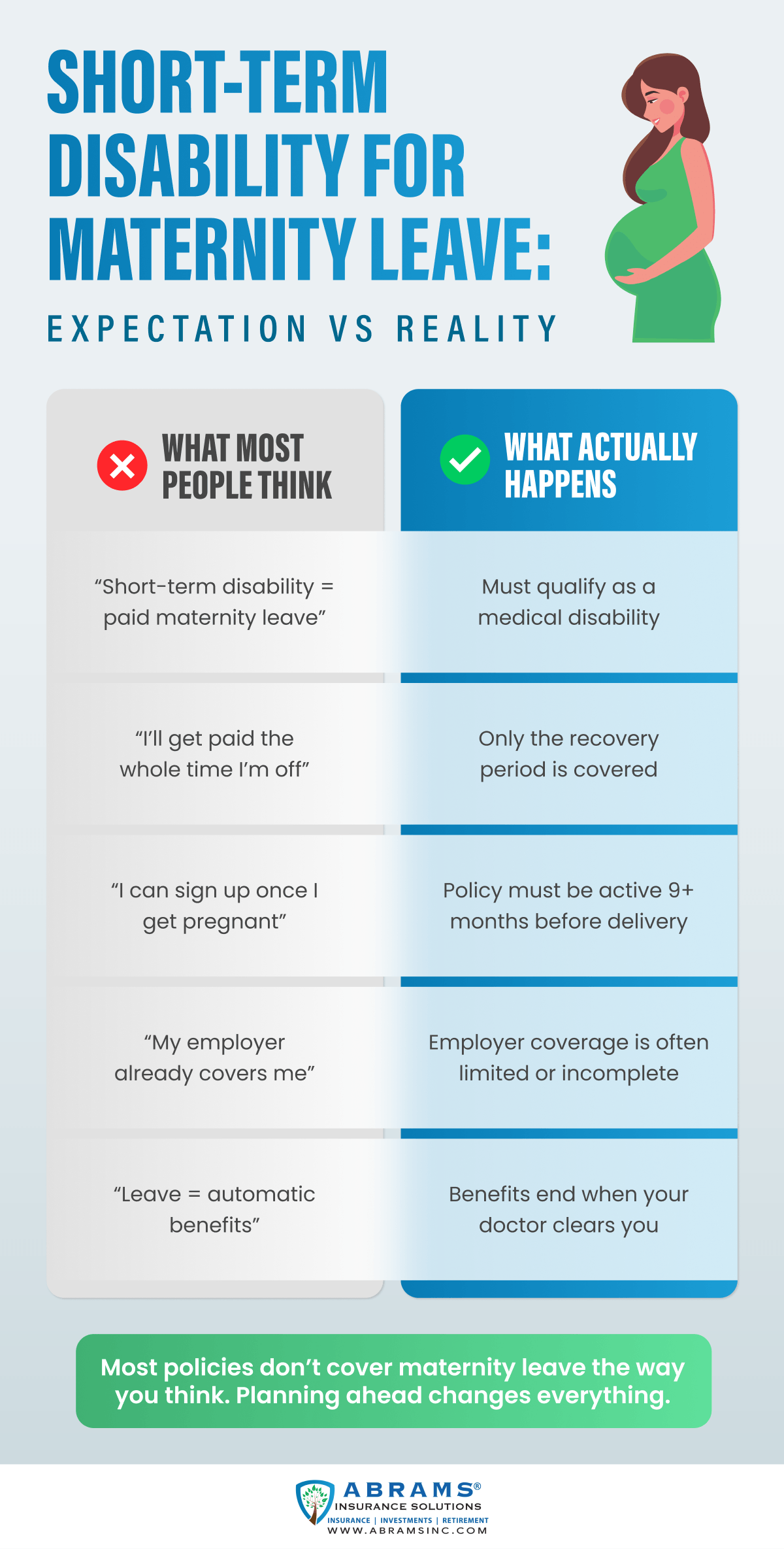
No. Short-term disability insurance provides income replacement while you are temporarily unable to work due to childbirth and recovery. Life insurance pays out a tax-free lump sum to your designated beneficiaries in the event of your death. Both serve distinct, complementary roles in a family's financial plan.
Recommended Next Actions
If you are planning a family, currently pregnant, or currently on maternity leave, take these strategic steps to protect your household:
- Review Existing Coverage: Calculate the total value of your personal and employer-provided policies to identify any financial protection gaps.
- Apply Early: Securing coverage early locks in rates based on your current age and health profile, avoiding potential delays from late-stage pregnancy complications.
- Establish Portable Coverage: Complement any group coverage with an individual, portable term or permanent life insurance policy that remains active regardless of job changes or extended leave.
- Consult an Independent Specialist: Partner with an independent insurance professional who can navigate carrier-specific pregnancy and parental leave guidelines to secure the best rates.
Image Gallery