Network Support Engineer Salary in the US: Complete Compensation Guide
In the United States, the average salary for a Network Support Engineer ranges between $68,000 and $115,000 per year, with a median base salary of approximately $86,500. Total compensation often increases significantly through performa...
In the United States, the average salary for a Network Support Engineer ranges between $68,000 and $115,000 per year, with a median base salary of approximately $86,500. Total compensation often increases significantly through performance bonuses, profit sharing, on-call stipends, and equity packages, particularly within high-growth technology firms and financial institutions.
Contents
Overview of Network Support Engineer Compensation
Network Support Engineers occupy a critical layer in corporate IT infrastructure. Positioned between front-line technical helpdesks (Tier 1/2 support) and high-level infrastructure architects, these professionals ensure that local area networks (LANs), wide area networks (WANs), wireless systems, and cloud connectivity function without disruption.
Because business operations depend heavily on uninterrupted network uptime, organizations compensate network support personnel based on their ability to minimize system downtime, resolve complex routing and switching issues, and enforce enterprise network security.
Compensation structures for network support engineers in the US generally comprise four main elements:
- Base Salary: The standard hourly or salaried rate paid to the employee.
- Performance Bonuses: Annual or quarterly cash bonuses tied to system availability SLAs (Service Level Agreements) and project milestones.
- Shift Differentials & On-Call Pay: Additional remuneration for working overnight shifts, weekend rotations, or maintaining emergency response readiness.
- Equity & Profit Sharing: Granted primarily by publicly traded tech firms, late-stage startups, and enterprise software vendors in the form of Restricted Stock Units (RSUs) or stock options.
The U.S. Bureau of Labor Statistics (BLS) categorizes network support specialists and systems administrators within the broader computer and information technology sector, projecting steady demand driven by cloud migrations, cybersecurity enhancements, and hybrid work network infrastructure updates.
Salary Breakdown by Experience Level
Career progression is one of the most significant determinants of pay for network support engineers. As engineers transition from basic troubleshooting to automated network management and complex architecture support, their market value increases substantially.
| Experience Level | Average Salary |
|---|---|
| Entry-Level (0-2 Yrs) | $55,000 - $72,000 |
| Mid-Level (3-5 Yrs) | $75,000 - $102,000 |
| Senior-Level (6+ Yrs) | $108,000 - $145,000+ |
Entry-Level Network Support Engineer (0–2 Years)
- Average Base Salary: $55,000 – $72,000
- Common Job Titles: Associate Network Engineer, Junior Network Support Technician, Tier 1/2 NOC (Network Operations Center) Technician.
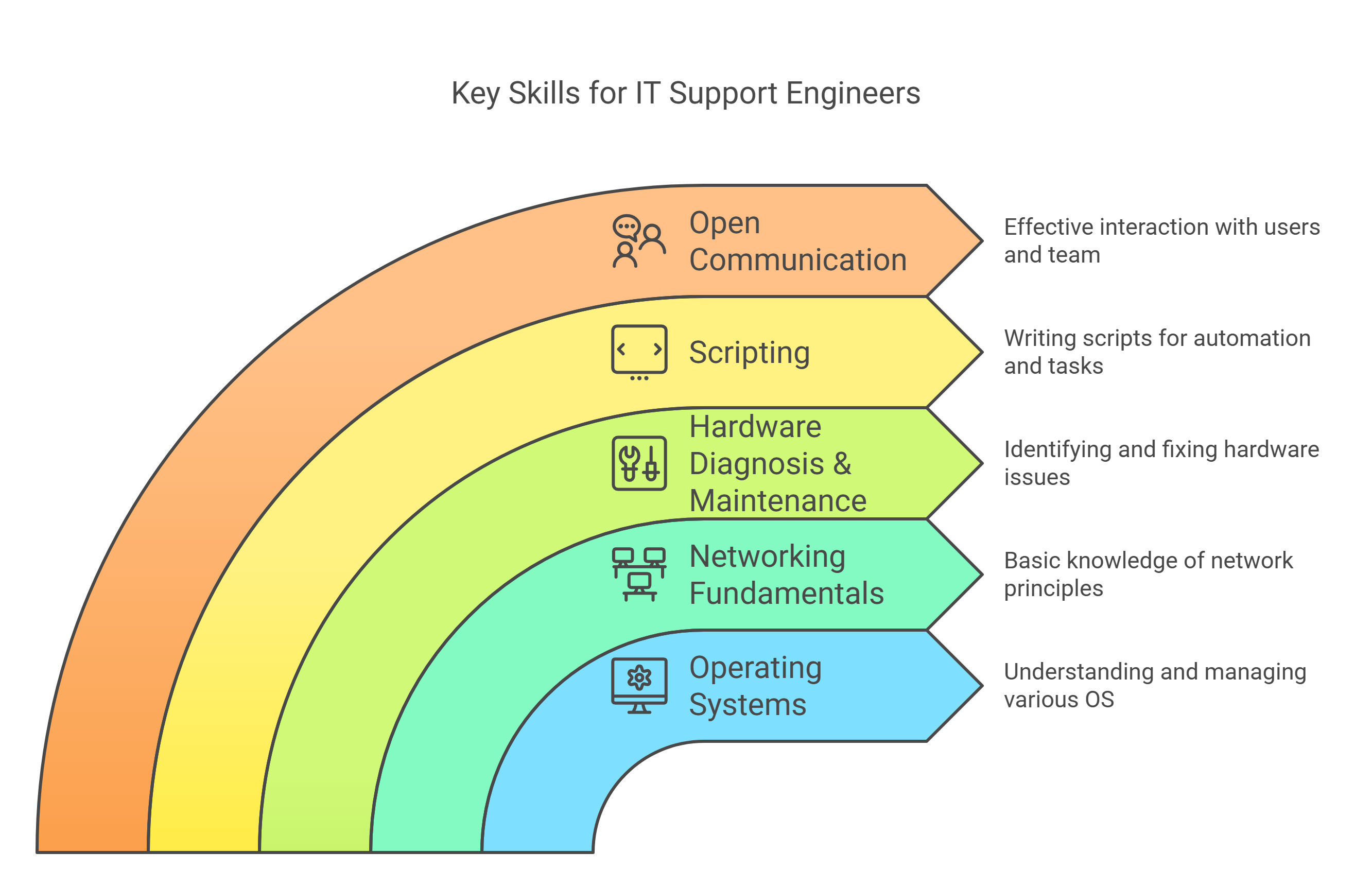
Entry-level professionals focus on fundamental monitoring, initial ticket triage, cable management, basic switch configuration, and resolving end-user connectivity issues. At this stage, compensation is heavily influenced by foundational certifications (such as CompTIA Network+ or Cisco Certified Network Associate) and practical lab experience with protocols like DHCP, DNS, and IPv4/IPv6 subnetting.
Mid-Career Network Support Engineer (3–5 Years)
- Average Base Salary: $75,000 – $102,000
- Common Job Titles: Network Support Engineer, Network Operations Engineer, Tier 2/3 Infrastructure Specialist.
Mid-level engineers handle advanced routing protocols (OSPF, BGP, EIGRP), firewall policy configuration, VPN access, and wireless controller management. They often serve as escalation points for major network outages and assist with capacity planning. Professionals in this range who hold professional-level credentials—such as the Cisco Certified Network Professional (CCNP) or Juniper Networks Certified Specialist (JNCIS)—frequently command salaries at the higher end of the mid-tier spectrum.
Senior Network Support Engineer (6+ Years)
- Average Base Salary: $108,000 – $145,000+
- Common Job Titles: Senior Network Support Engineer, Principal Infrastructure Engineer, Lead NOC Engineer.
Senior engineers design failover protocols, manage multi-vendor enterprise environments, oversee network security architecture, and implement network automation tools. They mentor junior staff and interface directly with IT directors and vendors. At major technology hubs or within financial service firms, total compensation for senior roles can exceed $160,000 when bonuses and equity grants are included.
Key Factors Influencing Pay in the US
Salary ranges for network support engineers fluctuate widely across the country. Understanding the core variables that affect compensation helps engineers position themselves effectively during job searches and salary negotiations.
1. Geographic Location and Cost of Living Adjustments
Regional demand and local cost of living play a decisive role in base compensation. Metropolitan areas with dense technology ecosystems or major corporate headquarters offer higher base salaries to offset elevated housing and living expenses.
- San Francisco Bay Area & Silicon Valley: Pay rates range 25% to 40% above the national average, with median base salaries for mid-level engineers reaching $115,000 to $135,000.
- New York City Metropolitan Area: High demand in finance, media, and healthcare pushes median compensation to $110,000–$130,000.
- Seattle & Washington D.C. Beltway: Driven by cloud hyperscalers (Amazon, Microsoft) and federal defense contracting, salaries typically range between $100,000 and $125,000.
- Austin, Denver, and Atlanta: Rapidly growing tech corridors offer competitive salaries ($85,000–$110,000) with relatively lower living costs compared to coastal markets.
- Remote Positions: Fully remote network support roles usually benchmark compensation against national averages or adjust rates based on the employee's resident geographic tier.
2. Industry Sector
The sector in which an engineer works strongly correlates with annual compensation:
- Financial Services & Investment Banking: Offers the highest total compensation packages, driven by demanding low-latency networking requirements and strict uptime guarantees.
- Cloud Providers & Enterprise SaaS: Technology companies offer higher equity components (RSUs) and competitive base salaries.
- Defense & Government Contracting: Requires active security clearances (e.g., Secret or Top Secret), which often trigger salary premiums of 10% to 20%.
- Healthcare & Higher Education: Tends to offer lower base compensation compared to commercial tech, but frequently balances this with robust pension plans, comprehensive healthcare benefits, and job stability.
3. Specialized Technical Skills and Automation
Standard routing and switching skills are now considered baseline requirements. Engineers who expand into modern operational paradigms command notable salary premiums:
- Network Automation: Skills in Python, Ansible, Terraform, and REST APIs allow engineers to automate repetitive configuration tasks, often raising earning potential by 15% or more.
- Cloud Networking: Practical expertise in AWS VPC architecture, Azure ExpressRoute, and Google Cloud Interconnect bridges traditional networking with cloud infrastructure.
- Network Security: Mastery of next-generation firewalls (Palo Alto Networks, Fortinet, Check Point) and Zero Trust Network Access (ZTNA) frameworks significantly elevates market demand.
Compensation Matrix by Role and Region
The following table outlines standard annual salary ranges, typical bonus structures, and regional cost-of-living adjustments across the United States.
| Job Role / Experience Level | Primary Regional Hubs | Average Base Salary Range | Typical Annual Bonus / Equity | Key Skill Drivers |
|---|---|---|---|---|
| Junior Network Support Engineer | Midwest / South (e.g., Dallas, Chicago) | $55,000 – $70,000 | 3% – 5% | CCNA, Cisco IOS, basic VLAN troubleshooting, ticket handling |
| Mid-Level Network Support Engineer | Southeast / Sunbelt (e.g., Atlanta, Phoenix) | $75,000 – $95,000 | 5% – 10% | BGP/OSPF routing, ASA/Palo Alto Firewalls, VPN setup |
| Senior Network Support Engineer | West Coast (e.g., San Francisco, Seattle) | $115,000 – $145,000 | 10% – 20% + RSUs | Enterprise architecture, Python automation, cloud networking |
| NOC Support Specialist (24/7 Shift) | National Average | $65,000 – $85,000 | Shift Differential (+10-15%) | Network monitoring tools (SolarWinds, Wireshark, Datadog) |
| Defense Network Engineer (Cleared) | Washington D.C. / Virginia Corridor | $95,000 – $130,000 | 5% – 12% | DoD 8570 compliance (Security+), active Secret/TS clearance |
Impact of Certifications on Compensation
Vendor certifications validate an engineer's technical competencies and directly correlate with higher compensation brackets. Industry surveys consistently demonstrate that certified network support engineers earn higher median salaries than uncertified peers in identical roles.
Entry-Level Credentials
- CompTIA Network+: Validates basic networking concepts, hardware installation, and cabling standards. It is ideal for breaking into entry-level helpdesk and junior NOC roles.
- Cisco Certified Network Associate (CCNA): The gold standard for foundational network engineering. Holding a CCNA often moves an candidate into the upper boundary of entry-level salary tiers ($65,000+).
Professional and Advanced Credentials
- Cisco Certified Network Professional (CCNP Enterprise / Security): Demonstrates deep expertise in enterprise campus networks, advanced routing, and troubleshooting. Professionals with a CCNP routinely access mid-to-senior salary bands ($90,000–$120,000+).
- Juniper Networks Certified Professional (JNCIP): Highly valued by Internet Service Providers (ISPs) and telecom companies operating Juniper infrastructure.
- Palo Alto Networks Certified Network Security Engineer (PCNSE): Focuses on next-generation firewall implementation and threat prevention, adding significant value to security-focused network roles.
- AWS Certified Advanced Networking – Specialty: Demonstrates capability in designing and maintaining complex hybrid cloud networks, directly aligning with high-paying enterprise cloud roles.
How to Increase Earnings as a Network Support Engineer
For engineers seeking to advance their pay scale, strategic career planning yields faster results than waiting for standard annual merit increases (which typically range between 3% and 5%).
1. Shift from Reactive Support to Proactive Automation
Traditional network troubleshooting relies on manual command-line interface (CLI) commands. Engineers who master network automation using Python libraries (such as Netmiko and Nornir) or configuration management systems like Ansible can manage hundreds of devices simultaneously. Demonstrating efficiency gains through code is one of the fastest paths to a senior title and higher pay.
2. Gain Cross-Domain Cloud Competencies
Hybrid enterprise environments require seamless integration between on-premises data centers and public cloud platforms. Expanding network skills to include cloud-native infrastructure—such as transit gateways, software-defined WAN (SD-WAN), and multi-cloud routing—makes engineers indispensable during digital transformation projects.
3. Pursue Security-Focused Network Roles
As ransomware attacks and network breaches proliferate, the boundary between network support and network security has blurred. Gaining hands-on experience with intrusion prevention systems (IPS), identity services engines (such as Cisco ISE), and Network Access Control (NAC) allows engineers to transition into higher-paying Network Security Engineer roles.
4. Negotiate On-Call and Overtime Pay
For non-exempt salaried or hourly support engineers governed by the Fair Labor Standards Act (FLSA), hours worked beyond 40 per week require overtime pay at time-and-a-half. Exempt salaried engineers, meanwhile, should negotiate explicit standby stipends or compensatory time off (comp time) when participating in mandatory 24/7 on-call rotations.
Frequently Asked Questions
What is the starting salary for a Network Support Engineer in the US?
The starting salary for an entry-level Network Support Engineer generally ranges between $55,000 and $72,000 annually. Entry-level pay depends heavily on geographic location, prior internship experience, and whether the candidate holds foundational certifications like the Cisco CCNA or CompTIA Network+.
Does a Network Support Engineer earn more than a System Administrator?
In general, Network Support Engineers and System Administrators earn comparable median salaries ($80,000–$95,000). However, Network Support Engineers who specialize in high-demand domains like network security, cloud interconnectivity, or network automation frequently earn higher salaries than generalist system administrators.
How much do remote Network Support Engineers make?
Remote Network Support Engineers in the United States typically earn between $75,000 and $115,000 per year. Companies often structure remote compensation packages around localized cost-of-living tiers or set a unified national baseline pay rate.
Is a college degree required to earn a high salary in network support?
While a Bachelor’s degree in Computer Science, Information Technology, or Computer Engineering is preferred by many large enterprises, it is not strictly required. Demonstrable hands-on experience, vendor certifications (such as CCNP or PCNSE), and practical troubleshooting skills often carry equal or greater weight in securing high-paying roles.
What is the difference between a Network Support Engineer and a Network Architect?
A Network Support Engineer focuses on maintaining, troubleshooting, and configuring existing network infrastructure to ensure operational continuity. A Network Architect is a higher-level role focused on designing complex, long-term network topologies, capacity planning, and evaluating enterprise technology investments. Network Architects earn significantly higher salaries, often ranging from $130,000 to over $180,000 annually.
Summary and Recommended Next Steps
The compensation landscape for Network Support Engineers in the United States remains robust, with base salaries starting around $55,000 for entry-level positions and rising past $145,000 for senior automated and cloud-focused specialists. Professionals seeking to maximize their compensation should prioritize building scriptable network automation skills, securing recognized certifications like the CCNP or AWS Networking Specialty, and targeting high-growth sectors such as finance, defense, or cloud architecture.
To advance your career and earnings in network support:
- Audit Your Current Technical Stack: Identify gaps between legacy routing/switching knowledge and modern infrastructure skills (SD-WAN, Python, Cloud VPCs).
- Target High-Yield Certifications: Prepare for vendor-specific exams that match enterprise job descriptions in your local market.
- Benchmark Local Market Rates: Use resources from the U.S. Bureau of Labor Statistics to evaluate regional pay variance before entering salary negotiations.
Image Gallery