Understanding the Life, Legacy, and Passing of Professor Stephen Hawking
Professor Stephen Hawking passed away on March 14, 2018, at the age of 76 at his home in Cambridge, England. Renowned worldwide for his groundbreaking work in theoretical physics, cosmology, and his exceptional longevity while living w...
Professor Stephen Hawking passed away on March 14, 2018, at the age of 76 at his home in Cambridge, England. Renowned worldwide for his groundbreaking work in theoretical physics, cosmology, and his exceptional longevity while living with amyotrophic lateral sclerosis (ALS), his death marked the end of an extraordinary era in modern science and public science communication.
Contents
The Life and Legacy of a Theoretical Physics Giant
Stephen William Hawking was born on January 8, 1942, in Oxford, England. From an early age, he exhibited a brilliant intellect and a deep curiosity about the natural world. He pursued his undergraduate studies at University College, Oxford, where he earned a degree in physics, before moving to Trinity Hall, Cambridge, to undertake doctoral research in cosmology. It was during his early days at Cambridge, at the age of 21, that he began experiencing clumsiness and slurring of speech—symptoms that led to a devastating diagnosis of motor neurone disease, specifically amyotrophic lateral sclerosis (ALS).
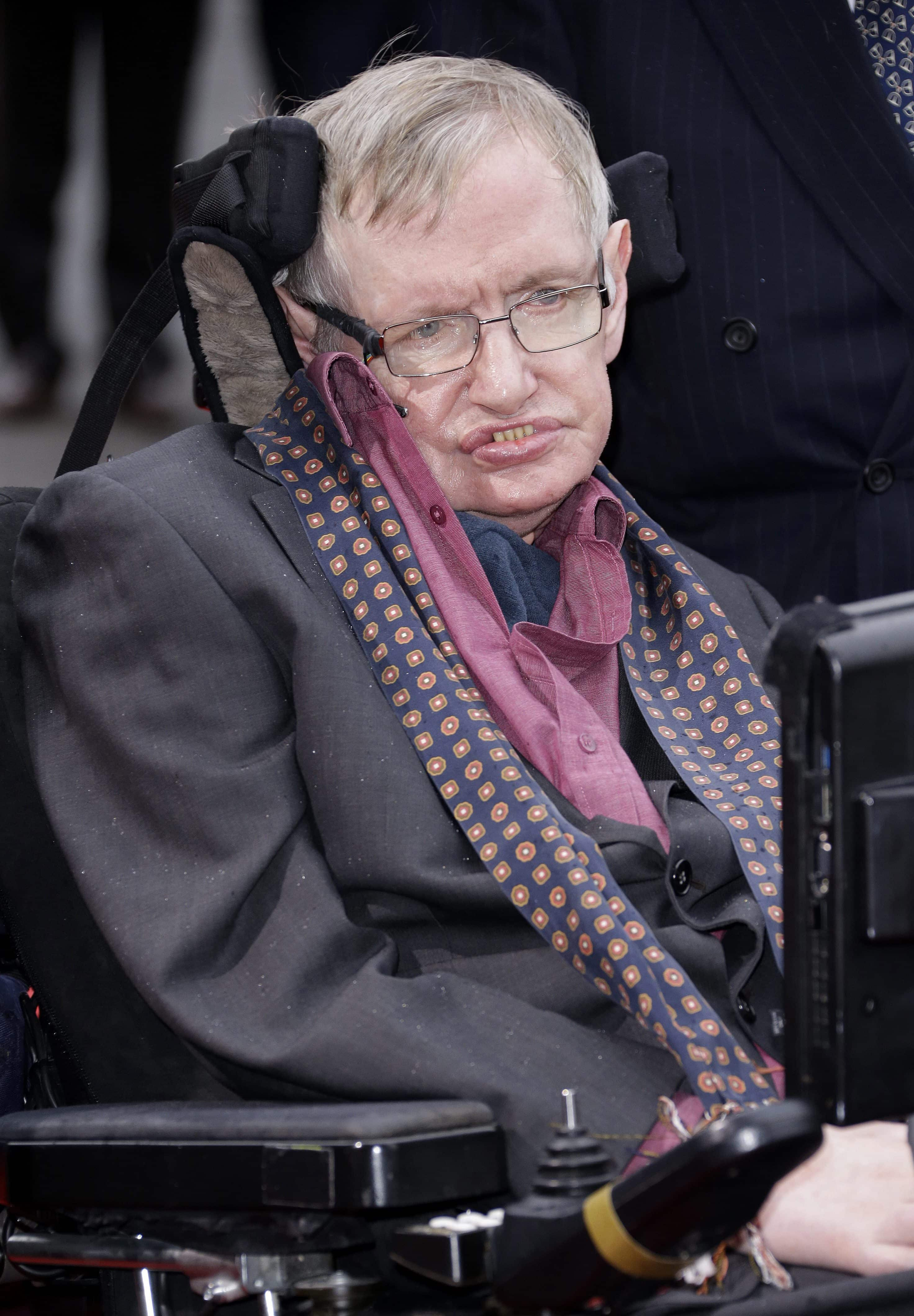
Doctors initially gave him a prognosis of just two to three years to live. However, the disease progressed much slower than anticipated, allowing him to continue his academic pursuits. Despite losing his physical mobility and, eventually, his natural voice following a tracheotomy in 1985, Hawking persevered through a computerized speech synthesis system operated via a cheek muscle twitch. His resilience became as legendary as his scientific output, transforming him into a symbol of human triumph over adversity.
His academic career flourished within the Department of Applied Mathematics and Theoretical Physics at the University of Cambridge, where he eventually held the prestigious post of Lucasian Professor of Mathematics—a chair once occupied by Sir Isaac Newton. Over five decades, Hawking dedicated his life to unlocking the deepest mysteries of the universe, bridging the gap between general relativity and quantum mechanics.
Groundbreaking Scientific Contributions
Hawking’s research fundamentally altered how physicists understand black holes, the origin of the universe, and the fabric of spacetime. While his contributions spanned numerous theoretical frameworks, several achievements stand out as pillars of modern cosmology.
Hawking Radiation and Black Hole Thermodynamics
Before Hawking's intervention in the 1970s, classical physics dictated that nothing, not even light, could escape the gravitational pull of a black hole, meaning black holes could only grow and never shrink. Working alongside physicist James Hartle and drawing upon quantum field theory, Hawking demonstrated that black holes are not entirely black.
By applying quantum mechanics near the event horizon—the boundary beyond which nothing can escape—he discovered that particle-antiparticle pairs are constantly created from quantum fluctuations. One partner falls into the black hole while the other escapes, creating a thermal emission known today as Hawking radiation. This theoretical breakthrough suggested that black holes possess a temperature and entropy, and that they can eventually lose mass and evaporate entirely over immense timescales.
The Origin of the Universe and Singularity Theorems
In collaboration with mathematician Roger Penrose, Hawking applied Albert Einstein’s general theory of relativity to cosmology on a grand scale. Together, they proved the Penrose-Hawking singularity theorems. These mathematical proofs demonstrated that if the universe obeys general relativity and contains matter, space and time must have originated from a gravitational singularity—an infinitely dense, infinitely small point—at the beginning of the Big Bang.
The Hartle-Hawking No-Boundary Proposal
Seeking to eliminate the initial singularity problem where standard physics breaks down, Hawking and James Hartle proposed the "no-boundary proposal" in 1983. Utilizing Euclidean quantum gravity, they suggested that space and time are finite in extent but possess no boundaries or edges, behaving much like the surface of the Earth. In this view, asking what came before the Big Bang is meaningless, much like asking what lies south of the South Pole.
Scientific Contributions Comparison
| Scientific Theory / Concept | Collaborator(s) | Primary Impact on Physics |
|---|---|---|
| Singularity Theorems | Roger Penrose | Proved that spacetime singularities are an inevitable consequence of general relativity under realistic conditions. |
| Hawking Radiation | Independent derivation | Unified quantum mechanics and general relativity by showing black holes emit thermal radiation and can evaporate. |
| No-Boundary Proposal | James Hartle | Proposed a universe that has a finite history without a singular boundary, reshaping early universe cosmology. |
Global Impact and Science Communication
Beyond his technical papers, Stephen Hawking played a pivotal role in popularizing science for general audiences. His ability to distill complex cosmological concepts into accessible narratives bridged the gap between academic research and public curiosity.
A Brief History of Time
Published in 1988, Hawking’s book A Brief History of Time: From the Big Bang to Black Holes became an unprecedented international publishing phenomenon. It spent a record-breaking 237 weeks on The Sunday Times bestseller list and sold millions of copies worldwide. The book explained complex topics such as the nature of time, the expanding universe, and quantum mechanics with minimal use of mathematical equations, making theoretical physics engaging for lay readers.
Cultural Iconography
Hawking’s distinct computerized voice, wheelchair, and piercing intellect made him an instantly recognizable global figure. He made numerous high-profile appearances in popular culture, including guest roles on television shows like The Simpsons, Star Trek: The Next Generation, and The Big Bang Theory. These appearances humanized theoretical physics and inspired generations of students to pursue careers in science, technology, engineering, and mathematics (STEM).
Frequently Asked Questions
What caused the death of Stephen Hawking?
Stephen Hawking died peacefully at his home in Cambridge on March 14, 2018. While his family did not release a specific immediate cause of death, he had lived with amyotrophic lateral sclerosis (ALS) for over 50 years, an extraordinary clinical course for a condition that typically features a much shorter life expectancy.
How long did Stephen Hawking live with ALS?
Hawking lived with ALS for 55 years. Diagnosed in 1963 at the age of 21, he survived decades past his initial medical prognosis, becoming one of the longest-living individuals with the disease in medical history.
What is Hawking's most famous scientific discovery?
His most famous discovery is Hawking radiation, published in 1974. This theoretical prediction showed that black holes emit thermal radiation due to quantum effects near the event horizon, resolving a major conflict between quantum mechanics and general relativity.
Did Stephen Hawking win a Nobel Prize?
No, Stephen Hawking never won a Nobel Prize. Nobel Prizes require empirical verification or observation, and Hawking radiation remains extremely difficult to detect experimentally given current technological limitations. However, he received numerous other prestigious accolades, including the Albert Einstein Award, the Copley Medal, and the Presidential Medal of Freedom.
What was the Lucasian Professor of Mathematics position?
The Lucasian Professorship is an endowed chair in mathematics at the University of Cambridge, founded in 1663 by Henry Lucas. Hawking held the post from 1979 until his retirement in 2009, following in the footsteps of historical figures such as Isaac Newton, Charles Babbage, and Paul Dirac.
Practical Recommendations for Exploring Hawking’s Work
For readers seeking to engage further with Stephen Hawking's legacy and contributions to theoretical physics, several avenues offer deep educational value:
- Read His Popular Works: Start with A Brief History of Time for an accessible foundation, followed by The Universe in a Nutshell and his final collaborative book, Brief Answers to the Big Questions.
- Explore Academic Lectures: The Stephen Hawking Foundation preserves his archival materials, public lectures, and academic papers, providing insight into his formal research output.
- Study Introductory Cosmology: To understand the mathematics behind his theories, consult standard university texts on general relativity, quantum mechanics, and black hole thermodynamics.
Image Gallery