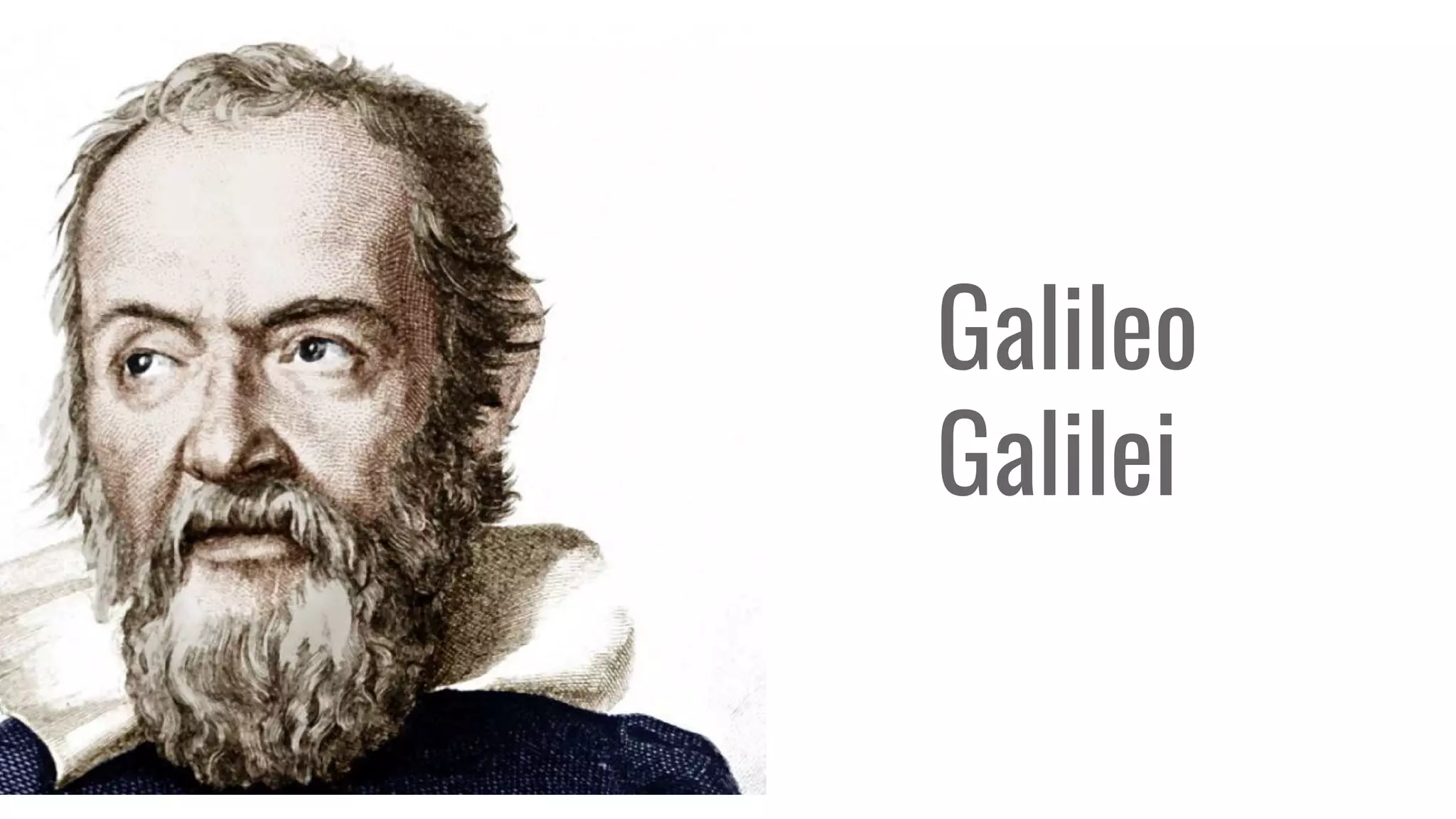
Was Galileo Executed: A Historical Clarification
Contrary to popular belief, Galileo Galilei was not executed, nor was he burned at the stake. While he was subjected to a formal trial by the Roman Inquisition in 1633, he was sentenced to house arrest for the remainder of his life rat...
Contrary to popular belief, Galileo Galilei was not executed, nor was he burned at the stake. While he was subjected to a formal trial by the Roman Inquisition in 1633, he was sentenced to house arrest for the remainder of his life rather than receiving a capital sentence. This clarification corrects a pervasive modern myth regarding the fate of the father of modern observational astronomy.
Contents
The Context of the 1633 Trial
To understand why the myth of Galileo’s execution persists, one must examine the intersection of 17th-century scientific inquiry and ecclesiastical authority. In 1632, Galileo published Dialogue Concerning the Two Chief World Systems, a work that presented a vigorous defense of the Copernican heliocentric model—the theory that the Earth revolves around the Sun—over the long-held Ptolemaic geocentric model.
The Catholic Church, acting on the decrees issued in 1616 that labeled heliocentrism as "philosophically foolish and formally heretical," summoned Galileo to Rome. The primary legal issue was not merely the scientific validity of his findings, but his perceived defiance of the Church’s authority and his breach of an injunction he had supposedly received in 1616, which barred him from teaching or defending the Copernican system.
The Verdict and Sentence
Following the trial, the Inquisition found Galileo "vehemently suspect of heresy." He was forced to formally abjure, curse, and detest his errors and heresies. Rather than being executed, his punishment consisted of:
- Formal Abjuration: He was required to kneel before the Inquisition and recant his scientific findings.
- Imprisonment: His sentence was technically an imprisonment that was immediately commuted to house arrest.
- Literary Censorship: His Dialogue was prohibited, and the order was given to punish those who continued to teach the prohibited doctrine.
Galileo spent the remaining nine years of his life under house arrest at his villa in Arcetri, near Florence. During this time, he was restricted from public appearances and his visitors were monitored by the Church. Despite these constraints, he managed to write his final major work, Discourses and Mathematical Demonstrations Relating to Two New Sciences, which was smuggled out of Italy and published in the Netherlands in 1638.
Why the Myth of Execution Persists
The misconception that Galileo was executed likely stems from a conflation of his biography with that of Giordano Bruno. Bruno, a philosopher and monk who advocated for the plurality of worlds and other metaphysical ideas that deviated from Catholic doctrine, was tried by the Roman Inquisition and burned at the stake in Rome’s Campo de' Fiori in 1600.
Because both men stood in opposition to the Church regarding cosmological ideas, and because both were involved in high-profile confrontations with the Inquisition, their stories have become blurred in popular culture. The dramatic nature of Bruno's execution serves as a powerful historical narrative that is frequently, albeit incorrectly, transposed onto the story of Galileo.
Comparative Summary: Galileo vs. Bruno
The following table distinguishes the legal outcomes and historical experiences of the two figures often conflated in public discourse.
| Feature | Galileo Galilei | Giordano Bruno |
|---|---|---|
| Year of Trial | 1633 | 1593–1600 |
| Primary Conflict | Heliocentrism (Scientific) | Metaphysical/Theological |
| Final Sentence | House arrest (Life) | Execution (Burning at stake) |
| Location of Death | Arcetri, Italy | Rome, Italy |
| Status at Death | Died of natural causes | Executed by the State |
The Aftermath and Rehabilitation
Galileo died of natural causes in 1642. The process of rehabilitating his reputation within the Catholic Church was long and protracted. It was not until the 18th century that the Church permitted the publication of his censored works.
The "Galileo Affair" remained a focal point of debate for centuries regarding the relationship between faith and scientific inquiry. In 1979, Pope John Paul II initiated a study to re-examine the proceedings against Galileo, leading to a formal acknowledgement in 1992 by the Pontifical Academy of Sciences that the Church had erred in its condemnation of the astronomer. This action formally closed the chapter on the ecclesiastical proceedings, though the popular myth regarding his execution remains a subject of historical correction.
Technical and Historical Prerequisites for Understanding
For those examining the "Galileo Affair," it is essential to distinguish between scientific consensus and political theology in the 17th century. The following elements define the constraints of the period:
- The Index of Prohibited Books: This was a list of publications deemed heretical or contrary to morality. Being placed on this list meant the text was banned, but it did not automatically result in the death of the author.
- Heliocentrism as a Theological Issue: In the early 1600s, heliocentrism was viewed as being in conflict with literal interpretations of certain biblical passages. Therefore, the Inquisition viewed the defense of this system as an attack on the Church’s interpretation of scripture, rather than as a purely astronomical debate.
- House Arrest (Carcer Privatus): Under 17th-century canon law, the conversion of a formal prison sentence to house arrest was a significant, albeit restricted, form of clemency. Galileo was afforded the ability to continue his correspondence and academic writing, provided it stayed within the bounds of his sentence.
Frequently Asked Questions
Did Galileo ever retract his scientific findings? Yes. In 1633, under the threat of torture, Galileo signed a formal document abjuring the view that the Sun is the center of the universe. This was a forced legal compliance, not a personal renunciation of his research.
Was Galileo the only scientist tried by the Inquisition? No. The Inquisition investigated numerous individuals for various infractions, including scientific ideas that challenged orthodoxy. However, Galileo remains the most famous case due to his stature and the clarity of the evidence he provided for his theories.
How did Galileo die? Galileo died of natural causes (specifically, heart palpitations and a fever) while under house arrest at his home in Arcetri on January 8, 1642. He was 77 years old.
Is it true that Galileo whispered "And yet it moves" after his trial? There is no contemporary evidence for this quote. The phrase, "E pur si muove," first appeared in print in an 18th-century collection of stories, more than 100 years after his death. It is considered an apocryphal invention that symbolizes his persistence.
What was the legal basis for his house arrest? The sentence was based on his violation of an informal order from 1616 to abandon the Copernican theory. The trial was focused on his alleged disobedience and his "imprudent" manner of presenting his findings in the Dialogue.
Recommendation for Further Inquiry
Those interested in the precise legal details of the 1633 proceedings should consult primary source transcripts from the Vatican Secret Archives, many of which have been digitized and published in academic collections. For a balanced view of the cultural tensions between science and the Church, focus on the distinction between the evidentiary requirements of 17th-century physics and the political motivations of the contemporary papacy. Relying on peer-reviewed historical monographs, rather than popular dramatizations, will ensure a more accurate understanding of Galileo's final years.
Image Gallery