How to Claim New York Treasurer Unclaimed Property: A Complete 2026 Guide
To claim New York unclaimed property, you must search the official database maintained by the Office of the State Comptroller. After identifying your assets, you submit a claim form online or by mail, providing proof of identity and ow...
To claim New York unclaimed property, you must search the official database maintained by the Office of the State Comptroller. After identifying your assets, you submit a claim form online or by mail, providing proof of identity and ownership. The process is free and managed directly by the state government.
Contents
Understanding New York Unclaimed Property in 2026
In New York, the responsibility for managing forgotten assets falls under the Office of the State Comptroller (OSC), specifically the Office of Unclaimed Funds. While many residents search for a "State Treasurer," New York is one of the few states where the Comptroller serves as the sole custodian of these funds. As of 2026, the state continues to hold billions of dollars in unclaimed funds, returning hundreds of millions to rightful owners annually.
Unclaimed property refers to money or intangible assets that have had no activity or contact with the owner for a set period, typically three years. Under the New York Abandoned Property Law, banks, insurance companies, corporations, and courts are required to transfer these assets to the state if they cannot locate the owner. This ensures that the money is preserved for the citizen rather than being absorbed as profit by a private corporation. Common examples include forgotten savings accounts, uncashed payroll checks, security deposits, insurance dividends, and even the contents of safe deposit boxes.
How to Search the New York Unclaimed Funds Database
The first step in the recovery process is a comprehensive search. The New York State Comptroller maintains a public, searchable database that is updated daily. To begin, you do not need a social security number for the initial search, though it may be required later for verification.
When searching, it is vital to check every variation of your name. This includes maiden names, middle initials, and common misspellings. Because these records are generated by the reporting institutions (like a bank or a utility provider), any typo they made decades ago will be reflected in the database. Furthermore, you should search for the names of deceased relatives, as you may be the legal heir to their forgotten assets.
If you lived at multiple addresses in New York, the database often lists a partial address or a city associated with the funds. This helps distinguish between individuals with common names. If you find a match, the system will provide an OUF (Office of Unclaimed Funds) Number, which is the unique identifier for that specific pot of money.
Step-by-Step Guide to Filing Your Claim
Once you have identified property that belongs to you, the filing process can generally be handled in one of two ways: online or through a paper application.
1. Online Claim Submission
Most claims for individuals can be processed entirely online. If the claim is straightforward—meaning you are the original owner and the amount is under a certain threshold—the system may allow for "Fast Track" processing. You will be asked to provide your Social Security Number for identity verification against state records. If the system can verify your identity immediately, your claim may be approved within days, and a check will be mailed to your current address.
2. Mail-In Claims
If your claim involves a complex situation, such as claiming on behalf of a deceased relative, a business, or a trust, you will likely need to submit a paper claim form. After you initiate the claim online, the system will generate a customized claim form (Form AU-92 for individuals or variations for other entities). You must print this, sign it, and in many cases, have it notarized.
3. Providing Documentation
The state requires "Clear and Convincing Evidence" that you are the rightful owner. This usually involves two layers of proof:
- Proof of Identity: A copy of your driver's license, passport, or other government-issued ID.
- Proof of Connection: Evidence linking you to the address listed on the unclaimed property. This could be an old utility bill, a bank statement, or a tax document that shows you once resided at the location associated with the funds.
Documentation Requirements by Claimant Type
The documentation required varies significantly depending on who the legal owner is and who is making the claim. The following table outlines the standard requirements as of 2026.
| Claimant Type | Primary Documentation Needed | Additional Requirements |
|---|---|---|
| Original Owner | Valid Government Photo ID | Proof of former address (tax return, utility bill). |
| Heir / Estate | Death Certificate of the owner | Letters Testamentary or Small Estate Affidavit. |
| Business | Proof of Authority to Sign | Documentation showing the business’s EIN and existence. |
| Parent / Guardian | Child's Birth Certificate | Proof of the child's SSN and parent's ID. |
| Trust | Trust Agreement or Certificate | Documentation of the Trustee's identity. |
What Happens After You File?
After submitting your claim to the New York State Office of the State Comptroller, the verification phase begins. In 2026, the processing time for a standard online claim is typically 2 to 4 weeks. However, paper-based claims or those involving estates can take 3 to 6 months due to the manual review of legal documents.
You can track the status of your claim through the "Claim Status" tool on the Comptroller’s website using your claim number. There are several statuses you might encounter:
- Received: Your application has been logged into the system.
- In Process: A claims auditor is currently reviewing your documentation.
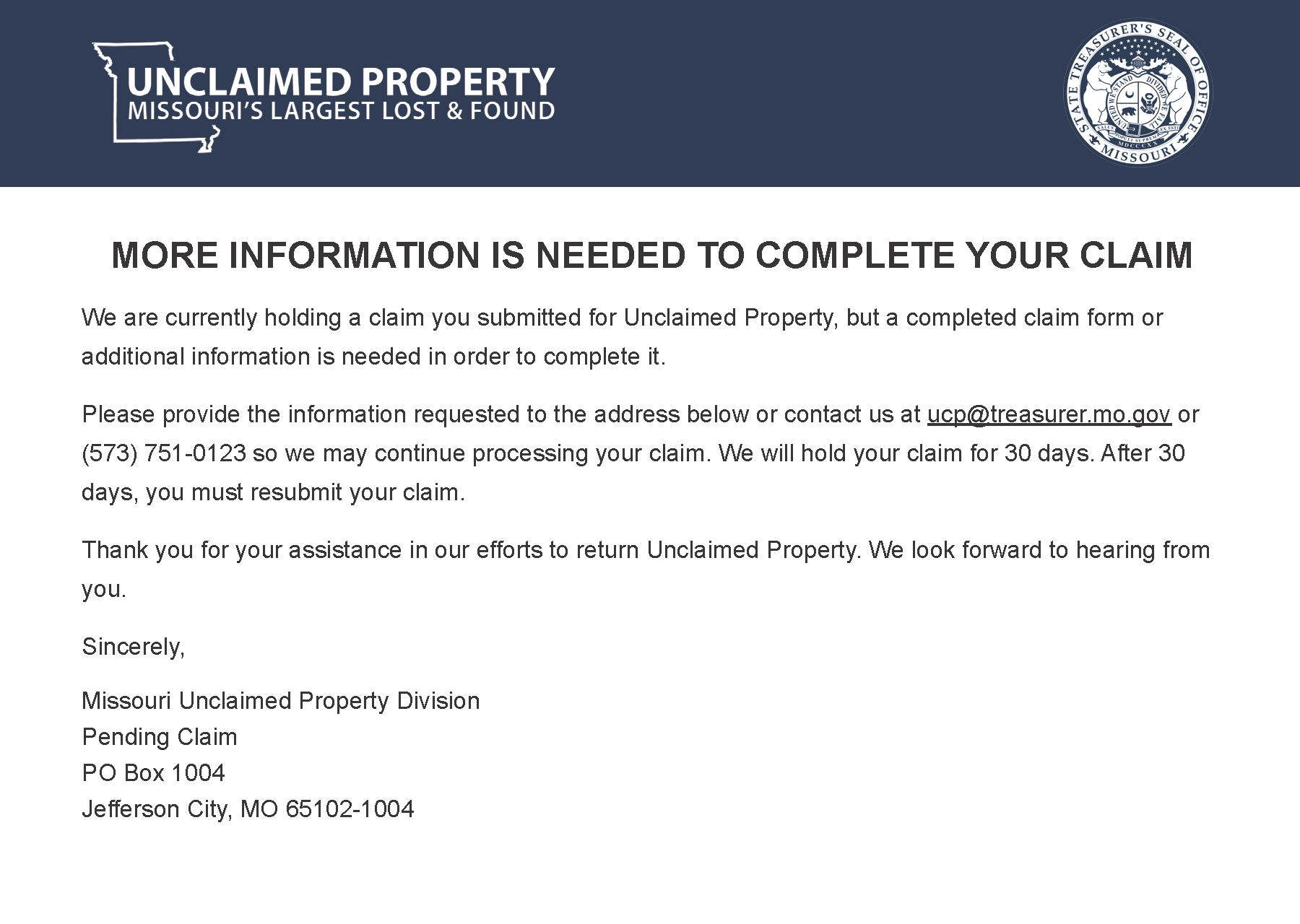
- More Info Required: The state has sent you a letter or email requesting additional proof.
- Approved: The check has been authorized for printing and mailing.
It is important to note that New York does not currently offer direct deposit for unclaimed funds. All payments are issued via paper check and sent through the U.S. Postal Service to the address provided during the claim process.
Common Obstacles and Troubleshooting
Many claimants encounter hurdles that delay their payments. One of the most frequent issues is a lack of "Address Linkage." If you lived in an apartment 20 years ago and no longer have paperwork from that era, you might struggle to prove you are the "John Doe" who lived at that specific location. In these instances, you can try contacting the Social Security Administration for a "Detailed Earnings Report" or searching through old school records or census data which might place you at that address.
Another common issue involves deceased owners. If the original owner died without a will (intestate) and the amount is significant, you may need to go through Surrogate’s Court to be appointed as a voluntary administrator. For smaller amounts (typically under $50,000 in New York), the "Small Estate" process is a more streamlined and less expensive alternative.
Avoiding Unclaimed Property Scams
Because the New York unclaimed property database is public information, "Locator Services" or "Finders" often browse the records and contact potential owners. These individuals or companies offer to help you recover your money in exchange for a fee—often 10% to 15% of the total value.
While these services are legal in New York, they are almost always unnecessary. The New York State Comptroller provides all search and claim services for free. You do not need a third party to "unlock" your funds. If you receive a solicitation, be aware that you can go directly to the official state website and file the exact same claim yourself without losing a percentage of your assets. Be especially wary of any service that asks for your Social Security Number or an upfront payment before they provide the details of the property.
Frequently Asked Questions
Is there a time limit to claim my property in New York?
No. New York acts as a perpetual custodian of unclaimed property. There is no statute of limitations on these funds; they are held in trust until the rightful owner or their heirs claim them. Whether the property was turned over to the state in 1975 or 2025, you still have the legal right to collect it.
Why is the New York Comptroller's name on my check?
The Comptroller is the chief financial officer of the state and the legal administrator of the Abandoned Property Fund. When a claim is approved, the check is issued from the state’s accounts, which is why it bears the name of the current Comptroller.
Can I claim property for a business that is now closed?
Yes, but you must prove that you were a high-ranking officer or owner of the business at the time it closed and that you have the legal authority to act on its behalf. You will typically need to provide the business’s Articles of Incorporation or dissolution papers.
What if the owner of the property is deceased?
If the owner is deceased, the legal heir or the executor of the estate can file a claim. You will need to provide a death certificate and legal documentation showing your right to the estate, such as a copy of the Will or court-issued Letters of Administration.
Does the state pay interest on unclaimed property?
New York pays interest on certain types of property, specifically those that were in interest-bearing accounts when they were turned over to the state. However, the interest is generally paid for only the first five years that the state holds the funds. Most uncashed checks or dividends do not accrue interest while held by the Comptroller.
How much money is currently unclaimed in New York?
As of 2026, the New York Office of Unclaimed Funds holds over $18 billion. The state receives millions of new records every year from entities that have lost contact with their customers or employees.
Practical Recommendation
To ensure a successful recovery, perform a search not just for yourself, but for your parents and grandparents. Because New York never expires these claims, there is a high probability that multi-generational families have funds waiting in the system. Always use the official .gov website to avoid unnecessary fees and ensure your personal information remains secure. Once you submit your claim, keep a digital copy of your claim number and all uploaded documents until the check arrives and is successfully deposited into your bank account.
Image Gallery