Workers Compensation Insurance for Therapists Explained: Coverage, Requirements, and Costs
Workers compensation insurance for therapists covers medical expenses, lost wages, and rehabilitation costs if a practitioner or employee sustains a work-related injury or illness. While mental health professionals, physical therapists...
Workers compensation insurance for therapists covers medical expenses, lost wages, and rehabilitation costs if a practitioner or employee sustains a work-related injury or illness. While mental health professionals, physical therapists, and occupational therapists often view their work as low-risk, state laws, employee headcount, practice structure, and patient interactions dictate specific legal obligations and coverage requirements.
Contents
What Is Workers Compensation Insurance for Therapists?
Workers compensation insurance is a state-mandated commercial insurance policy designed to protect both business owners and workers when workplace injuries occur. In therapy settings—spanning private psychotherapy practices, physical therapy clinics, home health visits, and multidisciplinary wellness centers—workers compensation provides statutory benefits regardless of who was at fault for the injury.
Unlike general liability insurance, which covers third-party bodily injury (such as a client slipping in your waiting room), or professional liability (malpractice) insurance, which covers claims of clinical negligence, workers compensation strictly applies to internal workplace injuries suffered by owners, W-2 employees, and qualified staff.
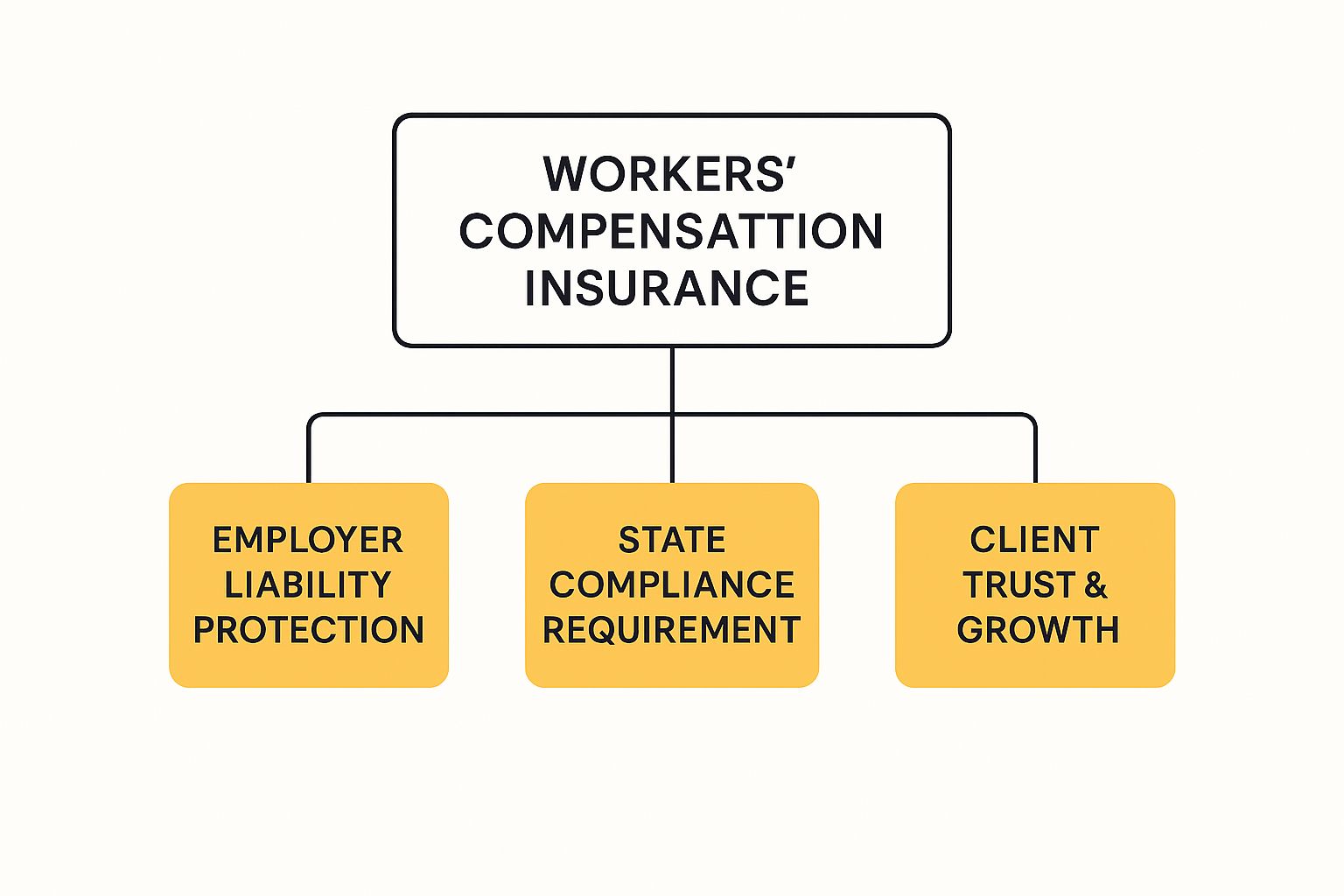
For healthcare and mental health professionals, workers compensation serves two vital purposes:
- Financial Security for Injured Workers: It pays for immediate medical treatments, ongoing physical therapy, disability benefits (temporary or permanent), and partial wage replacement while an injured staff member recovers.
- Employer Liability Protection: It grants statutory immunity against most common-law personal injury lawsuits brought by employees for workplace hazards, establishing a predictable, limited-liability framework for practice owners.
Legal Requirements: Do Therapists Need Workers Compensation?
Whether a therapist is legally required to carry workers compensation depends primarily on state regulations, entity structure, and employment relationships.
- Does Your Practice Need Workers' Comp?
- Has W-2 Employees? (1+ in most states)
- Mandatory in Nearly All States
- Exemptions Vary by State/Role
- Sole Proprietor / Single-Member LLC
- Optional (Opt-In) for Self Protection
- Required by Contracts (Leases, Hospitals)
- Has W-2 Employees? (1+ in most states)
State-Level Mandates
In the vast majority of U.S. states, any practice that hires one or more W-2 employees must maintain a workers compensation policy. Certain states, such as Florida or Georgia, set minimum employee thresholds (e.g., three or more employees) before coverage becomes mandatory for non-construction businesses, while states like California, New York, and Illinois require coverage starting with the very first employee.
Business Entity Structure Rules
- Sole Proprietors and Single-Member LLCs: If you operate a solo practice without employees, state laws generally do not force you to carry workers compensation for yourself. However, sole proprietors can choose to opt into coverage to safeguard their personal income against physical disability.
- Corporations and Multi-Member LLCs: Corporate officers, LLC members, and managing partners are often included in workers compensation coverage by default. Most jurisdictions allow qualifying officers or members to file an official waiver or exclusion form to opt out of coverage, reducing overall policy payroll calculations.
Contractual Requirements
Even when state law does not mandate coverage, external entities frequently demand it:
- Commercial Lease Agreements: Landlords often require private practice tenants to maintain active workers compensation policies regardless of headcount.
- Hospital Systems and Insurance Networks: Subcontracting for hospitals, school districts, or regional healthcare systems often requires proof of active workers compensation coverage (a Certificate of Insurance).
Note: Workers compensation rules are governed at the state level. Practice owners should consult their state's Workers Compensation Board or a licensed commercial insurance agent to confirm regional compliance.
What Does Workers Comp Cover in a Therapy Practice?
Therapy environments vary widely—from quiet counseling offices to dynamic pediatric or physical rehabilitation centers. Workers compensation covers injuries arising out of and in the course of employment (AOE/COE).
Covered Expenses and Benefits
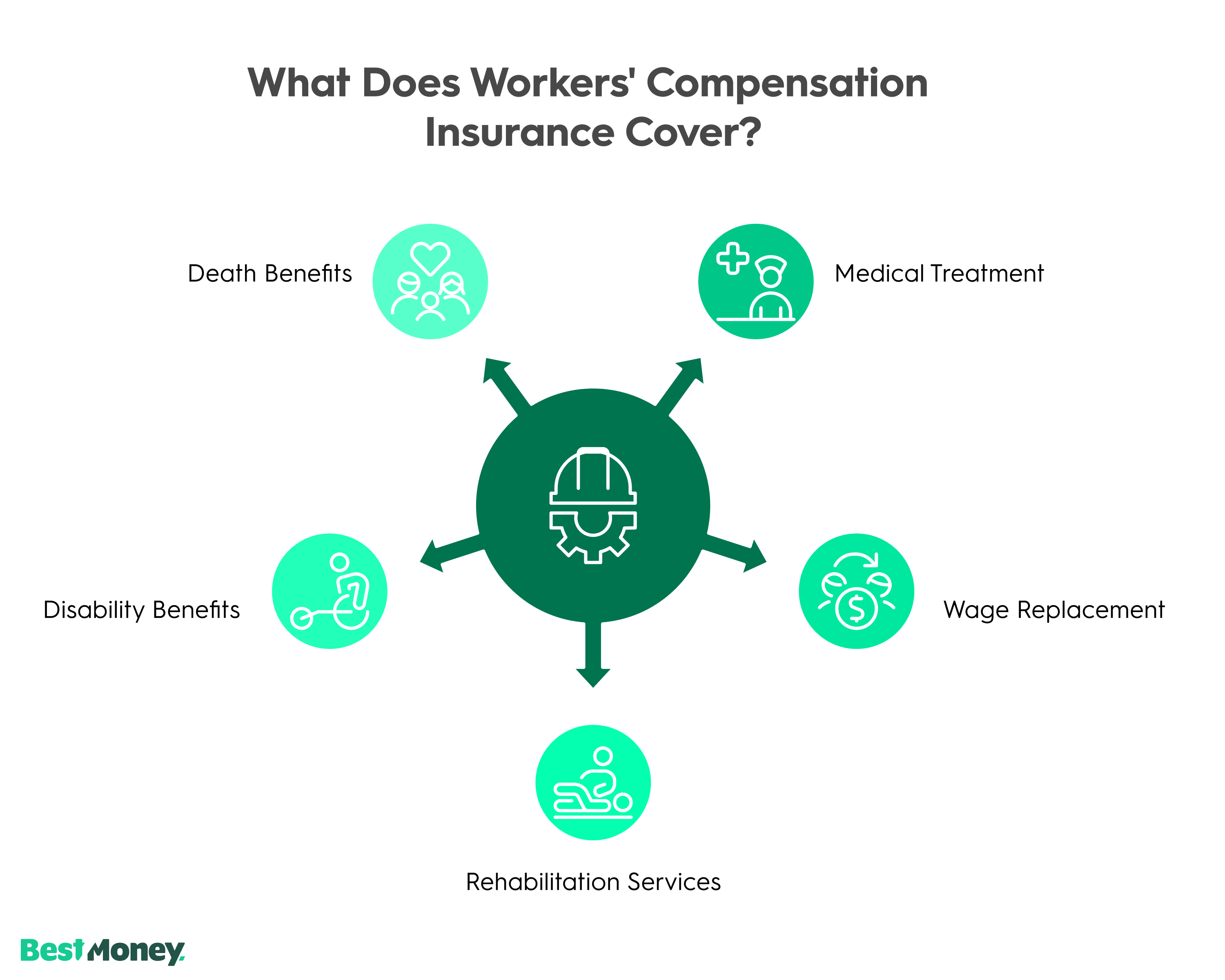
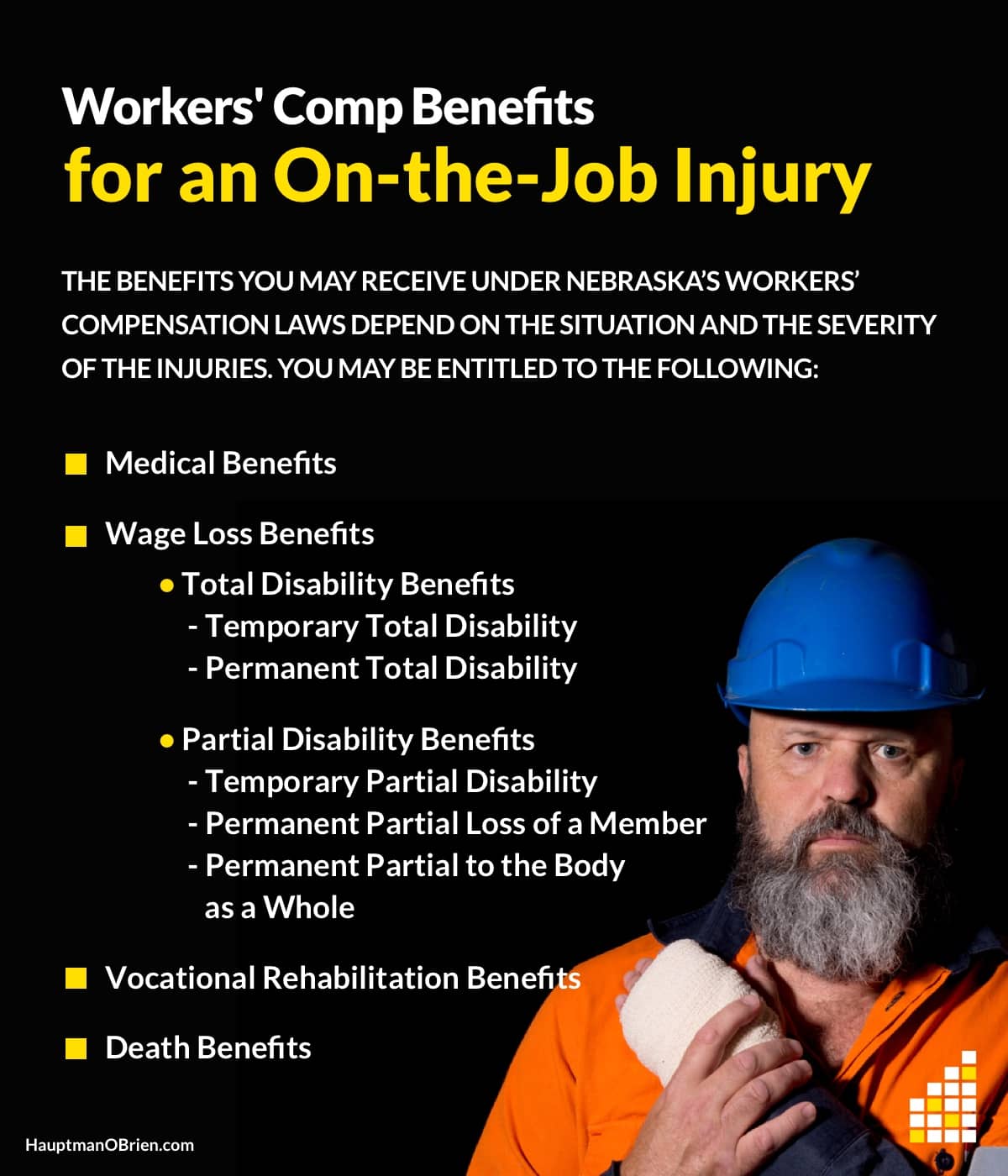
- Medical Treatment Costs: Emergency room visits, doctor appointments, surgical procedures, prescription medications, and rehabilitation sessions needed due to a workplace event.
- Disability Benefits (Wage Replacement): Partial reimbursement for lost earnings—typically around two-thirds of the employee's average weekly wage—if the injury prevents them from working during recovery.
- Ergonomic and Repetitive Strain Injuries (RSI): Physical therapists, occupational therapists, and massage therapists spend hours performing manual adjustments, transfers, or repetitive physical manipulation. Mental health therapists spend long hours typing case notes. Interstitial joint strain, carpal tunnel syndrome, and spinal disc injuries are compensable when clinically tied to work duties.
- Physical Assault or Violent Incidents: Mental health therapists working in psychiatric facilities, crisis centers, addiction rehabilitation clinics, or home visits face inherent risks of physical aggression from distressed clients. Injuries sustained during an altercation are covered.
- Slip, Trip, and Fall Incidents: Falls occurring within the clinic, office building, parking lot, or during official work-related travel (e.g., mobile therapy sessions).
- Death and Funeral Benefits: Financial compensation provided to surviving dependents in the event of a fatal workplace injury.
Common Exclusions
Workers compensation standard policies do not cover every scenario. Key exclusions include:
- Injuries sustained while commuting to and from work (the "Going and Coming" rule).
- Injuries resulting from intentional self-harm or illegal activities.
- Injuries occurring while an employee is under the influence of non-prescribed drugs or alcohol.
- Stress, anxiety, or mental health claims unless they stem directly from a sudden extraordinary event (such as a violent physical attack) or satisfy high statutory evidence thresholds for psychiatric injury, which vary significantly by state.
Comparing Commercial Insurance Coverage for Therapists
Understanding how workers compensation fits into a practice’s overall risk management program requires contrasting it with other foundational commercial insurance policies.
| Insurance Type | Primary Purpose | Who Is Protected? | Key Coverage Examples | Required by Law? |
|---|---|---|---|---|
| Workers Compensation | Covers work-related injuries and lost wages for staff. | Practice owners, W-2 employees, and staff. | Repetitive strain, ergonomic injury, physical assault by client, slip-and-fall at work. | Yes (in most states based on W-2 employee count). |
| Professional Liability (Malpractice) | Protects against claims of clinical error, negligence, or breach of duty. | The practicing therapist and business entity. | Allegations of misdiagnosis, improper treatment plan, HIPAA privacy violations, boundary violations. | Often mandatory for state licensing, credentialing, and malpractice boards. |
| General Liability | Protects against third-party non-employee injuries and property damage. | Clients, visitors, delivery drivers, and landlords. | A client trips over an rug in the waiting room; accidental damage to a leased facility. | Mandatory in most commercial office leases. |
| Business Owner’s Policy (BOP) | Bundles General Liability with Commercial Property protection. | Physical practice assets and business equipment. | Fire damage to office furniture, theft of therapy tools, business interruption. | Optional, but standard practice for clinic owners. |
1099 Contractors vs. W-2 Employees in Group Therapy Practices
One of the most complex liability traps in private group practices involves the misclassification of workers as 1099 independent contractors rather than W-2 employees.
- 1099 vs. W-2 Classification
- 1099 Independent Contractor
- Sets own hours & methods
- Supplies own insurance
- Audit Risk: State reclassification
- W-2 Employee
- Practice controls schedule/methods
- Practice MUST provide Workers' Comp
- Protected under statutory benefits
- 1099 Independent Contractor
The Misclassification Risk
Practice owners frequently hire associate therapists as independent contractors (1099s) to reduce payroll taxes and eliminate benefits. However, state labor departments and state workers compensation boards use strict tests (such as the ABC Test) to evaluate worker status.
If an auditor or state board determines that your group practice exercises control over an associate’s schedule, clinical notes platform, fee setting, or client assignment, the therapist will be reclassified as an employee.
Consequences of Reclassification
If an un-insured 1099 contractor gets hurt while working for your practice and files a workers compensation claim:
- State regulators can audit your practice for all uncollected premiums.
- Heavy administrative penalties and stop-work orders may be issued.
- You may be forced to pay the injured contractor's medical bills and lost wages directly out of pocket.
Ghost Policies for Solo Contractors
Independent contractors who want to demonstrate proof of coverage to group practice owners or clinical facilities often purchase a Ghost Policy. A ghost policy is a zero-payroll workers compensation policy that fulfills contractual requirements by providing a Certificate of Insurance (COI) showing the sole proprietor has technically secured coverage, even though no active employees are insured.
Class Codes and Cost Factors for Therapists
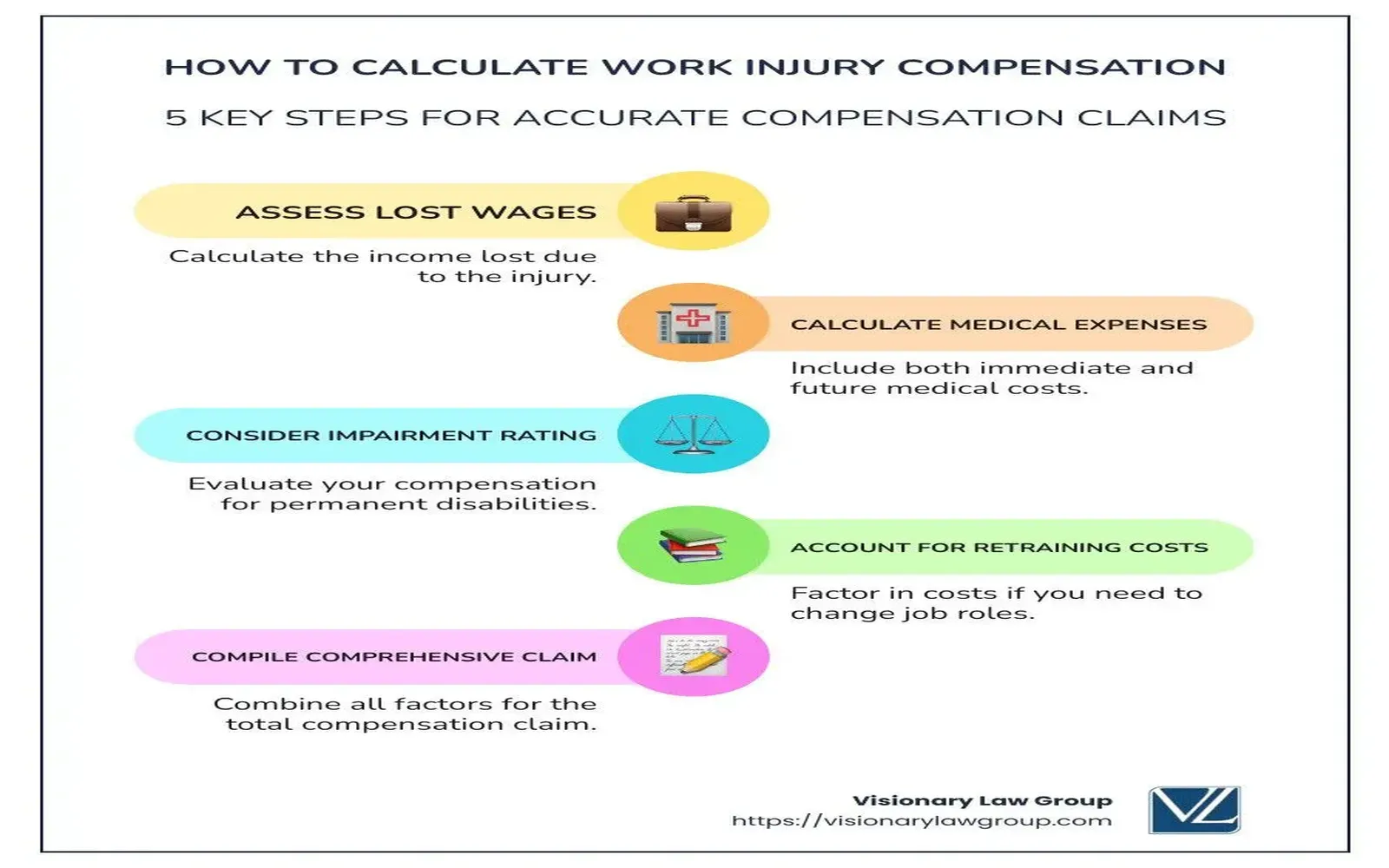
The cost of workers compensation insurance for therapists depends primarily on total annual payroll and specific industry risk classifications designated by the National Council on Compensation Insurance (NCCI) or independent state rating bureaus.
Common NCCI Class Codes for Therapy
Insurance underwriters assign class codes based on the operational risks associated with specific therapy roles:
- Class Code 8810 – Clerical Office Employees / Outpatient Mental Health:
- Scope: Psychologists, counselors, clinical social workers, marriage and family therapists (LMFTs), and administrative staff who work strictly in low-hazard office environments.
- Risk Level: Lowest risk category, resulting in low rates per $100 of payroll.
- Class Code 8832 – Physician & Outpatient Therapy Clinics:
- Scope: Physical therapists (PTs), occupational therapists (OTs), speech-language pathologists (SLPs), and outpatient medical clinics involving physical handling, client transfers, or specialized rehabilitation equipment.
- Risk Level: Moderate risk due to physical exertion, manual therapy, and potential patient falls during transfers.
- Class Code 8833 – Hospital Professional Employees / Inpatient Care:
- Scope: Therapists providing inpatient care, working in residential treatment facilities, or managing high-risk psychiatric crisis units.
- Risk Level: Higher risk category owing to exposure to acute clinical distress, patient handling, and physical intervention safety risks.
Calculating Your Base Premium
Workers compensation premiums are calculated using a baseline formula:
$$\text{Annual Premium} = \left( \frac{\text{Total Annual Payroll}}{$100} \right) \times \text{Class Code Rate} \times \text{Experience Modification Rate (EMR)}$$
Factors Influencing Rate Variations
- Total Payroll: Premiums scale directly with gross employee earnings.
- Claims History (Experience Modification Rate - EMR): Established practices with a clean claims history receive discounts, while practices with frequent injury claims pay higher surcharges.
- Work Setting: In-clinic mental health counseling carries significantly lower premium rates than mobile physical therapy involving frequent driving and physical patient transfers in non-controlled environments.
Common Workplace Injury Scenarios in Therapy
Understanding potential safety risks helps practice managers implement preventative policies:
1. Physical Therapy & Occupational Therapy: Patient Transfer Injury
- Scenario: A physical therapist helps a stroke patient transition from a wheelchair to an exercise bench. The patient loses balance, and the therapist absorbs the weight to prevent the patient from falling, resulting in an acute lumbar spine strain.
- Coverage Outcome: Workers compensation pays for the therapist’s MRI, physical therapy treatments, prescription medications, and temporary disability wages during their recovery period.
2. Mental Health Practice: Slip and Fall in Office Common Area
- Scenario: A clinical psychologist rushes between sessions in a rented office suite, trips over a loose computer cable in the hallway, and breaks their wrist.
- Coverage Outcome: Workers compensation covers emergency care, casting, follow-up orthopedist visits, and lost income for missed client sessions.
3. Crisis Counseling: Patient Altercation
- Scenario: A licensed professional counselor working in a residential treatment center is physically struck by a patient undergoing an acute mental health crisis, sustaining a concussion and facial trauma.
- Coverage Outcome: Workers compensation covers urgent medical evaluations, psychological follow-up care for trauma, and wage replacement while cleared from duty.
How to Obtain and Maintain Workers Comp Coverage
Follow this step-by-step approach to secure appropriate workers compensation coverage for your practice.
Step 1: Audit Your Practice’s Worker Status
Review all staffing arrangements. Identify who qualifies as a W-2 employee versus a true independent contractor based on state labor rules. Document clear contracts for any 1099 workers and ensure they hold their own insurance certificates.
Step 2: Determine Owner Opt-In / Opt-Out Status
Decide whether you, as a business owner (LLC member, partner, or corporate officer), should be included in or excluded from the policy. If you rely entirely on your practice revenue to pay your personal living expenses, opting into coverage or purchasing personal disability insurance is vital.
Step 3: Gather Accurate Payroll Data
Compile gross payroll estimates for the upcoming policy term, broken down by job role:
- Administrative and office counseling staff (Class 8810)
- Physical, occupational, or mobile therapy staff (Class 8832/8833)
Step 4: Shop and Compare Carrier Quotes
Work with an independent commercial insurance broker or online commercial platform that understands healthcare practices. Request quotes from carriers rated highly by credit bureaus like A.M. Best.
Step 5: Implement Workplace Safety Standards
Lower your long-term insurance costs by implementing active risk-mitigation strategies:
- Maintain clean, uncluttered walkways and secure loose cables in your suites.
- Provide training on proper lifting techniques and transfer mechanics for physical and occupational therapy staff.
- Establish safety protocols for high-risk psychiatric or home-visit consultations, such as panic buttons, check-in systems, or dual-staffing procedures.
Frequently Asked Questions
Do self-employed solo therapists need workers compensation insurance?
In most states, sole proprietors and single-member LLC owners without W-2 employees are not legally required to purchase workers compensation for themselves. However, solo therapists may choose to opt into coverage or secure private short-term disability insurance to protect their income if an injury prevents them from holding sessions. Additionally, commercial leases and hospital contracts may require proof of a policy regardless of employee count.
Does malpractice insurance cover employee workplace injuries?
No. Professional liability (malpractice) insurance only protects against claims filed by clients alleging clinical errors, negligence, or breach of professional duty. It provides no coverage for an employee or owner who hurts their back, trips in the office, or suffers a work-related physical injury.
What is a workers compensation ghost policy, and why do therapists use it?
A ghost policy is a workers compensation policy with zero payroll designed for sole proprietors or independent contractors with no employees. It satisfies contractual requirements from clients, landlord leases, or contracting agencies by generating an official Certificate of Insurance (COI), while excluding the business owner from receiving monetary policy benefits.
Are injuries during home visit therapy covered by workers comp?
Yes. If a therapist travels to a client's home as a mandatory duty of their employment, injuries sustained during travel (excluding standard home-to-work commutes) or inside the client's home fall under workers compensation. This includes motor vehicle accidents between appointments, dog bites at client residences, or slips on unmaintained entry steps.
How does workers comp handle mental stress or burnout claims for therapists?
Workers compensation coverage for purely psychological claims (such as stress, depression, or occupational burnout) is strictly limited and varies significantly by jurisdiction. Most states require evidence that the mental injury resulted from a sudden, violent event (such as a physical assault by a patient) rather than gradual workplace stress or heavy caseload demands.
Final Recommendation: Securing Your Practice
For therapists and practice owners, maintaining appropriate workers compensation coverage ensures regulatory compliance and protects your practice's financial health.
- If you operate a solo practice: Review your current landlord agreements and healthcare system contracts. If a policy is required but you have no employees, consult an insurance broker about an owner-inclusive policy or a low-cost ghost policy.
- If you employ staff or manage contractors: Review your worker classifications under state law. Secure a policy aligned with correct NCCI class codes (e.g., Code 8810 for office counseling vs. Code 8832 for physical rehabilitation) to ensure accurate premiums and complete legal protection.
To ensure your coverage satisfies legal mandates while minimizing overhead, request quotes from commercial brokers who specialize in healthcare practices and conduct annual internal audits of your payroll allocations.
EDITORIAL CATEGORY METADATA:
Image Gallery