Understanding Spirit Airlines Net Worth: Financial Valuation, Debt Restructuring, and Shareholder Equity
Understanding Spirit Airlines' net worth requires examining two distinct financial metrics: its book value (shareholders' equity) on the balance sheet and its market capitalization on public exchanges. Recent financial distress, elevat...
Understanding Spirit Airlines' net worth requires examining two distinct financial metrics: its book value (shareholders' equity) on the balance sheet and its market capitalization on public exchanges. Recent financial distress, elevated debt obligations, and Chapter 11 debt restructuring have significantly altered Spirit's net worth, turning traditional equity valuation into a complex study of corporate restructuring.
Contents
Market Capitalization vs. Book Value: Defining Corporate Net Worth
When evaluating a publicly traded company like Spirit Airlines (formerly listed under ticker SAVE), individuals often confuse market capitalization with book value. In corporate finance, a enterprise's net worth is measured through two separate lenses:
- Book Value (Shareholders' Equity): Calculated directly from the balance sheet as Total Assets minus Total Liabilities. Book value represents the net financial accounting residual that equity holders would theoretically retain if all assets were liquidated and all liabilities satisfied at their reported values.
- Market Capitalization: Calculated as the Total Outstanding Shares multiplied by the Current Share Price. Market cap reflects real-time investor sentiment, market supply and demand, and growth expectations.
For an airline, book value and market capitalization frequently diverge. Capital-intensive industries rely heavily on debt financing for fleet expansion, making aircraft asset valuations, long-term debt covenants, and cash burn rates critical factors. When financial losses erode retained earnings, book value can shrink rapidly or even fall into negative territory—meaning total liabilities exceed total recognized accounting assets.
Financial Breakdown: Key Metrics of Spirit Airlines' Balance Sheet
To evaluate Spirit Airlines' corporate financial standing, analysts track several core balance sheet components governed by U.S. GAAP (Generally Accepted Accounting Principles) standards. The airline business model depends on managing high fixed costs alongside volatile operational variable costs like jet fuel and labor.
| Assets | Liabilities |
|---|---|
| Flight Equipment (Owned Fleet) | Senior Secured Notes |
| Cash & Cash Equivalents | Convertible Senior Notes |
| Operating Lease Right-of-Use Assets | Operating Lease Liabilities |
| Slots, Gates & Brand Value | Accounts Payable & Reserves |
| Total Shareholders' Equity | (Total Assets - Total Liabilities) |
Total Assets
Spirit Airlines' asset base consists primarily of tangible long-term assets, dominated by its aircraft fleet (predominantly Airbus A320 family aircraft). Under Accounting Standards Codification (ASC) Topic 842, airlines must also record Operating Lease Right-of-Use (ROU) Assets, representing the present value of future lease control for aircraft that are leased rather than owned outright. Additional assets include:
- Unrestricted cash, cash equivalents, and short-term investments.
- Pledged cash reserves required by credit card processors.
- Intangible assets, such as flight slots, operating gates, and airport routes.
Total Liabilities
Liabilities represent Spirit's contractual financial obligations. Over years of fleet expansion and operational cash burn, Spirit accumulated substantial leverage:
- Senior Secured Debt: Secured by specific assets, including loyalty program IP and aircraft.
- Unsecured Debt: Convertible senior notes issued to finance working capital.
- Operating Lease Liabilities: Financial obligations matching the aircraft ROU assets.
- Unearned Passenger Revenue: Tickets sold for flights that have not yet occurred, recorded as a liability until service completion.
Balance Sheet Snapshot Overview
| Financial Metric Category | Primary Balance Sheet Components | Impact on Net Worth Calculation | Financial Risk Level |
|---|---|---|---|
| Current Assets | Cash, cash equivalents, short-term investments, accounts receivable | Provides immediate liquidity to service operational expenses and short-term debt | High sensitivity to cash burn rates |
| Non-Current Assets | Owned flight equipment, engine spare parts, right-of-use lease assets | Represents core operational revenue generation capability | Medium; subject to asset depreciation |
| Current Liabilities | Accounts payable, short-term debt maturity, unearned passenger revenue | Reduces working capital; requires ongoing cash inflows | Critical; drives immediate liquidity risks |
| Long-Term Liabilities | Long-term debt bonds, convertible notes, long-term lease obligations | Directly subtracts from long-term asset pool to determine net book value | High; elevated interest expenses depress margins |
| Shareholders' Equity | Common stock, paid-in capital, retained earnings (accumulated deficit) | The definitive accounting measure of corporate net worth | Severe deficit risk during sustained loss periods |
Catalysts Behind Spirit's Net Worth Deterioration
Spirit Airlines pioneered the Ultra-Low-Cost Carrier (ULCC) model in North America, unbundling fares to offer base travel at low prices while charging separately for carry-on bags, seat selection, and refreshments. However, structural financial shifts eroded its profit margins and balance sheet equity.
1. Post-Pandemic Margin Compression
Following post-pandemic travel recovery, consumer demand shifted heavily toward international, long-haul, and premium travel. Domestic ULCC markets experienced overcapacity, driving down average ticket yields. Spirit faced rising fuel prices, increased maintenance costs, and higher labor expenses under renegotiated collective bargaining agreements with pilots and crew.
2. Groundings from Pratt & Whitney Engine Recalls
Spirit faced major operational disruptions due to mandatory inspections of Pratt & Whitney Geared Turbofan (GTF) engines. Micro-cracks in powdered metal engine components required extended groundings of a significant portion of Spirit's Airbus A320neo fleet. Grounded aircraft generated zero operational revenue while continuing to incur fixed lease payments, depreciation, and storage expenses, causing sustained operational losses.
3. Blocked Mergers and Debt Obligations
Spirit initially sought to merge with Frontier Airlines before accepting a acquisition offer from JetBlue Airways valued at approximately $3.8 billion. In January 2024, a federal judge blocked the JetBlue-Spirit merger on antitrust grounds, ruling that the transaction would harm cost-conscious consumers by removing a major ultra-low-cost competitor.
The termination of the merger forced Spirit to confront its refinancing schedule independently. The company faced upcoming debt maturities, including hundreds of millions in senior secured notes due in late 2024 and 2025. With negative cash flows and debt markets demanding high interest rates, refinancing became increasingly difficult.
How Chapter 11 Restructuring Reshapes Net Worth
When a corporation's balance sheet liabilities exceed its assets and cash reserves cannot cover short-term debt maturities, the company may file for Chapter 11 bankruptcy protection. Spirit Airlines pursued Chapter 11 restructuring to reduce debt and realign its financial structure.
Debt-to-Equity Conversions
In a financial restructuring, corporate net worth undergoes major adjustments:
Bondholder Equitization: Unsecured debt holders and noteholders exchange their debt claims for newly issued common equity in the reorganized company. This process reduces total balance sheet liabilities, directly improving net worth.
Common Stock Dilution or Extinction: Legacy shareholders generally experience extreme dilution or total loss of equity. Under the absolute priority rule in bankruptcy law, senior creditors must be satisfied in full before junior equity holders receive any recovery. In equity restructurings, existing common stock is frequently canceled.
Debtor-in-Possession (DIP) Financing: Specialized financing provides the liquidity necessary to operate during court proceedings, securing essential operational commitments while restructuring contracts and leases.
Pre-Restructuring Balance Sheet: High Liabilities / Debt Load greater than Assets results in Negative / Distressed Book Equity
Post-Restructuring Balance Sheet: Debt Converted to Equity plus Reduced Liabilities results in Positive / Reset Book Equity
Through restructuring, an airline aims to shed unprofitable leases, reject excess aircraft, reduce long-term interest expenses, and exit with a balanced asset-to-debt ratio.
Calculating Spirit Airlines Net Worth: A Step-by-Step Financial Framework
To evaluate an airline’s net worth independently, financial analysts follow a standardized three-step balance sheet evaluation framework.
- Step 1: Determine Adjusted Assets (Fleet + Cash + Intangibles)
- Step 2: Subtract Total Liabilities (Secured Debt + Leases + Accounts Payable)
- Step 3: Account for Restructuring Adjustments (Debt Equitization - Stock Dilution)
- Final Corporate Net Worth (Book Equity)
Step 1: Establish Total Adjusted Assets
Calculate the sum of all reported assets, adjusting for real estate, slots, and fleet market values: $$\text{Total Assets} = \text{Cash Reserves} + \text{Fleet Valuation} + \text{ROU Lease Assets} + \text{Intangibles}$$
Step 2: Deduct Total Debt and Obligations
Subtract all contractual financial liabilities: $$\text{Book Net Worth} = \text{Total Assets} - (\text{Secured Notes} + \text{Convertible Debt} + \text{Lease Obligations} + \text{Other Liabilities})$$
Step 3: Factor in Market Realities and Restructuring Provisions
Evaluate market capitalization against book value. If book value is positive but market capitalization trades at a sharp discount, the market is pricing in future operational losses, asset write-downs, or impending restructuring dilution. Conversely, if book value is negative, market cap reflects speculative value on corporate turnarounds or debt restructuring outcomes.
Strategic Shift: Adapting the Business Model Post-Restructuring
Rebuilding positive net worth over the long term requires Spirit Airlines to restore operational profitability. A low net worth or restructured balance sheet is only a temporary stabilizing step; long-term financial viability depends on generating positive operating cash flow.
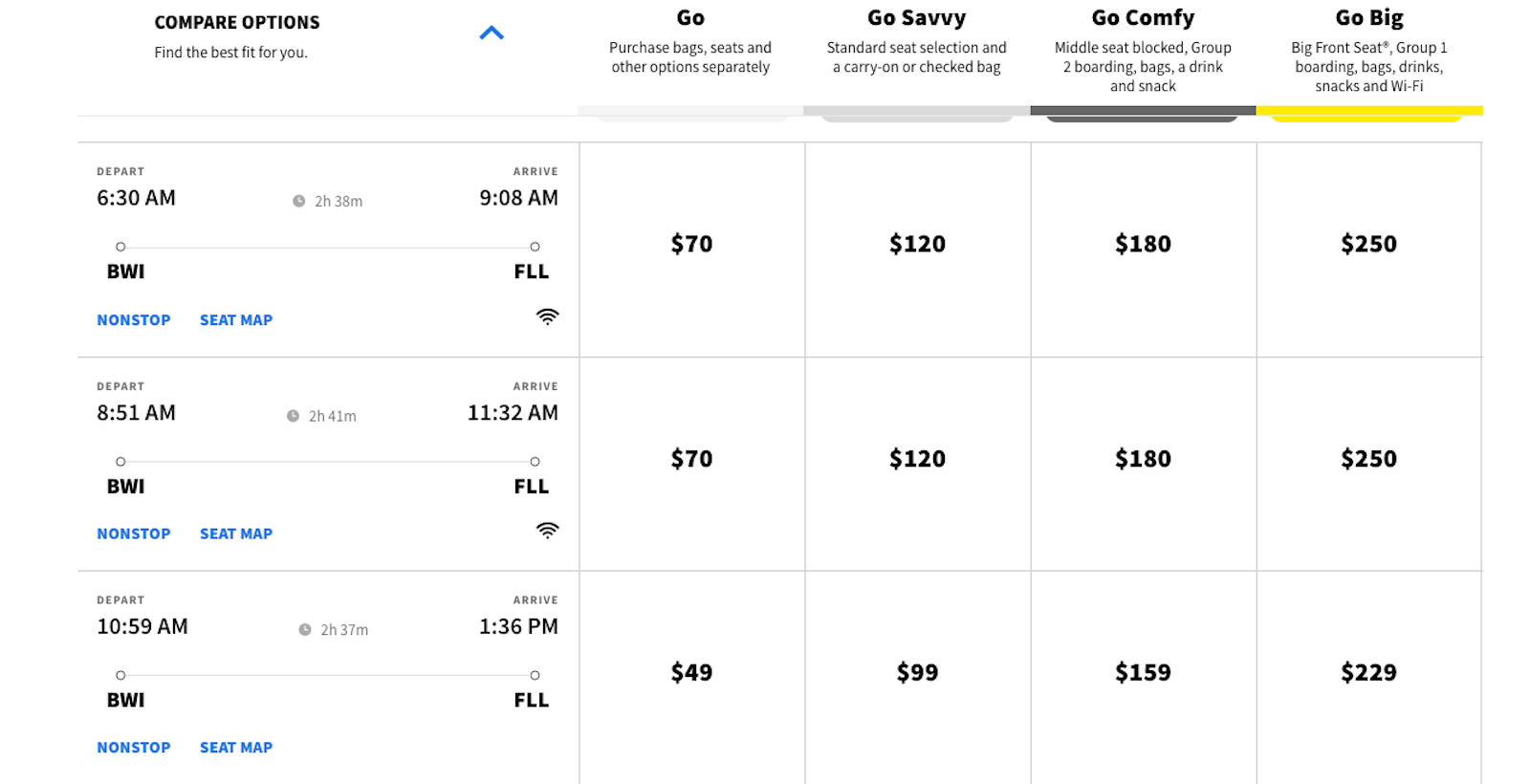
To address changing market conditions, Spirit has evolved away from pure unbundled pricing toward tiered value bundles:
- Premium Seating Options: Introducing wider seats with extra legroom (e.g., "Go Big" offerings) to capture higher-yielding passenger segments.
- Bundled Fares: Combining check-in bags, carry-on allowances, seat selection, and Wi-Fi into single discounted packages to boost average revenue per passenger.
- Network Optimization: Removing unprofitable regional routes, reallocating fleet capacity to higher-demand markets, and adjusting flying schedules to lower operational overhead.
By raising yield per available seat mile (YASM) while managing cost per available seat mile (CASM), Spirit aims to generate sustainable net income, accumulate retained earnings, and rebuild shareholder equity.
Frequently Asked Questions
What is the difference between Spirit Airlines' market cap and its net worth?
Spirit Airlines' market cap represents the total dollar value of its outstanding public stock shares traded on the market. Its net worth (book value) is an accounting metric found on its balance sheet, calculated as total assets minus total liabilities. During financial distress, market cap may fluctuate based on market sentiment, while book value reflects accumulated balance sheet losses and debt.
What happens to legacy common stock during an airline Chapter 11 restructuring?
In most airline Chapter 11 restructurings, existing common stock is either canceled or heavily diluted. Under the legal absolute priority rule, senior debtholders (such as bondholders) must be paid or converted to new equity before existing shareholders receive any recovery. Consequently, legacy shares usually retain little to no residual value.
How did Pratt & Whitney engine recalls impact Spirit Airlines' financial health?
Mandatory inspections of Pratt & Whitney Geared Turbofan (GTF) engines forced Spirit to ground a significant portion of its Airbus A320neo fleet. Grounded planes produced no operational ticket revenue while continuing to generate lease costs, depreciation expenses, and storage fees. This reduced operational cash flows and contributed to balance sheet losses.
Is Spirit Airlines still operating flights during a financial restructuring?
Yes. Airlines undergoing Chapter 11 restructuring typically continue normal flight operations. Operating cash, revenue from ongoing ticket sales, and specialized Debtor-in-Possession (DIP) financing allow the carrier to pay employees, maintain flight schedules, honor bookings, and service customers throughout the court-supervised process.
Can an airline have a negative net worth and still operate?
Yes, a company can operate with negative book net worth (where total liabilities exceed total assets) as long as it maintains adequate cash reserves and working capital to meet short-term financial obligations. However, sustained negative net worth indicates financial distress, typically requiring debt restructuring, asset sales, or capital injections to prevent insolvency.
Practical Recommendations for Tracking Airline Financial Solvency
For financial analysts, investors, and aviation industry researchers monitoring Spirit Airlines' ongoing balance sheet status, consider the following action steps:
- Review Quarterly SEC Filings (Form 10-Q and 10-K): Examine the consolidated balance sheet to track changes in Shareholders' Equity, Unrestricted Cash, and Long-Term Debt balances.
- Monitor Restructuring Docket Reports: Track court filings in the U.S. Bankruptcy Court to review approved debt equitization plans, creditor recovery rates, and legacy stock cancellation notices.
- Track Yield and Capacity Metrics: Watch key industry metrics—specifically CASM (Cost per Available Seat Mile) and RASM (Revenue per Available Seat Mile)—in press releases to evaluate whether operational adjustments are restoring profitable margins.
- Verify Aircraft Lease Commitments: Review footnote disclosures regarding lease liabilities under ASC 842 to evaluate how fleet downsizing impacts long-term fixed cost commitments.
Disclaimer: This article provides financial analysis for educational and informational purposes only and does not constitute investment or financial advice.
Image Gallery