Core Principles of Sustainable Growth: How a Good Business Thrives in 2026
A business thrives by consistently delivering superior value that solves specific customer pain points while maintaining a resilient operational framework. It requires balancing disciplined financial management with an adaptable cultur...
A business thrives by consistently delivering superior value that solves specific customer pain points while maintaining a resilient operational framework. It requires balancing disciplined financial management with an adaptable culture that embraces innovation, data-driven decision-making, and high employee engagement to navigate evolving market conditions and achieve long-term, scalable success.
Contents
The Foundation of Product-Market Alignment
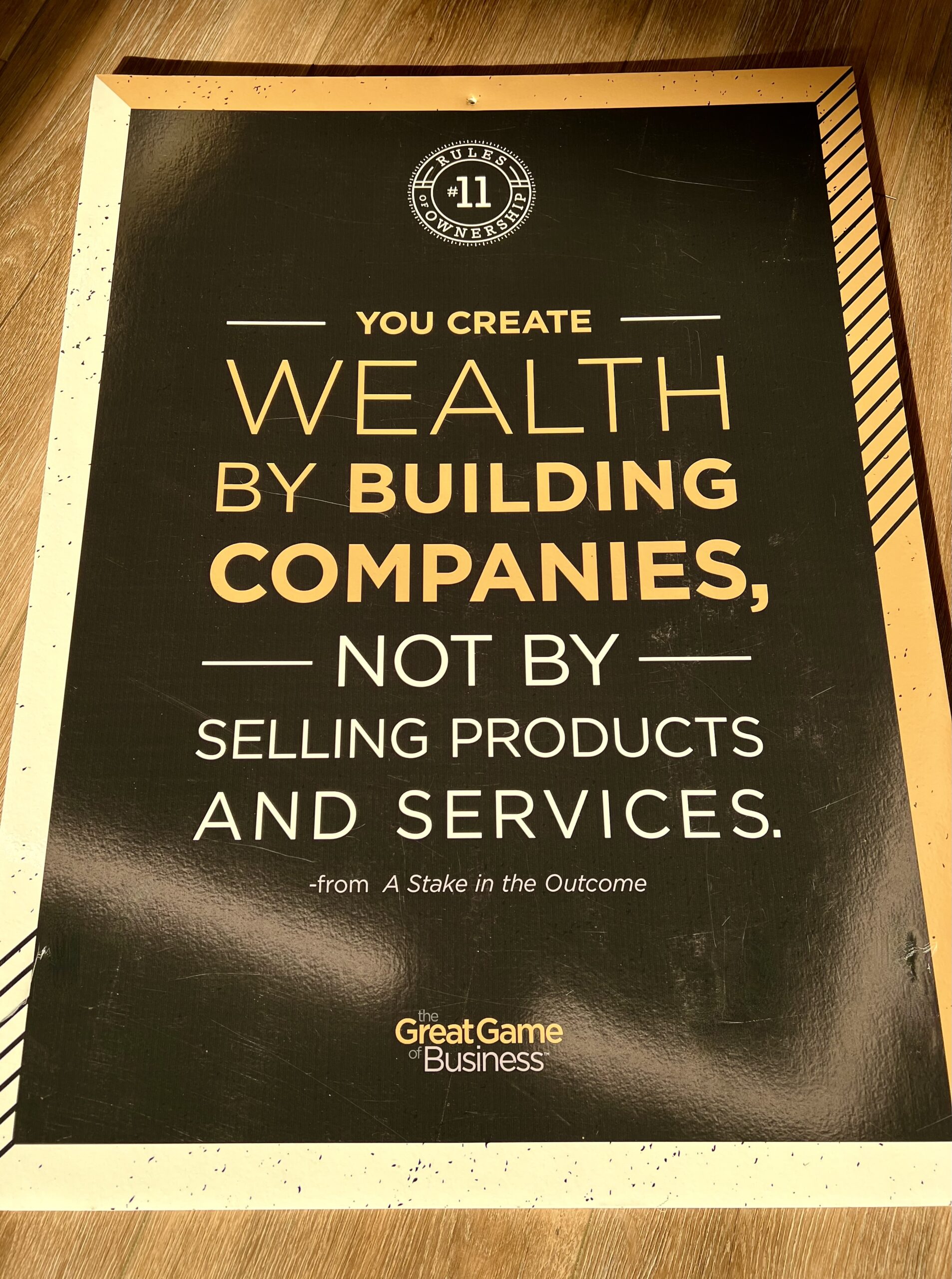
The primary driver of a thriving business is a deep, evolving alignment between what the company offers and what the market demands. In 2026, this goes beyond simple "product-market fit." Thriving organizations practice value innovation, which involves creating new demand by offering a leap in value that makes the competition irrelevant.
To achieve this, a business must implement a continuous feedback loop. This involves not only gathering customer reviews but utilizing sentiment analysis and behavioral data to anticipate needs before the customer even articulates them. A good business does not just react to the market; it shapes its niche by solving "latent" problems—issues customers face but have accepted as unavoidable.
Furthermore, thriving businesses prioritize the Customer Lifetime Value (CLV) over individual transaction margins. By focusing on the long-term relationship, companies can justify the higher initial costs of customer acquisition through improved retention and upsell opportunities. This perspective requires a shift from a sales-centric model to a success-centric model, where the organization’s growth is directly tied to the client’s success.
Operational Excellence and Scalability
For a business to move from surviving to thriving, its operations must be both efficient and scalable. Efficiency ensures that the company maximizes its resources, while scalability ensures that the business can handle increased volume without a proportional increase in costs.
In the current 2026 landscape, operational excellence is synonymous with intelligent automation. Thriving businesses have moved past simple robotic process automation (RPA) into the realm of autonomous agents that manage routine administrative tasks, supply chain logistics, and initial customer service inquiries. This allows the human workforce to focus on high-value, strategic work that requires empathy, complex problem-solving, and creative thinking.
Systems and Documentation
A business cannot thrive if its knowledge is trapped in the heads of a few key individuals. Standard Operating Procedures (SOPs) are the backbone of scalability. A thriving business documents every critical process, from lead generation to post-sale support. This documentation serves several purposes:
- Consistency: It ensures that every customer receives the same high-quality experience.
- Onboarding: It reduces the "time-to-productivity" for new hires.
- Optimization: It provides a baseline that can be measured and improved.
The Role of Data Integrity
Modern thriving businesses treat data as a balance-sheet asset. By 2026, the use of unified data environments has become standard for successful firms. Rather than having siloed information in marketing, sales, and operations, a thriving business integrates these data points to create a "single source of truth." This integration allows for predictive modeling, helping leadership understand how a change in marketing spend today will impact operational capacity three months from now.
Financial Resilience and Capital Allocation
Profitability is the fuel for business, but financial resilience is the engine. A thriving business maintains a healthy balance between aggressive growth investment and conservative risk management. This involves a sophisticated understanding of cash flow dynamics, not just profit and loss statements.
Cash Flow Management
Many businesses fail not because they lack orders, but because they run out of cash. Thriving businesses manage their Cash Conversion Cycle (CCC) with precision. They negotiate favorable terms with suppliers, incentivize early payments from customers, and maintain a "rainy day" reserve that can sustain operations for at least six to twelve months without new revenue. This liquidity provides the "strategic optionality" to acquire competitors or invest in new technology during market downturns when others are forced to retract.
Strategic Capital Allocation
How a business reinvests its profits determines its future trajectory. Thriving companies allocate capital across three horizons:
- Horizon 1: Investments to maintain and defend the core business (e.g., incremental product updates).
- Horizon 2: Investments in emerging opportunities (e.g., expanding into a neighboring geographic market).
- Horizon 3: Investments in long-term, potentially disruptive innovation (e.g., R&D for a completely new product line).
By balancing these horizons, a business ensures it is profitable today while remaining relevant tomorrow.
The Human Element: Culture as a Competitive Moat
In 2026, technology is often accessible to everyone, meaning it is no longer a permanent competitive advantage. The true "moat" for a thriving business is its people and the culture they inhabit. A good business thrives because it creates an environment where high-performers want to stay and contribute.
Mission-Driven Leadership
Employees are increasingly looking for more than just a paycheck. Thriving organizations lead with a clear Mission and Vision that provides purpose. When employees understand the "Why" behind their work, they are more engaged, more productive, and more likely to exercise "discretionary effort"—the extra push that leads to innovation and exceptional customer service.
Psychological Safety and Innovation
A culture that punishes failure is a culture that kills innovation. For a business to thrive, it must foster psychological safety, a concept popularized by researchers like Amy Edmondson. This means employees feel safe to take risks, voice dissenting opinions, and admit mistakes without fear of retribution. In such an environment, the "near-misses" and failures become learning opportunities that lead to the next breakthrough.
Talent Density
Thriving businesses focus on "talent density"—the ratio of high-performing employees to total staff. Rather than hiring quickly to fill seats, successful firms hire slowly and deliberately, looking for "A-players" who are not only technically proficient but also align with the company's core values. This focus on quality over quantity reduces the management overhead required to correct poor performance and creates a self-policing environment of excellence.
Adaptability and Market Agility
The pace of change in 2026 is unprecedented. A business that was successful five years ago may find its model obsolete today if it lacks agility. Thriving businesses build adaptability into their DNA.
This agility is manifested in several ways:
- Iterative Strategy: Moving away from rigid five-year plans toward "rolling forecasts" and quarterly strategic resets.
- Decentralized Decision-Making: Empowering front-line employees to make decisions quickly without waiting for multiple layers of management approval.
- Scenario Planning: Regularly conducting "pre-mortems" and "what-if" analyses to prepare for potential disruptions in the global economy, technology, or regulation.
| Feature | Surviving Business | Thriving Business |
|---|---|---|
| Primary Goal | Short-term revenue and stability | Long-term value and market leadership |
| Innovation Approach | Reactive (responding to competitors) | Proactive (shaping the market) |
| Decision Making | Based on intuition or "gut feeling" | Data-driven with predictive analytics |
| Employee Relation | Transactional (work for pay) | Relational (shared mission and growth) |
| Financial Focus | Monthly profitability | Cash flow resilience and capital allocation |
| Technology Use | Siloed tools for specific tasks | Integrated, AI-enhanced ecosystems |
| Risk Tolerance | Risk-averse, avoids change | Calculated risk-taking for high rewards |
Strategic Networking and Ecosystem Integration
No business is an island. In 2026, the concept of a "standalone" company has been replaced by the "ecosystem player." A thriving business understands how to leverage external partnerships to enhance its own value proposition.
This includes forming strategic alliances with non-competing firms to share data, co-market services, or integrate software. For instance, a thriving SaaS provider might integrate deeply with a specialized logistics firm to provide a seamless end-to-end solution for e-commerce clients. By becoming an essential part of a larger ecosystem, the business increases its "switching costs"—making it harder and more expensive for customers to leave for a competitor.
Environmental, Social, and Governance (ESG) as a Baseline
By 2026, ESG is no longer a "nice-to-have" or a marketing gimmick; it is a fundamental requirement for business health. Thriving businesses recognize that social responsibility and environmental sustainability are linked to long-term profitability.
Companies that prioritize ESG often see:
- Lower Cost of Capital: Lenders and investors increasingly favor firms with high ESG scores.
- Better Talent Acquisition: Younger generations of workers prioritize employers whose values align with their own.
- Risk Mitigation: Proactive environmental and social policies help avoid regulatory fines and reputation-damaging scandals.
A thriving business integrates these principles into its core operations—such as optimizing supply chains for carbon efficiency—rather than treating them as a separate department.
Frequently Asked Questions
Can a business thrive without being profitable?
In the short term, a business can thrive on capital investment (like many startups), but long-term sustainability requires profitability. A thriving business is one that has a clear path to—or is already maintaining—positive net income, as this profit is what allows for reinvestment and growth without constant reliance on outside funding.
What is the most important metric for a thriving business?
While it varies by industry, Net Promoter Score (NPS) combined with Net Revenue Retention (NRR) are often the most telling. NPS measures customer satisfaction and loyalty, while NRR measures how much revenue you keep from existing customers. If both are high, the business is providing genuine value and is positioned for organic growth.
How does AI help a business thrive in 2026?
AI helps by removing the "drudge work" from operations. It can handle massive data sets to identify market trends, automate repetitive customer interactions, and optimize logistics in real-time. This allows a business to remain lean and agile, scaling its output without necessarily scaling its headcount at the same rate.
Is rapid growth always a sign of a thriving business?
No. Rapid growth can actually kill a business if it outpaces its operational capacity or burns through cash too quickly. This is often called "growing broke." A truly thriving business pursues sustainable growth, which is growth that can be managed without compromising quality, culture, or financial stability.
How often should a thriving business change its strategy?
A thriving business maintains a consistent core mission but updates its tactical execution frequently. In 2026, most successful companies review their strategic initiatives quarterly. This allows them to pivot based on new data or market shifts while staying true to their long-term vision.
Practical Recommendation for Business Leaders
To ensure your business thrives, begin by conducting a comprehensive Internal Audit of Scalability. Identify the top three bottlenecks in your current operations—tasks that require manual intervention or cause delays. Invest in the automation or outsourcing of these tasks immediately to free up your team for strategic growth. Simultaneously, establish a dedicated "Customer Voice" program that brings real-time client feedback directly to the leadership table every week.
For more information on modern business standards and regulatory compliance, visit the U.S. Small Business Administration or the International Organization for Standardization (ISO).
Image Gallery