How Much Are LLC Taxes? A Complete Guide to 2026 Costs and Requirements
The amount an LLC pays in taxes is not a fixed fee but a variable total determined by your net profit, tax classification, and state of operation. Most LLC owners should expect to pay a 15.3% self-employment tax on net earnings, plus f...
The amount an LLC pays in taxes is not a fixed fee but a variable total determined by your net profit, tax classification, and state of operation. Most LLC owners should expect to pay a 15.3% self-employment tax on net earnings, plus federal and state income taxes ranging from 10% to 37% depending on their total annual income bracket.
Contents
Establishing a Limited Liability Company (LLC) is one of the most popular ways to structure a business because of its flexibility. However, that same flexibility means there is no "one-size-fits-all" answer to how much you will owe the government. Because the IRS does not recognize an LLC as a specific tax entity, it "passes through" its tax obligations to the owners. In 2026, navigating these costs requires an understanding of federal pass-through rules, the current status of tax deductions, and evolving state-level requirements.
Disclaimer: This article provides general information and does not constitute legal, financial, or tax advice. Tax laws are subject to change, and you should consult with a certified public accountant (CPA) or tax professional regarding your specific situation.
Federal Income Tax Classifications for LLCs
The primary factor determining your LLC tax bill is how the IRS classifies your business. By default, the IRS taxes LLCs based on the number of members (owners) they have. However, owners can elect to be taxed differently to optimize their liability.
Single-Member LLCs (Disregarded Entities)
If you are the sole owner of an LLC, the IRS treats the business as a "disregarded entity." This means the business itself does not pay income tax. Instead, all profits and losses are reported on your personal tax return, typically using Schedule C (Form 1040). You are taxed at your individual income tax rate on the entire net profit of the business, regardless of whether you actually withdrew that money from the business bank account.
Multi-Member LLCs (Partnerships)
By default, an LLC with two or more members is taxed as a partnership. Like a single-member LLC, it is a pass-through entity. The business files an information return (Form 1065) to report income and expenses to the IRS, but the entity pays no tax. Instead, each member receives a Schedule K-1, which details their specific share of the profits. Members then pay individual income tax on that share.
S-Corporation Election
LLCs can elect to be taxed as an S-Corp by filing Form 2553. This is a popular strategy for high-earning LLCs to reduce self-employment taxes. Under an S-Corp election, owners are treated as employees and must be paid a "reasonable salary." Only the salary is subject to self-employment (payroll) taxes, while the remaining profit can be distributed as a "draw" or dividend, which is exempt from the 15.3% self-employment tax.
C-Corporation Election
While less common for small businesses, an LLC can elect to be taxed as a C-Corporation. In this scenario, the entity pays a flat corporate tax rate (currently 21% at the federal level) on its profits. If the business distributes dividends to owners, those owners are taxed again on their personal returns—a phenomenon known as "double taxation."
Understanding Self-Employment Taxes (FICA)
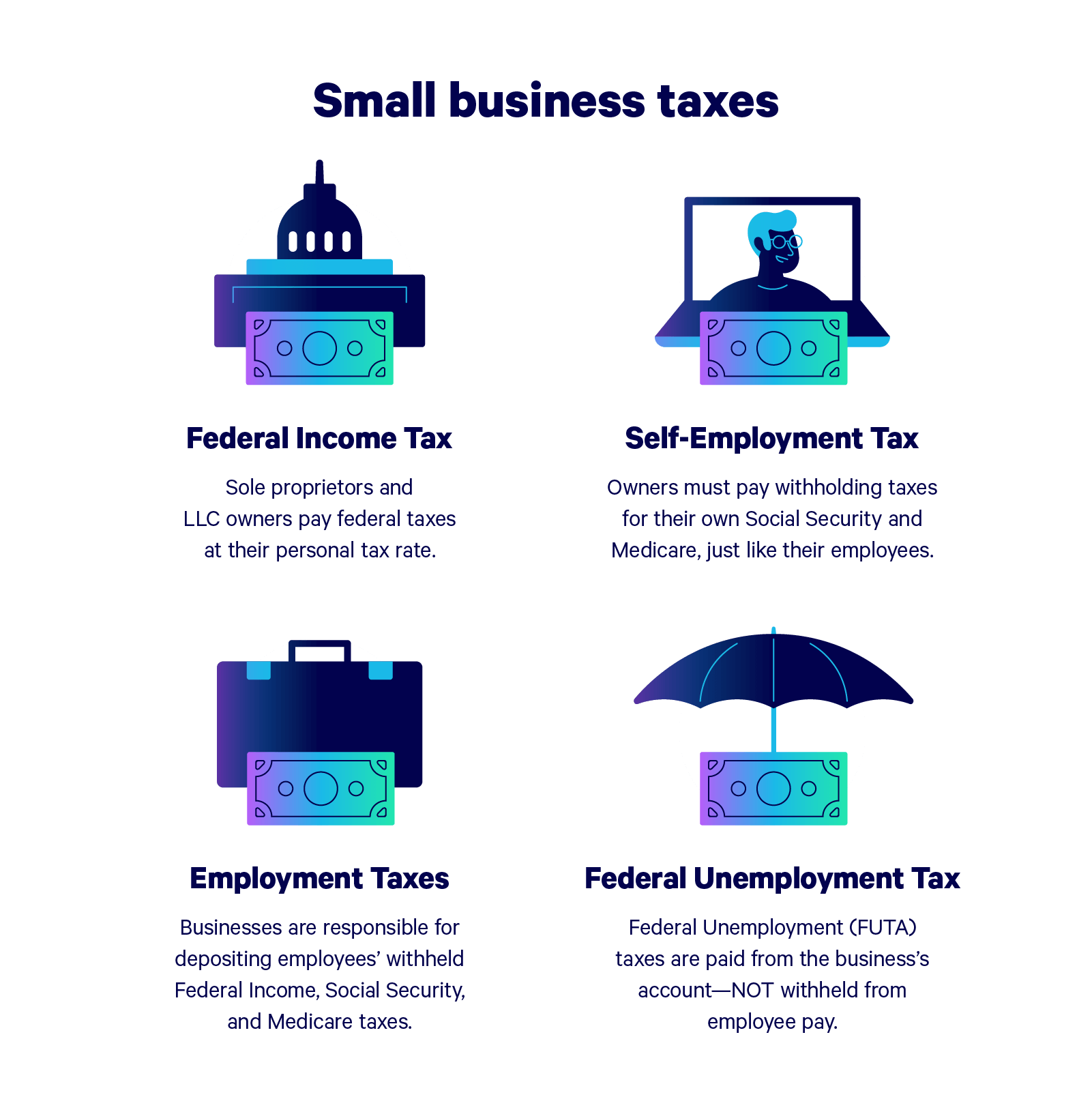
For most LLC owners, the largest "hidden" cost is the self-employment tax. When you work for an employer, the company pays half of your Social Security and Medicare taxes, and you pay the other half. When you own an LLC, you are both the employer and the employee, meaning you must pay both halves.
In 2026, the self-employment tax rate remains at 15.3%. This is broken down as follows:
- 12.4% for Social Security: This applies to the first portion of your net earnings, known as the Social Security wage base. For 2026, this threshold is adjusted for inflation (refer to the Social Security Administration for the exact current year maximum).
- 2.9% for Medicare: This applies to all of your net business earnings, with no upper limit.
It is important to note that you only pay self-employment tax on 92.35% of your net earnings from self-employment. Additionally, you can deduct half of your self-employment tax from your gross income when calculating your individual income tax, which provides a small measure of relief.
State-Level LLC Taxes and Annual Fees
Beyond federal obligations, your LLC is subject to the laws of the state where it was formed and any state where it does business. These costs vary wildly across the United States.
Annual Reports and Franchise Taxes
Many states require LLCs to pay an annual or biennial fee just to keep the business in "good standing."
- California: LLCs must pay a minimum $800 annual franchise tax, even if the business is not active or profitable.
- Delaware: While famous for its business-friendly laws, Delaware charges a flat $300 annual franchise tax for LLCs.
- Tennessee: LLCs may be subject to a franchise and excise tax based on their net worth or real property.
State Income Tax
Most states mirror the federal pass-through system, meaning you pay state income tax on your LLC profits via your personal state return. However, some states (like Florida, Texas, Nevada, and Wyoming) have no personal income tax, which can significantly lower the total tax burden for LLC owners.
Gross Receipts Taxes
A few jurisdictions, such as Ohio (Commercial Activity Tax) and Washington (Business & Occupation Tax), tax the total revenue of the business rather than the net profit. This means you could owe taxes even if your LLC lost money during the year.
The Role of Deductions and the QBI Deduction
In 2026, the tax landscape continues to feel the effects of the Tax Cuts and Jobs Act (TCJA). One of the most significant benefits for LLC owners has been the Section 199A Qualified Business Income (QBI) Deduction.
The QBI deduction allows eligible self-employed individuals and small business owners to deduct up to 20% of their qualified business income from their federal income taxes. However, as of 2026, business owners must be vigilant regarding the expiration or modification of these provisions. If the QBI deduction remains in effect or has been extended, it effectively lowers your top effective tax rate by 20% on your business profits.
To qualify, your LLC must be a pass-through entity, and your total taxable income must generally fall below specific thresholds. For those in "Specified Service Trades or Businesses" (SSTBs)—such as doctors, lawyers, and consultants—the deduction phases out more aggressively at higher income levels.
Estimated Quarterly Tax Payments
LLCs do not have taxes "withheld" from their income like W-2 employees do. Consequently, the IRS requires most LLC owners to make Estimated Tax Payments four times a year if they expect to owe $1,000 or more in taxes.
Failure to pay these installments on time can result in "underpayment penalties," even if you pay the full amount by the April filing deadline. These payments must cover both your expected income tax and your self-employment tax. The standard deadlines are April 15, June 15, September 15, and January 15 of the following year.
Summary of LLC Tax Obligations (2026 Estimates)
| Tax Type | Responsible Party | Rate/Amount (2026) | Due Date |
|---|---|---|---|
| Federal Income Tax | LLC Members | 10% – 37% (Personal Brackets) | April 15 |
| Self-Employment Tax | LLC Members | 15.3% of net profit | Quarterly |
| State Franchise Tax | The LLC Entity | $0 – $800+ (Varies by State) | Varies (e.g., March 1, April 15) |
| S-Corp Payroll Tax | LLC (Employer) & Owner | 7.65% each on salary | Monthly/Quarterly |
| Sales and Use Tax | The LLC Entity | 0% – 10%+ of gross sales | Monthly/Quarterly |
| Annual Report Fee | The LLC Entity | $10 – $500 (State dependent) | Annual Anniversary |
Common Tax Mistakes for LLC Owners
Even with the best intentions, LLC owners often fall into traps that increase their tax liability or trigger audits.
- Commingling Funds: Using your business bank account for personal groceries or rent can lead a court to "pierce the corporate veil," nullifying your liability protection. From a tax perspective, it makes bookkeeping a nightmare and can lead to the disallowance of legitimate business deductions.
- Missing State "Nexus" Rules: If your LLC is formed in Delaware but you operate in New York, you generally must register as a "Foreign LLC" in New York and pay New York taxes. Ignoring "nexus" (the level of connection to a state) can lead to massive back-tax bills.
- Neglecting Local Taxes: Many business owners focus on federal and state taxes but forget city-level requirements. Cities like New York City, Philadelphia, and San Francisco have their own specific business taxes that are separate from state filings.
- Underestimating the Reasonable Salary: If you elect S-Corp status, you must pay yourself a salary that matches what someone in your industry would earn. If you pay yourself $10,000 while the business earns $200,000, the IRS may reclassify your distributions as wages and charge you back-taxes and penalties on the self-employment tax you avoided.
Frequently Asked Questions
Do I have to pay taxes if my LLC made no money?
Generally, you will not owe federal or state income tax if the LLC had no net profit. However, you may still owe minimum franchise taxes (like California’s $800 fee) or annual report fees simply to keep the entity active. You should still file a tax return to report the loss, which may be used to offset other income.
How does an LLC pay for employees' taxes?
If your LLC has employees, it is responsible for withholding federal income tax, the employee's share of Social Security and Medicare (7.65%), and paying the employer's share (7.65%). You must also pay Federal Unemployment Tax (FUTA) and State Unemployment Tax (SUTA). These are separate from your personal self-employment taxes.
Can I deduct my LLC formation costs?
Yes. The IRS allows you to deduct up to $5,000 in organizational costs and $5,000 in start-up costs in the first year of business, provided your total start-up costs are $50,000 or less. Any remaining costs must be amortized (spread out) over 15 years.
What is the difference between a "member's draw" and a salary?
In a standard LLC, owners take a "draw"—effectively moving money from the business to their personal account. Draws are not taxed when they occur because you are already taxed on the business's total net profit. In an S-Corp, a "salary" is processed via payroll with tax withholding, while a "distribution" (similar to a draw) is the leftover profit.
Are health insurance premiums deductible for LLC owners?
Yes. As an LLC member, you can often take a "self-employed health insurance deduction" for yourself, your spouse, and your dependents. This is an "above-the-line" deduction, meaning it reduces your adjusted gross income (AGI) regardless of whether you itemize your other deductions.
Next Steps for Tax Compliance
To manage your LLC taxes effectively in 2026, your first action should be to separate your finances entirely. If you have not done so, open a dedicated business bank account and use accounting software to track every expense.
Secondly, calculate your "Safe Harbor" payment for estimated taxes. Generally, if you pay 100% of the tax shown on your prior year’s return (or 110% if your income is high), you can avoid underpayment penalties even if your business grows significantly this year. Finally, schedule a mid-year check-in with a tax professional to evaluate if an S-Corp election would be beneficial for the following year, as the deadline for this election is usually March 15.
For official forms and detailed filing instructions, visit the IRS Small Business and Self-Employed Tax Center.
Image Gallery