Divine Mercy Chaplet Meaning: Origins, Prayers, and Theological Significance
The Divine Mercy Chaplet is a Christocentric Catholic devotion centered on obtaining divine mercy for personal sins and those of the entire world. Dictated to Saint Maria Faustina Kowalska in 1935, the chaplet unites the believer’s per...
The Divine Mercy Chaplet is a Christocentric Catholic devotion centered on obtaining divine mercy for personal sins and those of the entire world. Dictated to Saint Maria Faustina Kowalska in 1935, the chaplet unites the believer’s personal intercession with Christ’s Eucharistic sacrifice, emphasizing total trust in God’s unfathomable forgiveness, atonement, and redemptive love.
Contents
Historical Origins: Saint Faustina and the 1935 Revelation
The devotion to the Divine Mercy took shape through private revelations received by Saint Maria Faustina Kowalska, a Polish nun belonging to the Congregation of the Sisters of Our Lady of Mercy. Between 1931 and her death in 1938, Faustina recorded her mystical experiences in a 600-page diary titled Divine Mercy in My Soul.
The specific prayers of the Chaplet were revealed to Sister Faustina on September 13–14, 1935, while she was stationed at the convent in Vilnius (now the capital of Lithuania). According to entry 474 of her diary, Faustina experienced an interior vision of an angel sent to execute God’s righteous anger upon a specific city. Powerless to turn away the chastisement on her own, she was interiorly moved to plead for mercy using words given directly to her spirit: "Eternal Father, I offer you the Body and Blood, Soul and Divinity of Your dearly beloved Son..."
As she recited these words repeatedly, the angel became powerless to carry out the punishment. The following morning, as she entered the chapel, Jesus instructed her to recite this exact prayer using ordinary Marian Rosary beads. What began as a personal intercessory encounter expanded into a universal devotion promoted worldwide, culminating in Saint Faustina’s canonization in April 2000 by Pope John Paul II, who officially designated the Second Sunday of Easter as Divine Mercy Sunday.
Theological Core: The Meaning Behind the Prayers
Every phrase within the Divine Mercy Chaplet contains precise theological doctrine grounded in Scripture, the liturgy of the Mass, and Catholic dogmatic tradition. Rather than functioning as a repetitive incantation, the prayer operates as an act of liturgical and redemptive intercession.
1. "Eternal Father, I offer You the Body and Blood, Soul and Divinity..."
Recited on the large beads where an Our Father is traditionally said, this prayer is deeply Eucharistic. It echoes the self-offering of Jesus Christ during the Last Supper and Calvary, which is re-presented at every celebration of the Holy Sacrifice of the Mass.
When laypeople pray these words, they do not act as ministerial priests consecrating the Eucharist. Instead, they exercise their common, baptismal priesthood (as articulated in the Second Vatican Council's dogmatic constitution Lumen Gentium). Believers unite their daily sacrifices, prayers, and struggles to the eternal offering of Jesus Christ. By offering the "Body and Blood, Soul and Divinity," the individual offers the whole, living, resurrected Christ back to the Father as a complete act of worship and reconciliation.
2. "...in atonement for our sins and those of the whole world"
The term atonement (propitiatio in Latin) signifies the reconciliation of God and humanity through the removal of sin. In Christian theology, human beings cannot generate infinite satisfaction for offences committed against an infinite God. Only Jesus Christ—being both true God and true man—can offer a sacrifice of infinite worth. By invoking Christ's sacrifice, the believer asks the Father to look not upon human guilt, but upon the merits of His Son, extending pardon to all humanity without geographic, cultural, or temporal limits.
3. "For the sake of His sorrowful Passion, have mercy on us and on the whole world"
Repeated ten times on the smaller decades, this petition identifies the sole ground upon which believers claim mercy: the suffering and death of Jesus Christ. It reflects the realization that humanity has no legal claim to forgiveness based on personal merit. Mercy is an unearned gift derived from Christ’s willingness to endure the Agony in the Garden, the scourging, the crowning with thorns, and the crucifixion. The phrase systematically moves from the personal ("on us") to the universal ("on the whole world"), training the soul to practice active charity and global intercession.
4. "Holy God, Holy Mighty One, Holy Immortal One, have mercy on us and on the whole world"
The concluding prayer of the Chaplet, recited three times, is known historically as the Trisagion ("Thrice Holy"). Used for centuries in Eastern Christian liturgies and the Latin Good Friday liturgy of the Reproaches, this ancient doxology honors the Holy Trinity. Repeating it three times underscores the absolute holiness, sovereignty, and eternity of God, contrasting human frailty with the divine majesty that deigns to stoop down in mercy.
Symbolic Themes of Divine Mercy Devotion
The Chaplet cannot be separated from the broader Divine Mercy iconography and theological practices revealed in Faustina's diary.
- Christ the Divine Mercy
- Red Ray: Sacramental Blood, Eucharist & Life
- Pale Ray: Cleansing Water, Baptism & Justification
- "Jesus, I Trust in You": Complete Interior Surrender
The Two Rays: Blood and Water
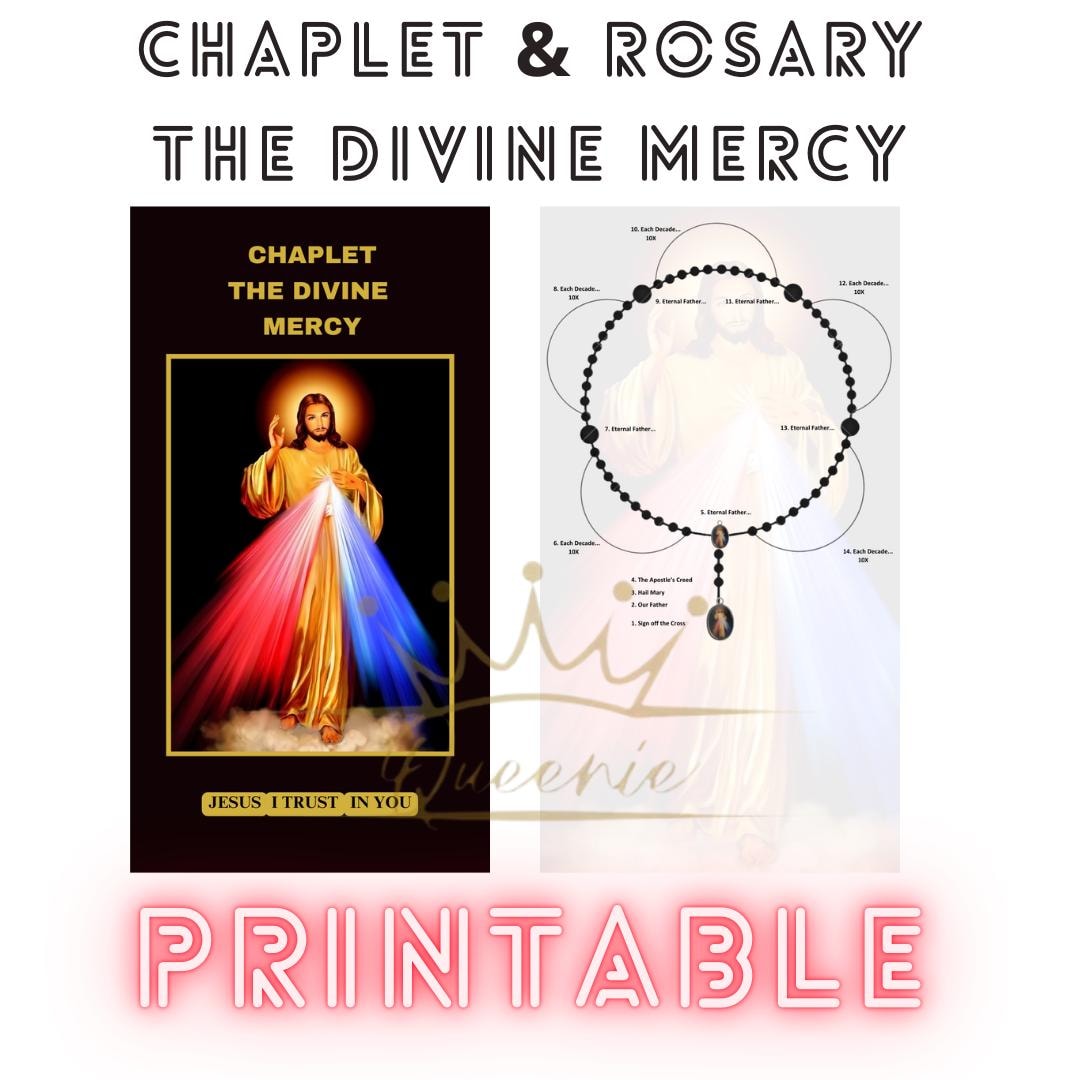
In the Divine Mercy image painted by Eugeniusz Kazimirowski under Faustina’s guidance, two rays of light radiate from Christ’s pierced heart. According to diary entry 299, Jesus explained the meaning:
- The Pale Ray: Represents the water that cleanses and justifies the soul, signifying the Sacraments of Baptism and Penance (Confession).
- The Red Ray: Represents the blood that is the life of souls, signifying the Holy Eucharist.
These rays symbolize the sacramental life of the Church, flowing directly from the lance wound inflicted upon Christ's side on Good Friday (John 19:34).
Radical Interior Trust (Ufam Tobie)
The inscription at the base of the image, "Jezu, ufam Tobie" ("Jesus, I trust in You"), serves as the core spiritual attitude demanded by the chaplet. Theological mercy requires a human vessel to receive it; Saint Faustina repeatedly noted that the vessel is trust. The prayer asserts that despair is unwarranted, no matter how severe an individual's transgressions, because divine mercy is greater than any finite human failure.
The Hour of Great Mercy (3:00 PM)
The chaplet is often paired with the three o'clock hour—the traditional time of Christ’s death on the Cross. Faustina wrote that at 3:00 PM, Christ invited souls to immerse themselves in His Passion, meditate on His abandonment, and implore His mercy, particularly for dying sinners. Praying the chaplet during this hour provides a liturgical rhythm that sanctifies daily life.
Structural Comparison: Marian Rosary vs. Divine Mercy Chaplet
Although the Divine Mercy Chaplet is prayed using a standard set of Dominican Rosary beads, its prayers, rhythm, and theological targets differ significantly.
| Attribute | Marian Rosary | Divine Mercy Chaplet |
|---|---|---|
| Primary Focus | Christ’s life, death, and resurrection viewed through Mary's perspective | The sacrificial atonement of Jesus Christ offered directly to the Father |
| Duration | Typically 15 to 25 minutes | Typically 7 to 12 minutes |
| Opening Beads | Apostles' Creed, 1 Our Father, 3 Hail Marys, 1 Glory Be | 1 Our Father, 1 Hail Mary, Apostles' Creed |
| Decade (Large Bead) | Pater Noster (Our Father) | "Eternal Father, I offer You the Body and Blood..." |
| Decade (Small Beads) | 10 Ave Marias (Hail Marys) | 10 "For the sake of His sorrowful Passion..." |
| Meditation Method | 20 designated Mysteries (Joyful, Luminous, Sorrowful, Glorious) | Singular focus on Christ's Passion, the Eucharist, and global mercy |
| Concluding Prayer | Salve Regina (Hail, Holy Queen) | Trisagion (Holy God, Holy Mighty One, Holy Immortal One...) x3 |
| Primary Theme | Marian intercession and Gospel contemplation | Intercessory atonement, divine forgiveness, and reliance on grace |
Spiritual Promises Attached to the Chaplet
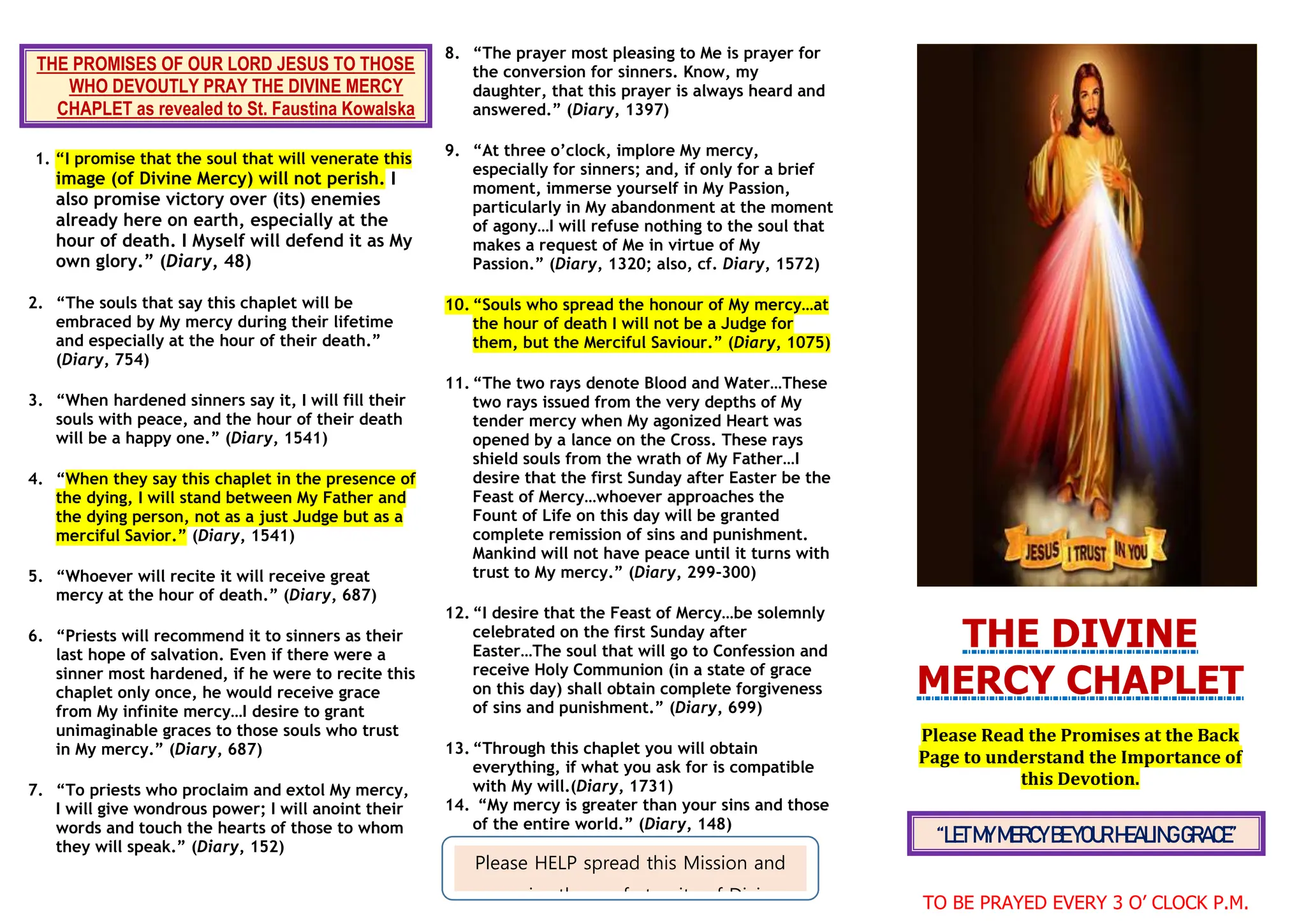
Throughout Faustina's diary, several explicit promises are attributed to Christ regarding the faithful recitation of the Chaplet. The Church interprets these promises not as magical guarantees or superstitions, but as demonstrations of God’s willingness to meet real repentance with abundant grace.
- Defense at the Hour of Death: In diary entry 687, Faustina records Christ promising to stand between His Father and the dying person not as a just Judge, but as a merciful Savior, when the chaplet is prayed near a dying soul.
- Grace for Hardened Sinners: Entry 1541 notes that even if a sinner were the most hardened imaginable, reciting the chaplet even once with sincere sorrow will grant them grace from infinite mercy.
- Hope for Hopeless Causes: The devotion emphasizes that no person’s past sins make them ineligible for forgiveness, counteracting spiritual despair.
- Pacification of Divine Wrath: The prayer acts as a spiritual buffer during periods of historical crisis, moral corruption, and personal turmoil, pleading Christ’s merits against impending spiritual consequences.
Step-by-Step Guide: How to Pray the Chaplet
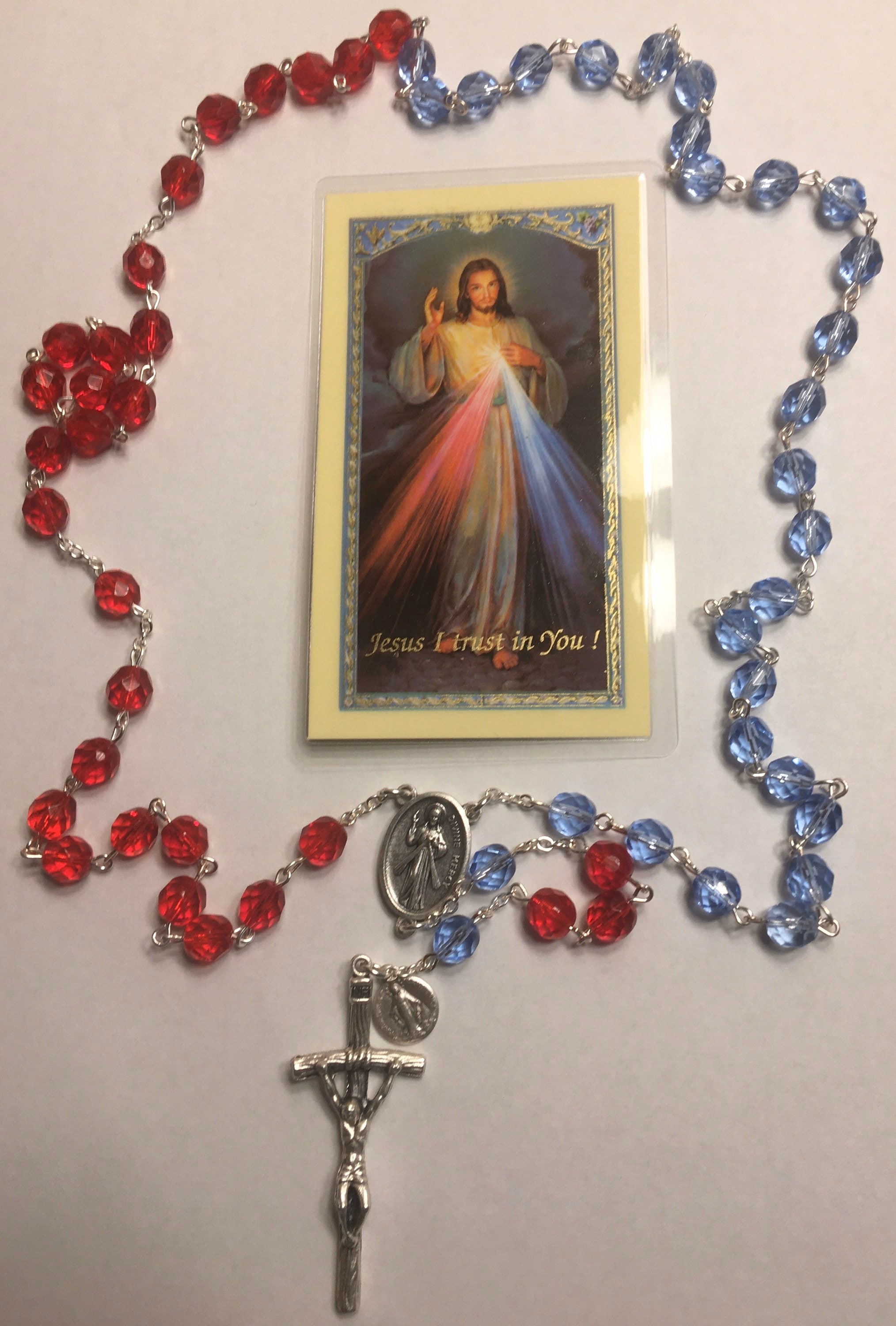
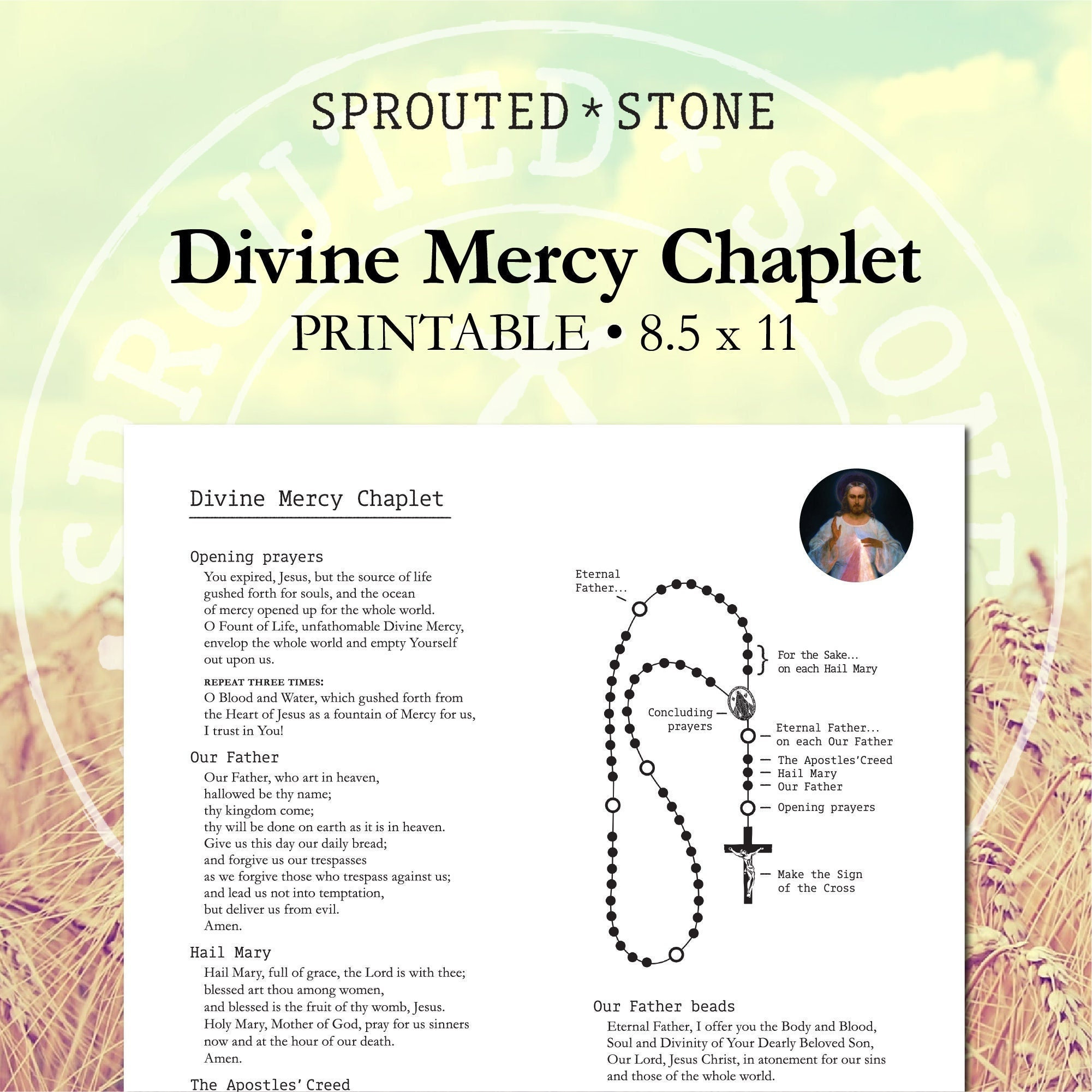
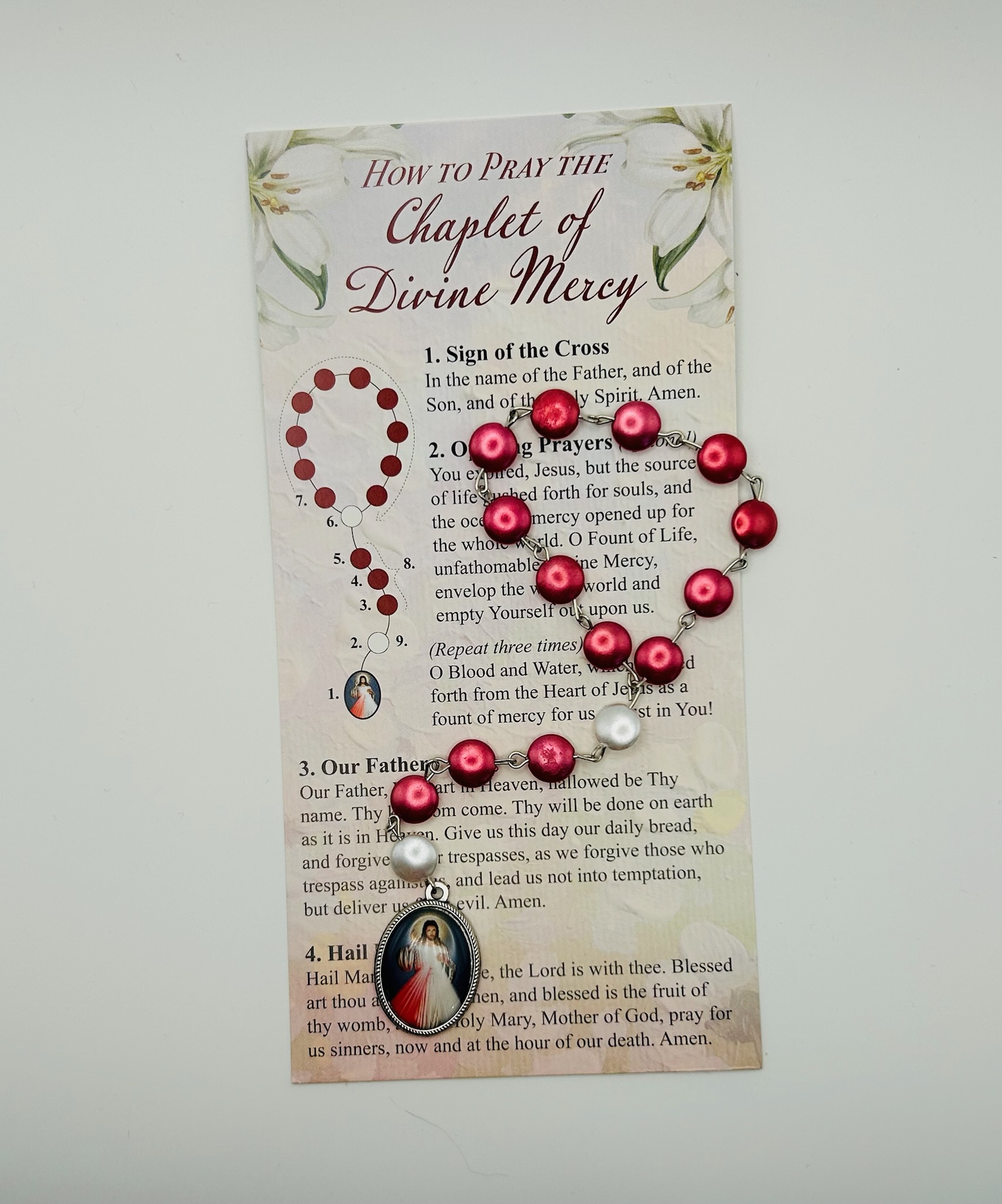
Praying the Chaplet of Divine Mercy requires an ordinary five-decade rosary. The process follows an established structural sequence:
- Sign of the Cross: Begin by blessing yourself: "In the name of the Father, and of the Son, and of the Holy Spirit. Amen."
- Optional Opening Prayers:
"You expired, Jesus, but the source of life gushed forth for souls, and the ocean of mercy opened up for the whole world. O Fount of Life, unfathomable Divine Mercy, envelop the whole world and empty Yourself out upon us."(Repeat three times): "O Blood and Water, which gushed forth from the Heart of Jesus as a fount of mercy for us, I trust in You!"
- The Introductory Prayers:
- Recite one Our Father on the first large bead.
- Recite one Hail Mary on the following bead.
- Recite the Apostles’ Creed on the third bead to ground the devotion in orthodox Christian doctrine.
- The Five Decades:
- On the single large bead before each decade: "Eternal Father, I offer You the Body and Blood, Soul and Divinity of Your dearly beloved Son, Our Lord, Jesus Christ, in atonement for our sins and those of the whole world."
- On the ten consecutive small beads: "For the sake of His sorrowful Passion, have mercy on us and on the whole world."
- The Trisagion (Closing Prayer):
- After completing all five decades, conclude by chanting or reciting three times:"Holy God, Holy Mighty One, Holy Immortal One, have mercy on us and on the whole world."
- Optional Closing Prayer:
"Eternal God, in whom mercy is endless and the treasury of compassion inexhaustible, look kindly upon us and increase Your mercy in us, that in difficult moments we might not despair nor become despondent, but with great confidence submit ourselves to Your holy will, which is Love and Mercy itself. Amen."
Frequently Asked Questions
Can non-Catholics pray the Divine Mercy Chaplet?
Yes, any Christian who believes in the Holy Trinity and the redemptive suffering of Jesus Christ can pray the chaplet. Because its prayers appeal directly to the Father through the merits of Christ’s sacrifice, it serves as a powerful form of Christocentric prayer across traditional denominations, though its language directly reflects Catholic Eucharistic theology.
Why do laypeople say "I offer you the Body and Blood"?
This phrasing reflects the baptismal priesthood shared by all baptized Christians, distinct from the ministerial priesthood of ordained clergy. Laypeople do not confect or consecrate the Eucharist; rather, they present the merits of the already-consecrated Christ to the Father, actively participating in the spiritual offering made present during Mass.
What is the Divine Mercy Novena?
The Divine Mercy Novena is a nine-day period of prayer that traditionally begins on Good Friday and concludes on the Saturday before Divine Mercy Sunday. For each day of the novena, Faustina’s diary records a specific group of souls for whom Jesus asked prayers, including priests and religious, lukewarm believers, the souls in Purgatory, and children.
Does reciting the Chaplet guarantee salvation?
No Catholic prayer provides an unconditional guarantee of salvation outside personal cooperation with grace. The promises attached to the Chaplet assume genuine interior sorrow for sin, personal conversion, and avoidance of presumption. It functions as an instrument of grace, drawing the soul toward the sacraments and authentic repentance.
When is the ideal time to pray the Chaplet?
While the Chaplet can be recited at any hour of the day or night, the Church highlights 3:00 PM (the Hour of Mercy) as especially fitting. It is also commonly prayed at the bedside of the dying, during Eucharistic adoration, and during periods of deep spiritual anxiety.
Practical Application
To integrate the meaning of the Divine Mercy Chaplet into your daily routine, begin by setting aside ten minutes at 3:00 PM or alongside your evening prayers. Rather than rushing through the beads, pause intentionally on each large bead to bring a specific person, troubled region, or personal trial to mind, consciously placing that intention into the wound of Christ’s side. Combining the spoken prayer with works of corporal and spiritual mercy completes the devotion, turning contemplative trust into active charity.
Image Gallery