Why the Simple Interest Loan Matters for Borrowers
A simple interest loan matters because it calculates interest only on the principal balance, allowing borrowers to save significant money by paying early. Unlike compound interest, it prevents debt from snowballing, providing a transpa...
A simple interest loan matters because it calculates interest only on the principal balance, allowing borrowers to save significant money by paying early. Unlike compound interest, it prevents debt from snowballing, providing a transparent, predictable path to repayment that rewards financial discipline and aggressive principal reduction strategies.
Contents
Understanding the nuances of interest calculation is often the difference between financial freedom and a cycle of perpetual debt. As of 2026, the lending landscape has become increasingly digitized, yet the fundamental math of the simple interest loan remains a cornerstone of consumer-friendly financing. Whether you are financing a vehicle, taking out a personal loan, or managing specific types of student debt, knowing how simple interest functions—and why it differs from other models—is essential for any informed borrower.
The Core Mechanics of Simple Interest
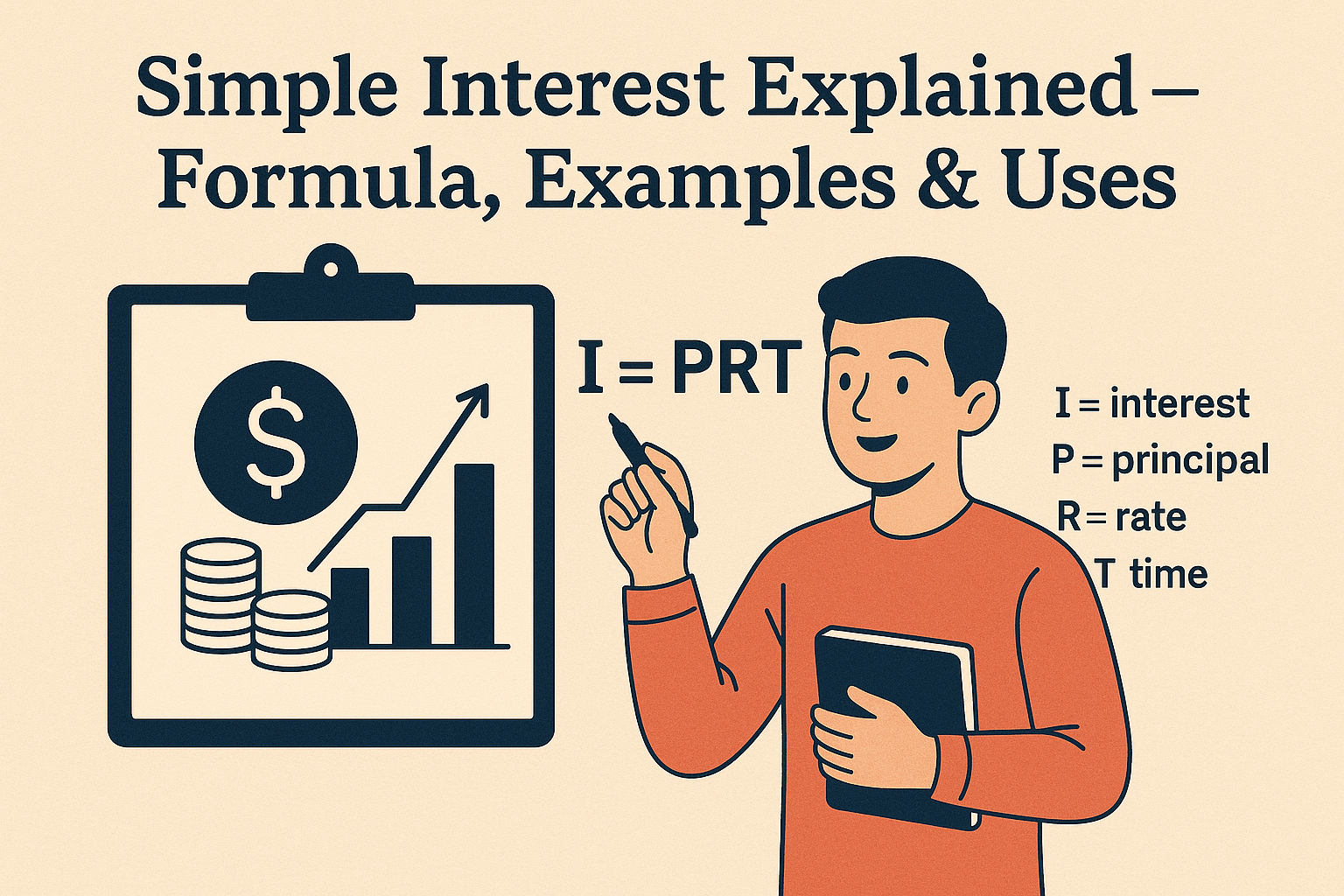
At its most basic level, simple interest is a calculation that ignores prior interest charges when determining the cost of borrowing for the current period. The formula is straightforward: Interest = Principal × Rate × Time.
In a simple interest environment, the "Principal" refers to the outstanding amount of the loan. As you make payments, the principal decreases. Because the interest for the next period is calculated only on that new, lower principal balance, the amount of money diverted to interest costs drops over time. This is the primary reason why simple interest is favored by borrowers who intend to pay off their debt ahead of schedule.
Daily Simple Interest Accrual
In 2026, most consumer simple interest loans—particularly auto loans—operate on a daily simple interest basis. This means the lender calculates interest every day based on the balance you owe at that exact moment. To find the daily interest charge, the lender divides the annual interest rate by 365 (or sometimes 360, depending on the contract).
For example, if you owe $20,000 at a 5% annual rate, your daily interest is approximately $2.74 ($20,000 × 0.05 / 365). If you make a payment today, your principal drops, and tomorrow’s interest calculation will be based on that smaller number. This daily calculation makes the timing of your payments critical; paying a few days early every month can result in substantial interest savings over the life of the loan.
Simple Interest vs. Compound Interest: The Borrower’s Advantage
The most significant reason a simple interest loan matters is its contrast with compound interest. Compounding is the process where interest is added to the principal, and then interest is charged on that new, larger total. While compounding is a powerful tool for savers and investors, it is a heavy burden for borrowers.
Most credit cards utilize compound interest (often compounded daily). If you do not pay your balance in full, the interest from June is added to your balance in July, and you begin paying interest on your previous interest. This creates a "snowball effect" that can make debt difficult to manage if only minimum payments are made.
In contrast, a simple interest loan never "capitalizes" interest under normal circumstances. If you have a $500 interest charge due and you pay it, that charge is gone. It does not get added to the principal to generate more interest the following month. This transparency allows for a linear reduction in debt that is easier for the average household to track and forecast using standard 2026 financial planning tools.
Why Early Payments Are a Game-Changer
For a borrower, the greatest utility of a simple interest loan is the ability to influence the total cost of the loan through behavior. Because interest is calculated based on the current principal, any payment made toward the principal immediately reduces the interest burden for all future periods.
The Power of Extra Principal Payments
When you make a standard monthly payment on a simple interest loan, the lender first applies the money to any late fees, then to the interest accrued since your last payment, and finally to the principal balance. By adding even a small "extra" amount to your monthly payment—and ensuring the lender applies it to the principal only—you are effectively shrinking the base upon which all future interest is calculated.
In a compound interest or an "add-on" interest environment, the benefits of early payment are often muted or non-existent. However, with simple interest, the math is always working in the borrower’s favor if they pay more than the minimum. By 2026 standards, most reputable lenders provide a "principal-only" toggle in their mobile apps, making it easier than ever to execute this strategy.
The Cost of Late Payments
Conversely, simple interest matters because it also penalizes late payments more than some borrowers realize. Because interest accrues daily, if you are ten days late on a payment, ten extra days of interest will accumulate. This means a larger portion of your next payment will go toward interest, and a smaller portion will go toward the principal. This "drags out" the loan term and increases the total amount paid over time, even if the lender doesn't charge a specific late fee.
Common Loan Types Utilizing Simple Interest
Understanding which products typically use this model helps borrowers navigate the marketplace. While terminology can vary by jurisdiction, the following products are most commonly structured as simple interest:
- Auto Loans: The vast majority of vehicle financing through banks, credit unions, and captive lenders (like Ford Credit or Toyota Financial Services) uses daily simple interest.
- Personal Loans: Most fixed-rate personal loans from online lenders and traditional banks are simple interest.
- Student Loans: Federal student loans and many private student loans use a simple interest formula, though they may "capitalize" (compound) interest after periods of deferment or forbearance.
- Mortgages: While mortgages are amortized, the monthly interest calculation is typically a form of simple interest based on the remaining balance. However, the calculation is usually monthly rather than daily.
Beware of "Add-On" Interest
Borrowers must be careful not to confuse simple interest with add-on interest. In an add-on loan, the interest is calculated on the original principal for the entire term and "added on" to the total immediately. Even if you pay the loan off halfway through the term, you may still be responsible for the full amount of interest calculated at the start. Simple interest is vastly superior for the borrower because it allows for interest savings through early retirement of the debt.
Comparative Interest Structures
The following table compares the three primary interest structures a borrower might encounter in 2026.
| Feature | Simple Interest | Compound Interest | Add-on Interest |
|---|---|---|---|
| Calculation Base | Current Principal Balance | Principal + Accrued Interest | Original Principal (Fixed) |
| Early Payment Benefit | High (Reduces future interest) | High (Prevents compounding) | Very Low to None |
| Transparency | High (Easy to calculate) | Moderate (Requires math) | Low (Often misleading) |
| Common Uses | Auto, Personal, Student Loans | Credit Cards, Lines of Credit | Subprime, Short-term Loans |
| Total Cost | Lowest (with early payments) | Highest (if unpaid) | High (Fixed cost) |
Verifying Your Loan Structure
Before signing a loan agreement, it is vital to verify that it is indeed a simple interest loan. In the United States, the Truth in Lending Act (TILA) disclosures are the primary tool for this.
What to Look for in the Contract
- The "Simple Interest" Clause: Most contracts will explicitly state "Simple Interest" or "Daily Simple Interest" in the "Method of Computing Interest" section.
- Prepayment Penalties: Simple interest loans generally do not have prepayment penalties. If you see a penalty for paying early, it may be an add-on loan or have a "Rule of 78s" calculation, which is less favorable for the borrower.
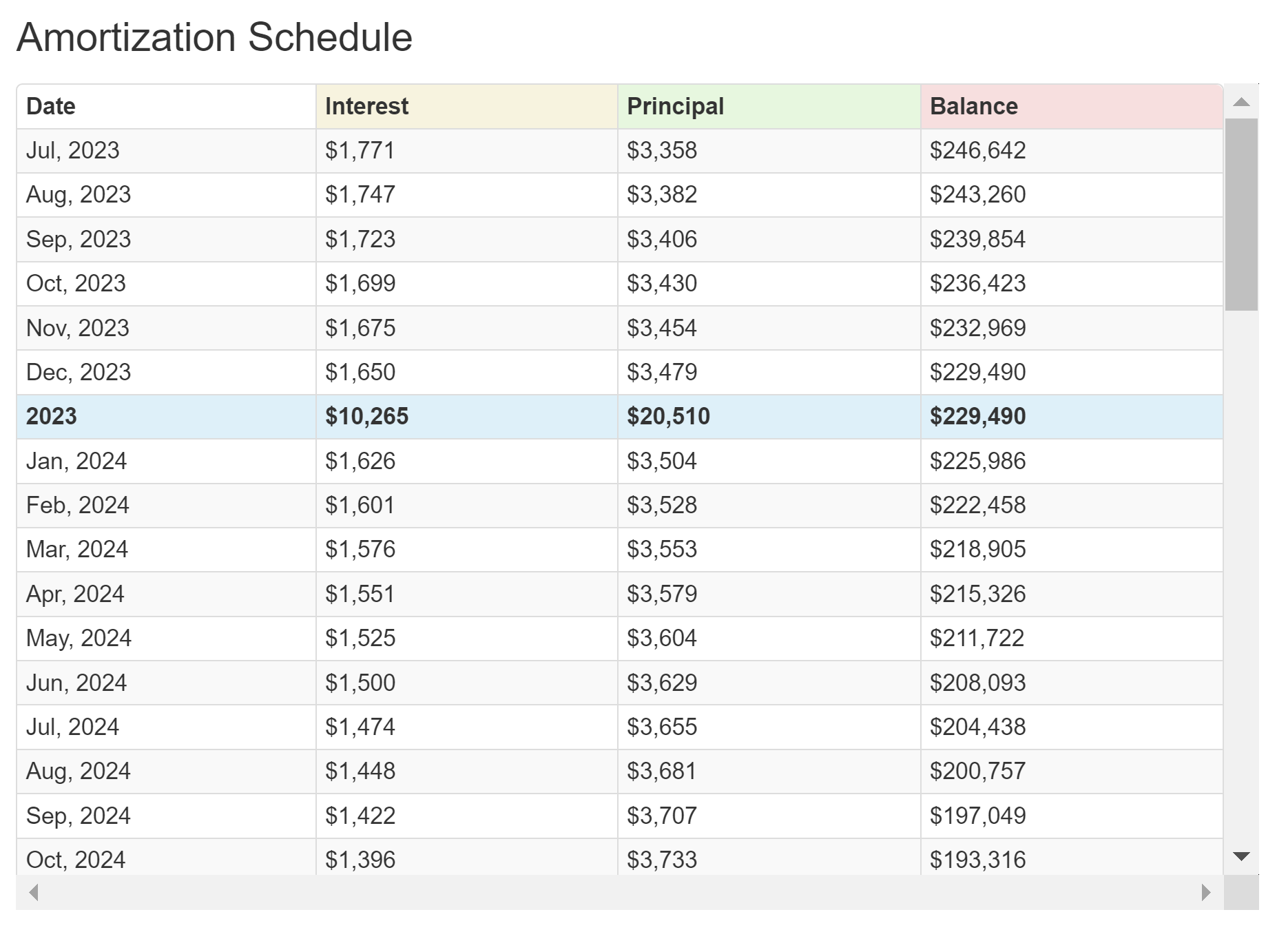
- Amortization Schedule: Review the schedule to see how the interest portion of your payment decreases over time. If the interest amount stays the same every month regardless of your balance, it is not a simple interest loan.
In 2026, many borrowers use third-party verification apps to scan their loan documents for "predatory math" or unfavorable interest clauses. Utilizing these tools can provide an extra layer of security against confusing terminology.
Financial Advice Disclaimer
This information is for educational purposes only and does not constitute professional financial, legal, or investment advice. Loan regulations and interest calculation methods may vary by jurisdiction and specific lender terms. Always consult with a qualified financial advisor or legal professional before entering into a credit agreement.
Frequently Asked Questions
1. Does a simple interest loan have a fixed or variable rate?
Simple interest loans can be either fixed or variable, but they are most commonly fixed-rate. This means the annual percentage rate (APR) stays the same throughout the life of the loan. The "simple" part refers to how the interest is calculated (on the principal only), while "fixed" refers to the rate itself. If you have a variable simple interest loan, your interest cost will change if the underlying index (such as the Prime Rate) moves, but the calculation will still only apply to your current principal.
2. Can I change a compound interest loan into a simple interest loan?
No, you cannot change the fundamental interest structure of an existing loan contract. However, you can refinance a compound interest debt (like a credit card balance) into a simple interest loan (like a personal debt consolidation loan). This is a common strategy in 2026 for reducing interest costs and creating a fixed timeline for becoming debt-free.
3. How does the "Rule of 78s" differ from simple interest?
The "Rule of 78s" is an older, often discouraged method of calculating interest that front-loads interest charges even more aggressively than standard amortization. Unlike a simple interest loan, where you pay interest based on your actual balance, the Rule of 78s pre-calculates the interest and makes it more expensive to pay off the loan early. Most modern consumer advocates and 2026 regulations favor simple interest over Rule of 78s calculations.
4. Why does my simple interest loan balance not seem to drop early on?
In the early stages of a simple interest loan (especially long-term ones like 72-month auto loans), your principal balance is at its highest. Therefore, the daily interest charge is also at its highest. Even though it is a simple interest loan, a large portion of your initial payments will go toward covering that interest. As the principal drops, the interest portion of your payment shrinks, and your balance will begin to decrease much faster. This is known as the amortization effect.
5. Does the date I make my payment matter for simple interest?
Yes, absolutely. Because simple interest is calculated daily, the exact day your payment is received matters. If you pay on the 1st of the month instead of the 15th, you have 14 fewer days of interest accruing on that principal. Over the course of a five-year loan, consistently paying a week or two early can save hundreds of dollars in interest and shave months off your repayment schedule.
Final Recommendation for Borrowers
If you are currently shopping for a loan, explicitly ask the lender for a daily simple interest structure with no prepayment penalties. This structure offers the most control over your financial future. Once the loan is active, prioritize making payments as early in the billing cycle as possible and allocate any windfalls—such as tax refunds or bonuses—directly toward the principal. In the 2026 financial environment, where interest rates and inflation can be volatile, the predictability and "hackability" of a simple interest loan remain one of the most effective tools for wealth preservation and debt elimination.
Image Gallery