Why Arkansas Auto Insurance Beats Georgia for Most Drivers in 2026
Arkansas offers significantly lower average premiums than Georgia due to lower population density, fewer high-traffic urban corridors, and a less aggressive litigation environment. While both states follow a tort-based "at-fault" syste...
Arkansas offers significantly lower average premiums than Georgia due to lower population density, fewer high-traffic urban corridors, and a less aggressive litigation environment. While both states follow a tort-based "at-fault" system, Georgia’s higher rates of uninsured motorists and expensive repair costs in metro areas like Atlanta make it consistently more expensive for the typical driver.
Contents
For drivers looking at the bottom line, the geographic and regulatory differences between Arkansas and Georgia create a stark contrast in monthly expenses. As we move through 2026, the gap between these two Southern states remains a focal point for those relocating or managing multi-state fleets. Although the states share a similar legal philosophy regarding liability, the practical application of insurance math favors the Natural State.
The Financial Divide: Premium Disparity in 2026
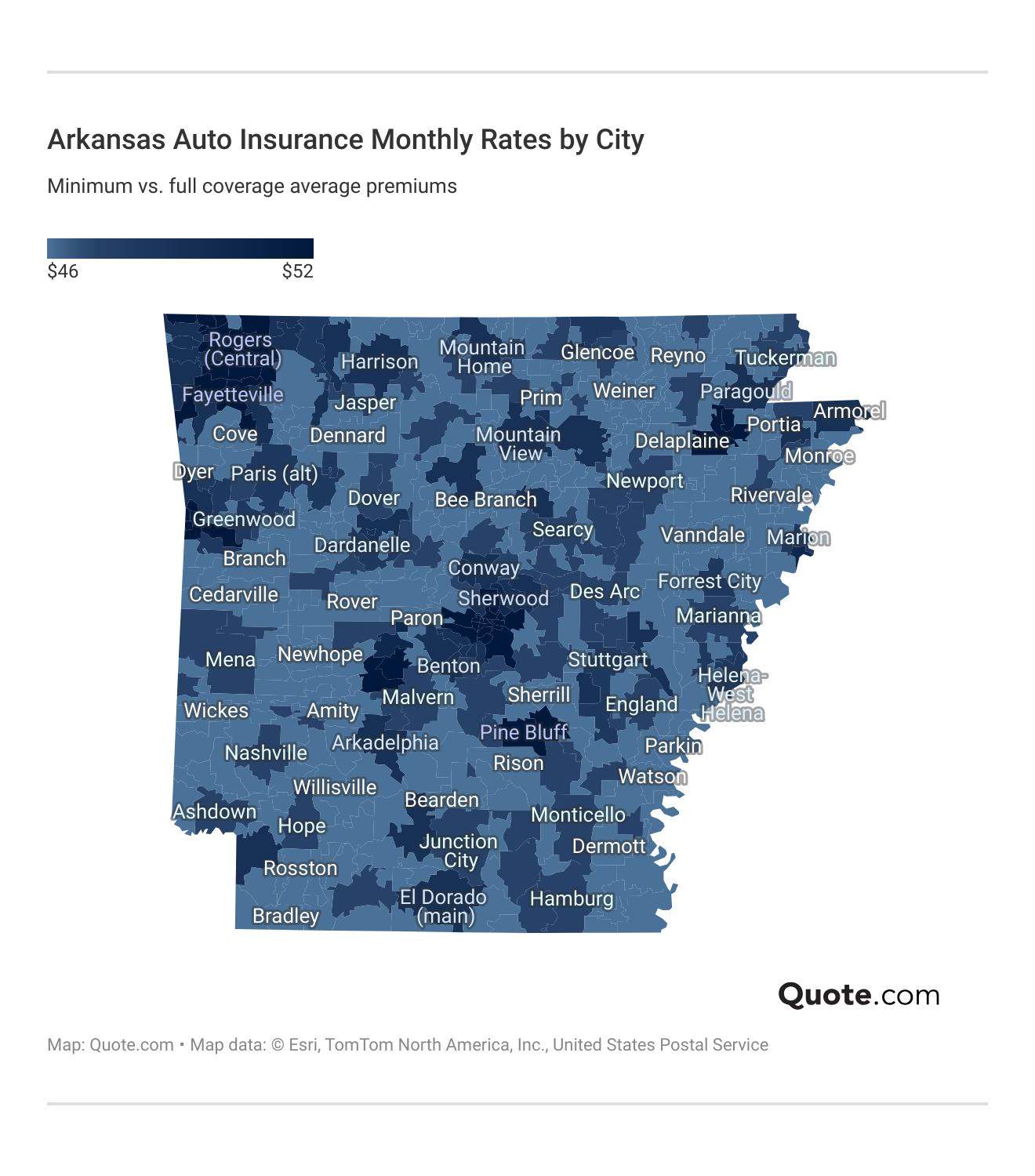
The most immediate reason Arkansas "beats" Georgia is the raw cost of a standard policy. In 2026, the average annual cost for full coverage in Arkansas hovers around $1,850 to $1,950, whereas Georgia drivers are frequently seeing averages between $2,400 and $2,700. This difference of roughly $500 to $750 per year is not arbitrary; it is the result of decades of actuarial data reflecting the relative risk of driving in each state.
Georgia has consistently ranked among the top ten most expensive states for auto insurance over the last several years. This is driven largely by the state’s rapid urbanization. Arkansas, conversely, maintains a more rural profile. Even in its largest metropolitan area, Little Rock, the traffic density and corresponding accident frequency do not reach the levels seen in the Atlanta-Sandy Springs-Alpharetta corridor. For insurers, lower density equates to fewer "fender benders" and fewer multi-vehicle pileups, allowing them to keep base rates lower for Arkansas policyholders.
The "Atlanta Effect" vs. Arkansas Urbanization
To understand why Georgia insurance is so expensive, one must look at the impact of Atlanta. Georgia’s population is heavily concentrated in a few high-density areas. In 2026, the Atlanta metro area accounts for more than half of the state’s total population. High-density urban driving is statistically the most dangerous for insurers because it involves higher frequencies of:
- Commuter Congestion: Stop-and-go traffic on major arteries like I-285 and I-85 leads to a higher volume of rear-end collisions.
- Vehicle Theft: Urban centers traditionally see higher rates of comprehensive claims related to theft and vandalism.
- Vulnerable Road Users: Higher concentrations of pedestrians and cyclists increase the potential for high-value liability claims.
Arkansas does not have a comparable mega-city. While Northwest Arkansas (Fayetteville-Springdale-Rogers) is growing rapidly, its infrastructure is newer and the population is more spread out. The lack of a massive, congested hub means that the "weighted average" of insurance costs in Arkansas remains low. A driver in Fort Smith or Jonesboro is paying a rate that reflects a much calmer driving environment than someone living in Marietta or Decatur.
Uninsured Motorist Rates and Their Impact on Premiums
Another critical factor where Arkansas holds an advantage is the rate of uninsured motorists. Despite mandatory insurance laws, Georgia has historically struggled with a high percentage of drivers operating without coverage—often estimated between 12% and 15% of the driving population.
When a state has a high number of uninsured drivers, insurance companies must raise premiums for everyone else to cover the costs of "Uninsured Motorist (UM)" claims. If a Georgia driver is hit by an uninsured party, their own insurance company often has to step in to pay for medical bills and property damage. In Arkansas, while the problem exists, the enforcement mechanisms and lower overall cost of insurance make it easier for the general population to maintain legal coverage. This results in lower UM premiums for those who do follow the law.
Legal Systems and the Cost of Litigation
Both Arkansas and Georgia utilize a tort system, meaning the driver found at fault for an accident is responsible for the damages. However, the litigation climate in Georgia is often cited by the Insurance Information Institute (III) as being more "litigious."
In Georgia, the potential for high-dollar jury awards in personal injury cases is significantly higher than in Arkansas. This "social inflation"—the rising cost of insurance claims resulting from societal trends such as increased litigation and higher jury awards—forces insurers in Georgia to maintain larger reserves. These costs are passed directly to the consumer. Arkansas’s legal environment is generally more conservative regarding tort settlements, which helps stabilize rates for long-term residents.
Comparison of Key Insurance Metrics (2026 Projections)
| Feature | Arkansas | Georgia |
|---|---|---|
| Avg. Annual Full Coverage | $1,900 | $2,550 |
| Minimum Liability Limits | 25/50/25 | 25/50/25 |
| Tort System Type | Modified Comparative Fault | Modified Comparative Fault |
| Uninsured Driver Rate (Est.) | 9-11% | 13-15% |
| Primary Cost Driver | Weather/Hail Events | Urban Traffic/Theft/Litigation |
| Repair Labor Rates (Avg.) | $95 - $115/hr | $120 - $150/hr |
Minimum Requirements and the Cost of Compliance
Both states share the same minimum liability requirements: 25/50/25. This shorthand stands for:
- $25,000 for bodily injury per person.
- $50,000 for bodily injury per accident.
- $25,000 for property damage.
While the requirements are identical, the cost to purchase that minimum level of protection is drastically different. In Arkansas, a "minimum limits" policy is often seen as a highly affordable entry point for young drivers or those on a budget. In Georgia, even a minimum limits policy can feel like a significant financial burden because the baseline risk (the probability that you will actually hit someone in Georgia’s dense traffic) is much higher.
Repair Costs and Labor Market Dynamics
The cost of insurance is also tied to the cost of "making the claimant whole," which involves repairing vehicles. Arkansas generally benefits from lower labor rates at auto body shops compared to Georgia’s major metros. In 2026, the sophisticated technology in modern electric and autonomous-assist vehicles requires specialized labor.
In Georgia, particularly in the northern part of the state, the competition for skilled technicians has driven labor rates significantly higher. When an insurer pays out a claim in Atlanta, they are likely paying 20-30% more for the same bumper repair than they would in Little Rock. These regional economic factors create a feedback loop that keeps Arkansas's premiums more competitive.
Factors Where Georgia Might Have an Edge
It is important to note that Arkansas is not "better" for every single driver. Arkansas is part of "Tornado Alley" and frequently experiences severe hailstorms. For drivers who carry Comprehensive Coverage, Arkansas can sometimes see price spikes following a particularly bad storm season.
Georgia, while prone to hurricanes on the coast and occasional storms inland, generally has a more predictable weather risk profile for the majority of its inland population. However, when you weigh weather risks against the constant, daily risks of Georgia’s traffic and crime rates, Arkansas still emerges as the more affordable option for the "average" driver.
Strategies for Drivers in Both States
Regardless of whether you are in Arkansas or Georgia, there are ways to mitigate the rising costs of 2026 insurance premiums:
- Telematics Programs: Usage-based insurance (UBI) is now standard. Drivers in Georgia, in particular, can save significantly by proving they avoid peak-hour traffic or high-speed maneuvers.
- Higher Deductibles: If you have an emergency fund, raising your deductible from $500 to $1,000 can reduce premiums by up to 15%.
- Credit Score Management: Both states allow insurers to use credit-based insurance scores. Maintaining a high credit score is one of the most effective ways to lower your rate in both Little Rock and Atlanta.
- Multi-Policy Discounts: Bundling home and auto insurance remains the most consistent way to trigger a 10-20% discount.
FAQ: Arkansas vs. Georgia Auto Insurance
Is it illegal to drive in Georgia with Arkansas insurance? If you are a permanent resident of Georgia, you must register your vehicle and obtain Georgia insurance within 30 days. Keeping Arkansas insurance while living in Georgia is considered "rate evasion" and can lead to claim denials or legal penalties.
Why did my rates go up in Arkansas even though it's "cheaper" than Georgia? Insurance rates across the U.S. have risen due to the increased cost of vehicle parts and the complexity of modern car repairs. Even if Arkansas is cheaper than Georgia, it is still subject to national inflationary trends.
Which state is better for teen drivers? Arkansas is generally much better for teen drivers. Because the "base rate" is lower, the percentage increase for adding a teenager results in a smaller total dollar amount than it would in Georgia.
Does Georgia's "No-Fault" or "At-Fault" status affect the comparison? Both states are "At-Fault" (Tort) states. This means the comparison is "apples-to-apples" regarding legal structure. The price difference is purely based on risk factors like traffic, crime, and litigation, rather than a fundamental difference in how claims are processed.
Are there specific Arkansas laws that help keep insurance low? Arkansas has strict laws regarding the "Stacking" of uninsured motorist coverage, which can limit the total payout in some scenarios compared to more consumer-friendly (and therefore more expensive) states.
Final Recommendation
For the majority of drivers, Arkansas auto insurance is the clear winner in terms of affordability and value. The lack of extreme urban congestion and a more stable legal environment allow Arkansas residents to keep more of their income compared to their peers in Georgia. If you are planning a move between these states, expect a significant shift in your cost of living—likely in your favor if you are heading to the Natural State. To get the best results, always compare quotes from at least three carriers, as regional specialists in the South often provide better rates than national "one-size-fits-all" insurers.
Image Gallery