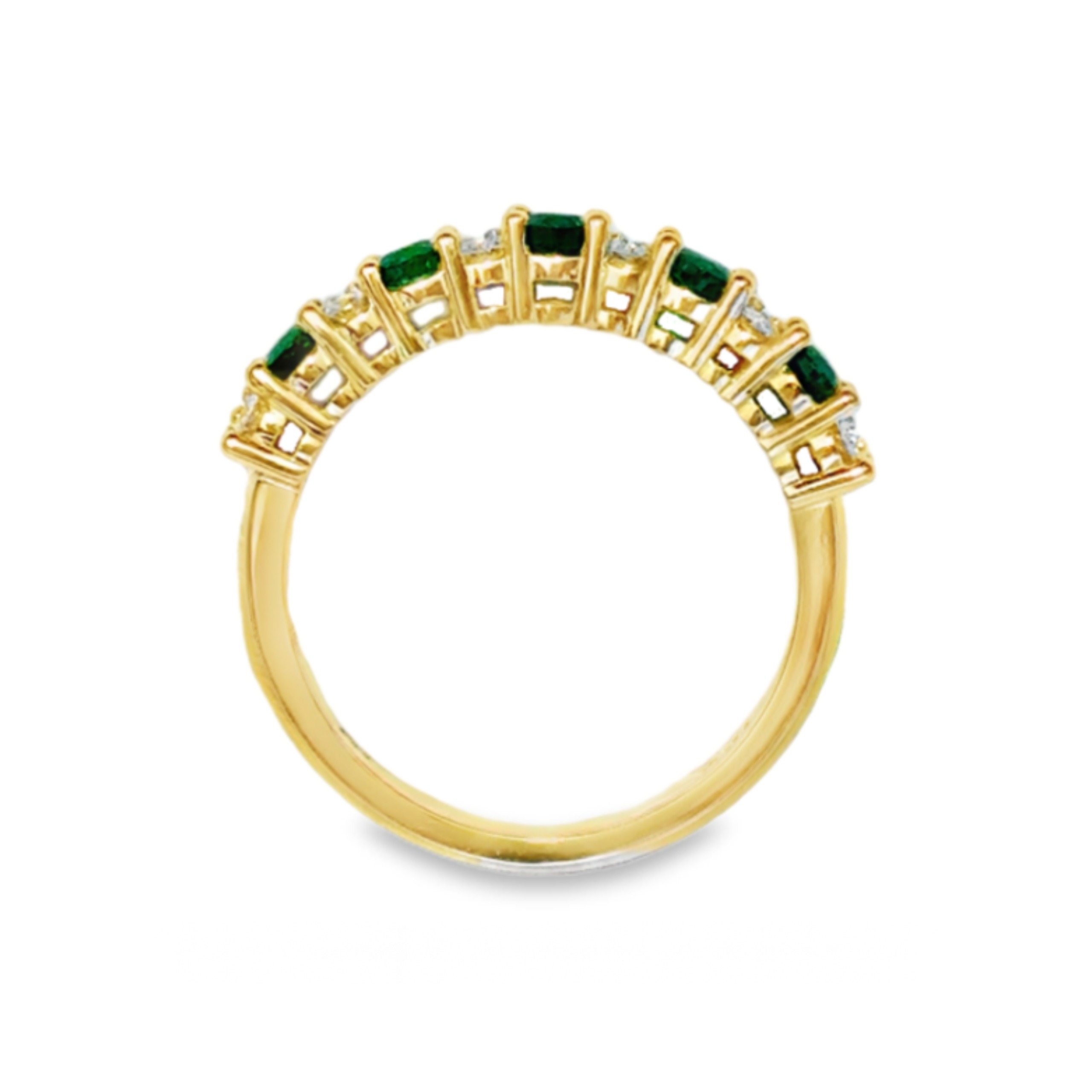
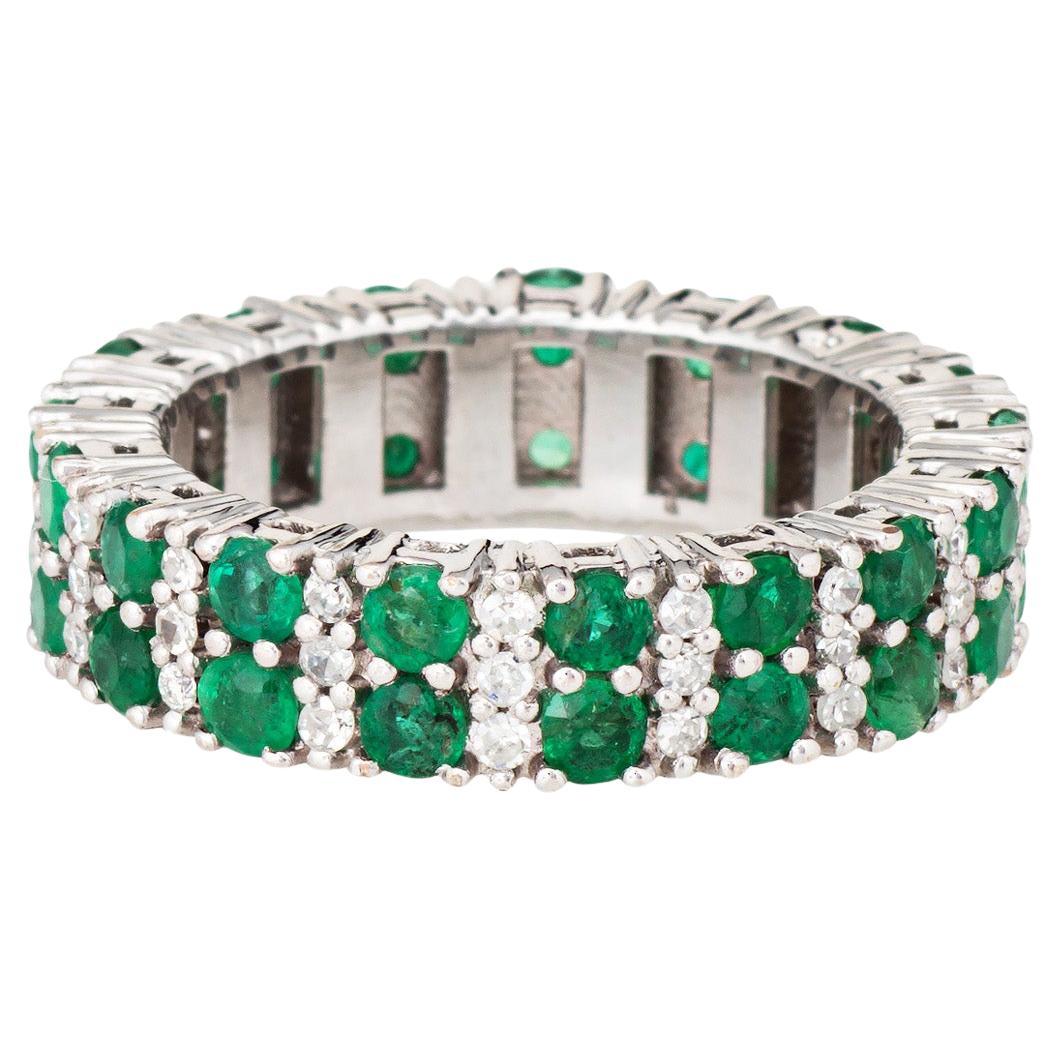
What to Know About the Emerald and Diamond Eternity Ring
An emerald and diamond eternity ring is a continuous band of alternating or grouped emeralds and diamonds symbolizing eternal love, making it a striking choice for milestone anniversaries or unique wedding bands that requires careful c...
An emerald and diamond eternity ring is a continuous band of alternating or grouped emeralds and diamonds symbolizing eternal love, making it a striking choice for milestone anniversaries or unique wedding bands that requires careful consideration of gemstone durability, setting styles, and daily maintenance.
Contents
The emerald and diamond eternity ring stands as one of the most visually arresting pieces of fine jewelry available today. Merging the vibrant, saturated green of the emerald with the brilliant, fiery sparkle of the diamond, this continuous band offers a sophisticated departure from traditional all-diamond eternity bands. However, because emeralds and diamonds possess significantly different physical properties, purchasing, wearing, and maintaining this type of ring requires specialized knowledge.
Whether you are considering this ring as a milestone anniversary gift, a wedding band, or a self-purchase, understanding the nuances of gemstone characteristics, setting vulnerabilities, sizing limitations, and long-term care will ensure your investment remains radiant and secure for decades to come.
Understanding the Gemstones: Emerald vs. Diamond
Before examining the design of an eternity ring, it is essential to understand the individual characteristics of the two gemstones that compose it. The contrast between emerald and diamond extends far beyond color; it dictates how the ring must be worn and cared for.
Diamond Characteristics and Durability
Diamonds are composed of pure carbon crystallized under high pressure and temperature deep within the Earth. Ranking a definitive 10 on the Mohs scale of mineral hardness, diamonds are the hardest known natural substance on Earth.
- Hardness vs. Toughness: While a diamond cannot be scratched by anything other than another diamond, it does possess planes of cleavage. This means a sharp blow at a specific angle can cause a diamond to chip or fracture.
- Brilliance and Fire: Diamonds are prized for their high refractive index, dispersing light into spectral colors (fire) and returning white light to the eye (brilliance).
Emerald Characteristics and Vulnerabilities
Emeralds belong to the beryl family and achieve their iconic green color through trace amounts of chromium, vanadium, and iron. Ranking between 7.5 and 8 on the Mohs scale, emeralds are considerably softer than diamonds.
- Inclusions (Jardin): Virtually all natural emeralds contain internal fractures and inclusions, poetically referred to as the jardin (garden). These inclusions are accepted as part of an emerald's natural identity and authenticity.
- Clarity Enhancement: Because of these internal features, the vast majority of commercial emeralds undergo clarity enhancement, typically being treated with natural oils or resins to fill surface-reaching fractures and improve visual transparency.
- Fracture Vulnerability: Because of their internal inclusions, emeralds are much more brittle than diamonds. They require careful handling to avoid impact-induced damage, thermal shock, and exposure to harsh chemicals that can strip treatment oils.
Design and Setting Options for Eternity Bands
An eternity ring features gemstones set continuously around the entire circumference of the precious metal band. When combining emeralds and diamonds, jewelers employ specific setting techniques to maximize aesthetic appeal while mitigating the structural risks posed by the softer emeralds.
| Setting Style | Visual Characteristics | Security Level for Emeralds & Diamonds |
|---|---|---|
| Prong / Shared | Minimal metal obstruction, maximizing light entry and brilliance. | Moderate to Low. Exposes stone girders to lateral impacts. |
| Channel | Metal walls enclose the stones on two sides, holding them tight. | High. Protects the delicate edges of emeralds. |
| Bezel | A thin metal rim wraps around the perimeter of each gemstone. | Maximum. Shields soft emerald edges from direct knocks. |
| Flush / Gypsy | Stones are set directly into drilled holes within the metal. | Very High. Extremely secure, though it reduces sparkle. |
Alternating Patterns vs. Clusters
The arrangement of stones significantly impacts the ring's overall durability.
- Alternating Individual Stones: A classic 1:1 alternation (one diamond, one emerald) distributes the color evenly and ensures that no single section is overly vulnerable.
- Cluster or Station Designs: Grouping small diamonds around a larger emerald or alternating small sections can protect the emeralds by buffering them with harder diamonds, though this alters the classic continuous eternity look.
Metal Selection
The choice of precious metal frames the gemstones and contributes to the ring's structural integrity.
- Platinum: The premier choice for eternity rings. Platinum is dense, durable, and naturally white. It develops a patina over time but holds prong settings very securely, reducing the risk of losing a stone.
- 18k and 14k Gold: Yellow, white, and rose gold are traditional favorites. White gold is often rhodium-plated for a bright finish. Gold is softer than platinum and can wear down faster over decades of daily wear, particularly along shared prongs.
Sizing Challenges and Practical Considerations
One of the most critical factors to understand before purchasing an emerald and diamond eternity ring is that traditional eternity rings generally cannot be resized. Because the gemstones encircle the entire finger, adding or removing metal to change the size would disrupt the continuous pattern of stones.
How to Address the Sizing Dilemma
- Exact Measurement: Have your finger sized by a professional jeweler using a wide ring sizer, as eternity rings feel tighter than narrow, standard bands due to their uniform thickness.
- Seasonal Fluctuations: Keep in mind that fingers swell in summer and contract in winter. Ensure the fit accommodates minor physiological changes without slipping off over the knuckle.
- Half-Eternity Alternatives: If sizing uncertainty is a concern, consider a half-eternity or three-quarter eternity band. These feature gemstones only across the top and upper sides of the finger, leaving a solid metal sizing bar at the bottom that can be easily adjusted by a jeweler in the future.
Cost Factors and Investment Value
The price of an emerald and diamond eternity ring varies widely based on several distinct gemological and manufacturing criteria. Understanding these factors helps you evaluate value accurately.
- Emerald Quality and Origin: Natural emeralds of fine quality—exhibiting a vivid, medium-dark green hue with moderate saturation and minimal eye-visible inclusions—frequently command prices per carat rivaling or exceeding top-tier diamonds. Origin also matters heavily; Zambian emeralds often possess superior clarity, while Colombian emeralds are prized for their historic, velvety hue.
- Diamond Cut and Color: In an eternity band, diamonds are typically matched for color (often G–H or better) and clarity (VS or SI) to maintain a cohesive visual standard. Round brilliant, emerald-cut, or princess-cut stones are common choices, with fancy cuts requiring precise calibrating to fit seamlessly side-by-side.
- Total Carat Weight (TCW): The combined weight of all emeralds and diamonds in the band directly affects the price. Larger stones require higher-grade rough material that is rarer to source in matched sets.
- Craftsmanship and Labor: Setting calibrated colored gemstones alongside diamonds requires advanced bench jeweler skill. Misalignments or uneven stone heights can ruin the symmetry of a continuous band.
Daily Wear, Care, and Maintenance Guidelines
Because an emerald and diamond eternity ring pairs a durable gemstone with a fragile one, wear habits must be adjusted to protect the piece.
When to Remove Your Ring
- Physical Labor and Exercise: Remove the ring before weightlifting, gardening, cleaning with harsh chemicals (such as bleach or chlorine), or playing contact sports.
- Swimming and Bathing: Chlorinated pool water and harsh soaps can degrade the oils or resins used to treat emeralds, causing the stone to appear dull or cloudy over time.
Safe Cleaning Practices
Never clean an emerald and diamond eternity ring in an ultrasonic jewelry cleaner. The high-frequency vibrations can shatter internal inclusions in emeralds and loosen stones in their settings.
- Use warm water, a mild dish soap, and a very soft-bristled baby toothbrush to gently clean around the settings.
- Rinse thoroughly in lukewarm water and pat dry with a lint-free microfiber cloth.
- Never use steam cleaners or chemical jewelry dips on emeralds.
Professional Inspections
Take your ring to a trusted professional bench jeweler every six months to inspect the prongs, channels, or bezels. Continuous wear subjects the underside of the band to friction against other jewelry (such as an engagement ring), which can slowly wear down metal claws.
Frequently Asked Questions
Can an emerald and diamond eternity ring be worn every day?
Yes, but with caveats. While diamonds handle daily wear effortlessly, emeralds require mindfulness. Avoiding heavy impacts, chemical exposure, and abrasive surfaces will allow you to enjoy the ring daily without compromising its integrity.
How do I ensure my emeralds are ethically sourced?
Ask your jeweler for complete provenance documentation. Reputable fine jewelry houses trace their gemstones through verified supply chains, often partnering with mines in Zambia, Colombia, or Brazil that adhere to ethical labor and environmental standards.
Are lab-grown emeralds used in eternity rings?
Yes. Lab-grown emeralds share the exact chemical, optical, and physical properties of mined emeralds. They frequently feature fewer natural inclusions, making them structurally more stable and generally more affordable than natural stones of equivalent size and color.
What is the difference between a full eternity and a half eternity ring?
A full eternity ring features gemstones set entirely around the band. A half-eternity ring features stones only across the top half, leaving a solid metal shank at the bottom. Half-eternity bands are more comfortable, easier to resize, and less prone to gemstone damage on the palm side of the hand.
How should I store my eternity ring when not wearing it?
Store the ring in a dedicated fabric-lined jewelry box or a soft pouch. Because diamonds can scratch emeralds (and other softer gemstones or metals), keep the ring separated from other pieces to prevent surface abrasion during storage.
Final Recommendation
When selecting an emerald and diamond eternity ring, prioritize structural security—such as bezel or robust channel settings—if you plan on frequent wear, or opt for a half-eternity design if future resizing is a priority. Always inspect the uniformity of the gemstone color matching and request certification or detailed gemstone disclosures regarding treatments from your jeweler.
Image Gallery