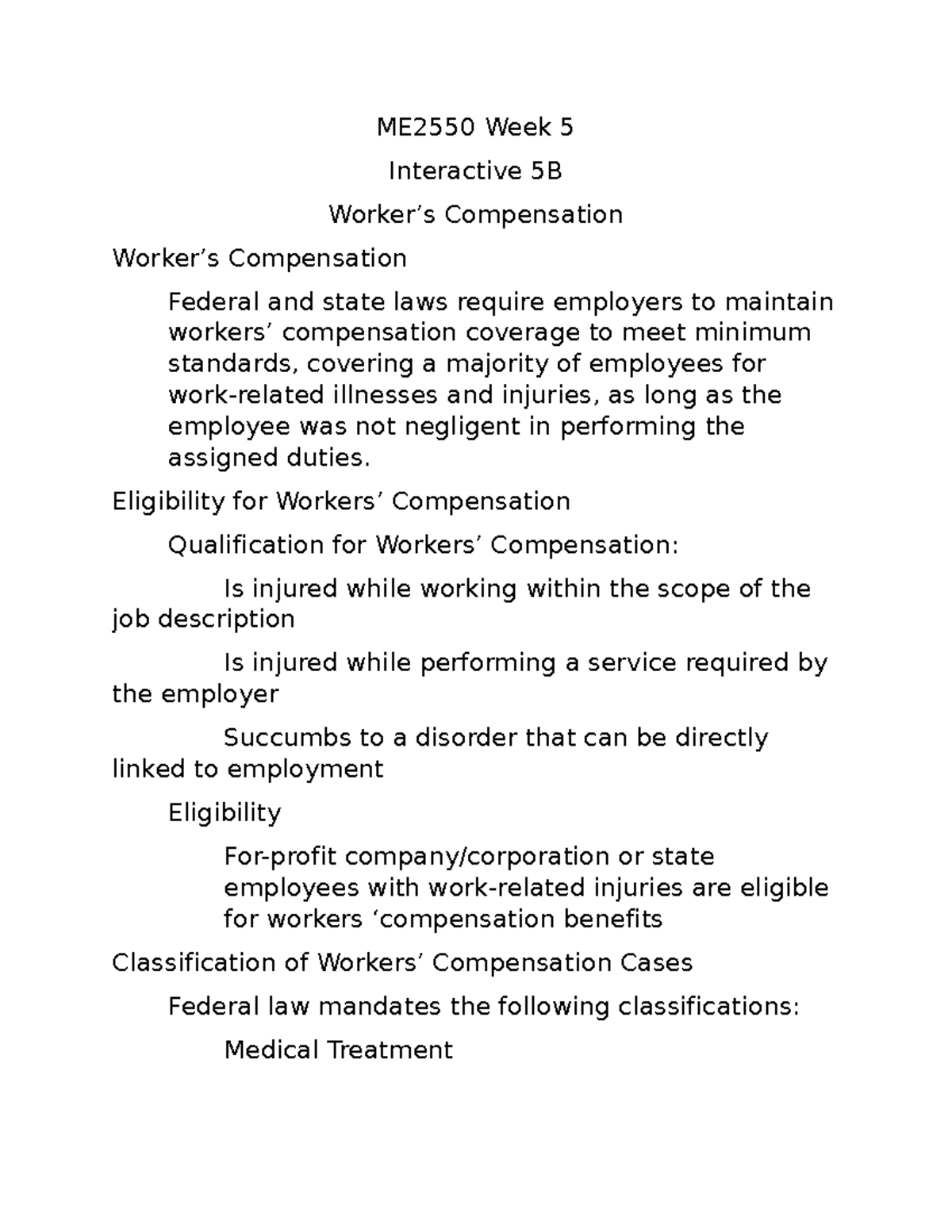
Understanding Why the ME2550 Week 5 Pays Your Workers Compensation Premiums
Navigating workers' compensation premium structures can often feel like deciphering a complex legal code, but specific administrative mechanisms—such as the operational framework represented by the ME2550 Week 5 classification—are desi...
Navigating workers' compensation premium structures can often feel like deciphering a complex legal code, but specific administrative mechanisms—such as the operational framework represented by the ME2550 Week 5 classification—are designed to shift or subsidize these costs under exact statutory and contractual conditions.
Contents
When evaluating business insurance overheads, commercial enterprises frequently encounter specialized endorsement codes and payroll reporting intervals that directly impact their bottom line. The ME2550 designation functions within specific state or multi-jurisdictional reporting structures to allocate financial responsibility for workplace injury coverage. Understanding how this mechanism operates helps employers verify billing accuracy, maintain compliance with state insurance boards, and properly account for payroll deductions.
The Mechanics of Workers' Compensation Premiums
Workers' compensation insurance is a mandatory form of commercial insurance designed to provide wage replacement and medical benefits to employees injured on the job. In exchange for these guaranteed benefits, employees forfeit the right to sue their employer for negligence. However, calculating the premium for this coverage is rarely straightforward; it depends heavily on total payroll, historical loss runs, and the specific risk classifications of the industry.
Carriers assess risk using classification codes assigned to different types of labor. High-hazard industries, such as heavy construction or manufacturing, pay significantly higher rates per $100 of payroll compared to low-hazard office environments. To manage these calculations, state rating bureaus and private insurers rely on periodic reporting schedules.
| Component | Standard Definition | ME2550 Context Impact |
|---|---|---|
| Payroll Basis | Total gross wages subject to caps | Specific operational exclusions |
| Classification Codes | Industry risk level indicator | Adjusted via specialized riders |
| Reporting Interval | Monthly, quarterly, or annual | Week 5 alignment cycles |
| Premium Obligation | Employer liability baseline | Subsidized or shifted obligation |
Understanding your premium structure requires a clear view of how payroll audits interact with scheduled adjustments. Insurers frequently reconcile estimated payroll with actual audited figures at the end of a policy term. Specialized provisions modify this standard timeline, altering when cash flow leaves the business to cover these liabilities.
Decoding the ME2550 Framework and Week 5 Schedules
To understand why a specific administrative cycle or endorsement like the ME2550 covers your workers' compensation liabilities, one must examine the intersection of premium financing, self-insurance trusts, or contractual risk transfer agreements.
The designation "ME2550" typically points to a specialized employer endorsement, group self-insurance fund accounting rule, or specific administrative billing schedule used by state funds or private commercial carriers. In many group self-insurance pools or retrospective rating plans, contributions are broken down into precise fiscal intervals rather than traditional annual lump sums or standard monthly installments.
The "Week 5" reference usually corresponds to a reconciliation period within a monthly or quarterly accounting cycle. In standard calendar-month billing, expenses incurred at the close of a multi-week operational block often trigger adjustments. Under certain collective bargaining agreements, wrap-up insurance policies, or state-administered pooling mechanisms, the fifth week of a reporting block acts as a settlement window where funds collected from pooled reserves or specialized credit accounts are disbursed to cover outstanding premium obligations.
Why the Payment Mechanism Triggers Coverage
When a policy configuration triggers payments during specific cycles, it is rarely random. Several structural reasons explain why these funds are allocated to settle workers' compensation debts:
- Group Self-Insurance Pooling: If a business participates in an industry group fund, the entity managing the pool collects contributions on a rolling schedule. Week 5 often marks the end of a financial reconciliation period where surplus reserves are tapped to pay carrier premiums on behalf of participating members.
- Retrospective Rating Adjustments: Policies tied to loss-sensitive plans adjust premiums based on actual losses incurred during the policy period. Week 5 reviews allow administrators to apply credits or subsidies generated by safety programs or favorable claims histories directly against outstanding premiums.
- Payroll Reporting Synchronization: When payroll is reported on a 4-week or 4-4-5 accounting calendar, the "fifth week" represents an adjustment period where accrued liabilities are balanced against actual cash deposits, fulfilling the insurer's premium requirement without requiring immediate out-of-pocket cash flow from the employer.
These structural nuances protect businesses from sudden cash flow crunches while ensuring that statutory insurance mandates remain continuously satisfied, preventing policy cancellation or audit penalties.
Employer Responsibilities and Compliance Verification
Relying on specialized mechanisms like the ME2550 Week 5 structure does not absolve employers of administrative duties. Maintaining compliance requires active oversight of payroll reporting and accurate classification of staff members.
1. Accurate Payroll Reporting
Insurers and group funds rely on precise gross payroll figures to calculate premiums. Under-reporting wages to align with specialized payment schedules can result in severe audit penalties, retroactive premium assessments, and potential cancellation of coverage.
2. Monitoring Endorsement Validity
Employers must review their policy declarations page and attached endorsements annually. Confirming that the ME2550 or equivalent rider is actively applied ensures that premium subsidies or pooled payment structures remain in effect.
3. Reviewing Audit Statements
When the policy period concludes, carriers perform physical or mail-in audits. Compare these audit findings against your Week 5 billing statements to verify that credits, subsidies, or pooled payments were correctly credited to your account balance.
Frequently Asked Questions
What does the ME2550 designation mean on my insurance policy?
It generally refers to a specific administrative endorsement or risk-pooling classification used to govern how premiums are calculated, reported, or subsidized within a specialized insurance program or group fund.
Why is Week 5 significant for my premium payments?
In many specialized accounting or group insurance calendars, Week 5 serves as a reconciliation and disbursement window where accumulated reserves, credits, or pooled funds are applied to cover outstanding workers' compensation liabilities.
Can this mechanism entirely eliminate my out-of-pocket premium costs?
No. While it may subsidize, defer, or restructure how and when payments are made, employers remain ultimately responsible for funding their baseline workers' compensation obligations based on actual payroll and risk exposure.
What should I do if my Week 5 payment fails to process?
Contact your insurance broker or group fund administrator immediately. Unresolved billing discrepancies during scheduled reconciliation windows can lead to a lapse in coverage notice sent to state regulatory boards.
Are these specialized payment schedules available to all businesses?
No. These structures are typically restricted to participants in group self-insurance funds, specific high-volume contractor programs, or businesses bound by specialized collective bargaining agreements.
Next Steps and Professional Guidance
To ensure your business fully maximizes available premium structures while maintaining strict compliance with state mandates, conduct a thorough review of your current policy documents. Consult with an experienced commercial insurance broker or a qualified legal advisor specializing in labor and employment law to verify that your payroll classifications and endorsement schedules are correctly aligned. Review your monthly billing statements to confirm that scheduled adjustments are properly reflecting in your cash flow management.
Image Gallery