Complete Guide to the Museum of Tomorrow in Rio de Janeiro: Architecture, Exhibits, and Visitor Tips
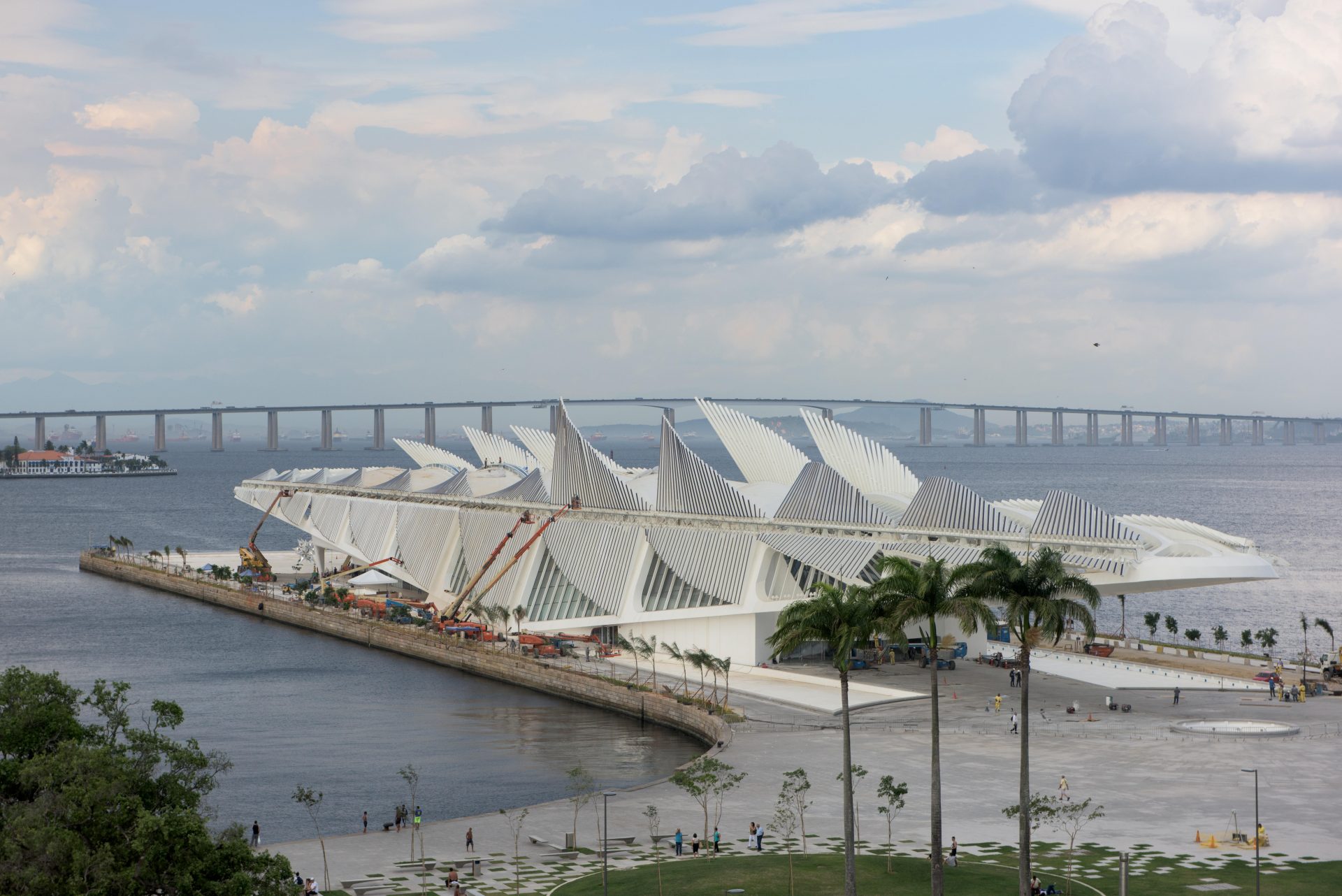
The Museum of Tomorrow (Museu do Amanhã) in Rio de Janeiro is an applied science museum located at Praça Mauá in the revitalized Porto Maravilha district. Designed by Spanish architect Santiago Calatrava, it explores climate change, te...
The Museum of Tomorrow (Museu do Amanhã) in Rio de Janeiro is an applied science museum located at Praça Mauá in the revitalized Porto Maravilha district. Designed by Spanish architect Santiago Calatrava, it explores climate change, technological transformation, and humanity's future through interactive, data-driven exhibits arranged across five core thematic zones.
Contents
Unlike traditional history museums focused on preserving artifacts from the past, the Museum of Tomorrow functions as an ideas laboratory. It evaluates contemporary scientific data to model potential scenarios for the next 50 years, encouraging visitors to consider how daily choices shape the collective future of planet Earth.
Architectural Masterpiece and Sustainable Engineering
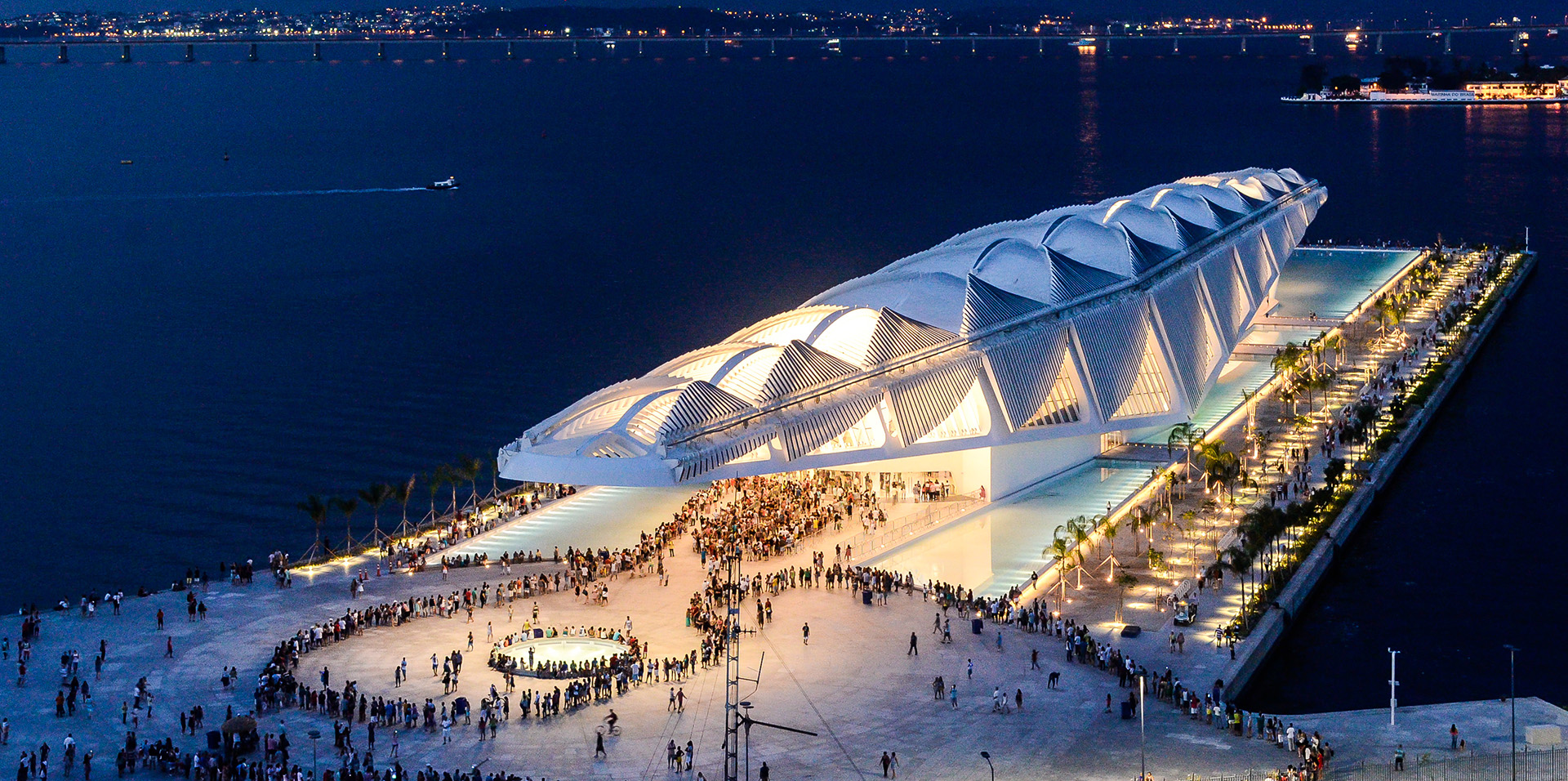
The building itself serves as a central exhibit of sustainable engineering and futuristic design. Situated on Pier Mauá jutting out into Guanabara Bay, the structure spans 15,000 square meters and appears to float above the water and surrounding plaza. Santiago Calatrava drew inspiration from native Brazilian flora, specifically the forms of bromeliads found in the Atlantic Forest (Mata Atlântica).
- Praça Mauá / Urban Plaza
- Cantilevered Solar Roof
- 5,492 Moving Photovoltaic Panels
- Main Exhibition Canopy
- Five Core Zones (Cosmos to Us)
- Cooling Reflecting Pools
- Pumping & Filtering Guanabara Bay Water
The architecture integrates multiple eco-friendly structural features:
- Solar Tracking Energy Roof: The building's roof features massive steel cantilever trusses extending 75 meters over the plaza and 45 meters toward the bay. Mounted on these arms are 5,492 photovoltaic solar panels grouped into movable "wings" that adjust their angle throughout the day to maximize solar energy collection.
- Bay Water Cooling System: The museum does not rely on conventional, energy-intensive air conditioning chillers. Instead, it pumps cold water from the depths of Guanabara Bay into heat exchangers to cool the interior spaces. The water is then filtered, cleaned, and cascaded into large outdoor reflecting pools before flowing back into the bay.
- Natural Lighting and Microclimate: Deep overhangs shade the glass facades from direct tropical sunlight, reducing thermal gain while allowing natural light to illuminate the main concourse.
This combination of active solar generation and passive thermal management allowed the building to achieve LEED (Leadership in Energy and Environmental Design) certification, establishing a benchmark for sustainable public architecture in South America.
Navigating the Main Exhibition: The Five Core Zones
The permanent narrative of the Museum of Tomorrow is organized along an intuitive linear pathway divided into five fundamental questions: Where do we come from? Who are we? Where are we? Where are we going? and How do we want to live together?
- COSMOS (origins)
- EARTH (life/mind)
- ANTHROPOCENE (human impact)
- TOMORROWS (future)
- US (ethics)
1. Cosmos (Cosmos)
Visitors enter the exhibition through a darkened, black-domed theater designed to evoke the vastness of space. A 360-degree immersive audiovisual projection takes audience members on an 8-minute journey from the Big Bang through the formation of galaxies, solar systems, geological eras, and the emergence of microscopic life. The experience establishes humanity's fundamental connection to cosmic evolution and universal physical laws.
2. Earth (Terra)
Upon exiting the dome, visitors enter a space anchored by three large structural cubes representing the foundational dimensions of our planet:
- Matter (A Matéria): Explores plate tectonics, atmospheric forces, weather patterns, and the physical chemistry that governs Earth.
- Life (A Vida): Highlights biological diversity, ecosystems, DNA structure, and interspecies interdependence across terrestrial and marine habitats.
- Thought (O Pensamento): Examines human consciousness, language, culture, symbolic expression, and the development of tools and social networks.
3. Anthropocene (Antropoceno)
The physical and intellectual center of the museum addresses the current geological epoch, defined by humanity's dominant impact on Earth's ecosystems. Six 10-meter-high luminous totems dominate the hall, displaying synchronized dynamic data visualizations, video footage, and real-time statistics regarding:
- Global temperature increases and atmospheric greenhouse gas concentrations.
- Resource consumption patterns and global waste generation.
- Biodiversity loss and habitat destruction.
- Rapid urban development and global population shifts.
This area challenges visitors with raw, unvarnished scientific data, illustrating the scale and speed of human environmental transformation.
4. Tomorrows (Amanhãs)
This section transitions from current reality to potential future trajectories over the coming decades. Interactive kiosks and digital simulations allow visitors to explore six major trends:
- Climate Change: Rising sea levels, extreme weather events, and agricultural shifts.
- Demographics: Aging populations, urbanization, and migration patterns.
- Technology: Robotics, artificial intelligence, biotechnology, and hyper-connectivity.
- Energy: Transition from fossil fuels to renewable grid infrastructure.
- Living Metrics: Changes in food production, freshwater distribution, and public health.
- Social Coexistence: Governance, distribution of wealth, and global collaboration.
Visitors can engage with interactive gaming modules that simulate city planning decisions, balancing environmental preservation, economic development, and social equity.
5. Us (Nós)
The final zone provides a quiet, introspective atmosphere designed for personal reflection. The central focal point is a traditional wooden Tshuka (a ceremonial artifact created by the Indigenous Yawanawá people of Acre, Brazil). Surrounded by soft lighting and acoustic soundscapes, this area emphasizes that the future is not an inevitable outcome, but a continuous series of ethical choices made by individuals and communities today.
Essential Visiting Guide: Tickets, Hours, and Operations
Planning ahead is essential when visiting the Museum of Tomorrow, as it remains one of the most visited cultural attractions in Brazil.
Key Operational Summary
| Aspect | Details | Visitor Recommendations |
|---|---|---|
| Operating Days | Tuesday to Sunday (Closed Mondays) | Visit Wednesday or Thursday mornings to avoid long wait times. |
| Operating Hours | 10:00 AM – 6:00 PM (Last entry at 5:00 PM) | Reserve at least 2 to 3 hours for a complete walkthrough. |
| Ticketing Method | Online timed-entry tickets via official platform | Book tickets 3–7 days in advance during peak tourism seasons (December–February). |
| Free Admission Day | Tuesdays (Mandatory online reservation required) | Secure Tuesday tickets well in advance, as slots fill quickly. |
| Public Transport | VLT Light Rail (Parada dos Museus) | Connect from Metro Lines 1 or 2 at Carioca or Cinelândia stations. |
| Accessibility | Full tactile, audio, and wheelchair access | Electric wheelchairs and audio guide devices are available at the service desk. |
Ticketing Strategy and Discounts
Tickets are sold with specific entry time slots to manage visitor capacity and ensure a comfortable gallery flow. While a limited number of tickets may be available at the box office on non-peak days, digital booking through the museum's official sales partner (typically Sympla) is strongly recommended.
Under Brazilian national law (Lei da Meia-Entrada), half-price admission is available for students, senior citizens (60+), individuals with disabilities, and teachers from public school systems, provided valid supporting documentation is presented at entry.
Transportation and Regional Context: How to Get There
The Museum of Tomorrow is located at Praça Mauá, 1 - Centro, Rio de Janeiro - RJ. The area was completely transformed as part of the Porto Maravilha urban redevelopment initiative, which removed the elevated Perimetral highway and converted the waterfront into a pedestrian promenade.
- Rio Metro Line 1 or 2
- Transfer at Carioca or Cinelândia
- VLT Light Rail (Line 1)
- Disembark at Parada dos Museus
- Praça Mauá Plaza
- Museum of Tomorrow
Transport Options
- VLT (Veículo Leve sobre Trilhos / Light Rail): This is the most direct and reliable transport option. Take Line 1 (L1) directly to the Parada dos Museus station, located right on Praça Mauá, steps from the museum entrance.
- Metro + VLT Combination: Take the Rio Metro (Line 1 or Line 2) to Carioca or Cinelândia station, then transfer directly to the VLT Line 1 heading toward Rodoviária/Praia Formosa.
- Rideshare and Taxis: Dedicated drop-off zones are situated near Praça Mauá along Avenida Rio Branco. Rideshare vehicles cannot enter the pedestrianized plaza itself.
- Pedestrian Routes: Visitors walking from the central financial district can follow Avenida Rio Branco northbound straight into Praça Mauá.
Area Safety and Visitor Guidance
Praça Mauá and the main stretches of the Boulevard Olímpico (Olympic Boulevard) are actively patrolled by municipal guards and tourist police. The area is safe and walkable during daylight hours and busy event evenings. However, visitors should exercise standard urban precautions:
- Keep mobile phones and cameras secure when taking photos in crowded areas.
- Stick to well-lit main pedestrian thoroughfares if walking near the port area after sunset.
- Avoid venturing deep into deserted side alleys off the main boulevard late at night.
Surrounding Cultural Circuit: Porto Maravilha
A trip to the Museum of Tomorrow can easily be expanded into a full-day cultural itinerary along the waterfront promenade.
- PORTO MARAVILHA CIRCUIT
- Museum of Tomorrow (Science/Future)
- Rio Art Museum (MAR) (Art/History)
- Kobra Mural (Etnias Wall)
- AquaRio / Yup Star
Key Nearby Attractions
- Rio Art Museum (Museu de Arte do Rio - MAR): Located directly across Praça Mauá from the Museum of Tomorrow. MAR focuses on the visual history, socio-cultural evolution, and artistic movements of Rio de Janeiro. The rooftop terrace offers exceptional elevated views of Calatrava’s architecture and Guanabara Bay.
- The Etnias Mural (Ethnicities Mural): Painted by world-renowned street artist Eduardo Kobra for the 2016 Olympic Games, this massive 3,000-square-meter graffiti mural depicts indigenous faces from five continents, celebrating human unity and diversity. It is situated along the Boulevard Olímpico, a short walk from the museum.
- AquaRio (Marine Aquarium of Rio): Located at the far end of the Boulevard Olímpico near the Gamboa neighborhood, AquaRio is the largest marine aquarium in South America, housing over 5,000 marine animals across 350 different species.
- Yup Star Ferris Wheel: Adjacent to AquaRio, this 88-meter-tall observation wheel offers panoramic view corridors across the Port Zone, Rio’s city center, Guanabara Bay, and the Rio-Niterói Bridge.
- Valongo Wharf (Cais do Valongo): An archaeological UNESCO World Heritage site located a few blocks inland. It is the preserved structural remnant of the main landing pier for enslaved African people in the Americas during the 18th and 19th centuries, serving as a solemn historical monument.
Frequently Asked Questions
How long does a typical visit to the Museum of Tomorrow take?
A standard walk-through of the permanent exhibition takes between 2 and 3 hours. Visitors who wish to engage deeply with every interactive kiosk, read all detailed data displays, and watch the opening movie in the Cosmos dome should budget up to 3.5 hours.
Is the content accessible for international tourists who do not speak Portuguese?
Yes. All major text panels, video subtitles, interactive software interfaces, and directional signage throughout the museum are fully trilingual, presented in Portuguese, English, and Spanish.
Can I buy tickets directly at the door?
While a physical ticket counter operates on-site, entry capacity is strictly controlled via timed slots. On weekends, holidays, and high summer season days, on-site tickets frequently sell out early in the day. Purchasing your tickets online in advance is strongly advised to guarantee entry at your preferred time.
Is photography allowed inside the museum?
Yes. Non-commercial photography and video recording are permitted throughout the galleries. However, flash photography, tripods, selfie sticks, and professional camera rigs are prohibited inside the exhibition zones to prevent disruptions and ensure public safety.
Is the museum suitable for young children?
While the scientific themes (anthropocene trends, data metrics, climate projections) are oriented toward middle-school students, teenagers, and adults, the museum features colorful visual projections, tactical interactive games, and sensory displays that engage younger children.
Practical Recommendations for Visitors
To maximize the quality of your experience at the Museum of Tomorrow, consider the following action items:
- Book Entry Slots Early: Secure digital tickets 3 to 5 days prior to your intended date, selecting a morning time slot (10:00 AM or 11:00 AM) to experience the galleries before afternoon peak crowds arrive.
- Use Public Transportation: Board Line 1 of the VLT light rail and alight at Parada dos Museus. It avoids traffic along Avenida Rio Branco and drops you directly at the entry plaza.
- Combine Cultural Venues: Purchase a joint ticket or plan a combined itinerary that includes the Rio Art Museum (MAR) across the plaza to experience both contemporary science and Rio's artistic heritage in a single visit.
- Check Schedule Updates: Verify holiday hours and temporary exhibition schedules directly on the official Museu do Amanhã portal prior to your visit.
Image Gallery