Professional Tree Service in Richmond, VA: Maintenance, Removal, and Regulatory Guidelines
Securing professional tree service in Richmond, VA, involves more than basic landscaping; it requires expert arboriculture to manage the city’s dense canopy of oaks, maples, and pines. In 2026, homeowners must navigate local permitting...
Securing professional tree service in Richmond, VA, involves more than basic landscaping; it requires expert arboriculture to manage the city’s dense canopy of oaks, maples, and pines. In 2026, homeowners must navigate local permitting, climate-specific health risks, and rigorous safety standards to protect property values and urban biodiversity.
Contents
The "River City" is renowned for its lush greenery, but Richmond’s mature urban forest presents unique challenges for property owners. From the historic Fan District to the expanding suburbs of Henrico and Chesterfield, the demand for specialized tree care remains high. Professional arborists in the region focus on maintaining structural integrity, mitigating storm damage, and managing indigenous species that are integral to the Virginia landscape.
The Vital Role of Certified Arborists in Central Virginia
Managing trees in an urban or suburban environment like Richmond requires a technical understanding of tree biology and local environmental stressors. Hiring a professional service is not merely about aesthetics; it is about risk management. In 2026, the industry standard in Virginia remains the International Society of Arboriculture (ISA) certification.
A certified arborist possesses the training to identify structural defects that are invisible to the untrained eye. For instance, Richmond’s frequent summer thunderstorms and occasional remnants of tropical systems place immense stress on large-canopy trees like the Willow Oak and Tulip Poplar. Without regular inspections, these trees can develop internal decay or "included bark," leading to catastrophic failure during high-wind events.
Furthermore, professional services utilize specialized equipment, such as aerial lifts (bucket trucks) and cranes, to perform "precision dismantling" in tight urban quarters. This is particularly relevant in Richmond’s historic neighborhoods, where houses are built close together and mature trees often overhang multiple structures.
Essential Tree Services for Richmond Property Owners
Tree care is a multi-faceted discipline. In 2026, service providers in the Richmond metropolitan area typically categorize their offerings into four primary areas: maintenance, removal, health management, and emergency response.
Structural Pruning and Canopy Management
Pruning is the most common maintenance task. According to the ANSI A300 standards—the industry’s peak performance guidelines—pruning should be performed with specific goals:
- Cleaning: Removing dead, diseased, or weakly attached branches.
- Thinning: Selective branch removal to improve structure and increase light penetration and air movement through the crown.
- Raising: Providing vertical clearance for pedestrians, vehicles, and buildings.
- Reduction: Reducing the height or spread of a tree to clear utility lines or structures while maintaining the tree's structural integrity.
Tree Removal and Technical Felling
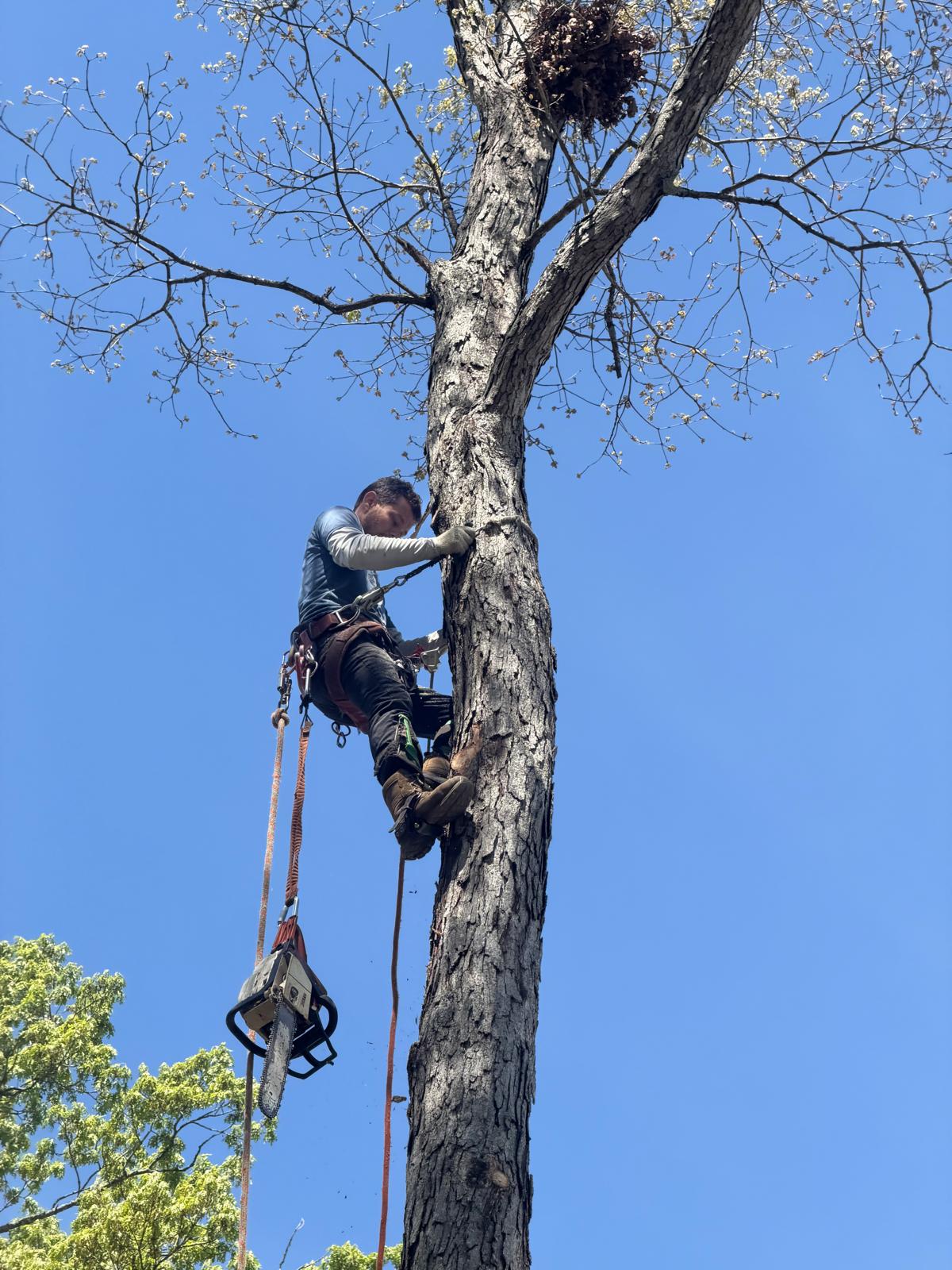
When a tree is dead, dying, or poses an unacceptable risk, removal becomes necessary. In Richmond, tree removal often requires "rigging," a process where branches are lowered using ropes and pulleys to avoid damaging fences, gardens, or roofs. Professional crews also handle the high-risk task of clearing trees near power lines, often coordinating with Dominion Energy to ensure safety.
Stump Grinding and Site Remediation
Following a removal, the stump remains a tripping hazard and a potential breeding ground for pests like subterranean termites. Stump grinding involves using a high-speed disk with carbide-tipped teeth to pulverize the wood into mulch, typically 6 to 12 inches below the soil grade. This allows for immediate replanting or turf installation.
Plant Health Care (PHC)
Richmond’s trees face ongoing threats from invasive species. In 2026, arborists are particularly focused on the Spotted Lanternfly and the continued management of the Emerald Ash Borer. PHC involves soil injections, trunk sprays, and macro-infusions designed to bolster a tree’s immune system or directly combat pathogens and insects.
Understanding Richmond’s Tree Regulations and Permitting
Richmond has specific ordinances governing tree care, particularly regarding "Street Trees" and trees within "Resource Protection Areas" (RPAs).
City-Owned Trees
If a tree is located between the sidewalk and the curb, it is likely a city-owned street tree. Property owners are prohibited from pruning or removing these trees themselves. Maintenance requests must be funneled through the City of Richmond Department of Public Works. Unauthorized work on city trees can result in significant fines.
The Chesapeake Bay Preservation Act (CBPA)
Large portions of Richmond and surrounding counties fall under the CBPA. This legislation protects water quality by regulating land use near streams and rivers. If your property is within a designated RPA, you may be required to obtain a special permit or an arborist’s report before removing any vegetation, even if the tree is dead. These regulations are designed to prevent erosion and filter runoff entering the James River.
Heritage and Significant Trees
Some Virginia localities have ordinances protecting "Heritage Trees"—specimens of notable age, size, or historical significance. Before removing a massive White Oak or Sycamore, homeowners should verify if their specific neighborhood or homeowner association (HOA) has restrictive covenants that supersede general municipal rules.
Tree Service Cost Estimates in Richmond, VA (2026)
Pricing for tree services in Richmond varies based on the tree's size, its proximity to structures, and the equipment required. The following table provides estimated price ranges for 2026, reflecting current labor and insurance costs in Central Virginia.
| Service Category | Description | Estimated Price Range (USD) |
|---|---|---|
| Basic Pruning | Small to medium trees (up to 30 ft) | $350 – $800 |
| Large Tree Pruning | Mature Oaks or Maples (50+ ft) | $900 – $2,500 |
| Small Tree Removal | Under 20 ft, easy access | $400 – $950 |
| Medium Tree Removal | 20–50 ft, standard rigging | $1,000 – $2,800 |
| Large Tree Removal | 50+ ft, complex rigging/crane use | $3,000 – $7,500+ |
| Stump Grinding | Per inch of diameter (at the flare) | $5 – $12 per inch |
| Emergency Service | After-hours storm response | $500 – $1,500 (Initial Fee) |
Note: Prices are estimates and subject to site-specific variables such as proximity to power lines or steep terrain.
Critical Verification: Hiring the Right Company
The tree care industry has a high barrier to entry regarding safety and insurance, yet "un-permitted" operators remain common. To protect yourself from liability, you must verify several credentials before signing a contract.
- Certificate of Insurance (COI): Do not accept a verbal claim of being "licensed and insured." Request a COI sent directly from the insurance agent. It must include General Liability (to cover property damage) and Workers’ Compensation (to cover crew injuries). Without Workers' Comp, a homeowner could be held liable for an injury occurring on their property.
- ISA Certification: Ensure a Certified Arborist is on staff or supervising the work. You can verify an individual's credentials via the ISA Verify an Arborist tool.
- TCIA Accreditation: The Tree Care Industry Association (TCIA) provides accreditation for companies that adhere to strict safety and business ethics standards. This is a "gold standard" indicator of a reputable firm.
- Written Contracts: A professional quote should detail the scope of work, the method of debris disposal (will they haul away wood or leave it?), and the final price. Avoid companies that demand large deposits upfront.
Seasonal Timing for Tree Care in Virginia
While emergency removals happen year-round, maintenance pruning is often best performed during the dormant season (late autumn through late winter).
During dormancy, the absence of leaves allows arborists to see the tree’s structure clearly, making it easier to identify defects. Additionally, pruning during cold weather reduces the risk of certain diseases, such as Oak Wilt, as the fungi and the insects that spread them are inactive.
However, "emergency" pruning—such as removing a limb cracked by a Richmond summer "macro-burst"—should be performed immediately regardless of the season to prevent further damage.
Frequently Asked Questions
Do I need a permit to remove a tree on my private property in Richmond?
In most cases, homeowners do not need a permit for trees on private property unless the land is within a Resource Protection Area (RPA) or subject to specific HOA bylaws. However, if the tree is in the "public right-of-way" (the strip between the street and your sidewalk), it is city property, and you must contact the Richmond Tree Division.
Why is tree removal so expensive in the RVA area?
The cost reflects the high risk and specialized equipment required. Richmond’s narrow streets and mature landscaping often require cranes or advanced rigging systems to remove trees without damaging surrounding homes. Additionally, the high cost of Workers' Compensation insurance for high-risk arboriculture work is factored into the pricing.
How can I tell if my oak tree is dying?
Look for "dieback" (dead branches at the very top of the canopy), trunk cankers, or fungal growth (conks) at the base of the tree. Another warning sign in Richmond is an abundance of "epicormic sprouts"—small, bushy twigs growing directly out of the main trunk—which indicates the tree is under severe stress.
What should I do if a neighbor's tree looks dangerous?
In Virginia, if a neighbor's tree appears hazardous, it is recommended to send them a formal notice via certified mail. This establishes that they are aware of the risk. If the tree falls after they have been notified of its dangerous condition, they (and their insurance) may be held liable for damages. Consulting a certified arborist for a "Tree Risk Assessment" is a recommended first step.
Does stump grinding include hauling away the mulch?
Usually, no. Standard stump grinding contracts include grinding the stump and leaving the resulting mound of wood chips and soil on-site. If you want the debris hauled away and topsoil brought in, you must specify this in the contract, and it will typically incur an additional fee.
Final Recommendation for Richmond Residents
When seeking tree service in Richmond, VA, prioritize safety and certification over the lowest bid. A poorly pruned tree can become a long-term liability, and an uninsured removal can lead to devastating financial consequences. For non-emergency work, schedule a consultation with an ISA Certified Arborist during the winter months to take advantage of dormant pruning benefits and potentially lower off-season rates. Always confirm that the company is familiar with local Richmond municipal codes and the Chesapeake Bay Preservation Act guidelines to ensure your project remains compliant with Virginia law.
Image Gallery