How a Wheel Speed Sensor Can Affect Your Transmission
A wheel speed sensor provides critical data to the Transmission Control Module (TCM) to coordinate gear shifts, torque converter lockup, and fluid pressure adjustments. If a sensor fails, the transmission may experience harsh shifting,...
A wheel speed sensor provides critical data to the Transmission Control Module (TCM) to coordinate gear shifts, torque converter lockup, and fluid pressure adjustments. If a sensor fails, the transmission may experience harsh shifting, delayed engagement, "limp mode" restrictions, or a complete refusal to shift into higher gears.
Contents
The Critical Link Between Wheel Speed and Gear Selection
In the automotive landscape of 2026, the integration between chassis electronics and the drivetrain is more seamless than ever. At the heart of this integration is the wheel speed sensor (WSS), often referred to as an ABS sensor. While its primary role was historically tied to preventing wheel lock-up during braking, modern vehicle architectures utilize this data as a primary input for transmission management.
The Transmission Control Module (TCM) operates based on a complex algorithm that balances engine load, throttle position, and—most importantly—output speed. The wheel speed sensors provide a high-resolution map of how fast the vehicle is moving relative to the engine's RPM. When this data is accurate, the transmission shifts smoothly, optimizing fuel efficiency and power delivery. However, when a wheel speed sensor sends erratic or non-existent signals, the TCM loses its "eyes," leading to significant driveability issues and potential mechanical stress.
How the Transmission Control Module Uses Wheel Speed Data
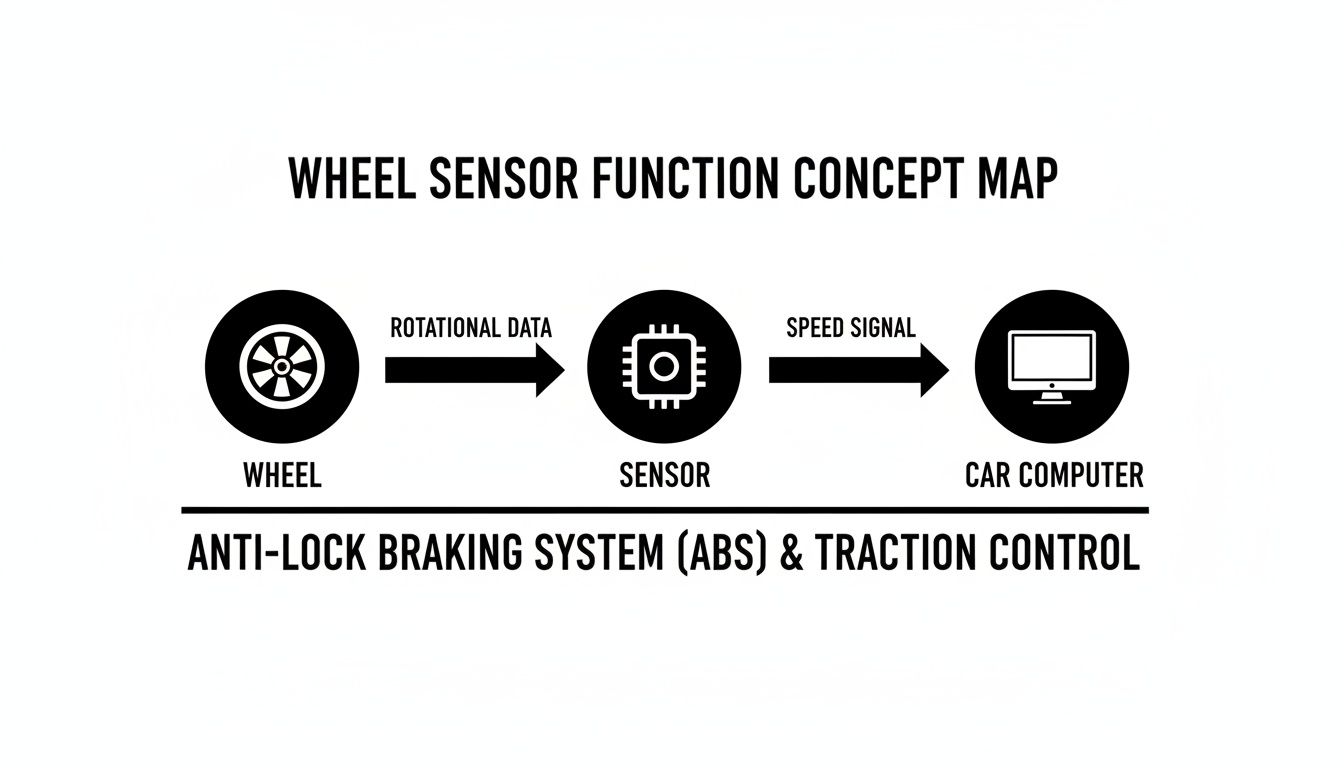
The TCM does not operate in a vacuum. It communicates constantly with the Engine Control Unit (ECU) and the Anti-lock Braking System (ABS) module via the Controller Area Network (CAN bus). The wheel speed sensor’s data is translated into a digital signal that informs the TCM of the vehicle's actual ground speed.
1. Shift Timing and Quality
For an automatic or dual-clutch transmission to shift correctly, it must know exactly when the vehicle has reached a specific velocity relative to the engine's torque output. If a wheel speed sensor fails, the TCM may "hunt" for gears, shifting up and down rapidly because it cannot verify if the vehicle is accelerating or decelerating. This often results in "hard shifts," where the transmission engages with a noticeable jolt, as the system defaults to maximum line pressure to prevent internal clutch slippage.
2. Torque Converter Lockup
The torque converter is a fluid coupling that allows the engine to spin somewhat independently of the transmission. At cruising speeds, a lockup clutch engages to create a direct mechanical link, improving fuel economy. This engagement is highly dependent on consistent speed readings. A faulty wheel speed sensor can prevent the torque converter from locking, leading to increased fuel consumption and higher transmission fluid temperatures, which can shorten the lifespan of the gearbox.
3. Electronic Stability and Traction Control Integration
Modern transmissions are proactive. If the wheel speed sensors detect that one wheel is spinning faster than the others (slippage), the TCM may signal the transmission to upshift early or reduce torque to regain traction. If the sensor is faulty, the vehicle may mistakenly trigger traction control protocols, cutting power or preventing the transmission from shifting out of a lower gear even on dry pavement.
The "Limp Home" Mode: A Protective Response
One of the most dramatic ways a wheel speed sensor affects a transmission is by triggering "Limp Home" mode. This is a programmed software state designed to protect the engine and transmission from catastrophic failure when critical data—like wheel speed—is missing.
When the TCM detects a total loss of signal or highly implausible data from the wheel speed sensors, it may lock the transmission into a single gear (usually second or third). This prevents the transmission from attempting high-speed shifts that could lead to mechanical synchronization errors. While this allows the driver to move the vehicle to a safe location or a repair facility, it severely limits top speed and acceleration, often causing concern for drivers unaware of the sensor's role.
Symptoms of Transmission Issues Caused by Wheel Speed Sensors
It is common for drivers to assume their transmission is failing when the underlying cause is actually a $100 sensor. Recognizing the specific symptoms of WSS-related transmission trouble can save thousands in unnecessary repair costs.
- Erratic Speedometer: Since many modern vehicles calculate speedometer readings from the average of the wheel speed sensors, a failing sensor often causes the needle to bounce or stay at zero.
- Delayed Upshifts: The transmission may hold onto a gear much longer than usual, causing the engine to rev high before finally slamming into the next gear.
- Refusal to Engage Overdrive: Without a confirmed high-speed signal, the TCM will often disable the highest gears (overdrive) to prevent damage.
- Warning Lights: The ABS, Traction Control (TCS/ESC), and Check Engine light (CEL) will almost always illuminate simultaneously when a wheel speed sensor fails.
Comparison: Normal Operation vs. Sensor Failure
| Feature | Normal WSS Operation | Failed/Erratic WSS Operation |
|---|---|---|
| Shift Quality | Smooth, predictable transitions. | Harsh, "clunking" engagements. |
| Gear Range | Access to all gears, including overdrive. | Limited to lower gears (Limp Mode). |
| Torque Converter | Locks at cruising speeds for efficiency. | Remains unlocked; increased heat. |
| Speedometer | Steady, accurate speed display. | Erratic, dropped, or frozen readings. |
| Safety Systems | ABS and Traction Control fully active. | ABS/TCS disabled; safety risk. |
| Fuel Economy | Optimized via precise gear selection. | Decreased due to high RPMs and heat. |
Technical Diagnostics: Finding the Root Cause
Diagnosing a wheel speed sensor issue requires more than just reading basic OBD-II codes. While a generic scanner might show a "P0500" code (Vehicle Speed Sensor Malfunction), a professional-grade diagnostic tool is often needed to view "Live Data" from the ABS module.
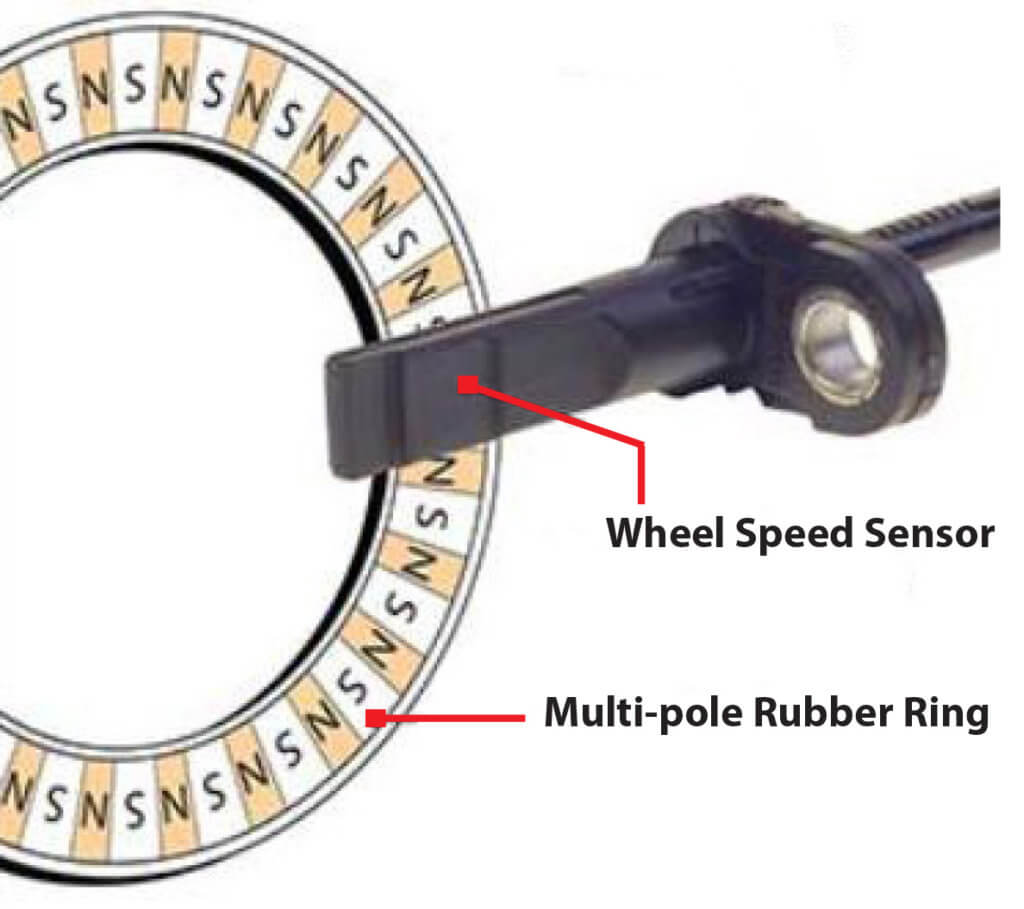
Technicians look for "dropouts" in the signal. By graphing the speed of all four wheels while the vehicle is in motion, they can identify which specific sensor is reporting incorrect data. In many cases, the sensor itself is not broken; rather, the "tone ring" (a notched ring the sensor reads) may be clogged with magnetic debris, rusted, or cracked. Because the sensor relies on magnetic induction or the Hall Effect, even a small piece of road debris can disrupt the signal and wreak havoc on the transmission's logic.
Maintenance and Prevention in 2026
Wheel speed sensors are located in one of the most hostile environments on a vehicle: behind the braking assembly, exposed to extreme heat, road salt, water, and vibration. As vehicles age, the wiring harnesses leading to these sensors can become brittle or corroded.
To prevent transmission issues related to wheel speed sensors, it is recommended to:
- Inspect during brake service: Whenever brake pads or rotors are replaced, have the technician clean the sensor face and inspect the tone ring.
- Clean the hubs: In regions where road salt is used, periodically pressure-washing the inner wheel hub area can prevent the buildup of corrosive materials that interfere with magnetic signals.
- Address warning lights immediately: Ignoring an ABS light can lead to a sudden "Limp Mode" event while driving at highway speeds, which can be dangerous.
Frequently Asked Questions
Can a bad wheel speed sensor cause my car to not move?
Generally, a bad wheel speed sensor will not prevent a car from moving entirely, but it can prevent it from moving correctly. It may cause the vehicle to stay in a low gear or feel very sluggish as the TCM limits power. However, if the sensor failure causes the electronic parking brake or traction control to malfunction and lock the wheels, movement could be restricted.
How much does it cost to fix a wheel speed sensor?
In 2026, the average cost for a wheel speed sensor replacement ranges between $150 and $400, including parts and labor. The part itself is usually inexpensive ($50–$150), but the labor can vary depending on whether the sensor is integrated into the wheel bearing/hub assembly, which requires more extensive disassembly.
Will a faulty sensor damage my transmission permanently?
If driven for a long period, yes. The harsh shifting (high line pressure) associated with sensor failure puts excessive strain on the transmission's internal clutches, bands, and gear sets. Additionally, if the torque converter fails to lock, the resulting heat can degrade the transmission fluid, leading to premature wear of all internal components.
Can I drive with a faulty wheel speed sensor?
It is not recommended. Beyond the transmission issues, you lose your Anti-lock Braking System and Traction Control. In emergency braking or slippery conditions, the vehicle will not behave as expected, significantly increasing the risk of an accident.
Does every wheel have a sensor?
Most modern vehicles manufactured in the last decade have a sensor at each of the four wheels. Some older rear-wheel-drive vehicles used a single sensor located on the transmission output shaft or the rear differential, but 4-wheel independent sensing is the standard for 2026 models to support advanced stability control.
Final Recommendation
If your vehicle is experiencing erratic shifting accompanied by an ABS or Traction Control warning light, do not immediately assume you need a new transmission. The relationship between the wheel speed sensor and the transmission is fundamental to modern vehicle operation. Have a qualified technician perform a full system scan to check for ABS wheel speed codes. Replacing a faulty sensor or cleaning a dirty tone ring is a fraction of the cost of a transmission overhaul and will often restore your vehicle's performance immediately.
Image Gallery