Deconstructing the Core Technology Behind the Agentic CRM
The core technology behind the agentic CRM combines large language models, dynamic vector databases, autonomous planning loops, and robust API tool-binding layers to execute complex customer relationship workflows without human interve...
The core technology behind the agentic CRM combines large language models, dynamic vector databases, autonomous planning loops, and robust API tool-binding layers to execute complex customer relationship workflows without human intervention. Unlike traditional systems that merely store data, agentic customer relationship management platforms perceive goals, reason through tasks, and proactively execute multi-step operations.
Contents
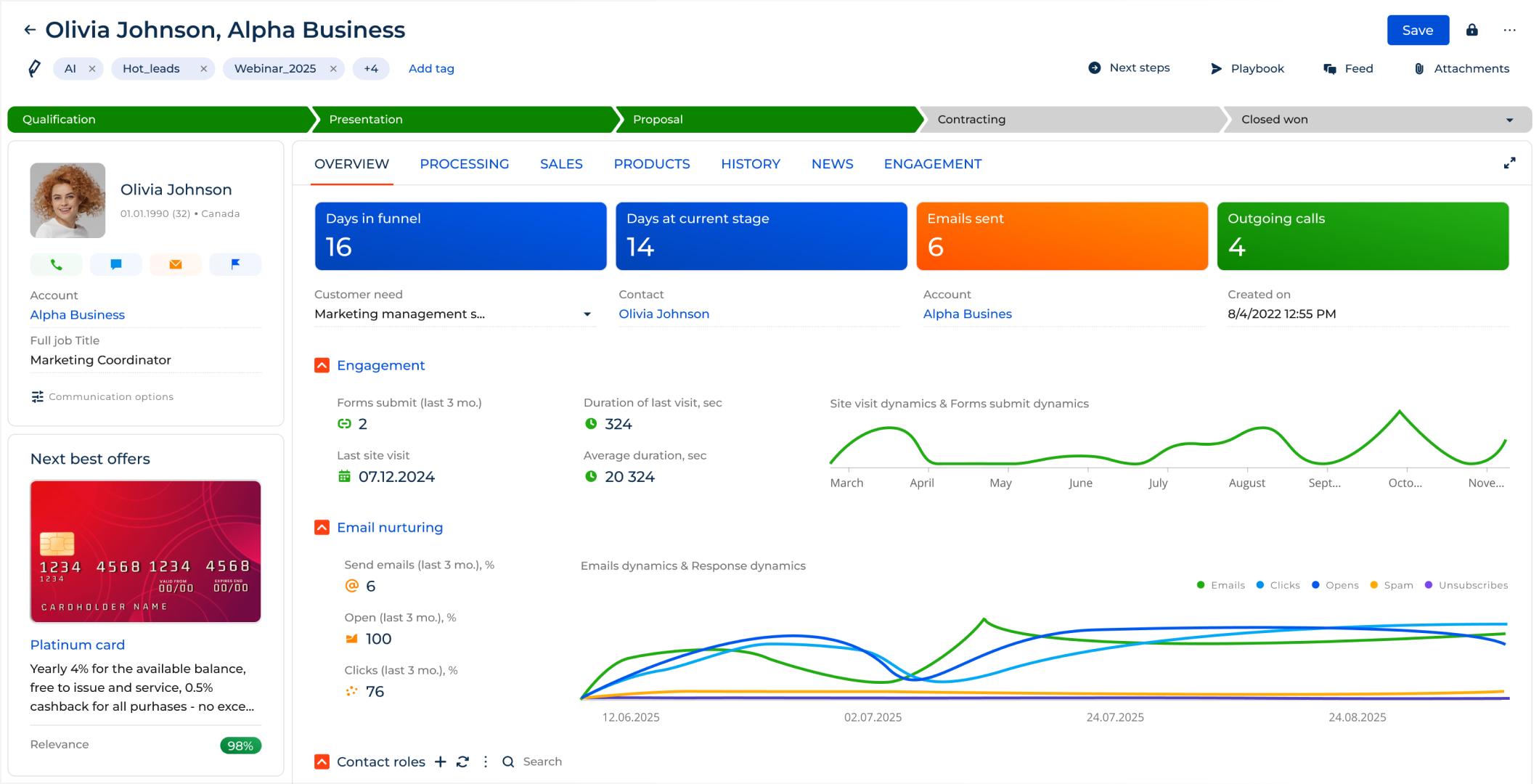
Customer relationship management (CRM) software has long functioned as a sophisticated digital filing cabinet. Traditional platforms record interactions, track sales pipelines, and store customer support tickets, relying entirely on manual data entry or rigid, rules-based automation triggers. The evolution toward an agentic CRM architecture marks a fundamental paradigm shift. Instead of waiting for human operators to click buttons, run reports, or draft follow-up emails, agentic systems use autonomous software agents to reason, plan, and execute multi-step workflows across enterprise software stacks.
Understanding the core technology behind the agentic CRM requires peeling back the user interface to examine the underlying AI orchestration frameworks, reasoning engines, memory systems, and execution layers that transform passive data repositories into proactive digital workers.
Architectural Shift: From Passive Databases to Active Agents
Traditional CRM systems operate on a deterministic, input-output model. If a user sets a trigger—such as changing a deal stage to "Closed-Won"—the system executes a pre-coded sequence, like sending a standard welcome email or creating an onboarding task. While efficient for linear processes, this architecture fails when faced with ambiguity, nuanced customer inquiries, or unstructured data that does not fit neatly into relational database schemas.
Agentic CRMs replace or augment this deterministic layer with probabilistic, goal-oriented architectures. The system is no longer programmed with explicit, rigid rules for every scenario. Instead, it is given high-level objectives, such as "reduce customer churn in the enterprise tier," and the autonomy to determine the best sequence of actions to achieve that goal. This shift relies on a convergence of advances in natural language understanding, persistent memory management, and secure tool execution.
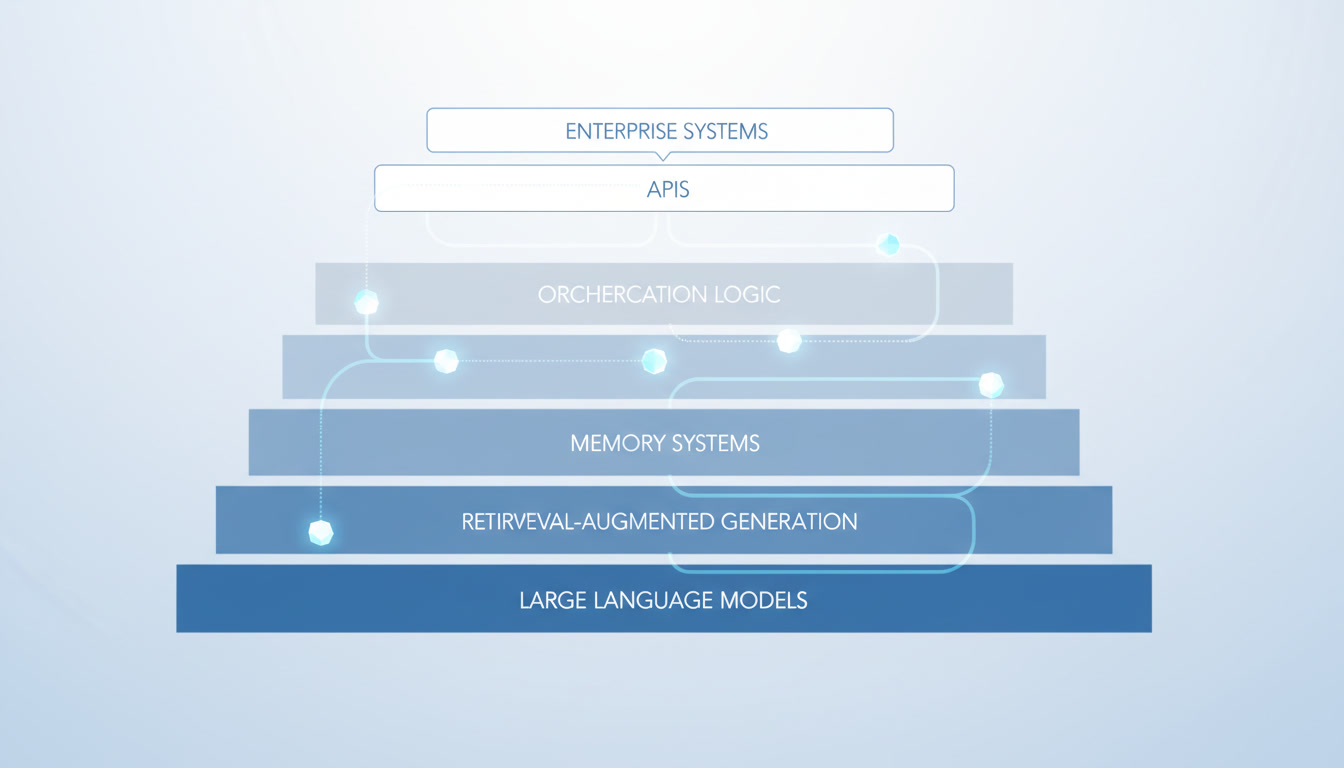
- Agentic CRM Architecture Layer
- User Intent / Natural Language Goal Input
- Reasoning & Planning Engine (LLM + ReAct Framework)
- Memory Systems: Short-Term Context & Long-Term Vector DB
- Tool-Binding & API Gateway (Function Calling & Security)
- External Systems: Email, ERP, Telephony, Enterprise DBs
The Reasoning and Planning Engine
At the heart of any agentic CRM lies the reasoning and planning engine, typically powered by advanced Large Language Models (LLMs) fine-tuned for enterprise logic. This engine serves as the cognitive processor, responsible for breaking down a high-level customer request or business objective into an executable sequence of micro-tasks.
The ReAct (Reasoning and Acting) Framework
Most agentic CRMs implement variations of the ReAct (Reasoning and Acting) framework or plan-and-solve paradigms. When a customer sends a complex, multi-part support inquiry or when a sales representative requests a comprehensive account audit, the agent does not simply generate a static response.
- Thought Generation: The LLM analyzes the input, referencing system instructions and current customer data to formulate an internal monologue or step-by-step plan.
- Action Selection: The model selects a specific tool or API endpoint required to gather information or execute a change.
- Observation Processing: The system ingests the output from the tool execution, updates its internal state, and determines whether further steps are required before delivering a final output or completing the workflow.
This iterative loop allows the agent to handle conditional logic dynamically. For instance, if an agent attempts to pull customer billing history from an integrated ERP system and encounters an authentication timeout or missing record, it can re-plan, query a secondary database, or flag the error for human intervention without crashing the entire workflow.
Memory Architecture: Short-Term Context and Long-Term Vector Stores
An agentic CRM cannot function effectively without a sophisticated memory architecture. Traditional CRMs store historical data in rigid relational tables (SQL), which are excellent for exact queries like finding all accounts with a specific zip code, but poor at capturing semantic meaning, unstructured conversation history, and contextual nuance.
Short-Term Context Management
During an active session or a multi-turn customer interaction, the agent maintains a short-term context window. This includes the immediate conversation history, active variables, and the current state of the execution plan. Managing this window efficiently requires advanced token-pruning and summarization techniques to prevent the agent from losing track of critical instructions during extended interactions.
Long-Term Vector Databases and Semantic Retrieval
For long-term intelligence, agentic CRMs integrate vector databases (such as Pinecone, Milvect, or pgvector) alongside traditional relational databases.
- Embeddings: Customer emails, support transcripts, contract PDFs, and meeting notes are converted into high-dimensional vector embeddings using specialized embedding models.
- Semantic Search: When an agent needs to understand a customer's sentiment history or recall a specific product preference mentioned six months ago across a chat transcript, it performs a semantic similarity search rather than a keyword match.
- Retrieval-Augmented Generation (RAG): This retrieved context is injected into the agent's prompt context, allowing it to make deeply informed, personalized decisions grounded in the entirety of the customer's historical relationship with the enterprise.
Tool-Binding, APIs, and Function Calling
An autonomous agent is only as powerful as the tools it can manipulate. While reasoning and memory provide cognitive capability, tool-binding and Application Programming Interface (API) integration give the agent "hands" to interact with the outside world.
Modern agentic CRMs leverage native LLM function-calling capabilities. Developers define a schema of available tools—such as send_email, update_deal_amount, query_inventory_db, or schedule_calendar_event—complete with parameter descriptions and type constraints.
{ "name": "update_crm_deal_stage", "description": "Updates the pipeline stage of an active enterprise deal.", "parameters": { "type": "object", "properties": { "deal_id": { "type": "string", "description": "The unique alphanumeric identifier for the CRM deal." }, "new_stage": { "type": "string", "enum": ["Discovery", "Proposal", "Negotiation", "Closed-Won", "Closed-Lost"], "description": "The target stage to transition the deal into." } }, "required": ["deal_id", "new_stage"] } }
When the reasoning engine determines that an action is necessary, it generates a structured JSON payload matching this schema. The CRM's execution layer intercepts this payload, executes the corresponding API call against internal databases or external SaaS platforms (like Salesforce, HubSpot, Stripe, or Gmail), and returns the execution result to the agent.
Autonomous Execution and Guardrails
The transition from human-in-the-loop automation to fully autonomous execution introduces significant operational risks, including hallucinations, unauthorized data access, and unintended mass modifications of customer records. Consequently, the core technology stack of an enterprise-grade agentic CRM includes robust security, permissioning, and guardrail layers.
Deterministic Guardrails and Policy Engines
To prevent agents from executing catastrophic actions—such as offering unauthorized discounts, deleting user accounts, or sending sensitive data to external endpoints—architects implement deterministic policy engines that sit between the agent's reasoning output and the API execution layer.
- Role-Based Access Control (RBAC): Agents inherit the permission profile of the user or system account under whose authority they operate, restricting their ability to query or modify restricted records.
- Confidence Scoring and Human-in-the-Loop Thresholds: If an agent's internal confidence score for a high-stakes action (e.g., issuing a refund exceeding $500 or modifying contract terms) falls below a predefined threshold, the system automatically pauses execution and routes the task to a human supervisor for approval.
| Feature / Dimension | Traditional CRM Automation | Agentic CRM Technology |
|---|---|---|
| Logic Foundation | Deterministic if-then rules and hardcoded triggers. | Probabilistic LLM reasoning and dynamic planning loops. |
| Data Handling | Structured relational tables and exact keyword queries. | Vector embeddings, semantic search, and RAG architectures. |
| Workflow Scope | Linear, pre-defined sequences within a single platform. | Multi-step, cross-platform execution via dynamic API tool-binding. |
| Handling Ambiguity | Fails or routes to human when input deviates from rules. | Reasons through unstructured data and adapts execution paths. |
| Risk Management | Rigid permission settings and static field validations. | Dynamic confidence scoring, policy guardrails, and HITL gates. |
Evaluating Technical Prerequisites for Implementation
Organizations looking to deploy or build atop an agentic CRM must evaluate their existing technical infrastructure to ensure compatibility with modern AI orchestration requirements.
- API Maturity: Core business systems—including ERPs, billing platforms, and communication channels—must expose robust, well-documented REST or GraphQL APIs to enable effective agent tool-binding.
- Data Hygiene and Unification: Fragmented data silos hinder agent performance. Implementing a unified customer data platform (CDP) or centralized vector store is essential for providing agents with clean, comprehensive context.
- Observability and Auditing: Unlike traditional software logs, probabilistic agent outputs require specialized tracing tools (such as LangSmith, Arize, or native enterprise logging) to audit why an agent made a specific decision, trace multi-step tool calls, and debug failures.
Frequently Asked Questions
What is the primary difference between traditional CRM automation and an agentic CRM?
Traditional CRM automation relies on rigid, rule-based triggers where a human must pre-define every condition and outcome. An agentic CRM uses large language models and autonomous planning loops to reason through ambiguous goals, interpret unstructured data, and dynamically select tools to execute multi-step workflows without constant human oversight.
How do agentic CRMs maintain security and prevent unauthorized actions?
Enterprise agentic CRMs incorporate intermediate policy engines, role-based access controls, and confidence-scoring thresholds. These guardrails intercept tool execution requests, verifying that actions comply with enterprise security policies and routing high-risk operations to human supervisors for approval.
Do agentic CRMs require replacing existing relational databases?
No. Agentic CRMs typically augment existing relational databases with vector databases. Relational databases continue to store structured transactional records, while vector databases handle unstructured data and semantic search capabilities required for advanced context retrieval.
How does memory work inside an agentic CRM architecture?
Memory is divided into short-term context windows for active multi-turn interactions and long-term vector memory. Long-term memory converts historical emails, chat transcripts, and documents into vector embeddings, allowing the agent to perform semantic searches and recall deep contextual details across long customer lifecycles.
What technical skills are required to configure an agentic CRM?
Implementing and maintaining an agentic CRM requires expertise in API integration, prompt engineering, vector database management, and AI orchestration frameworks. Organizations typically benefit from data engineers and machine learning operations (MLOps) professionals who can monitor agent behavior and manage governance guardrails.
Conclusion and Recommended Next Actions
The core technology behind the agentic CRM represents a fundamental evolution from passive data recording to active, autonomous customer relationship execution. By combining advanced reasoning engines, vector-based memory, and secure API tool-binding, these platforms enable organizations to automate complex, unstructured workflows at scale.
To prepare for implementation, technology leaders should begin by auditing their organization's API infrastructure, centralizing customer data into unified repositories, and establishing clear governance frameworks and human-in-the-loop checkpoints to ensure secure, reliable autonomous operations.
Image Gallery