How Distributed Compute is Redefining Market Scale Analytics
Distributed compute transforms market scale analytics by decoupling processing power from centralized data storage, enabling firms to ingest, process, and derive real-time insights from petabyte-scale datasets. By distributing computat...
Distributed compute transforms market scale analytics by decoupling processing power from centralized data storage, enabling firms to ingest, process, and derive real-time insights from petabyte-scale datasets. By distributing computational workloads across clusters of commodity or cloud-native hardware, organizations can execute complex algorithmic models in parallel, slashing latency and shifting the barrier to entry from hardware capacity to architectural efficiency.
Contents
The Shift Toward Decentralized Processing
Traditional analytics architectures relied heavily on monolithic, scale-up database systems. As global market data—ranging from high-frequency trading (HFT) telemetry to consumer behavioral patterns—grows, these centralized systems encounter physical and financial ceilings. Scaling up involves purchasing increasingly expensive hardware, which eventually hits a point of diminishing returns.
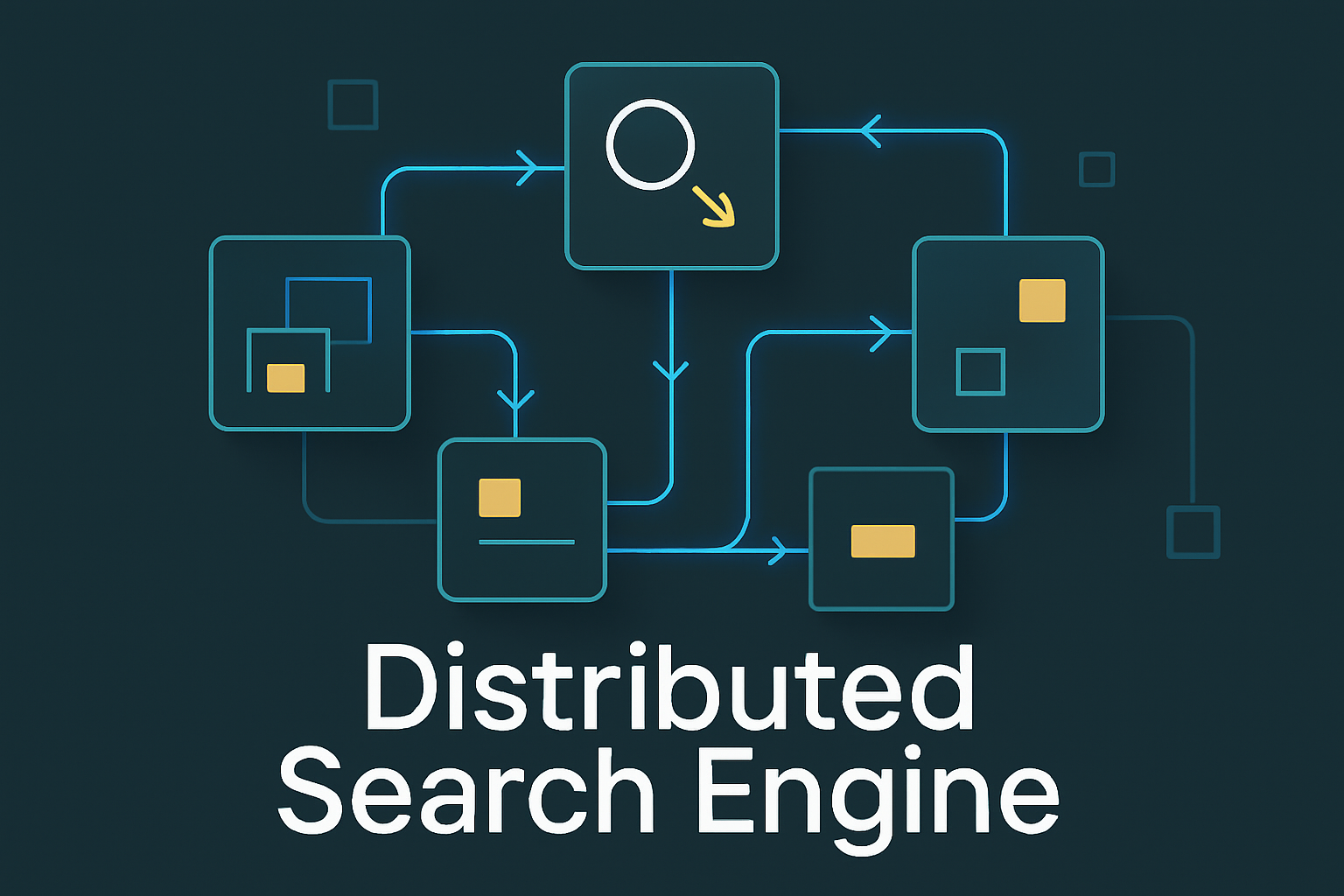
Distributed compute solves this by utilizing horizontal scalability. Instead of a single server managing a massive workload, a cluster of nodes divides the task into smaller, manageable chunks. This transition represents a shift from "big iron" processing to "big data" orchestration. Technologies like Apache Spark, Trino, and cloud-native serverless functions allow analytics engines to execute SQL-like queries across distributed partitions of data simultaneously. For firms managing market-scale analytics, this means the ability to query multi-terabyte datasets in seconds rather than hours, provided the data is partitioned effectively.
Key Drivers of Distributed Market Analytics
The primary catalyst for this shift is the need for velocity. In modern market analysis, the value of data decays exponentially over time. Distributed compute allows for the ingestion of streaming data alongside historical archives, creating a unified view of market performance.
- Concurrency and Parallelism: Distributed systems allow thousands of analytical queries to run concurrently without performance degradation, as resources are allocated dynamically across the cluster.
- Elastic Resource Allocation: With cloud-native infrastructure, compute nodes can be spun up during periods of high market volatility and decommissioned when volume drops, optimizing costs.
- Hybrid Data Processing: Modern frameworks enable the execution of both batch processing (for long-term trend analysis) and stream processing (for immediate market signals) within the same environment.
Architectural Prerequisites and Operational Requirements
Transitioning to a distributed compute model for market analytics is not merely a software deployment; it requires a fundamental redesign of the data pipeline. Without a robust architecture, distributed systems can lead to "data silos" or "network shuffling," where performance is lost due to nodes constantly waiting for data transfers.
- Data Partitioning Strategy: You must determine how data is sliced. Partitioning by time, geography, or asset class is essential to ensure that individual nodes are not bottlenecked by skewed data distribution.
- Low-Latency Interconnects: The speed of the network between nodes is often the limiting factor. High-throughput, low-latency interconnects, such as InfiniBand or optimized cloud fabric, are necessary to prevent the "n+1" query problem.
- Governance and Consistency: In a distributed environment, ensuring ACID (Atomicity, Consistency, Isolation, Durability) compliance across nodes is challenging. Selecting the right consistency model—eventual vs. strong—is critical for financial accuracy.
Comparison of Computational Approaches
The following table illustrates the operational differences between legacy monolithic systems and modern distributed compute architectures.
| Feature | Monolithic Analytics | Distributed Compute |
|---|---|---|
| Scalability | Vertical (Scale-up) | Horizontal (Scale-out) |
| Cost Profile | High fixed hardware costs | Variable/OpEx (Cloud consumption) |
| Data Locality | Centralized in one warehouse | Distributed across clusters |
| Latency | Increases with data volume | Constant/Predictable |
| Failure Tolerance | Single point of failure | High (Distributed redundancy) |
Practical Challenges and Troubleshooting
Implementing distributed compute is not without risks. The complexity of managing clusters often introduces new types of failures. A common mistake is failing to account for "data shuffles"—a scenario where the system must move large chunks of data between nodes to complete a join operation, causing a massive spike in network traffic and latency.
- Identifying Skewed Loads: If one node takes significantly longer than others to complete its task, it indicates a skew. Use observability tools to rebalance the partition keys to ensure uniform load distribution.
- Cost Management: While distributed compute is efficient, improper resource management—such as leaving clusters running during off-peak hours—leads to significant cost leakage. Implement auto-scaling policies to maintain fiscal control.
- Cold Starts: In serverless-based distributed compute, the "cold start" delay can be detrimental to time-sensitive analytics. Keep warm pools or persistent clusters to mitigate this.
Regulatory and Compliance Considerations
When processing market-scale data, firms must adhere to strict regulatory standards regarding data privacy and auditability. Because distributed systems break data into fragments, ensuring that PII (Personally Identifiable Information) remains encrypted and accessible only to authorized processes is a significant architectural burden. Organizations must ensure that their distributed logs provide a clear, immutable audit trail for every transformation applied to the market data, as regulators require proof of data lineage in high-stakes financial environments.
Future Outlook for Market Intelligence
Looking toward the remainder of 2026, the convergence of distributed compute and edge computing is expected to further redefine the sector. By moving the initial stage of processing closer to the data source (the "edge"), firms can filter out noise before the data even touches the core analytical cluster. This reduces bandwidth requirements and speeds up the decision-making process for algorithmic trading platforms and predictive market engines.
Frequently Asked Questions
How does distributed compute reduce latency in market analytics? Distributed compute reduces latency by breaking down massive analytical tasks into smaller sub-tasks that run in parallel across multiple processors. Instead of waiting for a single CPU to finish a long sequential task, the workload is distributed, allowing for significantly faster data aggregation and retrieval.
What is the biggest cost factor when migrating to distributed architectures? The primary cost factor is often data egress and network throughput between nodes. While storage costs have dropped, the compute time required to join and shuffle data across a network can become expensive if the architecture is not optimized to minimize data movement.
Is specialized hardware required for distributed compute? While you can run distributed frameworks on commodity hardware, high-performance market analytics usually require high-speed networking and balanced memory-to-core ratios. Commodity hardware is often sufficient, but only if the cluster is sized correctly to account for overhead.
How do I ensure data accuracy in a distributed system? Data accuracy is managed through robust distributed transaction protocols and idempotent data pipelines. Using versioned data formats, such as Apache Iceberg or Delta Lake, helps ensure that analysts are querying a consistent version of the data, even while new data is being ingested.
What is the role of the cloud in distributed analytics? Cloud platforms provide the elastic infrastructure necessary for distributed computing. They remove the burden of maintaining physical server clusters, offering on-demand scalability that is essential for handling unpredictable market volatility.
Strategic Recommendation
For organizations aiming to modernize their analytics capabilities, the recommended next action is to audit current data partitioning schemas. Before migrating to a full distributed architecture, identify if your current bottlenecks are caused by raw compute limits or inefficient data modeling. Start by containerizing your existing analytical workloads and benchmarking them on a small, scalable cluster to quantify the performance gain before initiating a full-scale migration.
Image Gallery