Marvin Gaye Senior: The Life, Tragic Conflict, and Legacy of Marvin Gay Sr.
Marvin Gay Sr. (October 1, 1914 – October 10, 1998) was an American Pentecostal minister and the father of legendary Motown soul singer Marvin Gaye. He became a figure of intense public scrutiny following the April 1, 1984, fatal shoot...
Marvin Gay Sr. (October 1, 1914 – October 10, 1998) was an American Pentecostal minister and the father of legendary Motown soul singer Marvin Gaye. He became a figure of intense public scrutiny following the April 1, 1984, fatal shooting of his son during a domestic dispute at their Los Angeles home.
Contents
Early Life and Religious Ministry of Marvin Gay Sr.
Marvin Pentz Gay Sr. was born in Catlettsburg, Kentucky, on October 1, 1914. Raised in a challenging environment marked by family instability and strict religious surroundings, he relocated to Washington, D.C., as a young man. There, he became affiliated with the House of God, Which Is the Church of the Living God, the Pillar and Ground of the Truth, Without Controversy, House of Prayer for All People. This Pentecostal denomination adhered to strict Hebrew Christian traditions, requiring members to follow rigorous codes of conduct, observe Saturday as the Sabbath, and follow precise dietary guidelines.
Gay Sr. rose to become a minister within the denomination. He was known for his commanding preaching style and strict adherence to church doctrine. Within his local congregation, he demanded total obedience to religious law. However, his personal life exhibited significant contradictions. Relatives and biographer accounts noted that while he preached moral austerity from the pulpit, he struggled with severe personal conflicts, heavy alcohol consumption, and erratic behavioral patterns at home.
In 1935, Gay Sr. married Alberta Cooper, a schoolteacher from North Carolina. The couple settled in Washington, D.C., where they raised four children: Jeanne, Marvin Jr., Frankie, and Zeola. Gay Sr. also fathered a child, Antwaun Gay, through an extramarital relationship. The household was governed under strict rules enforced through severe corporal punishment, creating an atmosphere of tension that profoundly influenced the childhood of Marvin Jr. and his siblings.
Domestic Dynamics and the Impact on Marvin Gaye Jr.
The household environment maintained by Marvin Gay Sr. was defined by severe discipline and emotional distance. Biographies detailing the life of Marvin Gaye—including David Ritz's authorized biography Divided Soul: The Life of Marvin Gaye—document the intense physical and psychological stress inflicted by Gay Sr. on his children. The elder Gay enforced strict religious rules, punishing any perceived disobedience with severe beatings.
Marvin Jr. displayed early musical talent, singing in his father’s church choir from a young age. Despite his musical gifts, he rarely received praise from his father. Instead, his father viewed his secular musical interests with hostility. As Marvin Jr. pursued a professional singing career in his late teens and early twenties, the fracture between father and son deepened.
When Marvin Jr. joined Motown Records in Detroit during the early 1960s, he made the deliberate decision to add an "e" to his surname, changing it from "Gay" to "Gaye." Historical accounts attribute this modification to three primary factors:
- Distance from his father: Establishing a distinct personal identity separate from Marvin Gay Sr.
- Tribute to Sam Cooke: Emulating his musical idol, Sam Cooke, who had added an "e" to his original last name, Cook.
- Reduction of teasing: Curbing persistent rumors and jokes regarding his original last name during his early career.
Despite the deep psychological rift, Marvin Jr. maintained financial responsibility for his parents throughout his career, purchasing a large home for them in Los Angeles while continuing to seek the paternal validation he was routinely denied.
- DOMESTIC AND FINANCIAL TENSION
- Strict religious discipline vs. personal habits
- Parental dependence on son's financial support
- Mutual resentment compounding over decades
- ESCALATION (LATE 1983 - 1984)
- Marvin Jr. moves into parents' Los Angeles residence
- Deepened addiction and paranoia from Marvin Jr.
- Escalating arguments over misplaced documents
- FATAL ALTERCATION (APRIL 1, 1984)
- Verbal altercation between Gay Sr. and Alberta
- Marvin Jr. physically intervenes on mother's behalf
- Gay Sr. retrieves .38 revolver, shoots Marvin Jr.
The Escalation of Conflict and the Events of April 1, 1984
By late 1983, Marvin Gaye was struggling with severe depression, drug addiction, and financial difficulties following a prolonged tax dispute with the Internal Revenue Service. Moving back into his parents' home at 2101 South Gramercy Place in the Western Heights neighborhood of Los Angeles, the singer sought refuge and stability. However, placing an emotionally fragile Marvin Jr. back into the daily presence of his estranged father exacerbated existing family wounds.
During late 1983 and early 1984, friction between Marvin Gay Sr. and Alberta Gay deteriorated further. Gay Sr. suffered from worsening health, increasing resentment toward his dependence on his son's financial generosity, and an escalating abuse of alcohol. Marvin Jr. frequently intervened in arguments between his parents to protect his mother, intensifying his father's anger.
On the evening of March 31, 1984, and the morning of April 1, 1984, an argument erupted regarding a misplaced insurance policy document. Gay Sr. paced through the house shouting at Alberta. Marvin Jr., resting in his bedroom, warned his father to stop yelling at his mother. When Gay Sr. refused, Marvin Jr. confronted him physically, shoving and kicking his father out of the room.
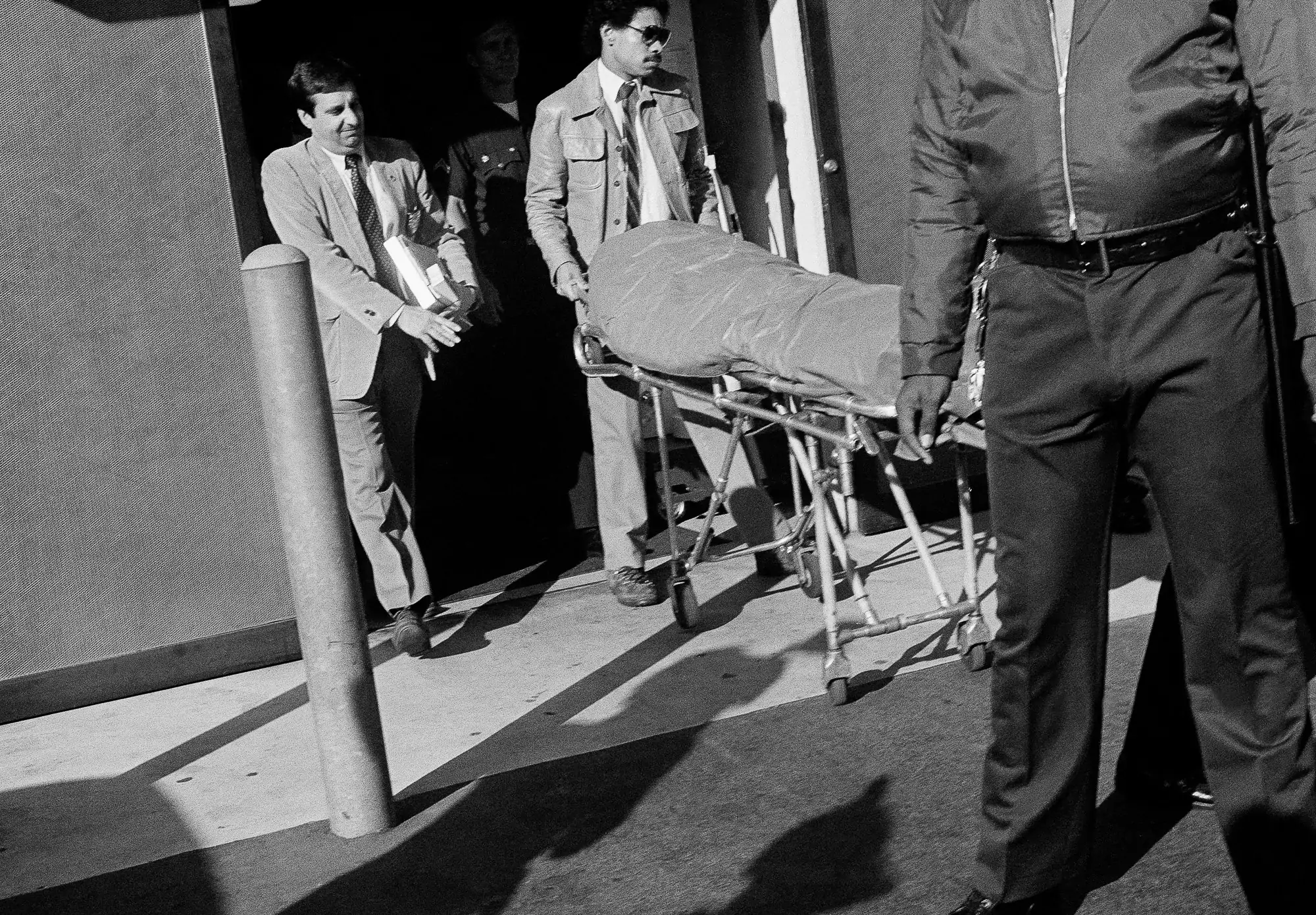
Shortly before 12:30 p.m. PST on April 1, 1984—one day before Marvin Jr.'s 45th birthday—Marvin Gay Sr. returned to the bedroom holding a .38 Special revolver. The handgun had originally been given to him by Marvin Jr. during the 1983 Christmas season to protect the family home from potential intruders. Gay Sr. fired twice at his son. The first bullet struck Marvin Jr. in the chest, penetrating his heart and left lung; the second shot was fired at closer range. Marvin Gaye was pronounced dead upon arrival at California Hospital Medical Center at 1:01 p.m.
Legal Proceedings, Tumor Discovery, and Sentencing
Following the shooting, Marvin Gay Sr. was taken into custody by the Los Angeles Police Department. During police interrogations, he claimed he did not realize the gun held live ammunition and maintained that he acted in self-defense, asserting that his son had beaten him severely before the shooting.
| Date | Legal Timeline & Findings |
|---|---|
| April 1, 1984 | Marvin Gay Sr. arrested for murder |
| May 1984 | Medical exam reveals benign brain tumor |
| Sept 20, 1984 | Enters plea of no contest to manslaughter |
| Nov 2, 1984 | Sentenced to suspended term & probation |
During pre-trial medical evaluations, physicians discovered that Marvin Gay Sr. suffered from a benign pituitary tumor (an angioma). Defense attorneys argued that the brain tumor, combined with his advanced age and physical ailments, affected his cognitive state and judgment during the altercation. Autopsy reports for Marvin Jr. also revealed traces of cocaine and phencyclidine (PCP) in his system, supporting claims of an intense physical confrontation prior to the shooting.
On September 20, 1984, the Los Angeles County District Attorney's office accepted a plea bargain. Gay Sr. pleaded no contest to one count of voluntary manslaughter.
On November 2, 1984, Los Angeles Superior Court Judge Gordon Ringer delivered the sentence:
- Suspended Sentence: A six-year suspended state prison sentence.
- Probation: Five years of supervised probation.
- Prohibition: A strict order prohibiting the possession of firearms or alcohol.
During sentencing, Judge Ringer acknowledged the complex dynamics of the assault and the physical state of both men, determining that state prison would not serve a rehabilitative purpose for an ailing 70-year-old man with significant medical deterioration.
Key Milestones in the Life of Marvin Gay Sr.
| Year | Event | Location | Significance / Outcome |
|---|---|---|---|
| 1914 | Born in Catlettsburg, Kentucky | Catlettsburg, KY | Raised in difficult conditions before moving to Washington, D.C. |
| 1935 | Marries Alberta Cooper | Washington, D.C. | Established the household where Marvin Jr. and siblings were raised. |
| 1939 | Birth of Marvin Pentz Gay Jr. | Washington, D.C. | Second child born; initial church singing experiences began shortly after. |
| 1973 | Relocation to Los Angeles | Los Angeles, CA | Moved into a home purchased by Marvin Jr. on South Gramercy Place. |
| 1984 | Fatal shooting of Marvin Gaye | Los Angeles, CA | Tragic altercation ending in the death of Marvin Gaye on April 1, 1984. |
| 1984 | Plea agreement for Manslaughter | Los Angeles Superior Court | Pleaded no contest to voluntary manslaughter; received probation. |
| 1986 | Divorce from Alberta Gay | Los Angeles, CA | Alberta filed for divorce following the trial; marriage officially dissolved. |
| 1998 | Death of Marvin Gay Sr. | Culver City, CA | Died of pneumonia in a nursing home at the age of 84. |
Later Years and Death
Following the conclusion of the criminal trial, Marvin Gay Sr. returned briefly to the Gramercy Place residence before his wife, Alberta, filed for divorce in 1986 after 51 years of marriage. Alberta relocated to live with her daughter, Jeanne, until her death from cancer in 1987.
Gay Sr.’s physical health deteriorated steadily through the late 1980s and 1990s. Suffering from strokes, heart disease, and advancing dementia, he spent his remaining years in various specialized nursing facilities throughout Los Angeles County. He rarely spoke publicly about the shooting, though in brief interviews with reporters, he expressed remorse, stating he wished his son had lived.
On October 10, 1998, nine days after his 84th birthday, Marvin Gay Sr. died of pneumonia at the Inglewood Park Urgent Care Center (and recorded at a Culver City nursing home facility). He was cremated, closing a troubled chapter in American popular music history.
Frequently Asked Questions
Did Marvin Gay Sr. go to prison for killing his son?
No. Marvin Gay Sr. did not serve time in state prison. He pleaded no contest to voluntary manslaughter after medical examinations revealed a benign brain tumor. The judge issued a six-year suspended sentence and placed him on five years of supervised probation.
Why did Marvin Gaye change his last name from Gay?
Marvin Gaye added an "e" to his surname when he signed with Motown Records. He did so to distance himself from his father, to follow the pattern of his idol Sam Cooke (who added an "e" to Cook), and to avoid persistent teasing regarding his original last name.
What religion did Marvin Gay Sr. practice?
He was an ordained minister in the House of God, Which Is the Church of the Living God, the Pillar and Ground of the Truth, Without Controversy, House of Prayer for All People. This Pentecostal church observed Saturday Sabbath, followed strict dietary restrictions, and mandated conservative behavioral codes.
Who owned the gun used in the April 1, 1984 shooting?
The weapon used—a .38 Special revolver—was originally purchased by Marvin Gaye Jr. and given to his father as a Christmas gift in December 1983 to protect their Los Angeles home against potential intruders.
What happened to Alberta Gay after the trial?
Alberta Gay filed for divorce from Marvin Gay Sr. in 1986. She moved to live with her daughter Jeanne in California and passed away from cancer in May 1987.
Historical Retrospective
The life of Marvin Gay Sr. remains linked to the loss of one of soul music's greatest talents. For music historians and biographers, the fatal conflict between father and son serves as a study in intergenerational trauma, strict religious extremism, domestic abuse, and complex family dynamics. Understanding the life of Marvin Gay Sr. provides essential context for the emotional intensity found throughout Marvin Gaye’s musical catalog, reflecting the complex personal struggles behind his artistic legacy.
Image Gallery