When Is Enrollment for Medicare Part B? A Guide to Deadlines and Eligibility
Enrollment for Medicare Part B typically occurs during your Initial Enrollment Period, a seven-month window surrounding your 65th birthday. If you miss this, you can enroll during the General Enrollment Period (January 1 to March 31 an...
Enrollment for Medicare Part B typically occurs during your Initial Enrollment Period, a seven-month window surrounding your 65th birthday. If you miss this, you can enroll during the General Enrollment Period (January 1 to March 31 annually) or a Special Enrollment Period if you have qualifying employer-sponsored coverage.
Contents
Medicare Part B is a critical component of the federal health insurance program, covering outpatient services, doctor visits, preventive care, and durable medical equipment. Because Part B carries a monthly premium and potential lifelong late-enrollment penalties, understanding exactly when to sign up is one of the most important financial decisions for individuals approaching retirement age. In 2026, the rules governing these windows remain strict, though recent legislative updates have streamlined when coverage actually begins after you hit the "submit" button.
The Initial Enrollment Period (IEP): Your First Opportunity
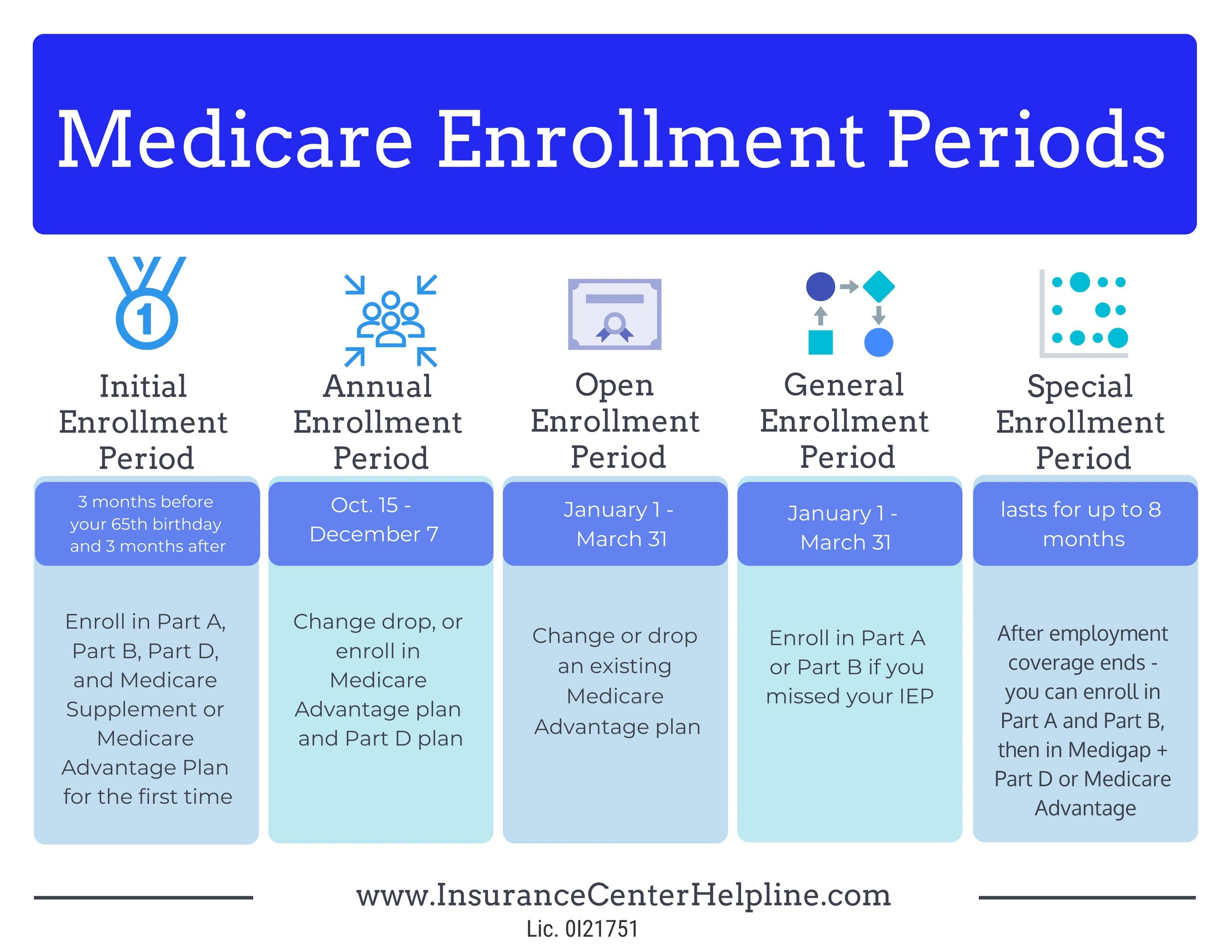
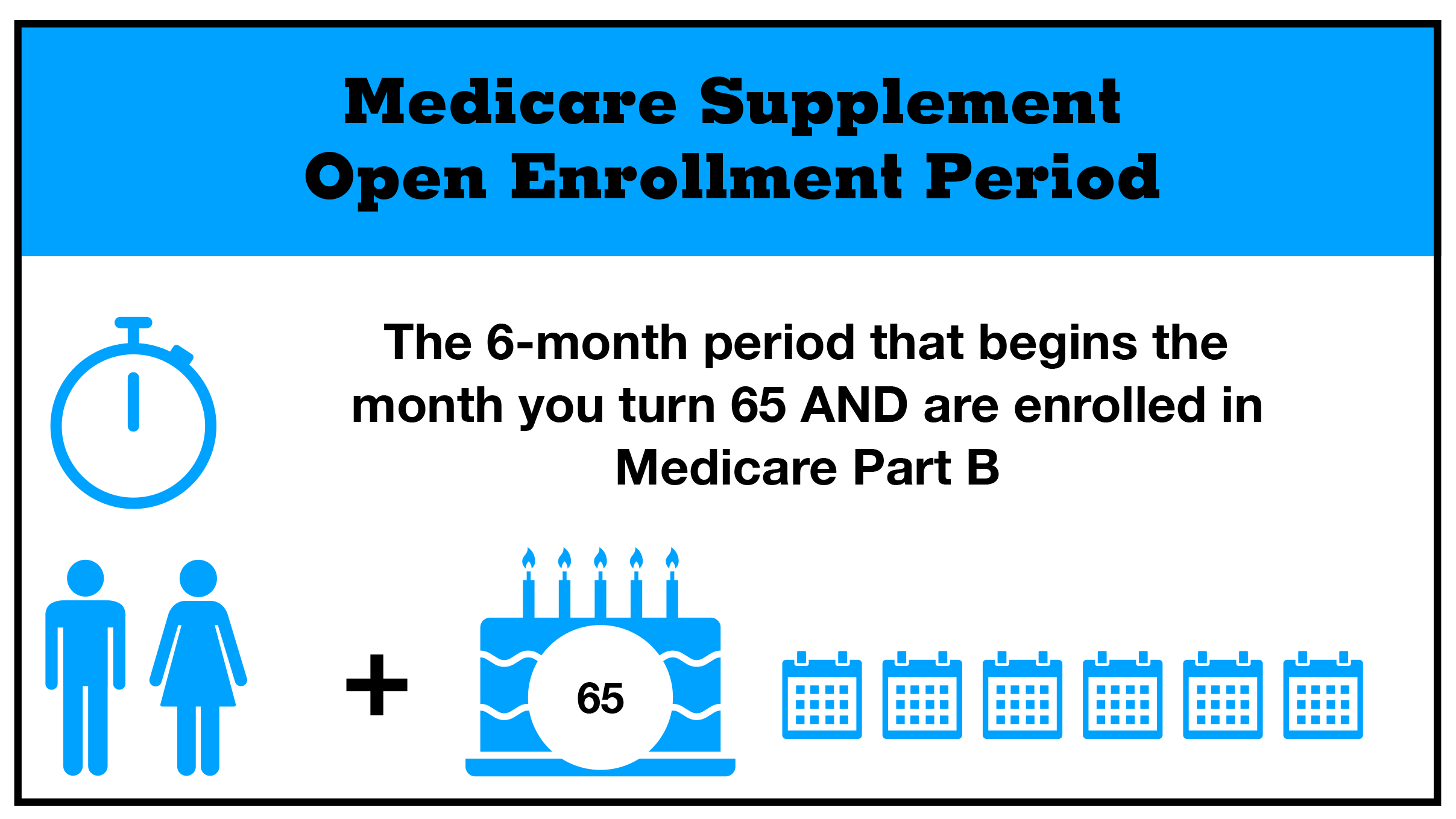
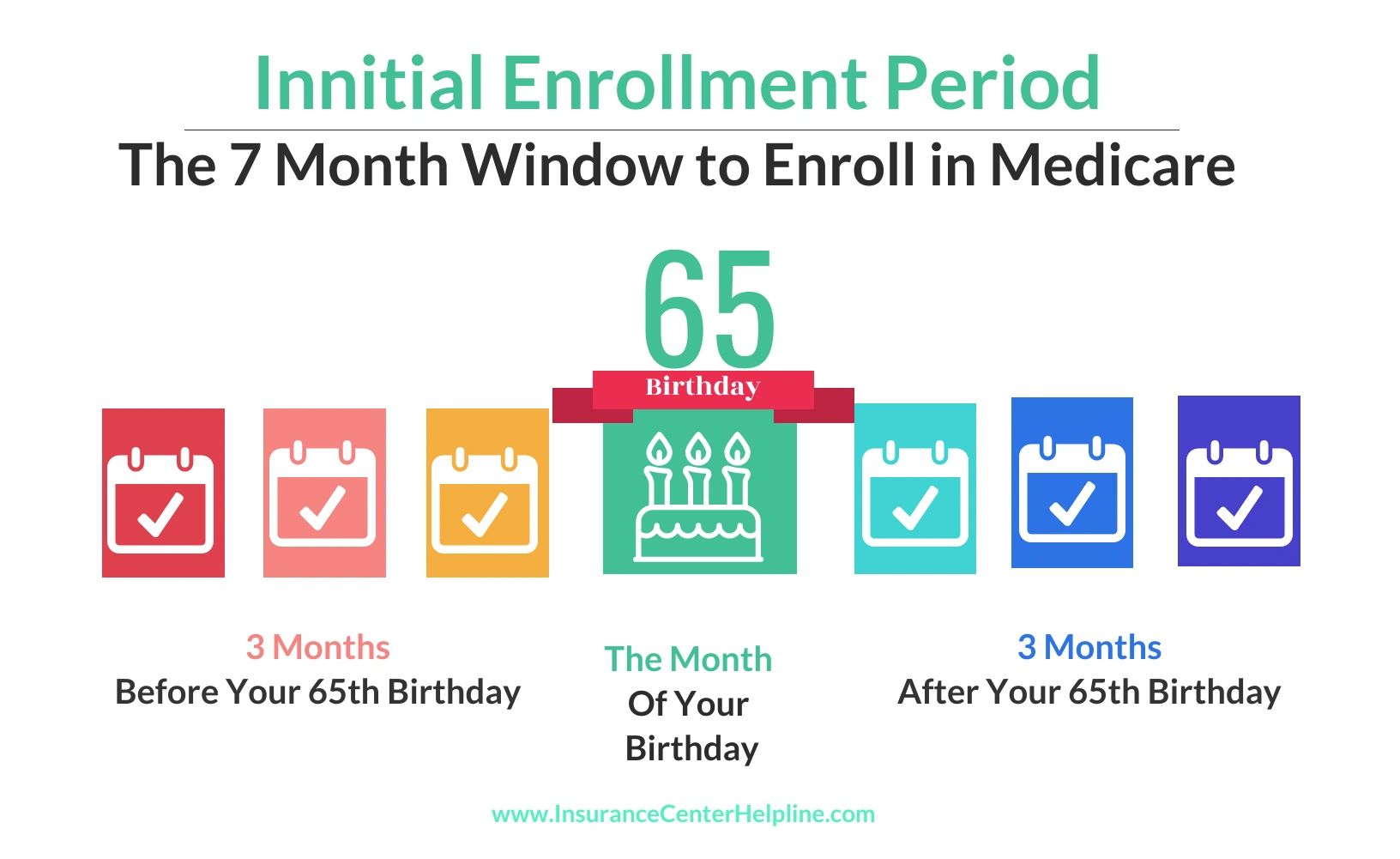
For most Americans, the Initial Enrollment Period (IEP) is the primary timeframe for securing Medicare Part B. This is a one-time, seven-month window that is uniquely tied to your 65th birthday. It is designed to give you ample time to transition from private or employer-based insurance into the federal system.
The IEP is calculated as follows:
- Three months before the month you turn 65.
- The month of your 65th birthday.
- Three months after the month you turn 65.
If your birthday falls on the first day of the month, your IEP actually begins one month earlier. For example, if your birthday is October 1, Medicare treats you as having turned 65 in September. Consequently, your seven-month window would begin on June 1 and end on December 31.
Why the IEP Timing Matters
Signing up during the first three months of your IEP ensures that your coverage begins on the first day of your birth month. Since the implementation of the "Beneficiary Enrollment Notification and Eligibility Simplification (BENES) Act," coverage now typically begins the first of the month following your enrollment if you sign up during the later months of your IEP. This eliminated the confusing multi-month "waiting periods" that used to plague the system.
The General Enrollment Period (GEP): The Fallback Window
If you missed your Initial Enrollment Period and do not qualify for a Special Enrollment Period, you must wait for the General Enrollment Period (GEP). The GEP occurs every year from January 1 through March 31.
In the past, people who signed up during the GEP had to wait until July 1 for their coverage to start. However, as of 2026, the modernized rules dictate that your coverage begins the first day of the month following the month in which you enroll. For instance, if you sign up on February 15, your Part B coverage will be active starting March 1.
The Penalty for Using the GEP
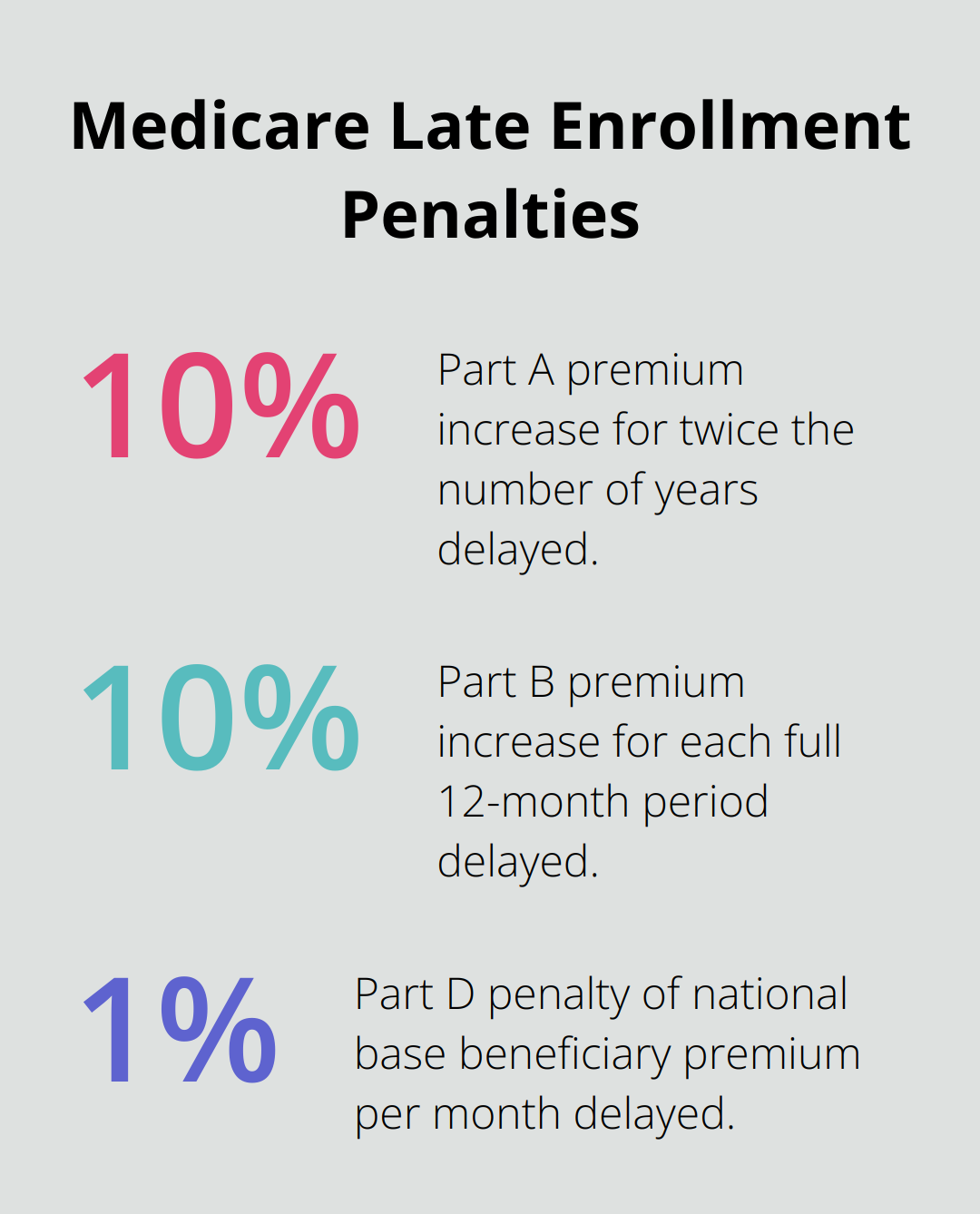
While the GEP provides a way to get coverage if you missed your first chance, it often comes with a financial sting: the Part B Late Enrollment Penalty. For every full 12-month period that you were eligible for Part B but did not have it (and did not have "creditable" coverage), your monthly premium increases by 10%. This penalty is not a one-time fee; it is a permanent increase that stays with you for as long as you have Medicare Part B.
Special Enrollment Periods (SEP): For Those Still Working
Many individuals choose to work past age 65. If you or your spouse are still employed and you are covered by a Group Health Plan (GHP) based on that current employment, you may not need to sign up for Part B during your IEP.
The Special Enrollment Period (SEP) allows you to sign up for Part B at any time while you are still covered by the group health plan or during the eight-month period that begins the month after the employment ends or the group health plan coverage ends, whichever happens first.
Qualifying for a Part B SEP
To qualify for this window without penalty, the employer providing the insurance must usually have 20 or more employees. It is vital to distinguish between "active" employment coverage and other types of insurance:
- COBRA: This does not count as "current employment" coverage. If you leave your job and take COBRA, you must still sign up for Part B during your IEP or you will face penalties later.
- Retiree Insurance: Similar to COBRA, retiree health plans are generally not considered creditable coverage for the purposes of delaying Part B.
- VA Benefits: While excellent, VA health benefits are not considered a substitute for Medicare Part B. Delaying Part B while only having VA coverage will typically result in a late enrollment penalty.
| Enrollment Window | Dates | Coverage Start Date | Penalty Risk |
|---|---|---|---|
| Initial Enrollment Period (IEP) | 7-month window around age 65 | 1st of birth month (or month after sign-up) | None |
| General Enrollment Period (GEP) | Jan 1 – March 31 annually | 1st of the month after sign-up | 10% per 12-month delay |
| Special Enrollment Period (SEP) | While working + 8 months after | 1st of the month of sign-up | None (if qualified) |
| Special Circumstances SEP | Varies (e.g., natural disasters) | Case-by-case basis | Usually none |
Automatic vs. Manual Enrollment: Who Needs to Act?
Not everyone needs to manually "enroll" in Medicare Part B. For some, the process is handled automatically by the Social Security Administration (SSA).
Automatic Enrollment
You will be automatically enrolled in Medicare Part A and Part B if:
- You are already receiving Social Security benefits at least four months before you turn 65.
- You are receiving Railroad Retirement Board (RRB) benefits.
- You have been receiving Social Security Disability Insurance (SSDI) for 24 months.
In these cases, your Medicare card will arrive in the mail about three months before your 65th birthday (or your 25th month of disability). Your coverage will start on the first day of the month you turn 65.
Manual Enrollment
If you are not yet receiving Social Security benefits—perhaps because you are waiting until age 67 or 70 to maximize your monthly check—you must manually sign up for Medicare Part B. The government will not "remind" you with a phone call or a knock on the door. Failing to take action during your IEP in this scenario is a common cause of late enrollment penalties.
Medicare Part B Costs and IRMAA in 2026
When you enroll in Part B, you agree to pay a monthly premium. For 2026, the standard premium is adjusted by the Centers for Medicare & Medicaid Services (CMS) based on the cost of the program. While the standard premium covers most beneficiaries, high-income earners are subject to the Income-Related Monthly Adjustment Amount (IRMAA).
IRMAA is a surcharge added to your Part B and Part D premiums if your modified adjusted gross income (MAGI) from two years prior exceeds certain thresholds. For 2026, the SSA looks at your 2024 tax returns to determine your rate. If your income has dropped significantly since 2024 due to a "life-changing event" (such as retirement, divorce, or the death of a spouse), you can file Form SSA-44 to request a reduction in your IRMAA.
Common Pitfalls and How to Avoid Them
1. Assuming Your Employer Coverage is "Creditable"
Before deciding to skip Part B, talk to your benefits administrator. Ask specifically: "Is this group health plan considered primary to Medicare?" If the company has fewer than 20 employees, Medicare usually becomes the primary payer at age 65, meaning your employer plan might not pay for anything until you have Part B active.
2. Missing the COBRA Trap
As mentioned, COBRA is a common source of confusion. Many retirees believe that because they are paying for COBRA, they are "covered." While you have insurance, COBRA does not grant you a Special Enrollment Period. If your IEP passes while you are on COBRA, you will likely pay a Part B penalty for the rest of your life.
3. The Health Savings Account (HSA) Conflict
If you are still working and contributing to an HSA, be aware that you cannot contribute to an HSA once you are enrolled in any part of Medicare. If you plan to continue contributing to your HSA, you must delay both Part A and Part B. However, delaying Part A is only possible if you have not yet claimed Social Security benefits.
Frequently Asked Questions
Can I enroll in Part B if I live outside the United States?
Generally, no. Medicare Part B does not provide coverage for medical care received outside the U.S. and its territories. Most people living abroad delay Part B. However, you must be careful; unless you are working abroad for a U.S. company with group health coverage, you may still face a penalty when you return to the U.S. and sign up later.
What if I missed my enrollment because of a natural disaster?
CMS provides "Exceptional Circumstances" SEPs. If a FEMA-declared emergency or natural disaster prevented you from enrolling during your IEP or GEP, you may be granted a special window to sign up without penalty. This also applies to situations involving misinformation from an employer or health plan.
Do I have to sign up for Part B if I have TRICARE?
Yes. If you are a military retiree with TRICARE, you must generally enroll in Medicare Part B when you turn 65 to remain eligible for TRICARE For Life (TFL). TFL acts as a supplement to Medicare, but it requires Part B to be active to provide secondary coverage.
How do I actually apply for Part B?
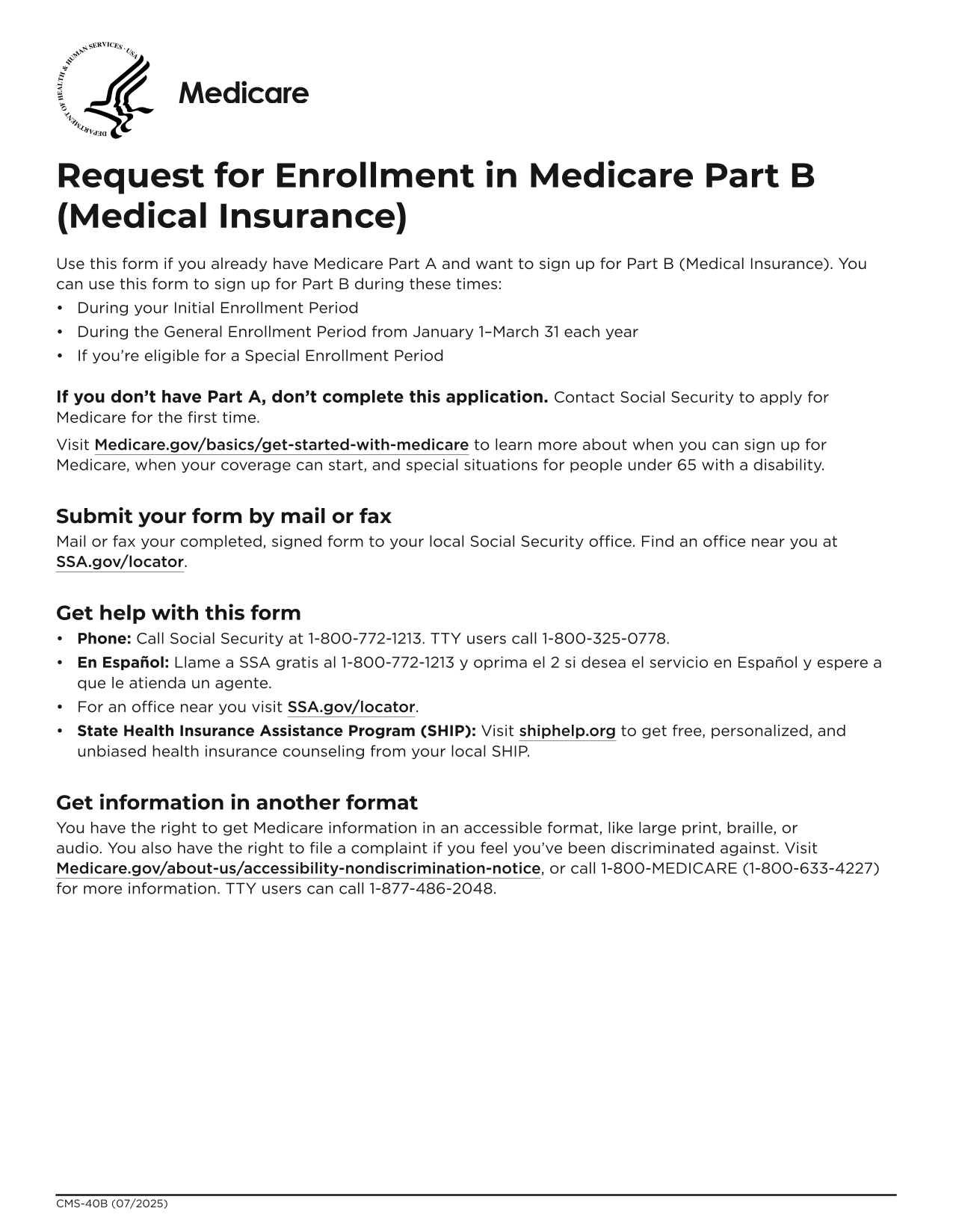
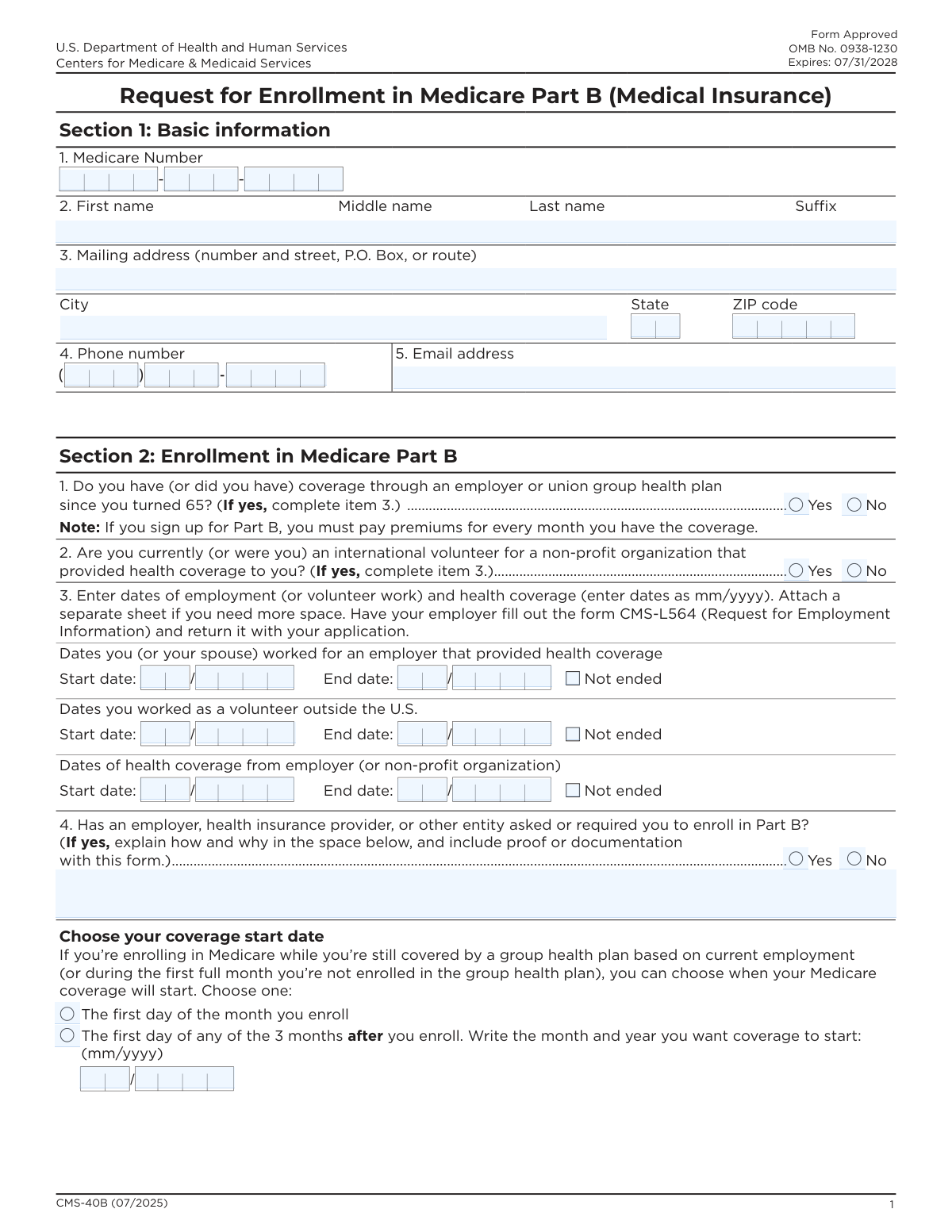
The most efficient way to apply is online through the Social Security Administration website (ssa.gov). You can also make an appointment at your local Social Security office or call 1-800-772-1213. If you are applying via a Special Enrollment Period, you will need to submit Form CMS-40B and Form CMS-L564 (signed by your employer).
Final Recommendation: Take Action Early
The most effective strategy for Medicare Part B is to begin your research six months before your 65th birthday. Verify whether you will be automatically enrolled or if you need to file an application. If you are still working, obtain written confirmation from your employer regarding the "creditable" status of your health plan. By securing your enrollment during the first three months of your Initial Enrollment Period, you avoid lapses in coverage and ensure that your healthcare transition is seamless and penalty-free.
Image Gallery