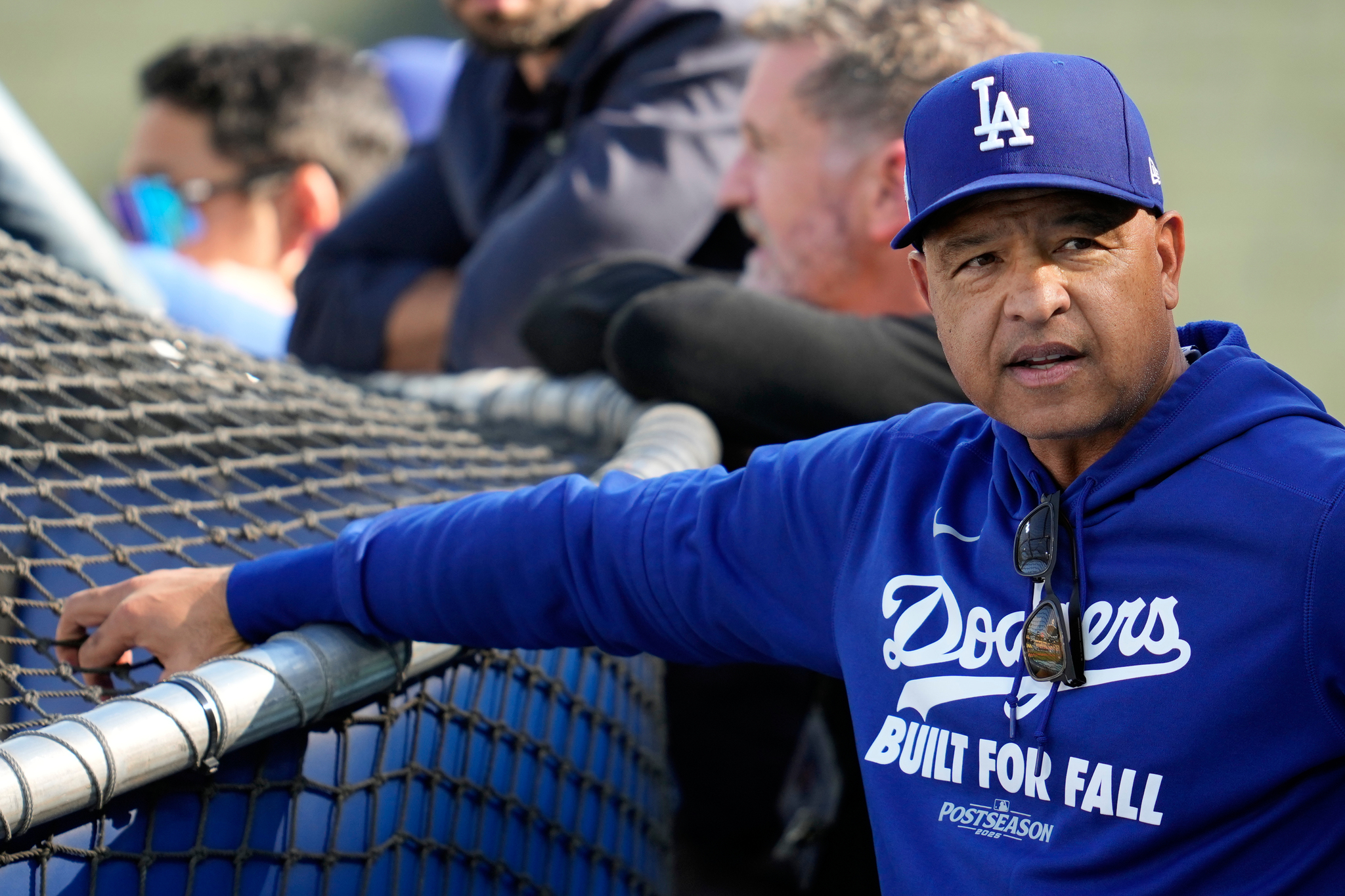
Dave Roberts’ Dodgers Player Impact Over Time: Player Legacy to Managerial Strategy
Dave Roberts has shaped the Los Angeles Dodgers across two distinct eras: first as a gritty, high-speed outfielder from 2002 to 2004, and later as the franchise's manager starting in 2016. His impact over time encompasses both his indi...
Dave Roberts has shaped the Los Angeles Dodgers across two distinct eras: first as a gritty, high-speed outfielder from 2002 to 2004, and later as the franchise's manager starting in 2016. His impact over time encompasses both his individual on-field performance—built on elite base-running and outfield range—and his modern analytical, player-first managerial framework that has maximized individual talent across multiple World Series championship runs.
Contents
Disambiguating the Dual Impact: Player Legacy vs. Managerial Influence
When evaluating Dave Roberts’ impact on the Los Angeles Dodgers over time, it is essential to distinguish between his physical contributions as an active player and his systemic influence as the team's manager. As an active player from 2002 through mid-2004, Roberts provided dynamic top-of-the-order speed, high-grade center field defense, and aggressive baserunning. That playing tenure established his deep understanding of clubhouse dynamics and high-pressure media environments.
Since returning to Los Angeles as manager prior to the 2016 season, Roberts’ impact transitioned from personal statistical production to broad organizational influence. Over a decade in the dugout, his player impact has manifested through advanced load management, platoon optimization, psychological support of modern superstars, and bullpen leverage tactics. Examining his evolution reveals how a player focused on small-ball fundamentals grew into a manager tasked with guiding multi-billion-dollar rosters through grueling 162-game seasons and high-variance October postseasons.
Phase 1: Dave Roberts as a Dodgers Player (2002–2004)
Acquired by the Dodgers from the Cleveland Guardians (then Indians) in late December 2001, Dave Roberts brought an explosive speed element to Los Angeles. Serving primarily as the team's starting center fielder and leadoff hitter, Roberts altered how opposing pitchers handled the top of the Dodgers' lineup.
On-Field Production and Style of Play
During his two-and-a-half seasons in a Dodgers uniform, Roberts posted consistent offensive and defensive numbers while playing under legendary manager Jim Tracy:
- 2002 Season: Played 127 games, batting .277 with a .353 on-base percentage (OBP) and 45 stolen bases.
- 2003 Season: Batting was limited by injuries to 107 games, yet he recorded 40 stolen bases while maintaining strong defensive metrics in center field.
- 2004 Season: Stole 33 bases in 87 games with Los Angeles before being traded to the Boston Red Sox at the July trade deadline for prospect Henri Stanley—a trade that set up his famous postseason steal in Boston while clearing outfield playing time in Los Angeles.
Roberts was not a power hitter; his value stemmed from disrupting rhythm. By extending at-bats, forcing pickoff throws, and taking extra bases on hits to the alley, he manufactured runs during an era dominated by heavy power hitters.
Culture and Clubhouse Foundation
Beyond raw statistics, Roberts established himself in Los Angeles as a high-IQ communicator. Teammates relied on his preparation and baserunning study. His understanding of micro-situations—reading dirt-ball reads, identifying pitcher tendencies, and calculating outfield throwing arms—laid the groundwork for the tactical instincts he would later demand from players under his managerial tenure.
Phase 2: The Transition to Bench Leadership and Management
After concluding his playing career in 2008 with 243 career stolen bases, Roberts transitioned into coaching, joining the San Diego Padres organizational structure as a special assistant before becoming their first base coach and later bench coach. When the Dodgers hired Roberts as manager in November 2016, replacing Don Mattingly, the franchise was entering a modern analytical transformation led by President of Baseball Operations Andrew Friedman.
Roberts was uniquely positioned to bridge the gap between front-office quantitative data and human performance in the clubhouse. Having played through the early 2000s transition to sabermetrics, he understood player hesitation toward analytical shifts like radical defensive shifts, strict pitch-count limits, and platooning.
Early Managerial Years (2016–2019): Establishing Operational Identity
In his initial seasons as Dodgers manager, Roberts demonstrated an ability to buy player trust for unconventional strategies:
- Strict Platoon Matching: Maximizing bench players like Enrique Hernández and Chris Taylor by deploying them strictly in favorable matchup splits.
- Rotation Workload Limits: Protecting elite arms such as Clayton Kershaw, Walker Buehler, and Rich Hill by limiting third-time-through-the-order exposures.
- Position Versatility: Encouraging regulars to play multiple positions to maintain roster flexibility during mid-game substitutions.
These moves yielded immediate results, as Roberts earned National League Manager of the Year honors in 2016 after leading Los Angeles to the NLCS despite setting a major league record for players placed on the injured list.
Phase 3: Modern Strategic Impact: Workload Management and Roster Optimization
As Roberts’ managerial tenure expanded through the late 2010s and into the 2020s, his primary impact on players shifted toward long-term physical sustainability and tactical deployment. Managing a modern contender requires navigating an expanded postseason format while maintaining elite regular-season win totals.
Pitching Staff Utilization and Protection
One of Roberts' most measurable impacts on player usage is how he manages pitching workloads. Under his direction, the Dodgers systematically prioritized October health over regular-season individual pitch counts.
- Front-Office Analytics
- Roberts' Tactical Communication
- Player Buy-in & Performance
- Regular Season Preservation
- Load-managed rotation
- Strict pitch-count limits
- Postseason Agility
- High-leverage bullpen games
- Aggressive mid-inning hooks
- Regular Season Preservation
This strategy frequently required Roberts to make controversial decisions, such as pulling starting pitchers with active no-hitters or low pitch counts to protect their arms for postseason runs. While heavily scrutinized by media and traditional fans, this approach protected player longevity and ensured bullpen availability across grueling playoff series.
Developing and Elevating Role Players
Under Roberts, the Dodgers became a model franchise for transforming fringe major-leaguers into core contributors. By clearly communicating roles and providing predictable matchup entry points, players like Max Muncy, Justin Turner, Chris Taylor, and Evan Phillips evolved from minor-league free agents or waiver claims into All-Stars and high-leverage postseason heroes. Roberts’ ability to maintain confidence among bench players ensures that bench units perform effectively when starters take rest days.
Managing Modern Superstars: The Betts, Freeman, and Ohtani Era
Managing a modern roster filled with high-profile superstars presents different challenges than managing developmental teams. Following the acquisitions of Mookie Betts (2020), Freddie Freeman (2022), and Shohei Ohtani (2024), Roberts expanded his management profile to balance elite individual routines with team goals.
DAVE ROBERTS' MANAGERIAL FRAMEWORK
| Strategic Pillar | Operational Application |
|---|---|
| Superstar Empowerment | Accommodating individual pre-game routines |
| Tactical Matchup Flexibility | Optimizing platoon advantages across 162 games |
| Open Communication Channels | Pre-explaining tactical pulls and rest days |
| Clubhouse Culture Preservation | Maintaining unity across multi-star rosters |
Superstar Empowerment and Routine Respect
Roberts' success with superstars relies on partnership rather than rigid control. With players of elite caliber, Roberts establishes clear boundaries:
- Mookie Betts: Transitioned seamlessly between right field, second base, and shortstop based on team roster needs, driven by open communication between Betts and Roberts regarding workload and preparation.
- Freddie Freeman: Maintained his desire to play all 162 games while Roberts balanced rest schedules around Freeman’s preferences.
- Shohei Ohtani: Navigated the unique logistical and physical demands of a designated hitter and rehabilitation program, allowing Ohtani maximum autonomy over his daily preparation while keeping the team focused amid global media attention.
By insulating stars from external noise and validating their preparation styles, Roberts has fostered an environment where premier talent consistently produces at career-peak levels in Los Angeles.
Quantitative & Qualitative Comparison: Impact Across Eras
The table below outlines Dave Roberts' measurable impact during his distinct roles within the Los Angeles Dodgers organization.
| Era / Phase | Primary Role | Key Quantitative Metrics | Main Strategic / Tactical Focus | Lasting Impact on Franchise |
|---|---|---|---|---|
| 2002–2004 | Starting Center Fielder & Leadoff Hitter | .274 BA, 118 Stolen Bases, .342 OBP in 321 games | Base disruption, outfield range, situational small ball | Established dynamic top-of-order speed and clubhouse prep standards. |
| 2016–2019 | First-Phase Manager | 434–214 (.670 Win %), 4 NL West Titles, 2 NL Pennants | Platoon optimization, early sabermetric adaptation, shifting | Established analytical alignment between front office and clubhouse. |
| 2020–2023 | Mid-Tenure Manager | 344–160 (.683 Win %), 2020 World Series Title | Workload management, bullpen game innovation, roster depth | Proved sustainability of load management; won franchise's first title since 1988. |
| 2024–2026 | Veteran Championship Manager | Multi-hundred win seasons, 2024 World Series Championship | Superstar integration, high-stakes bullpen leverage | Standardized management of mega-rosters while delivering multiple titles. |
Key Tactical Indicators of Roberts' Player Impact
To understand how Dave Roberts influences player outcomes on a daily basis, coaches and analysts examine specific tactical indicators:
- Low-Leverage Relief Conversions: Roberts excels at identifying early-season lower-leverage relievers and putting them in structured situations to build confidence before introducing them to ninth-inning duties.
- Pre-Game Matchup Transparency: Players routinely report that Roberts informs them of potential late-game pinch-hitting or defensive substitution scenarios hours before first pitch, eliminating mid-game uncertainty.
- Defensive Positioning Buy-in: Convincing veteran players to accept defensive realignments and positional shifts requires personal trust, an area where Roberts consistently scores high among players.
- Post-Loss Insulation: In post-game press conferences, Roberts absorbs public criticism for tactical failures or player errors, protecting his roster from market pressure.
Long-Term Legacy: How Roberts Transformed the Dodgers Player Lifecycle
Dave Roberts’ long-term impact on the Los Angeles Dodgers has fundamentally altered how players move through the organization. As a player himself, he represented speed, execution, and maximizing every physical tool available. As a manager, he built an operational infrastructure where high-budget star talent and low-cost waiver pickups coexist effectively.
His tenure proves that analytical management does not have to be cold or transactional. By combining data-driven matchup strategies with human empathy and clear communication, Roberts established a culture that routinely extracts peak value from top-tier starters and bench options alike.
Frequently Asked Questions
How did Dave Roberts perform as an active player for the Dodgers?
Dave Roberts played 321 games for the Dodgers between 2002 and July 2004. He batted .274 with a .342 on-base percentage and stole 118 bases, serving as the team's primary center fielder and speed threat at the top of the batting order before being traded to Boston.
What is Dave Roberts' overall impact as manager of the Dodgers?
As manager since 2016, Roberts has led the Dodgers to annual postseason appearances, multiple National League Pennants, and World Series Championships in 2020 and 2024. His impact centers on high-level workload management, platoon optimization, tactical communication, and managing superstar rosters.
How does Dave Roberts manage pitcher workloads compared to traditional managers?
Roberts relies heavily on quantitative data to protect pitcher health, often pulling starters before their third time through an opposing batting order. He prioritizes bullpen match-ups and long-term October freshness over individual complete games or high single-game pitch counts.
How has Dave Roberts integrated superstars like Mookie Betts and Shohei Ohtani?
Roberts provides elite players with wide operational latitude regarding their daily routines while maintaining team accountability. He uses pre-game communication to ensure stars understand tactical shifts, position changes, or rest schedules well in advance.
Did Dave Roberts win a World Series as both a player and a manager?
Roberts won a World Series ring as a player with the Boston Red Sox in 2004 (notably contributing "The Steal" in the ALCS). As manager of the Dodgers, he has won multiple World Series titles, including championships in 2020 and 2024.
Actionable Takeaway for Baseball Analysts and Fans
When evaluating Dave Roberts' legacy with the Los Angeles Dodgers, avoid analyzing his tenure through a single lens. Track his legacy across two distinct metrics:
- As a Player: Measure his legacy through baserunning efficiency, outfield coverage, and top-of-the-order run creation during the early 2000s.
- As a Manager: Measure his legacy through win percentages, postseason games managed, bullpen conversion rates, star-player production metrics, and long-term roster health.
By combining on-field speed as a player with elite communication and analytical execution as a manager, Dave Roberts has built one of the most comprehensive footprints in modern Dodgers history.
Image Gallery