Marshawn Lynch NFL Teams: A Complete Timeline of Beast Mode’s Career
Marshawn Lynch played for three primary organizations during his storied NFL career: the Buffalo Bills (2007–2010), the Seattle Seahawks (2010–2015, 2019), and the Oakland Raiders (2017–2018). Known for his "Beast Mode" running style,...
Marshawn Lynch played for three primary organizations during his storied NFL career: the Buffalo Bills (2007–2010), the Seattle Seahawks (2010–2015, 2019), and the Oakland Raiders (2017–2018). Known for his "Beast Mode" running style, Lynch earned five Pro Bowl selections and won Super Bowl XLVIII with Seattle.
Contents
Marshawn Lynch remains one of the most enigmatic and physically dominant running backs in the history of the National Football League. His career, spanning over a decade of active play, was defined by a relentless north-south running style that prioritized contact over avoidance. Beyond the "Beast Mode" persona and his famous media interactions, Lynch’s journey through the league involved strategic trades, a short-lived retirement, and a homecoming to his native Oakland. As of 2026, his legacy is firmly cemented as the backbone of the greatest era in Seahawks history and a cultural icon in the sport.
The Buffalo Bills (2007–2010): The Emergence of a Star
Marshawn Lynch entered the NFL as a highly touted prospect out of the University of California, Berkeley. The Buffalo Bills selected him with the 12th overall pick in the 2007 NFL Draft, intending for him to replace Willis McGahee as the franchise's workhorse back.
Immediate Impact in Western New York
Lynch’s transition to the professional level was seamless. In his rookie season, he rushed for 1,115 yards and seven touchdowns, providing the Bills' offense with a much-needed physical identity. His ability to break tackles and gain yards after contact was immediately evident, earning him a spot on the 2007 NFL All-Rookie Team.
In 2008, Lynch continued his upward trajectory. He recorded 1,036 rushing yards and earned his first Pro Bowl selection. During this period, the "Beast Mode" moniker began to take root, though it had not yet reached the fever pitch it would see in Seattle. He was a versatile threat, contributing significantly in the passing game and proving he could handle the heavy workload required of a featured back.
The Transition and Trade
By 2009, Lynch’s tenure in Buffalo began to face challenges. Off-field incidents and a three-game suspension complicated his relationship with the front office. Simultaneously, the emergence of Fred Jackson provided the Bills with a productive alternative. In 2010, after playing only four games for Buffalo, Lynch was traded to the Seattle Seahawks in exchange for a fourth-round pick in the 2011 draft and a conditional pick in 2012. At the time, few realized this transaction would alter the trajectory of the NFC for the next half-decade.
The Seattle Seahawks (2010–2015): The Peak of Beast Mode
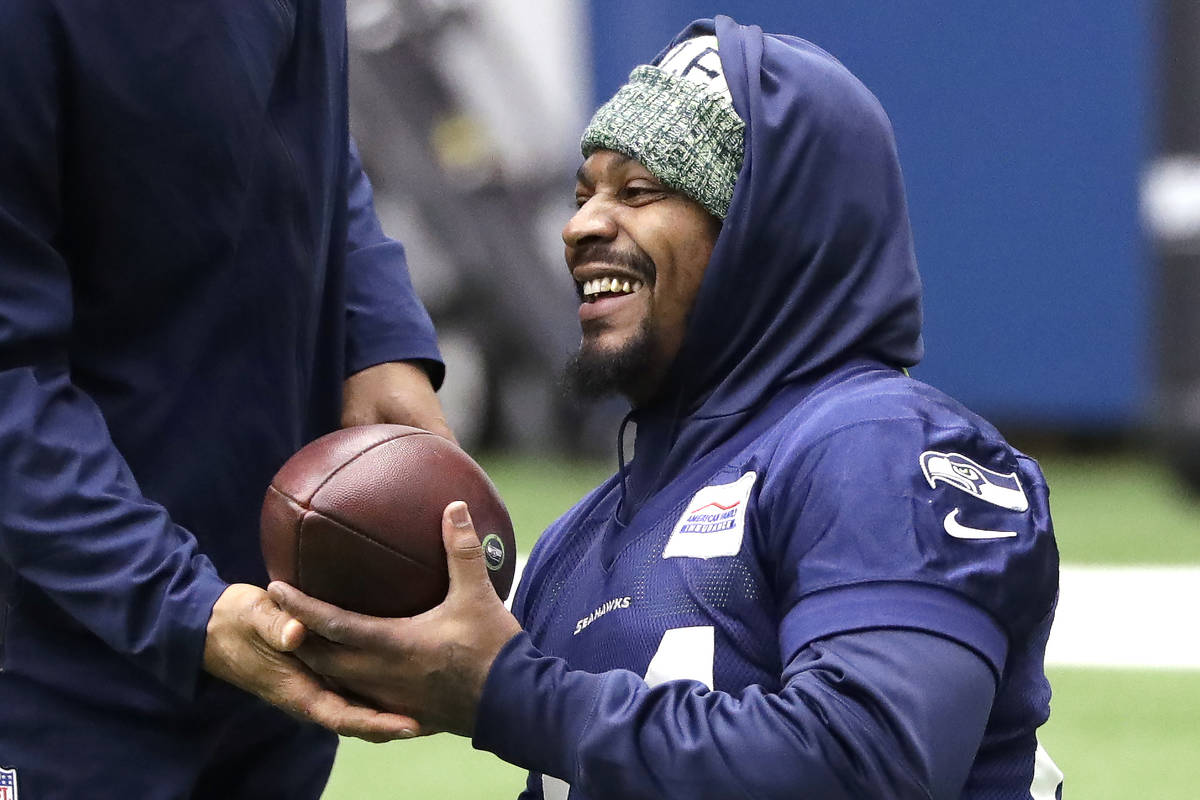
The trade to Seattle was the defining moment of Marshawn Lynch's career. Under head coach Pete Carroll, Lynch became the engine of an offense that complemented the "Legion of Boom" defense.
The Beast Quake and Postseason Heroics
Lynch’s arrival in Seattle was punctuated by one of the most famous plays in NFL history: the "Beast Quake." During the 2010 Wild Card game against the defending champion New Orleans Saints, Lynch broke nine tackles on a 67-yard touchdown run. The crowd's reaction was so intense that it registered as seismic activity on a nearby seismograph. This play did more than just win a game; it established the physical culture that Pete Carroll wanted to instill in the Pacific Northwest.
Sustained Dominance and Super Bowl Success
From 2011 to 2014, Lynch was arguably the most consistent running back in the league. He posted four consecutive seasons with at least 1,200 rushing yards and double-digit touchdowns.
- 2011: 1,204 yards, 12 TDs
- 2012: 1,590 yards, 11 TDs (First-team All-Pro)
- 2013: 1,257 yards, 12 TDs (Super Bowl Champion)
- 2014: 1,306 yards, 13 TDs (Led NFL in rushing TDs)
The 2013 season culminated in a dominant 43-8 victory over the Denver Broncos in Super Bowl XLVIII. While the defense received much of the acclaim, Lynch’s ability to move the chains and exhaust opposing defenses was the tactical foundation of the championship run.
The Super Bowl XLIX Heartbreak
The 2014 season led the Seahawks back to the Super Bowl against the New England Patriots. The game ended in controversy when the Seahawks opted to pass from the one-yard line instead of handing the ball to Lynch. The resulting interception by Malcolm Butler remains one of the most debated coaching decisions in sports history. Despite the loss, Lynch's performance throughout the season reinforced his status as an elite player.
The Oakland Raiders (2017–2018): The Hometown Return
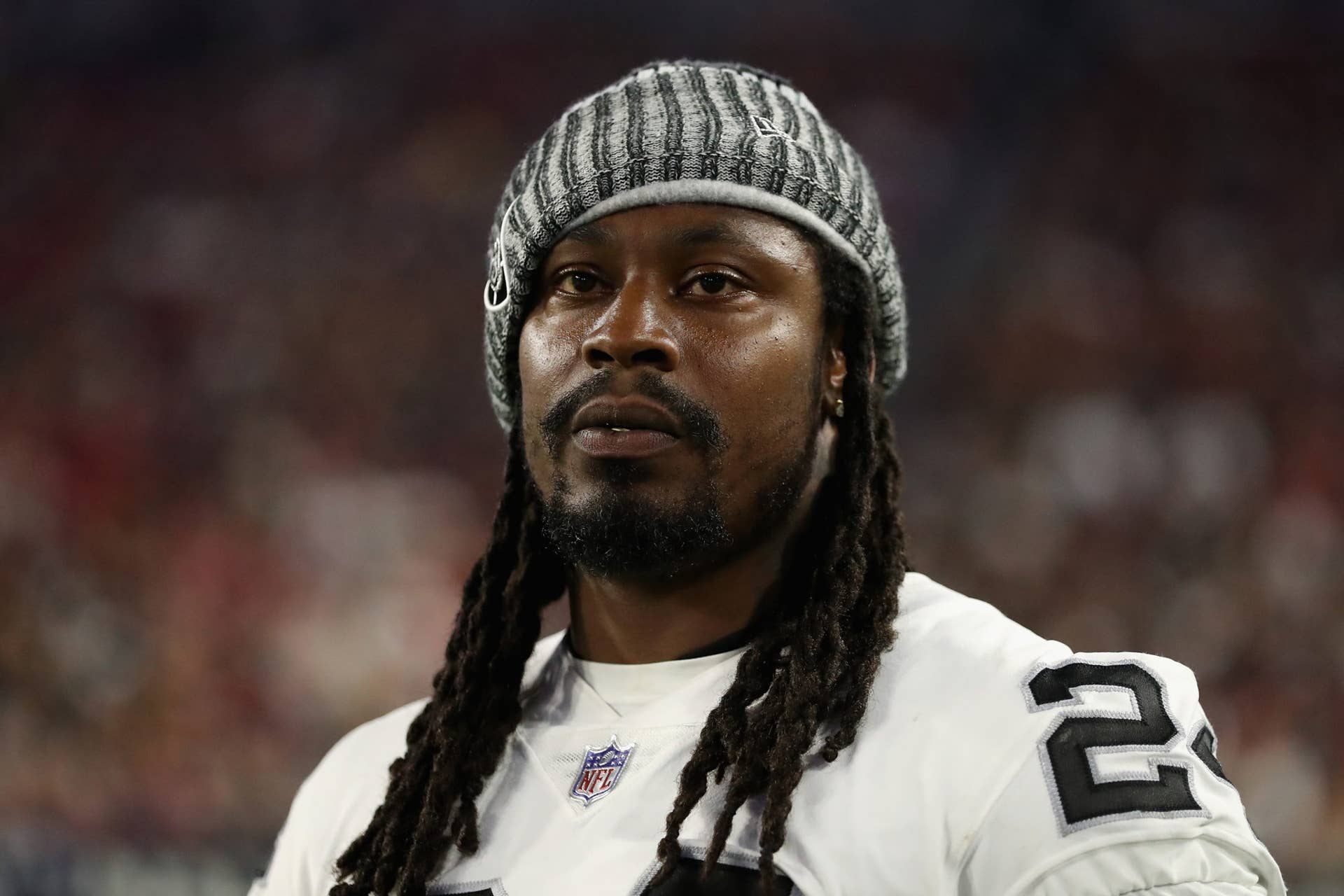
Following an injury-plagued 2015 season, Lynch announced his retirement by posting a picture of his cleats hanging from a power line during Super Bowl 50. However, the lure of playing for his hometown team, the Oakland Raiders, brought him back to the field in 2017.
Coming Out of Retirement
Because the Seahawks still held his rights, a trade was orchestrated to allow Lynch to join Oakland. His return was a significant cultural event for the city, as the Raiders were preparing for an eventual move to Las Vegas. Lynch wanted to represent "The Town" before the franchise departed.
In 2017, Lynch proved he still had plenty of "beast" left, rushing for 891 yards and seven touchdowns. He was a locker room leader and a focal point for the community. His 2018 season started strongly, but a groin injury placed him on injured reserve after six games, effectively ending his tenure with the Raiders. He finished his time in Oakland with a total of 1,267 rushing yards across two seasons.
The Final Return: Seattle (2019)
In a move that surprised the league, Lynch returned to the NFL one last time in December 2019. The Seahawks' backfield had been decimated by injuries late in the season, and Pete Carroll reached out to his former star for the Week 17 matchup against the San Francisco 49ers and the subsequent playoffs.
Lynch’s return was more about leadership and short-yardage efficiency than yardage totals. He scored four rushing touchdowns in just three games (one regular season, two playoffs), showing his signature ability to find the end zone in high-pressure situations. After the Seahawks' divisional-round loss to the Green Bay Packers, Lynch gave a memorable post-game press conference advising younger players to take care of their finances and their bodies, marking a poetic end to his playing days.
Marshawn Lynch Career Statistics by Team
The following table summarizes Lynch’s regular-season production across his three NFL franchises.
| Team | Seasons | Games Played | Rushing Yards | Rushing TDs | Receptions |
|---|---|---|---|---|---|
| Buffalo Bills | 2007–2010 | 45 | 2,765 | 17 | 94 |
| Seattle Seahawks | 2010–2015, 2019 | 83 | 6,381 | 58 | 158 |
| Oakland Raiders | 2017–2018 | 21 | 1,267 | 10 | 35 |
| Total Career | 12 Seasons | 149 | 10,413 | 85 | 287 |
Legacy and Impact as of 2026
As we look back from 2026, Marshawn Lynch’s impact on the NFL is viewed through two lenses: his on-field performance and his off-field authenticity. He retired with over 10,000 career rushing yards, a milestone that historically puts players in strong contention for the Pro Football Hall of Fame.
Lynch was a pioneer in "player empowerment" and brand management. His "Beast Mode" brand grew into a successful retail and lifestyle empire. Furthermore, his refusal to adhere to traditional media norms—most famously highlighted by his "I'm just here so I won't get fined" appearance at Super Bowl XLIX Media Day—challenged the league’s control over player personalities.
In retirement, Lynch has remained active in professional sports ownership (including a stake in the Seattle Kraken of the NHL) and community work in Oakland. He has transitioned into a successful media personality, appearing in various films and television series, often playing a version of himself that leans into the dry wit and unique perspective he displayed during his playing years.
Frequently Asked Questions
Which NFL team did Marshawn Lynch play for the longest?
Marshawn Lynch played for the Seattle Seahawks for the longest duration, spanning seven seasons in total (2010–2015 and a brief return in 2019). During his time in Seattle, he played 83 regular-season games and became the franchise's all-time leader in several postseason rushing categories.
How many Super Bowls did Marshawn Lynch win?
Lynch won one Super Bowl championship, Super Bowl XLVIII, as a member of the Seattle Seahawks. The Seahawks defeated the Denver Broncos 43-8 on February 2, 2014. He also appeared in Super Bowl XLIX the following year, though the Seahawks lost to the New England Patriots.
Why did Marshawn Lynch leave the Buffalo Bills?
Lynch was traded from the Buffalo Bills to the Seattle Seahawks in October 2010. The move was precipitated by a combination of factors, including the emergence of running back Fred Jackson in Buffalo and a desire for a fresh start following off-field issues and a league suspension in 2009.
Did Marshawn Lynch play for the Las Vegas Raiders?
No, Marshawn Lynch only played for the Raiders while they were still located in Oakland. He played for his hometown team during the 2017 and 2018 seasons. The Raiders officially moved to Las Vegas in 2020, by which time Lynch had completed his final stint with the Seahawks and moved into retirement.
What are Marshawn Lynch's career rushing totals?
Marshawn Lynch finished his NFL career with 10,413 rushing yards and 85 rushing touchdowns in the regular season. He also added 2,214 receiving yards and nine receiving touchdowns, making him one of the most productive dual-threat power backs of his generation.
Expert Recommendation for Fans and Historians
For those looking to understand the full scope of Marshawn Lynch's career, it is recommended to study game film from the 2011–2014 Seattle Seahawks era. While his statistics are impressive, they do not fully capture the "attrition factor"—the way his physical style wore down opposing defenses over four quarters. Analysts often point to the fourth-quarter performance of the Seahawks' offense during these years as the primary evidence of Lynch's value, as his relentless contact-running opened up explosive play opportunities for teammates late in games.
Image Gallery