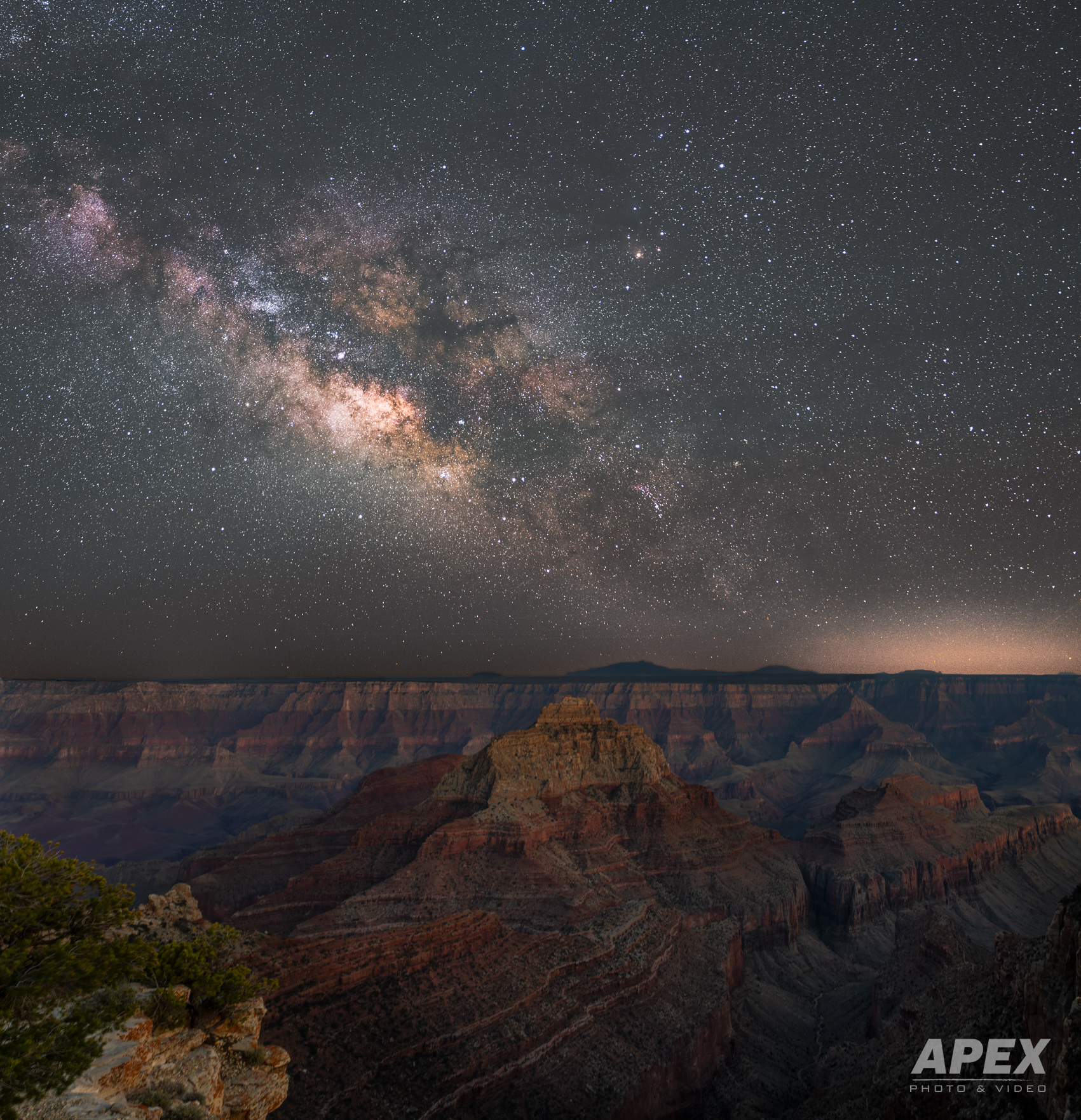
Witnessing the Milky Way Over the Grand Canyon: A Complete Guide to the Stars
To see the Milky Way over the Grand Canyon, visit during a New Moon between April and September when the galactic core is most visible. Optimal locations include the South Rim’s Desert View Drive or the North Rim’s Cape Royal. As a cer...
To see the Milky Way over the Grand Canyon, visit during a New Moon between April and September when the galactic core is most visible. Optimal locations include the South Rim’s Desert View Drive or the North Rim’s Cape Royal. As a certified International Dark Sky Park, the canyon offers world-class clarity for stargazing and astrophotography.
Contents
The Grand Canyon is not merely a geological marvel of the daylight hours; it is one of the premier nocturnal landscapes on Earth. Since its official certification as an International Dark Sky Park by DarkSky International in 2019, the park has undergone extensive lighting retrofits to preserve the prehistoric darkness that allows the Milky Way to appear with startling three-dimensional depth. In 2026, the park remains a gold standard for dark sky preservation, offering visitors a rare opportunity to see the celestial river of stars arching from one rim to the other.
Why the Grand Canyon is a Premier Dark Sky Destination
The quality of the night sky at the Grand Canyon is the result of both geography and intentional conservation. At an average elevation of 7,000 feet on the South Rim and over 8,000 feet on the North Rim, observers are positioned above a significant portion of the Earth’s lower atmospheric haze. This thinner air reduces "scintillation"—the twinkling effect caused by atmospheric turbulence—allowing the light from distant stars to reach the eye with greater steadiness and brilliance.
Furthermore, the sheer scale of the canyon acts as a natural buffer against light pollution. The nearest major metropolitan areas, Las Vegas and Phoenix, are far enough away that the deep interior of the canyon remains shielded by its own massive stone walls. The National Park Service (NPS) has replaced thousands of light fixtures with shielded, amber-colored LEDs that point downward, ensuring that the "sky glow" from park infrastructure is virtually non-existent. This commitment ensures that the Milky Way is not just visible, but detailed enough to reveal the Great Rift—the dark bands of interstellar dust that obscure the galactic center.
Timing Your Visit for the Galactic Core
Seeing the Milky Way requires more than just a clear night; it requires celestial alignment. The Milky Way is visible year-round, but the "Galactic Core"—the brightest, most photogenic part of our galaxy—is only visible during specific months in the Northern Hemisphere.
The Milky Way Season
In 2026, the Milky Way season follows the traditional astronomical cycle. The core begins to emerge in the pre-dawn hours of late February. By May and June, it rises earlier in the evening, standing tall across the southern sky by midnight. July through September offers the most convenient viewing hours, as the core is visible shortly after sunset. By late October, the core moves below the horizon during the night, beginning its winter dormancy.
The Lunar Cycle
The moon is the primary "light polluter" for stargazers. Even a quarter moon can wash out the delicate structures of the Milky Way. To experience the canyon at its darkest, you must plan your visit within a window of five days before or after the New Moon. During this phase, the moon is absent from the night sky, allowing the faint light of the galaxy to dominate.
Top Viewing Locations: South Rim vs. North Rim
Selecting the right viewpoint is critical for both visual impact and photographic composition. Because the Milky Way core appears in the southern sky, you generally want to look across the canyon toward the south or find a spot where the canyon depth provides a dramatic foreground.
South Rim Highlights
The South Rim is accessible year-round and offers several vantages where the canyon opens up to the south.
- Mather Point: While popular and easily accessible from the Visitor Center, it can be crowded. However, its proximity to the entrance makes it a safe choice for first-time night visitors.
- Lipan Point: Often cited by photographers as the best spot on the South Rim. It offers an expansive view of the Colorado River and a wide-open southern horizon, perfect for capturing the Milky Way as it rises over the desert landscape.
- Moran Point: This location provides unique rock formations in the foreground, which can be silhouetted against the starry sky for a sense of immense scale.
North Rim Highlights
The North Rim is higher, cooler, and significantly less crowded, though it is only open seasonally (typically May through October).
- Cape Royal: This is arguably the finest stargazing spot in the entire park. It offers a nearly 360-degree panorama. Because it reaches far out into the canyon, you can see the Milky Way arching over the "Wotan’s Throne" formation with zero interference from artificial lights.
- Point Imperial: As the highest point on the rim, it provides a unique perspective looking toward the Painted Desert, where the sky seems to touch the horizon at a lower angle.
Essential Gear for Stargazing and Astrophotography
The environment at the Grand Canyon at night can be unforgiving. Proper preparation is the difference between a successful outing and a frustrated retreat.
- Red-Light Flashlight: White light destroys your night vision, which takes 20-30 minutes to fully develop. Use a dedicated red-light headlamp to navigate the trails and adjust your camera.
- Appropriate Clothing: Even in the summer, temperatures on the rim can drop into the 40s (Fahrenheit) or lower once the sun sets. Synthetic layers and a windbreaker are essential.
- Sturdy Tripod: If you intend to photograph the stars, a tripod is non-negotiable. The winds at the rim can be strong, so a heavy-duty tripod or one with a weighted hook is preferred.
- Wide-Angle, Fast Lens: For astrophotography, a lens with a focal length between 14mm and 24mm is ideal. It must have a wide maximum aperture, preferably f/2.8 or faster, to let in as much light as possible during a short exposure.
Technical Camera Settings for the Milky Way
Capturing the Milky Way over the Grand Canyon requires manual control over your camera's sensor. The goal is to collect enough light to show the galaxy without causing the stars to "trail" due to the Earth's rotation.
| Setting | Recommended Value | Reasoning |
|---|---|---|
| Mode | Manual (M) | You must control aperture, shutter, and ISO independently. |
| Aperture | f/1.8 to f/2.8 | Maximizes light intake for the faint galactic dust clouds. |
| ISO | 3200 to 6400 | Increases sensor sensitivity; higher ISOs may introduce noise. |
| Shutter Speed | 15–25 Seconds | Long enough to gather light, short enough to keep stars as points. |
| Focus | Manual (Infinity) | Auto-focus will fail in the dark; use "Live View" to focus on a bright star. |
| White Balance | 3200K - 4000K | Provides a natural "night" blue/neutral tone rather than yellow. |
To calculate the exact shutter speed for your lens to avoid trailing, many photographers use the 500 Rule: Divide 500 by your focal length (e.g., 500 / 20mm = 25 seconds). However, with modern high-resolution sensors, a "400 Rule" or the more complex NPF rule is often more accurate for pinpoint stars.
Safety and Ethics in the Dark
The Grand Canyon is a wilderness area. At night, the risks are magnified. Always stay on designated paved paths or well-marked trails. The limestone edges of the canyon can be unstable, and a misstep in the dark can be fatal. It is highly recommended to scout your location during daylight hours so you are familiar with the terrain before the sun sets.
Furthermore, practice "Dark Sky Etiquette." If you are at a popular viewpoint like Mather Point, avoid using bright flashlights or "light painting" the canyon walls with powerful beams. This ruins the experience for others and can interfere with long-exposure photography. The National Park Service encourages visitors to embrace the natural darkness as part of the park's protected heritage.
The Grand Canyon Star Party 2026
If your visit aligns with June 2026, the annual Grand Canyon Star Party is an unmissable event. Held on both the South and North Rims, this week-long event features volunteer astronomers who bring dozens of high-powered telescopes for public use. During the day, there are solar viewing sessions, and at night, guest speakers discuss topics ranging from planetary science to the mythology of the constellations. It is one of the largest and most accessible astronomy events in the United States, providing a social and educational context to the visual spectacle of the Milky Way.
Frequently Asked Questions
What is the best month to see the Milky Way at the Grand Canyon?
June and July are typically the best months. During this time, the galactic core is visible for the longest duration of the night, and the weather is generally stable. However, be mindful of the "Monsoon Season" starting in mid-July, which can bring afternoon clouds that sometimes linger into the night.
Can I see the Milky Way with the naked eye?
Yes, absolutely. At the Grand Canyon, the Milky Way does not look like a faint smudge; it appears as a bright, glowing cloud stretching across the sky. Once your eyes adjust to the darkness (about 20-30 minutes), you will be able to see the dark dust lanes within the Milky Way and even the faint glow of the Andromeda Galaxy on clear nights.
Do I need a permit for night photography?
For personal use, no special permit is required to photograph the night sky from public viewing areas. However, if you are conducting a professional commercial shoot or workshops, you must apply for a Special Use Permit through the Grand Canyon National Park Film Office well in advance.
Is the North Rim better than the South Rim for stargazing?
The North Rim is technically better because it has a higher elevation and less human activity. The air is thinner and clearer, and there is significantly less "light leakage" from hotels and shuttle buses. However, the South Rim remains excellent and is far more accessible for most travelers.
What should I do if it’s cloudy?
Check high-resolution cloud cover maps like those provided by Astrospheric or Clear Dark Sky. Often, clouds at the Grand Canyon are "patchy," and because the canyon is so large, one rim might be cloudy while the other is clear. If the forecast is poor, the Star Party presentations usually still occur in indoor or sheltered venues.
Final Recommendation
For the most impactful experience, plan your trip to the South Rim’s Lipan Point during the New Moon in June or August. Arrive an hour before sunset to witness the transition of colors on the canyon walls, and stay at least two hours after sunset to allow the Milky Way core to rise fully. Bring a chair, a warm blanket, and a red light, and give yourself permission to look up without the distraction of a screen. The scale of the universe is best appreciated in the silence and shadow of the canyon.
Image Gallery