Nordatrom: Mapping the Emerging Data Exchange Landscape
The Nordatrom framework for mapping the emerging data exchange landscape provides a strategic blueprint for navigating decentralized data spaces, sovereign data sharing, and cross-border interoperability. By 2026, it has become the def...
The Nordatrom framework for mapping the emerging data exchange landscape provides a strategic blueprint for navigating decentralized data spaces, sovereign data sharing, and cross-border interoperability. By 2026, it has become the definitive guide for organizations transitioning from siloed architectures to federated ecosystems, prioritizing data sovereignty and automated compliance across global jurisdictions.
Contents
The evolution of the global data economy has reached a critical inflection point in 2026. The transition from traditional, centralized data silos toward distributed, sovereign data spaces is no longer a theoretical ambition but a functional requirement for competitive enterprise operations. Nordatrom’s comprehensive mapping of this landscape serves as a vital navigational tool, identifying the protocols, governance models, and technological pillars that define how information is exchanged securely and ethically.
The Architecture of the Modern Data Exchange Landscape
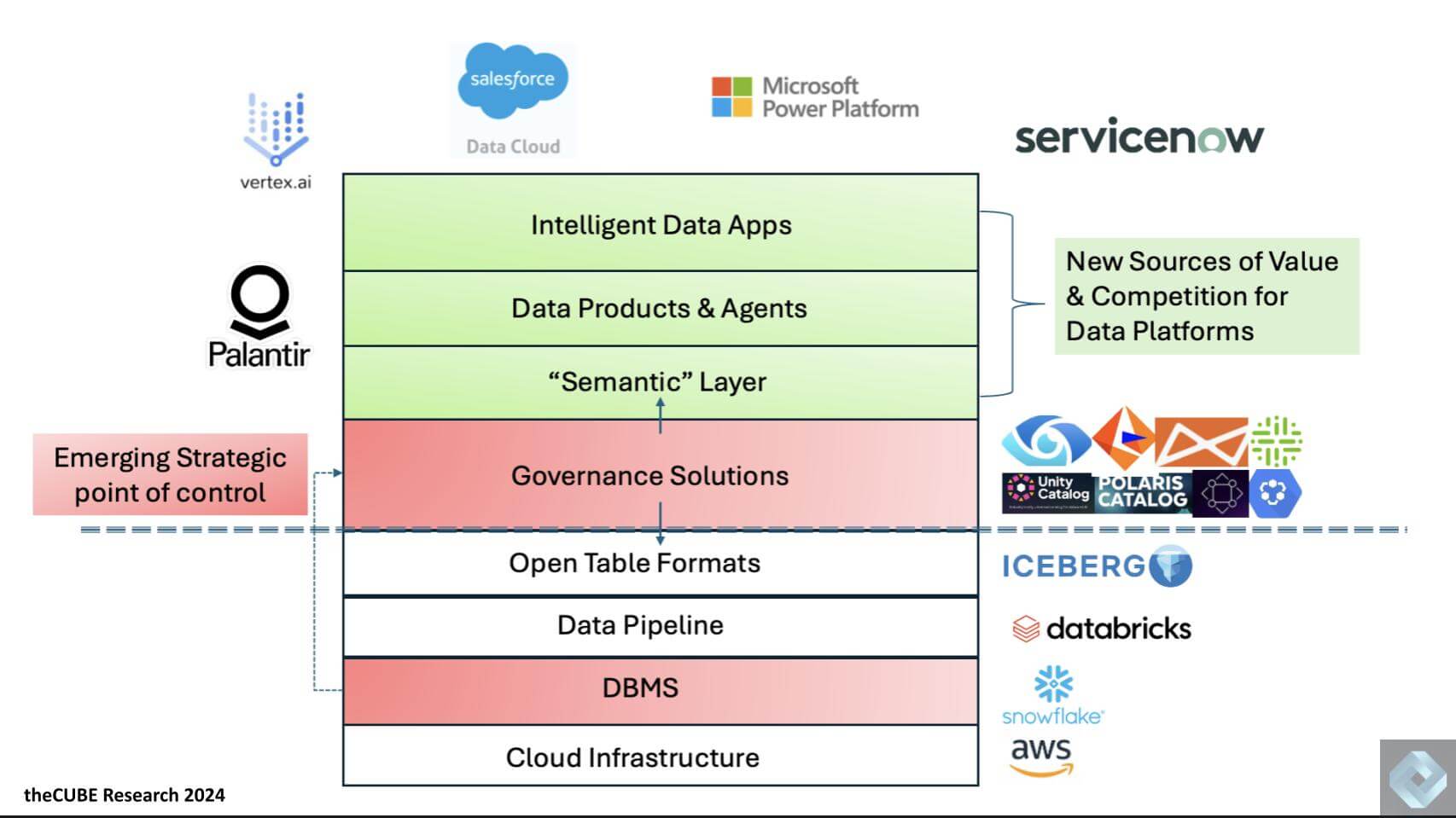
The Nordatrom map divides the data exchange ecosystem into four primary layers: the Infrastructure Layer, the Interoperability Layer, the Governance Layer, and the Value Creation Layer. Understanding these segments is essential for any organization looking to participate in or build a data space.
The Infrastructure Layer
At the base of the Nordatrom map is the infrastructure layer, which has shifted significantly by 2026. While cloud computing remains central, the rise of edge-to-cloud continuums has decentralized where data resides. Data exchange now requires "Connectors"—lightweight software components that mediate access between data providers and consumers. These connectors, often based on standards like the Eclipse Dataspace Components (EDC), ensure that data never leaves its source without a verified, policy-backed handshake.
The Interoperability Layer
Interoperability is the most complex challenge highlighted in the Nordatrom mapping. In 2026, this is achieved through semantic interoperability and standardized APIs. Semantic mapping ensures that a "price" field in one system is interpreted identically in another, regardless of the underlying database schema. Nordatrom emphasizes the use of shared ontologies and metadata standards that allow disparate systems to "understand" the context of the data being exchanged without manual intervention.
Key Technological Pillars in 2026
Nordatrom identifies three core technologies that have stabilized and scaled to support the emerging data exchange landscape. These pillars are essential for ensuring that data exchange is not only efficient but also compliant with increasingly stringent global regulations.
Federated Identity and Trust Services
In a decentralized landscape, knowing who you are dealing with is paramount. Nordatrom maps the shift toward Self-Sovereign Identity (SSI) and Verifiable Credentials (VCs). By 2026, organizations no longer rely on a single central authority to verify their identity. Instead, they use decentralized identifiers (DIDs) that allow participants to prove their credentials—such as ISO certifications or regulatory compliance status—instantly and cryptographically.
Decentralized Governance Models
Governance has moved away from top-down contractual agreements toward "Code as Contract." Nordatrom illustrates how Decentralized Autonomous Organizations (DAOs) and smart contracts now automate the enforcement of data usage policies. If a data consumer attempts to use a dataset for a purpose not permitted by the provider’s policy, the exchange is automatically blocked at the connector level.
Privacy-Preserving Technologies (PPTs)
The 2026 landscape heavily utilizes Privacy-Preserving Technologies to facilitate exchange without exposing raw data. Nordatrom maps the integration of:
- Federated Learning: Training AI models on local data and only sharing the model weights.
- Secure Multi-Party Computation (SMPC): Allowing parties to compute a result based on combined data without any party seeing the others' inputs.
- Zero-Knowledge Proofs (ZKP): Verifying a claim about data without revealing the data itself.
Comparative Analysis of Data Exchange Models
To help organizations choose the right path, Nordatrom provides a comparison of the dominant data exchange models currently in operation.
| Feature | Centralized Data Platforms | Peer-to-Peer Connectors | Federated Data Spaces |
|---|---|---|---|
| Data Sovereignty | Low (Host controls data) | High (Provider retains control) | High (Policy-based control) |
| Scalability | High (Single point of entry) | Medium (Direct links required) | Very High (Network effect) |
| Trust Model | Trust in the Platform | Trust in the Participant | Trust in the Framework/Rules |
| Compliance Cost | High (Manual auditing) | Moderate (Per-link) | Low (Automated by design) |
| Common Use Case | Legacy SaaS integrations | Bilateral research sharing | Multi-sector industrial AI |
Navigating Regulatory and Legal Requirements
The Nordatrom mapping places significant emphasis on the regulatory landscape of 2026, particularly the maturation of the EU Data Act and similar sovereign data frameworks in North America and Asia. Participation in the data exchange landscape now requires a rigorous understanding of "Data Sovereignty"—the legal and technical ability of a data provider to define the terms and conditions under which their data can be used.
The Role of Data Sovereignty
Sovereignty is the cornerstone of the Nordatrom map. It ensures that an organization does not lose control over its intellectual property or sensitive information once it enters the exchange ecosystem. This is achieved through "Usage Control," which goes beyond traditional access control. While access control dictates who can see data, usage control dictates how they can use it (e.g., "this data can be used for training AI but cannot be redistributed to third parties").
Automated Compliance and Auditing
In 2026, manual compliance checks are a bottleneck of the past. The Nordatrom framework describes a "Compliance-by-Design" approach where every data packet is accompanied by a digital policy. Clearinghouses and logging services within the data space provide immutable records of transactions, making regulatory auditing a continuous, automated process rather than a periodic hurdle.
Strategic Implementation: Next Steps for Organizations
For organizations looking to align with the Nordatrom map, the transition requires a phased approach. It is not merely a technical upgrade but a strategic shift in how data is perceived—from a guarded asset to a liquid resource.
- Assess Data Readiness: Identify which internal datasets have high external value and determine their sensitivity levels.
- Adopt Standardized Connectors: Move away from custom API integrations toward standardized connectors (like Gaia-X compliant nodes) to ensure future-proofing.
- Define Governance Internal to the Organization: Establish who within the company has the authority to set data usage policies for external exchange.
- Join a Data Space: Participate in existing vertical-specific data spaces (e.g., Catena-X for automotive, EHTN for health) to gain experience in federated environments.
Common Obstacles in Mapping the Landscape
Despite the advancements in 2026, Nordatrom identifies several persistent challenges that organizations must navigate.
The "Incentive Gap"
Many organizations remain hesitant to share data because the immediate ROI is not always clear. Nordatrom’s mapping suggests that the value in 2026 is often found in "Data Reciprocity"—where the value of the insights gained from the ecosystem far outweighs the perceived risk of sharing a specific dataset.
Technical Debt and Legacy Systems
Integrating legacy on-premise systems with modern, decentralized connectors remains a significant technical hurdle. Nordatrom recommends using "Abstraction Layers" or "Gateways" that can bridge the gap between 20th-century database architectures and 21st-century data spaces.
Frequently Asked Questions
What is the main difference between a Data Lake and a Data Space in the Nordatrom map?
A Data Lake is a centralized repository where data is moved for storage and analysis. In contrast, a Data Space is a decentralized framework where data remains at the source and is only accessed or shared via standardized protocols under strict usage policies. Data Spaces focus on sovereignty and interoperability rather than physical consolidation.
How does Nordatrom address data security in cross-border exchanges?
Nordatrom maps a "Zero Trust" architecture for all cross-border exchanges. This involves mandatory encryption in transit and at rest, identity verification through federated trust anchors, and the use of "Policy Enforcement Points" (PEPs) at every node to ensure that data does not enter jurisdictions where its use would violate local laws or the provider's original intent.
Can small businesses participate in the landscape mapped by Nordatrom?
Yes. One of the primary goals of the 2026 data exchange landscape is to lower the barrier to entry. By using standardized, open-source connectors and joining established data spaces, small businesses can access high-value industrial data and AI services that were previously only available to large enterprises with massive R&D budgets.
Is blockchain necessary for the data exchange landscape?
While blockchain is often used for logging transactions and managing decentralized identities (DIDs) within the Nordatrom framework, it is not always used for the actual transfer of data. Data usually moves via secure, point-to-point protocols, while the blockchain serves as the "trust layer" for verifying credentials and policy compliance.
What is the "Data Act" mentioned in the Nordatrom mapping?
By 2026, the EU Data Act (and its global equivalents) has become the legal foundation for data exchange. It mandates that users of connected devices have the right to access and share the data they generate. Nordatrom maps how this regulation forces manufacturers to implement interoperable interfaces, fundamentally changing the competitive dynamics of the Internet of Things (IoT).
Practical Recommendations
To successfully navigate the emerging data exchange landscape as mapped by Nordatrom, organizations should prioritize interoperability over proprietary silos. The most successful entities in 2026 are those that have moved away from "owning" data toward "orchestrating" data.
Start by implementing a pilot project involving a single, non-sensitive data stream and a trusted partner using a standardized connector. This allows your technical and legal teams to understand the nuances of usage control and federated identity without exposing critical assets. As the landscape continues to evolve, staying aligned with the Nordatrom framework will ensure your organization remains an active, secure, and profitable participant in the global data economy.
Image Gallery