Understanding the WOC Rank: The Backbone of Army Modern Logistics in 2026
The Warrant Officer Candidate (WOC) rank represents the critical transition of a senior Non-Commissioned Officer into a high-level technical expert within the U.S. Army. In modern logistics, WOCs are the future architects of supply cha...
The Warrant Officer Candidate (WOC) rank represents the critical transition of a senior Non-Commissioned Officer into a high-level technical expert within the U.S. Army. In modern logistics, WOCs are the future architects of supply chains, maintenance, and transportation, bridging the gap between tactical execution and strategic planning.
Contents
To understand the WOC rank within the context of modern logistics, one must first recognize that the U.S. Army does not view "Warrant Officer" as merely a promotion. It is a fundamental change in status from a "manager of people" (NCO) to a "manager of systems and technical proficiency." As of 2026, the complexity of global supply chains and the integration of artificial intelligence in sustainment operations have made the logistics Warrant Officer more vital than ever.
What is a Warrant Officer Candidate (WOC)?
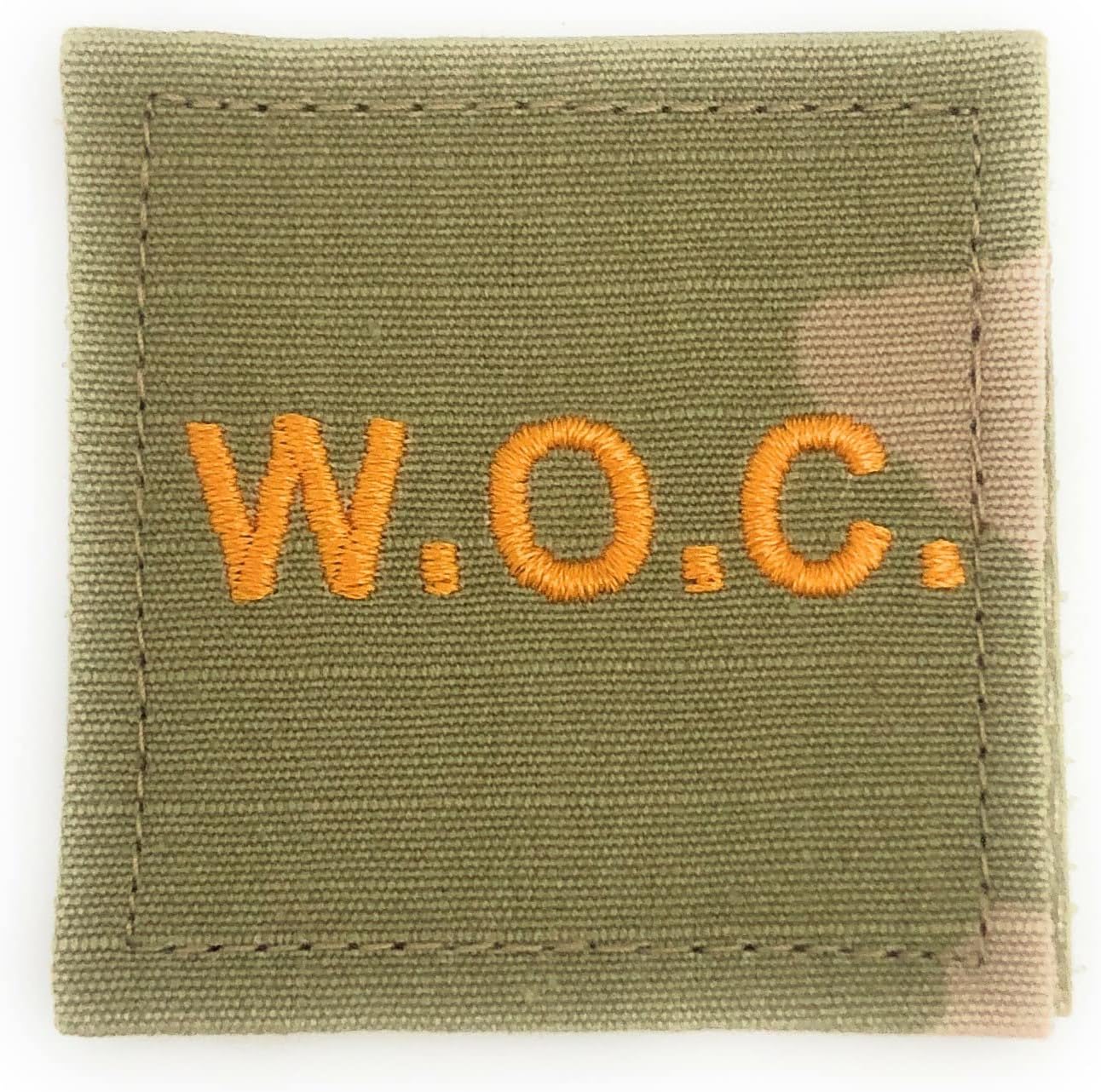
A Warrant Officer Candidate (WOC) is a soldier who has been selected to attend Warrant Officer Candidate School (WOCS), typically located at Fort Novosel, Alabama. During this period, the soldier holds a transitional rank. While they may technically be paid at their previous NCO grade (SGT/E-5 through MSG/E-8), they are addressed as "Candidate" and wear specific WOC insignia.
The WOC rank is a period of intense evaluation. It is designed to strip away the "NCO mindset"—which focuses on the direct supervision of soldiers and squads—and replace it with the "Officer mindset," which focuses on technical consultation, systems integration, and advising commanders. In the logistics field, this means a WOC is moving from someone who operates a warehouse or a motor pool to someone who engineers the entire sustainment flow for a Brigade Combat Team (BCT) or higher echelon.
The Strategic Importance of Logistics Warrants in 2026
By 2026, the Army’s "Contested Logistics" framework has become the standard for operations. This environment assumes that an adversary will attempt to disrupt supply lines via cyberattacks, long-range fires, and electronic warfare. In this high-stakes landscape, the logistics Warrant Officer serves as the "Technical Integrator."
While a Commissioned Officer (a Second Lieutenant or Captain) might be responsible for the overall mission success and troop movements, they rely on the Warrant Officer to know the exact technical limitations of the equipment and the digital architecture of the supply systems. The WOC is training to become the person who says, "Sir/Ma'am, based on our current fuel consumption rates and the cyber-interference in our GPS-guided delivery systems, we must pivot to these secondary distribution methods."
The "Big Three" Logistics Branches
The WOC path in logistics is primarily funneled through three distinct branches, each requiring a specific set of technical skills:
- Quartermaster Corps (92 series): These WOCs focus on supply, water, petroleum, and aerial delivery. In 2026, they are heavily involved in autonomous resupply systems and automated property accounting.
- Ordnance Corps (91 series): These candidates are the masters of maintenance and munitions. They ensure that the Army’s increasingly complex fleet of robotic and manned vehicles remains mission-capable.
- Transportation Corps (88 series): WOCs here manage the movement of personnel and equipment via land, sea, and air. This includes the high-demand field of Marine Deck and Engineering officers who manage the Army’s watercraft.
The Training Pipeline: From NCO to Technical Expert
The journey to the WOC rank begins long before the soldier arrives at Fort Novosel. A soldier must first demonstrate "technical baggage"—a term used to describe years of documented excellence in their specific Military Occupational Specialty (MOS).
Eligibility and Selection
To become a logistics WOC, an applicant must usually be at least a Sergeant (E-5) with several years of experience in a feeder MOS. For example, a 92Y (Unit Supply Specialist) NCO would apply to become a 920A (Property Accounting Technician). The selection board looks for:
- NCO Evaluation Reports (NCOERs): Proven leadership and technical mastery.
- Civilian Education: Increasingly, degrees in Supply Chain Management or Logistics are preferred.
- Physical Fitness: Meeting the high standards of the Army Combat Fitness Test (ACFT).
- Letter of Recommendation: Crucially, a recommendation from a Senior Warrant Officer (CW3-CW5) in their chosen specialty.
Warrant Officer Candidate School (WOCS)
Once selected, the soldier enters WOCS. This program is rigorous, focusing on leadership, ethics, and military history, but also on the mental shift required for officer-level responsibilities. The candidate is tested on their ability to perform under high stress while maintaining the attention to detail required for technical advising. Upon graduation, the candidate is appointed to the rank of Warrant Officer One (WO1) and proceeds to their Warrant Officer Basic Course (WOBC) for branch-specific technical training.
Modern Logistics Technical Specialties (2026)
The following table outlines the primary logistics specialties that a Warrant Officer Candidate might enter, illustrating the diversity of the "Logistics" umbrella.
| MOS Code | Title | Core Responsibility |
|---|---|---|
| 920A | Property Accounting Technician | Oversees billion-dollar property books and ensures fiscal accountability. |
| 920B | Supply Systems Technician | Manages the automated supply chain systems (GCSS-Army) at the warehouse level. |
| 922A | Food Service Technician | Plans large-scale nutritional support and field feeding operations. |
| 913A | Armament Systems Technician | Expert in the maintenance of weapons systems, from small arms to tanks. |
| 915A | Unit Maintenance Technician | Manages the maintenance programs for all wheeled and tracked vehicles. |
| 882A | Mobility Officer | Coordinates complex multi-modal transportation (rail, sea, air, and road). |
| 880A/881A | Marine Deck/Engineering | Commands and maintains the Army’s fleet of logistical watercraft. |
The Impact of Modern Technology on WOC Training
In 2026, the curriculum for a logistics WOC has expanded to include data science and cybersecurity. The Army’s primary logistics platform, GCSS-Army (Global Combat Support System-Army), has evolved into a more predictive tool.
Predictive Maintenance and AI
WOCs in the Ordnance branch now spend significant time learning how to interpret "Big Data." Sensors on modern vehicles (like the XM30 Mechanized Infantry Combat Vehicle) provide real-time data on engine health. The WOC must be able to use this data to predict a failure before it happens, ensuring that parts are ordered and staged in advance. This "Proactive Logistics" model replaces the "Reactive Logistics" model of previous decades.
Additive Manufacturing (3D Printing)
Modern logistics WOCs are also trained in the deployment of field-level 3D printing. In a contested environment where the "Iron Mountain" of supplies cannot be reached, the 915A Maintenance Warrant Officer must oversee the printing of critical repair parts on-site. This requires a deep understanding of metallurgy, polymer science, and digital blueprint security.
The Career Progression After WOC Rank
Graduating from the WOC rank is only the beginning. The Warrant Officer career path is a steady climb of increasing technical and advisory complexity.
- Warrant Officer One (WO1): The "Junior Tech." Focuses on the company or battalion level. They are the "doers" who ensure the technical systems are functioning correctly.
- Chief Warrant Officer Two (CW2): The "Proven Tech." Usually found at the battalion or brigade level, managing larger teams of NCOs and advising mid-level officers.
- Chief Warrant Officer Three (CW3): The "Technical Advisor." At this level, they are often at the Brigade or Division level, designing the systems that move and fix equipment across a large geographic area.
- Chief Warrant Officer Four (CW4): The "Senior Technical Advisor." They often serve at the Corps or Army level, influencing policy and large-scale procurement.
- Chief Warrant Officer Five (CW5): The "Master Technical Expert." There are very few CW5s; they advise the highest levels of Army leadership (Generals and the Department of the Army) on logistics strategy.
Common Challenges and Troubleshooting for Candidates
Transitioning to the WOC rank is not without its hurdles. Many candidates struggle with the "limbo" of the candidate status.
- The Mindset Shift: NCOs are used to being the "backbone" who pushes soldiers to work. WOCs must learn to be the "brain" that tells the commander why the work must be done in a certain way.
- Technical Depth: The sheer volume of technical data in modern logistics can be overwhelming. A WOC must become a master of the Army’s complex regulatory environment (e.g., AR 710-2 for supply, AR 750-1 for maintenance).
- Writing and Communication: Warrant Officers must write clearly and concisely. They often produce technical reports that decide whether a unit is "Combat Ready" or not.
FAQs
What is the difference between a WOC and a regular Officer Candidate (OCS)?
A Warrant Officer Candidate (WOC) is training to become a technical expert in a field they have already worked in for years as an NCO. An Officer Candidate (OCS) is training to become a generalist leader who will command units. WOCs focus on "how it works," while OCS graduates focus on "what we need to do."
Can I apply for a logistics WOC rank without prior military experience?
Generally, no. Technical Warrant Officers (like those in logistics) require significant prior experience in a feeder MOS. The only exception is the Aviation Warrant Officer track, which allows "street-to-seat" applicants, but this does not apply to the Quartermaster, Ordnance, or Transportation corps.
How long does Warrant Officer Candidate School last in 2026?
The standard resident course at Fort Novosel remains approximately five weeks, though this is often preceded by a distance learning phase and followed by several months of branch-specific Warrant Officer Basic Course (WOBC) training.
Is the WOC rank recognized by civilian logistics firms?
Yes, the transition from WOC to Warrant Officer is highly regarded in the civilian sector. The skills learned in supply chain management, data analysis, and technical advising map directly to senior roles in organizations like Amazon, FedEx, or major defense contractors.
Next Steps for Aspiring Logistics Warrants
If you are a current NCO in a logistics MOS, your first step toward the WOC rank is a self-audit. Review your NCOERs to ensure you are being rated as "Exceeded Standard" or "Far Exceeded Standard." Begin building a relationship with a Senior Warrant Officer in your field; their mentorship is the most valuable asset you can have.
Next, visit the U.S. Army Recruiting Command (USAREC) Warrant Officer Recruiting website to view the specific "Prerequisite" sheets for your desired MOS. These sheets change as technology evolves, so ensure you are looking at the 2026 requirements. Preparing your packet is a long process that often takes 6 to 12 months, so start early to ensure you meet all medical and administrative deadlines.
Image Gallery