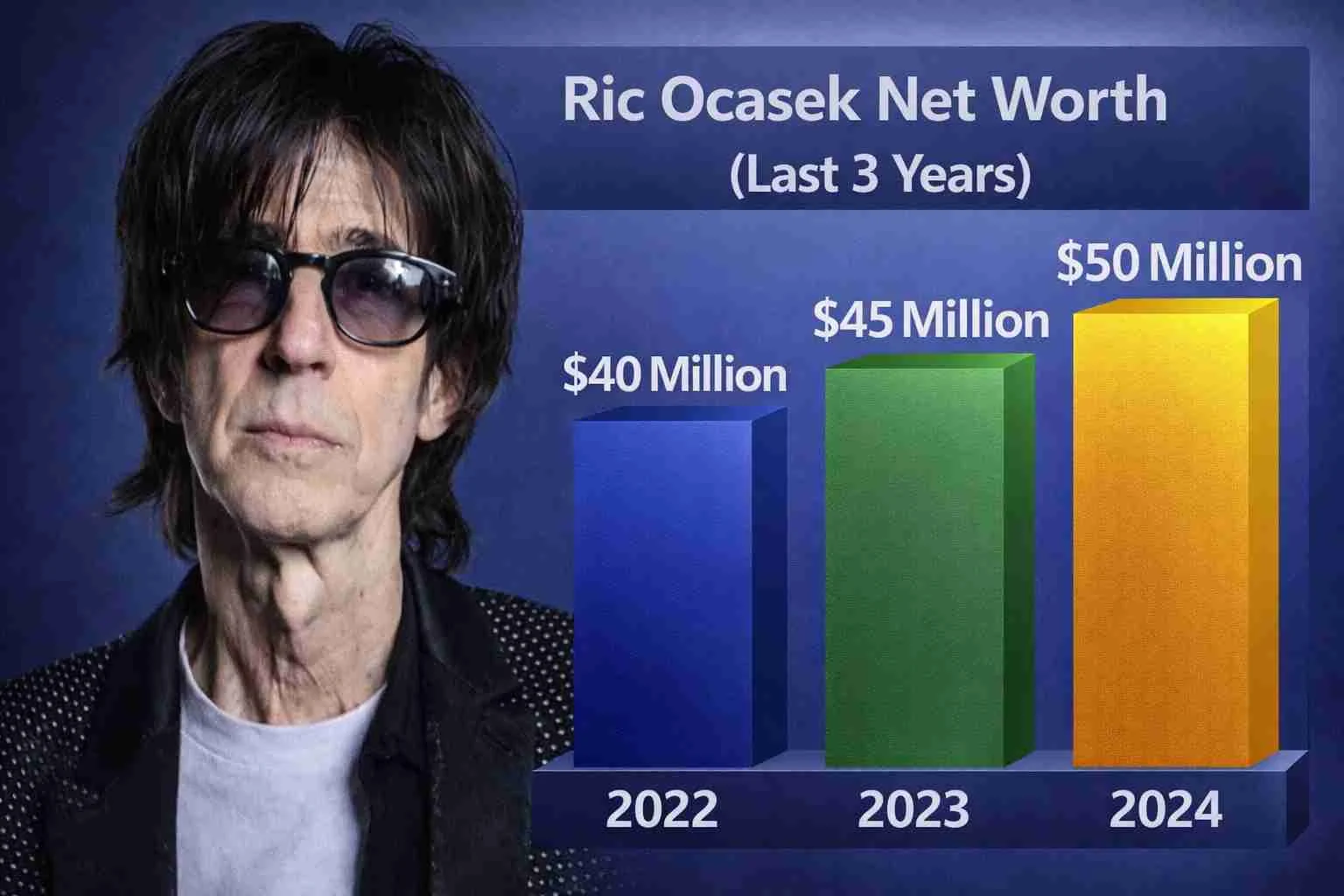
Analyzing the Estate and Net Worth of Ric Ocasek
At the time of his passing in September 2019, Ric Ocasek, the iconic frontman of The Cars and a prolific music producer, left behind an estate estimated to be valued between $20 million and $40 million. While official probate filings w...
At the time of his passing in September 2019, Ric Ocasek, the iconic frontman of The Cars and a prolific music producer, left behind an estate estimated to be valued between $20 million and $40 million. While official probate filings were initially private, public records and legal proceedings subsequent to his death clarified the distribution of his significant assets and intellectual property.
Contents
The Complexity of Musician Net Worth
Determining the exact net worth of a multi-hyphenate artist like Ric Ocasek requires looking beyond simple bank account balances. Ocasek was not merely a performer; he was a songwriter, lead vocalist, rhythm guitarist, and one of the most sought-after record producers of the late 20th century. His financial profile was built upon three distinct pillars:
- Performance and Touring Royalties: As the primary songwriter for The Cars, Ocasek held a significant stake in the publishing rights for hits that remain staples of classic rock radio, such as "Just What I Needed," "Drive," and "Shake It Up."
- Production Income: Ocasek pivoted to a highly successful career as a producer for influential acts, including Weezer, Bad Brains, Guided by Voices, and Hole. Producers often command flat fees, points on the back end, or a combination of both, providing a steady stream of passive income.
- Real Estate and Private Assets: Ocasek maintained high-value property, most notably a townhouse in the Gramercy Park neighborhood of Manhattan, which served as both a residence and a creative sanctuary.
Probate and Estate Planning
The valuation of Ocasek's estate became a matter of public interest following his death due to the specifics of his final will. Ocasek updated his will shortly before his passing, explicitly disinheriting his estranged wife, model Paulina Porizkova. In the document, he stated that she had "abandoned" him during his recovery from surgery.
This exclusion sparked significant legal discussion regarding elective share laws in New York, where the estate was probated. Under New York law, a spouse cannot be entirely disinherited unless they have specifically waived their rights in a prenuptial or postnuptial agreement. Consequently, despite the language in his will, the estate was subject to legal negotiations to ensure statutory compliance regarding spousal rights.
Valuation of Intellectual Property
A significant portion of Ocasek’s wealth was tied to his music catalog. In the modern era, the valuation of legacy music catalogs has skyrocketed as streaming services provide consistent, long-term returns.
- Songwriting Credits: Ocasek wrote or co-wrote the vast majority of The Cars' catalog. Because he retained substantial control over his publishing, these rights represented a perpetual annuity.
- Production Royalties: Unlike a touring musician who earns money through live performances, a producer’s earnings are tied to the ongoing consumption of the recorded music they engineered. For albums like Weezer’s Blue Album and Green Album, which have achieved multi-platinum status and possess high re-listenability, the residuals remain substantial.
Real Estate Assets: The Gramercy Park Townhouse
One of the most verifiable components of Ocasek's wealth was his Manhattan real estate. The townhouse at 122 Gramercy Park South was a significant asset. Purchased in the late 1980s, the property appreciated significantly over the decades.
In real estate terms, Manhattan townhouses are considered trophy assets. The maintenance costs, taxes, and high market value of the Gramercy Park area meant that this single asset likely accounted for several million dollars of the total net worth. Furthermore, the property served as a recording studio and storage space for his extensive collection of vintage guitars and audio equipment, which were also considered part of the estate's total inventory.
Comparative Financial Context
When comparing Ocasek to his contemporaries in the new wave and rock scenes, his financial success stands out as a result of his diversified professional life.
| Source of Income | Revenue Stability | Scalability |
|---|---|---|
| Songwriting | High (Long-term) | High (Licensing/Sync) |
| Touring (The Cars) | High (When Active) | Low (Physical limit) |
| Record Production | Medium (Project-based) | Medium (High demand) |
| Real Estate | High (Appreciation) | Fixed (Asset-locked) |
Legal and Financial Considerations for Estates
The case of Ric Ocasek highlights a critical lesson in estate planning: the interplay between personal intent and state law. For high-net-worth individuals, a will is only one part of an effective strategy. Trusts, beneficiary designations on financial accounts, and specific property titling (such as joint tenancy) often override the instructions written in a will.
In the United States, probate courts focus on the "probate estate," which includes assets owned solely by the decedent. Assets held in a living trust or accounts with "payable-on-death" designations typically bypass the probate process entirely. For Ocasek, the distribution of his estate had to account for both his direct assets and the legal rights afforded to his surviving heirs under New York law, regardless of the exclusionary language in his will.
FAQ: Understanding Musician Estates
What happens to a musician's royalties after they die? Royalties generally continue to be paid to the estate of the deceased artist. The duration of this income depends on the copyright laws of the country where the music was created; in the U.S., song copyrights typically last for the life of the author plus 70 years.
Does a will always override marriage laws? No. In most jurisdictions, including New York, statutory protections exist for spouses. Even if a will explicitly disinherits a spouse, the law often mandates that they receive an "elective share" of the estate, which is a percentage of the assets defined by state law.
How is a celebrity's total net worth calculated? Net worth is a snapshot of assets minus liabilities. For celebrities, this involves adding the estimated value of their real estate, cash, investment portfolios, and the capitalized value of their future royalty streams, then subtracting any outstanding debts, mortgages, or tax obligations.
Why are music catalogs considered valuable assets? Streaming services have transformed music into a recurring revenue model. Unlike a physical product that must be sold once, a song streamed a million times generates continuous royalty payments, making the ownership of those rights highly attractive to private equity and investment firms.
What is the probate process? Probate is the legal process of settling a deceased person's estate. It involves verifying the validity of the will, identifying and inventorying property, appraising assets, paying debts and taxes, and distributing the remaining property to heirs.
Final Recommendation
For those managing intellectual property or significant personal estates, the primary takeaway is the necessity of professional legal oversight. The ambiguity surrounding Ocasek’s estate and the subsequent challenges illustrate that "intent" is insufficient without precise execution. If you hold copyrights, high-value real estate, or complex financial assets, consult with a qualified estate attorney to draft a plan that aligns with both your personal wishes and the jurisdictional requirements of your state of residence. Protecting your legacy requires proactive measures that anticipate the complexities of probate law and the evolving value of your professional work.
Image Gallery