Changan Automobile: A Comprehensive 2026 Corporate Profile and Global Strategy Overview
Changan Automobile stands as one of the "Big Four" Chinese automotive groups, representing a sophisticated blend of state-backed industrial heritage and aggressive modern innovation. By 2026, the company has successfully transitioned f...
Changan Automobile stands as one of the "Big Four" Chinese automotive groups, representing a sophisticated blend of state-backed industrial heritage and aggressive modern innovation. By 2026, the company has successfully transitioned from a traditional internal combustion engine manufacturer into a global leader in New Energy Vehicles (NEVs) and intelligent mobility solutions.
Contents
The Historical Evolution of Changan Automobile
Changan Automobile’s origins trace back to 1862, making it the oldest industrial enterprise in China’s modern history. Founded by Li Hongzhang as the Shanghai Foreign Gun Bureau, the company shifted its focus toward military manufacturing for over a century before entering the automotive sector in 1958 with the production of China’s first Jeep, the "Yanjin."
The transition into the modern passenger vehicle market began in earnest in the 1980s through technical cooperation with Suzuki. By the early 2000s, Changan had established itself as a dominant force in the micro-van and budget passenger car segments. However, the last decade—leading up to 2026—has been defined by a radical pivot toward premium branding and technological self-reliance. This evolution was accelerated by the "Third Venture" strategy, which prioritized innovation over assembly and global expansion over domestic saturation.
Today, Changan operates as a diverse conglomerate under the state-owned China South Industries Group. It maintains a dual-track strategy: optimizing its highly profitable Internal Combustion Engine (ICE) "Blue Core" lineup while scaling its "Shangri-La" (New Energy) and "Dubhe" (Intelligence) initiatives to capture the shifting global demand.
Organizational Structure and Brand Portfolio
Changan’s corporate structure is designed to mitigate the risks of brand dilution while targeting specific consumer demographics through distinct sub-brands. This tiered approach allows the company to compete simultaneously in the budget, mass-market, and luxury segments.
1. Changan Main Brand
The core Changan brand focuses on the mass market, featuring the popular "Uni," "CS," and "Eado" series. The Uni series, in particular, has been instrumental in changing perceptions of Chinese design, utilizing a "borderless" aesthetic that appeals to younger, tech-savvy buyers.
2. Deepal (Shenlan)
Launched to spearhead the mid-to-high-end NEV market, Deepal focuses on Pure Electric, Range Extended (EREV), and Hydrogen Fuel Cell technologies. By 2026, Deepal has become Changan's primary volume driver for green energy vehicles, utilizing the EPA1 dedicated EV platform.
3. Avatr Technology
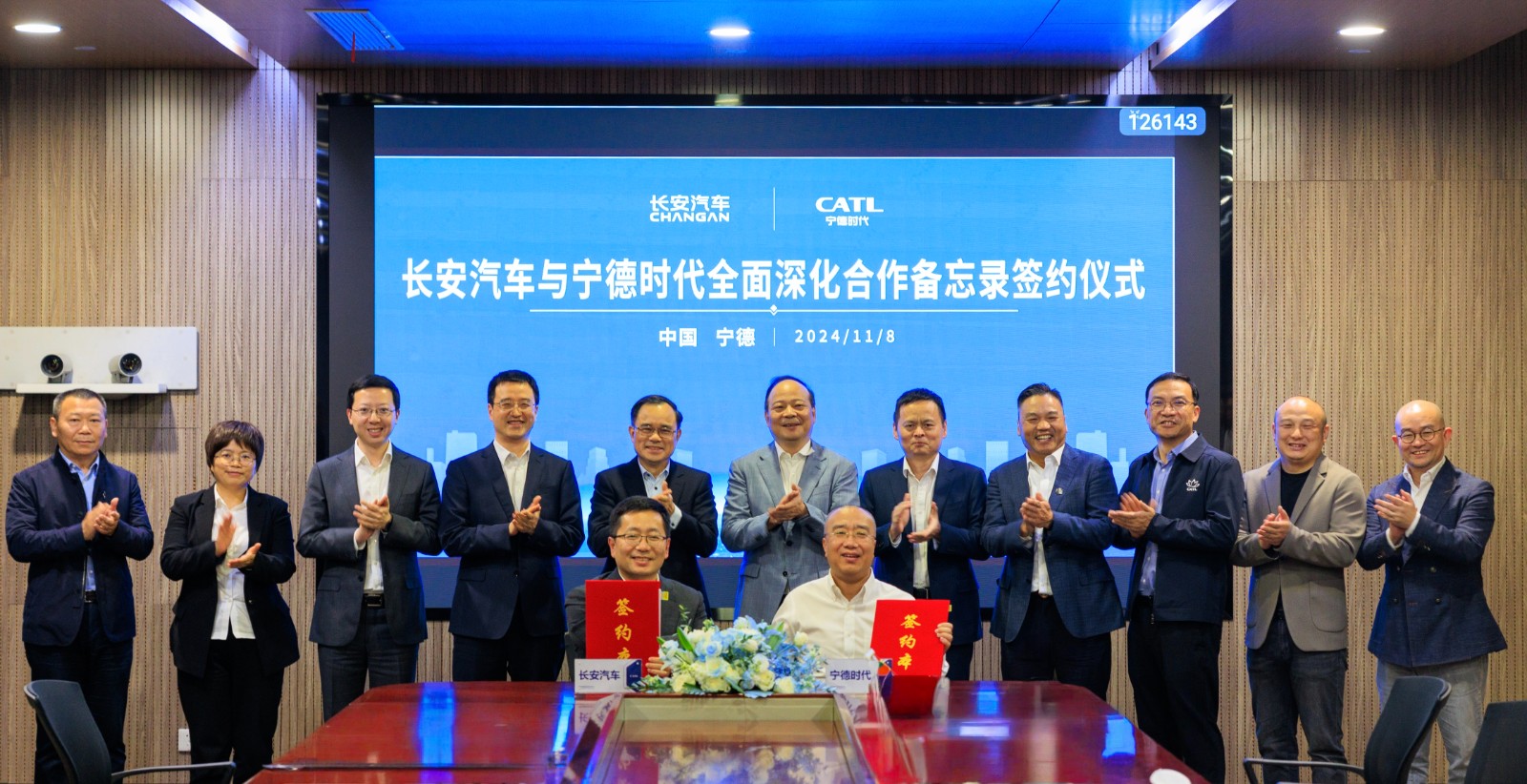
Avatr is a high-end luxury EV brand created through a strategic "CHN" partnership between Changan, Huawei, and CATL. While Changan handles vehicle integration and manufacturing, Huawei provides the "HarmonyOS" cockpit and automated driving systems, and CATL supplies the battery technology. This synergy positions Avatr against global premium brands like Tesla and NIO.
4. Changan Kaicene
This subsidiary focuses on commercial vehicles, including light trucks, vans, and pickups. In the 2026 landscape, Kaicene has shifted heavily toward the electrification of "last-mile" logistics, supporting the greening of urban supply chains.
Joint Ventures and International Partnerships
Changan has a long history of leveraging joint ventures to gain manufacturing expertise and global market insights. While many Chinese automakers have seen their joint ventures decline in the face of domestic competition, Changan has maintained stable, albeit evolving, partnerships.
- Changan Ford: Established in 2001, this partnership remains a critical component of Changan's manufacturing footprint. In recent years, the JV has focused on localizing Ford’s global EV strategy for the Chinese market.
- Changan Mazda: This venture continues to serve a niche market of enthusiasts, focusing on driving dynamics and internal combustion efficiency, while slowly introducing electrified crossovers.
These partnerships have provided Changan with rigorous quality control standards and a deep understanding of international supply chain management, which the company now applies to its independent global exports.
Research, Development, and Technological Innovation
Changan's R&D philosophy is rooted in "Six Countries, Nine Locations," a global network that ensures the company stays at the forefront of various automotive disciplines. Each center specializes in a specific area of expertise:
- Chongqing, China: Global Headquarters and vehicle integration.
- Turin, Italy: Exterior and interior styling/design.
- Yokohama, Japan: Interior craftsmanship and detail design.
- Birmingham, UK: Advanced powertrain and transmission R&D.
- Detroit, USA: Chassis design and autonomous driving software.
- Munich, Germany: Intelligent systems and advanced engineering.
The Shangri-La and Dubhe Plans
In 2026, Changan’s "Shangri-La Plan" is in its final phase of total electrification. The goal is not just to produce EVs but to master the underlying technology, including "All-in-One" electric drive systems and solid-state battery integration.
The "Dubhe Plan" represents the company’s push into intelligence. Changan has achieved Level 3 autonomous driving capabilities in several production models, supported by an integrated "Vast Ocean" architecture. This software-defined vehicle (SDV) approach allows for over-the-air (OTA) updates that can enhance everything from battery efficiency to self-parking algorithms.
Key Performance Indicators and Market Data (2026 Context)
The following table outlines the comparative positioning of Changan’s primary sub-brands as of the current 2026 fiscal year.
| Brand | Target Segment | Primary Powertrain | Key Models (2026) | Price Range (Est. USD) |
|---|---|---|---|---|
| Changan (Uni/CS) | Mass Market | ICE, PHEV (iDD) | Uni-K, CS75 Plus, Eado | $15,000 – $35,000 |
| Deepal | Tech-Focused Mid-Range | BEV, EREV | SL03, S7, G318 | $25,000 – $45,000 |
| Avatr | Premium Luxury | BEV | Avatr 11, Avatr 12 | $45,000 – $80,000 |
| Changan Lumin | Urban Budget | BEV (Micro) | Lumin Corn | $7,000 – $12,000 |
| Kaicene | Commercial/Logistics | ICE, BEV | Star Series, Hunter | $10,000 – $30,000 |
Global Expansion and the "Vast Ocean" Strategy
Changan’s 2026 global presence is no longer limited to exports from China. Under the "Vast Ocean" strategy, the company has established a localized manufacturing and sales presence in key regions to bypass trade barriers and reduce logistics costs.
Southeast Asia (ASEAN)
Changan’s Rayong plant in Thailand serves as a right-hand-drive (RHD) production hub. This facility supplies Thailand, Australia, and New Zealand, capitalizing on regional free-trade agreements and the growing appetite for affordable EVs in Southeast Asia.
Europe and Latin America
Changan has adopted a "premium-first" approach in Europe, launching the Deepal and Avatr brands in markets like Norway, Germany, and the Netherlands. In Latin America, particularly in Mexico and Chile, the focus remains on the durable CS series SUVs, which have gained a reputation for reliability in varied terrains.
Manufacturing Excellence and Sustainability
Changan has integrated "Industry 4.0" standards across its major manufacturing bases. The Liangjiang plant in Chongqing is a hallmark of this effort, featuring over 90% automation in its welding and painting shops.
Sustainability is addressed through "Green Factories" that utilize solar power and closed-loop water recycling systems. Changan has committed to achieving carbon neutrality across its entire life cycle by 2045, with a significant reduction in supply chain emissions projected by the end of 2026.
Challenges and Competitive Landscape
Despite its strengths, Changan faces significant hurdles in the 2026 automotive climate:
- Intense Domestic Rivalry: Competition from BYD and Geely remains fierce, particularly in price wars that compress profit margins on entry-level NEVs.
- Geopolitical Friction: Increasing tariffs and data security regulations in North America and parts of Europe complicate Changan’s efforts to establish a foothold in Western markets.
- Software Integration: As vehicles become "computers on wheels," Changan must continue to improve its in-house software capabilities to avoid over-reliance on third-party providers like Huawei.
Frequently Asked Questions
Is Changan a state-owned or private company?
Changan Automobile is a state-owned enterprise (SOE). It is a subsidiary of the China South Industries Group Corporation, which is under the direct supervision of the central government. This provides the company with significant financial backing and alignment with national industrial policies, though it operates with a high degree of market-oriented autonomy.
What is the relationship between Changan and Huawei?
Changan and Huawei maintain a deep technical partnership, most notably through the Avatr brand. Huawei provides the "Full Stack Smart Car Solution," which includes the Kirin chipset, HarmonyOS operating system, and the Lidar-based autonomous driving suite. Changan acts as the manufacturing and vehicle engineering lead.
Where can I buy Changan vehicles outside of China?
As of 2026, Changan has a presence in over 60 countries. Major hubs include Southeast Asia (Thailand, Philippines), the Middle East (Saudi Arabia, UAE), Latin America (Chile, Peru, Mexico), and increasingly, Europe (Norway, Germany). Sales are typically handled through a mix of direct subsidiaries and authorized national distributors.
Are Changan cars considered reliable?
Changan consistently ranks high in domestic reliability studies, such as those conducted by J.D. Power China. The company's heavy investment in R&D centers in Europe and the US has resulted in build quality and safety standards that meet or exceed international requirements, including 5-star Euro NCAP ratings for several of its export models.
Does Changan still make gasoline-powered cars?
While Changan is rapidly transitioning to NEVs, it still produces a significant number of gasoline and Plug-in Hybrid (PHEV) vehicles under its "Blue Core" engine program. These models remain popular in markets where EV infrastructure is still developing, though the company plans to phase out non-electrified ICE models in the coming years.
Practical Recommendation for Stakeholders
For investors, Changan represents a balanced play between a stable state-owned entity and a high-growth tech innovator. Its partnerships with Huawei and CATL provide a competitive edge in the "intelligent" car race that few traditional OEMs can match.
For consumers, Changan's current lineup—specifically the Deepal and Uni series—offers a high feature-to-price ratio. However, buyers should verify local dealer support and spare parts availability, as Changan’s service networks are still maturing in newer Western markets.
For business partners, Changan's shift toward localized manufacturing in regions like ASEAN offers significant opportunities for tier-one suppliers looking to integrate into a rapidly expanding global supply chain.
Image Gallery