Which Player Has the Most Ballon d'Or Awards: A Historical Record
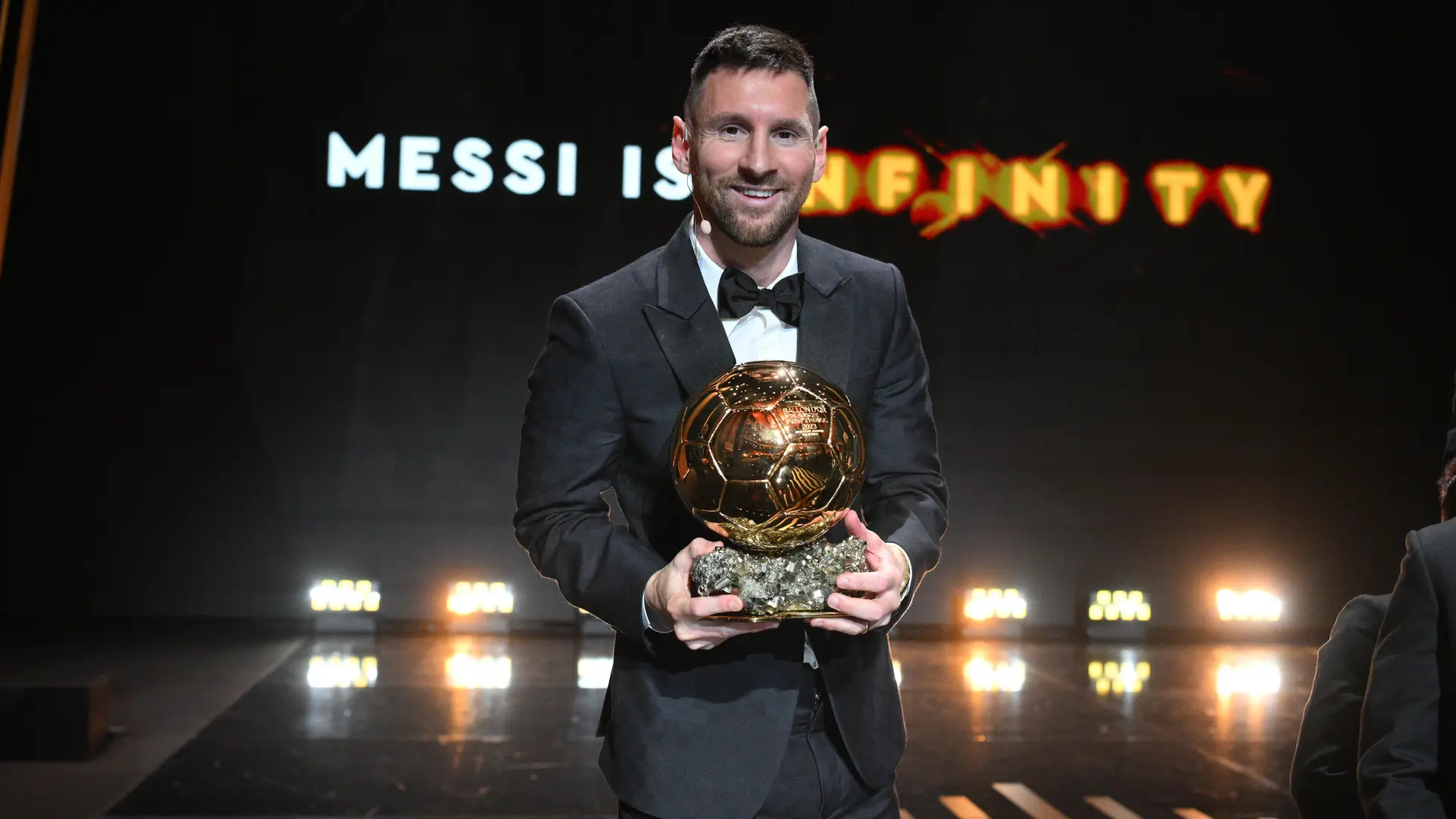
Lionel Messi holds the record for the most Ballon d'Or awards in history, having won the prestigious trophy eight times. Presented annually by the French news magazine France Football, the award recognizes the male footballer deemed to...
Lionel Messi holds the record for the most Ballon d'Or awards in history, having won the prestigious trophy eight times. Presented annually by the French news magazine France Football, the award recognizes the male footballer deemed to have performed the best over the previous season. Messi’s record-setting career, spanning over two decades of professional play, has seen him secure victories in 2009, 2010, 2011, 2012, 2015, 2019, 2021, and 2023.
Contents
The Evolution of the Ballon d'Or
Established in 1956 by journalist Gabriel Hanot, the Ballon d'Or was originally conceived to honor the best European player in European football clubs. The inaugural winner was Stanley Matthews of Blackpool. Over the decades, the eligibility criteria have shifted significantly. In 1995, the award expanded to include players of any nationality, provided they were active at European clubs. Further reforms in 2007 opened the ballot to journalists worldwide, effectively making it a global recognition of footballing excellence.
The prestige associated with the trophy stems from its voting mechanism. A panel of international journalists, national team coaches, and captains participates in a rigorous selection process, evaluating individual performances, team achievements, and fair play. By 2026, the award remains the most coveted individual accolade in the sport, representing a pinnacle of achievement that defines the legacy of the modern era’s greatest athletes.
Lionel Messi’s Unprecedented Dominance
Lionel Messi’s eight wins represent an era of sustained dominance that is statistically unique in football history. His initial period of success between 2009 and 2012 marked a four-year winning streak, a feat never previously accomplished. During this time, Messi’s role as the creative and finishing engine for FC Barcelona resulted in numerous domestic and European titles.
His later victories, particularly the 2021 and 2023 awards, reflected his continued influence at both the club and international levels. His 2023 win, in particular, was largely credited to his leadership in guiding Argentina to victory at the 2022 FIFA World Cup in Qatar. This consistency over fifteen years highlights not just his raw talent, but an ability to adapt his game to different tactical systems and evolving demands of the sport.
The Closest Rivals: Cristiano Ronaldo and Others
While Messi leads the count, the history of the award is defined by intense competition. Cristiano Ronaldo holds the second-highest number of Ballon d'Or trophies, with five wins to his name (2008, 2013, 2014, 2016, 2017). The rivalry between Messi and Ronaldo dominated the footballing landscape for over a decade, with the two players collectively securing thirteen awards within a fifteen-year window.
Other legends of the game follow in the historical rankings, though none have reached the total achieved by the two primary record-holders. Players like Michel Platini, Johan Cruyff, and Marco van Basten each secured three Ballon d'Or awards during their respective careers. These figures represent different tactical eras of the game, from the fluid total football of the 1970s to the structured tactical play of the late 1980s and early 1990s.
Historical Winners Comparison
The following table illustrates the players who have secured the most awards in the history of the trophy.
| Player | Total Wins | Winning Years |
|---|---|---|
| Lionel Messi | 8 | 2009, 2010, 2011, 2012, 2015, 2019, 2021, 2023 |
| Cristiano Ronaldo | 5 | 2008, 2013, 2014, 2016, 2017 |
| Michel Platini | 3 | 1983, 1984, 1985 |
| Johan Cruyff | 3 | 1971, 1973, 1974 |
| Marco van Basten | 3 | 1988, 1989, 1992 |
Criteria and Selection: How Winners Are Decided
Understanding why a player wins the Ballon d'Or requires looking at the technical criteria established by France Football. As of 2026, the voting criteria emphasize three primary pillars:
- Individual Performance and Decisive Impact: The focus is on a player’s influence on the pitch, including goals, assists, and defensive contributions that alter the outcome of high-stakes matches.
- Team Trophies and Success: Collective achievements, such as winning the UEFA Champions League, domestic leagues, or FIFA-sanctioned international tournaments, play a critical role in the final tally.
- Fair Play and Class: A player’s professional conduct, sportsmanship, and overall character are assessed to ensure the recipient serves as a positive ambassador for the sport.
The shift toward evaluating performance based on the football season (August to July) rather than the calendar year has refined how players are judged, ensuring that high-level summer international tournaments are accurately reflected in the voting cycle.
Challenges to the Historical Record
As football evolves, the standards for "greatness" continue to change. While Lionel Messi’s record is secure in 2026, the sport is seeing a transition to a new generation of talent. The challenge for future players is not merely individual skill, but the ability to maintain peak physical performance over a decade or more. The physical demands of the modern game, combined with a congested fixture list, make the longevity required to win multiple Ballon d'Or titles significantly more difficult than in previous decades.
Furthermore, the rise of specialized tactical roles means that players who do not score high volumes of goals—such as world-class defenders or defensive midfielders—often face an uphill battle in the voting process. Historically, the award has skewed heavily toward offensive playmakers and strikers, a trend that continues to be a subject of intense debate among football analysts and fans.
Frequently Asked Questions
Has any other player come close to Messi’s record? Cristiano Ronaldo is the only player to have secured five awards. While several players have achieved three, the gap between the two top-placed players and the rest of history remains substantial.
Does winning the World Cup guarantee a Ballon d'Or? No, winning a World Cup does not guarantee the award, though it is a significant factor. A player’s individual consistency throughout the full season remains the primary driver for the jury.
Are there different Ballon d'Or awards for women? Yes, France Football introduced the Ballon d'Or Féminin in 2018 to recognize the best female player in the world, ensuring that the award mirrors the global growth and professionalization of women’s football.
How does the voting panel remain objective? The panel consists of specialized football journalists from around the globe. By selecting experts who cover the sport daily, the organizers aim to mitigate bias toward any specific club, league, or nationality, focusing purely on footballing merit.
What is the "Super Ballon d'Or"? The Super Ballon d'Or is an extremely rare accolade awarded only once, in 1989, to Alfredo Di Stéfano, recognizing the best player of the previous three decades. It is not part of the standard annual voting cycle.
Final Perspective
The pursuit of the Ballon d'Or serves as the ultimate yardstick for individual excellence in association football. While Lionel Messi holds the current record with eight wins, the value of the award lies in its ability to capture the zeitgeist of football history. Whether the record will be challenged in the coming years depends on the emergence of a player capable of sustaining elite performance levels across multiple competitions and high-pressure tournament cycles. For now, the tally remains a testament to a unique era defined by the technical and creative consistency of its most celebrated recipient.
Image Gallery