Can You Buy Multiple Life Insurance Policies on One Person?
Yes, you can absolutely buy multiple life insurance policies on one person. There is no legal limit to the number of policies an individual can hold, provided they meet the insurance company's financial underwriting requirements and ca...
Yes, you can absolutely buy multiple life insurance policies on one person. There is no legal limit to the number of policies an individual can hold, provided they meet the insurance company's financial underwriting requirements and can demonstrate a legitimate insurable interest. This strategy is frequently used to "ladder" coverage for different financial milestones.
Contents
In the complex landscape of 2026 financial planning, the question is rarely about whether you can hold multiple policies, but rather how much total coverage you are eligible for and how to structure those policies to maximize value. Insurance companies do not restrict the quantity of contracts, but they do strictly regulate the total "death benefit" amount relative to an individual’s income, net worth, and specific financial liabilities.
The Mechanics of Multiple Life Insurance Policies
When an individual applies for life insurance, they are not just being evaluated for their health. Carriers perform a deep dive into "financial underwriting." The primary goal for an insurer is to ensure that the total amount of insurance in force across all companies is commensurate with the economic loss that would occur upon the insured’s death.
As of 2026, the industry standard for total coverage limits usually follows a multiple of the insured’s annual income. For example, an individual in their 30s might be eligible for a total death benefit of 25 to 30 times their annual salary, while someone in their 50s might be limited to 10 to 15 times their salary. If you already have a $1 million policy and apply for another $1 million policy, the new insurer will look at your total $2 million coverage to ensure it aligns with these income multiples.
Why Insurers Monitor Total Coverage
Insurers are wary of "over-insurance." This occurs when the death benefit significantly exceeds the financial value of the person’s life or their future earning potential. From a risk management perspective, over-insurance can create a moral hazard. To prevent this, insurance companies share data through the MIB Group (formerly known as the Medical Information Bureau). When you apply for a new policy, the carrier sees your application history and existing coverage to ensure you aren't exceeding the industry's established financial ceilings.
Strategic Reasons to Hold Multiple Policies
Holding more than one policy is often more efficient than trying to find a "one size fits all" solution. Diversifying your insurance portfolio allows for greater flexibility as your life stages evolve.
1. The "Laddering" Strategy
Laddering involves purchasing multiple term life insurance policies with different expiration dates. This approach mirrors the natural decline of financial responsibilities over time. For instance, a young parent might have a 30-year mortgage, a 20-year window until their children finish college, and a 10-year period of high-income replacement needs.
Instead of buying one massive 30-year policy, they might buy:
- A $500,000 30-year policy for the mortgage.
- A $500,000 20-year policy for college tuition.
- A $1,000,000 10-year policy for peak earning years.
As each "rung" of the ladder expires, the total premium decreases, aligning the coverage with the actual remaining financial risk.
2. Supplementing Group Coverage
Many professionals receive life insurance as a workplace benefit, often equal to one or two times their annual salary. While this is a valuable perk, it is rarely sufficient for a family's long-term needs. Furthermore, group coverage is usually not portable; if you leave your job, you lose the coverage. Buying a private, individual policy alongside a group policy ensures that you have a permanent foundation of protection that isn't tied to your employment status.
3. Combining Term and Permanent Insurance
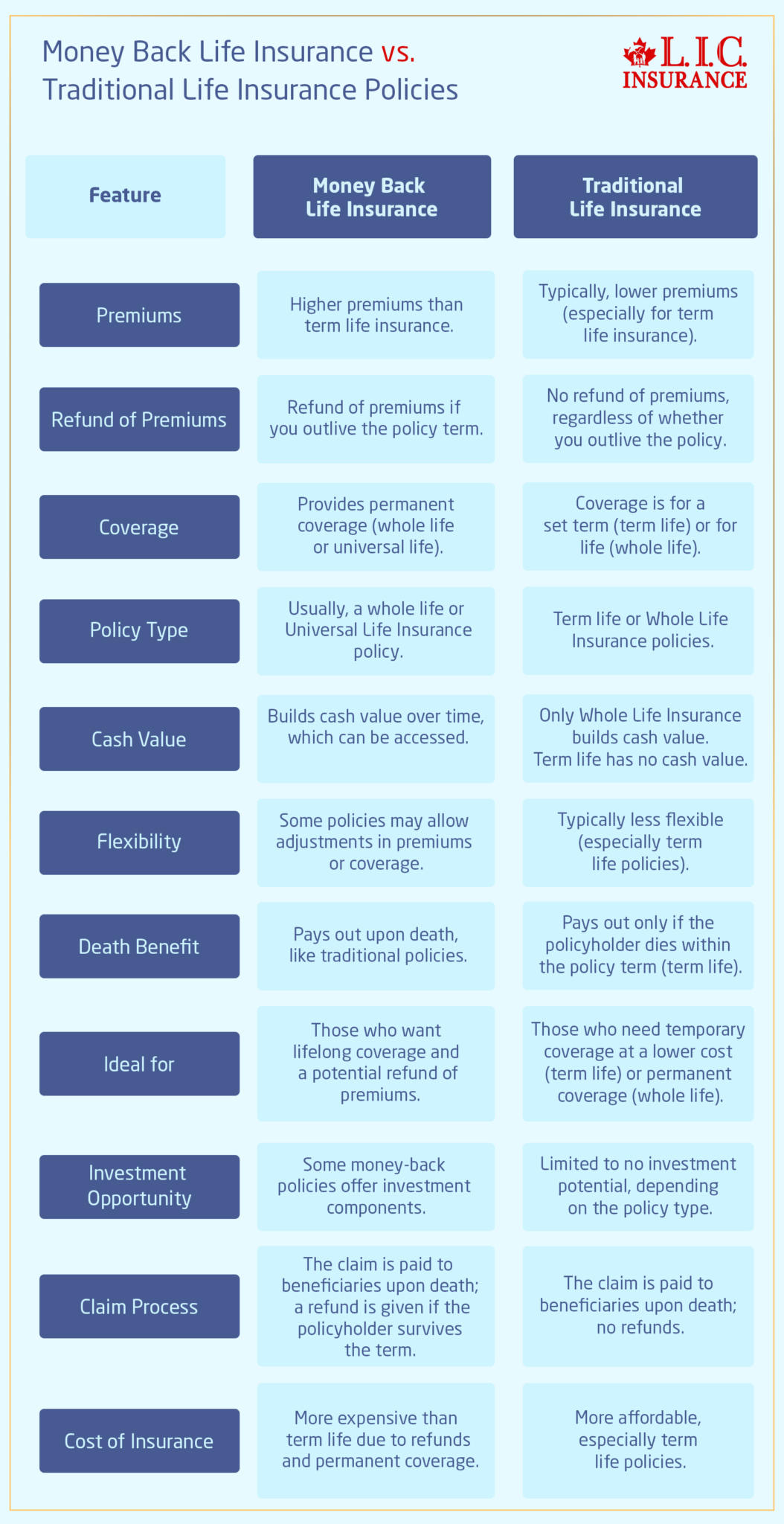
A common strategy is to use Term Life Insurance for temporary, high-value needs (like debt and child-rearing) while maintaining a smaller Whole Life or Universal Life policy for permanent needs. Permanent policies can cover end-of-life expenses, provide a tax-advantaged cash value component, or facilitate estate planning and legacy gifts, which remain relevant long after the term policies have expired.
4. Business and Personal Separation
Business owners often require life insurance for "Buy-Sell" agreements or "Key Person" insurance. These policies serve a specific commercial purpose: ensuring the business can continue to operate or that a partner's shares can be bought out if they pass away. These business-related policies are typically held in addition to the owner’s personal policies that protect their spouse and children.
Comparison of Single vs. Multiple Policy Strategies
The following table illustrates the differences between managing a single large policy versus a multi-policy "laddered" approach for a typical 35-year-old applicant in 2026.
| Feature | Single $2M Policy (30-Year Term) | Laddered Approach (3 Policies) |
|---|---|---|
| Total Initial Coverage | $2,000,000 | $2,000,000 |
| Premium Structure | Level premium for 30 years | Decreasing premiums as policies expire |
| Flexibility | Low; must cancel or reduce one policy | High; rungs expire naturally as needs vanish |
| Cost Efficiency | Higher total cost over 30 years | Lower total cost; avoids paying for unneeded coverage |
| Administrative Effort | Minimal (One bill, one carrier) | Moderate (Multiple bills, multiple carriers) |
| Risk Diversification | Concentration in one carrier | Spread across multiple insurance companies |
The Application Process for Additional Policies
When applying for a second or third policy, the process is largely the same as the first, with a few added requirements regarding disclosure.
- Full Disclosure: On the application, you must list all existing life insurance policies currently in force. Failure to disclose this can be considered material misrepresentation, which could lead to a claim being denied later.
- Replacement Questions: The agent or carrier will ask if the new policy is intended to replace an existing one. If you are keeping your old policy, you simply state that the new coverage is "additional."
- Medical Underwriting: Even if you were recently approved for a policy, a new carrier will likely require their own medical exam or access to your digital health records. However, in 2026, many carriers utilize "accelerated underwriting," which uses data algorithms to approve policies without a physical exam if the applicant is within certain health and age brackets.
- The MIB Check: The insurer will query the MIB database to verify your previous applications and ensure the total amount of insurance you are seeking is within reasonable bounds for your financial profile.
Challenges and Considerations
While buying multiple policies is generally a smart move, there are specific hurdles to keep in mind.
Cumulative Costs
Every insurance policy has built-in administrative fees and "policy fees" (often ranging from $50 to $100 per year). If you have five different $100,000 policies, you are paying that policy fee five times. In some cases, it may be more cost-effective to have two larger policies rather than several small ones.
Complexity of Management
Managing multiple policies means tracking multiple premium due dates, beneficiaries, and policy numbers. In 2026, digital insurance vaults and management apps have made this easier, but it still requires organizational diligence. If a policy lapses due to a missed payment, you lose that specific "rung" of your coverage.
Underwriting Consolidation
If you apply for multiple policies simultaneously from different companies, it can sometimes trigger a "red flag" in the system known as "jumbo" underwriting. This happens when the total amount applied for exceeds a certain threshold (often $5 million to $10 million). In these cases, the insurers may coordinate more closely to ensure the applicant isn't attempting to secure more coverage than their financial status warrants.
Frequently Asked Questions
Can I have policies with different insurance companies?
Yes, and it is often recommended. Having policies with different carriers provides "carrier diversification." If one company were to face financial instability (an extremely rare event given state guaranty associations), your entire death benefit wouldn't be at risk. Additionally, different companies have different "underwriting niches"; one might be better for people with high blood pressure, while another offers better rates for tobacco users who have quit.
Do I have to tell my current insurance company if I buy a new policy?
You do not have a legal obligation to inform your current insurer that you have purchased additional coverage elsewhere. However, you are legally required to inform the new insurance company about any existing coverage you already have during the application process.
Is there a limit to how many life insurance policies I can have?
There is no specific numerical limit (e.g., you can have 10 policies if you choose). The limit is purely financial. If your income is $100,000 and you already have $3 million in coverage, a new carrier will likely decline a request for another $2 million because the total would exceed standard income replacement multiples.
Can I buy multiple policies on someone else?
Yes, provided you have insurable interest. This means you would suffer a financial loss if the person died. Common examples include spouses, business partners, or a debtor for whom you are the creditor. You generally cannot buy a policy on a stranger or a distant acquaintance. Furthermore, the person being insured must typically consent to the policy and participate in the underwriting process.
Does having multiple policies make the claims process harder for beneficiaries?
It adds administrative steps, as the beneficiaries will need to file a separate claim with each insurance company. Each company will require a certified copy of the death certificate. However, having multiple policies does not inherently make any single claim more likely to be denied, provided all policies were obtained honestly and the premiums were kept current.
Final Recommendation
If you find that your current life insurance no longer meets the full scope of your financial responsibilities, buying an additional policy is often a better solution than canceling your old one. You can lock in the rates for the new coverage while maintaining the lower-age premiums of your original policy.
To start, audit your current financial liabilities—including your mortgage, potential education costs for children, and estate taxes—and compare them to your existing coverage. If a gap exists, consult with an independent agent who can shop across multiple carriers to find a policy that complements your current portfolio without exceeding your financial underwriting limits.
Image Gallery