Who Played Thanos in Guardians of the Galaxy? Josh Brolin’s MCU Debut Explained
Actor Josh Brolin played Thanos in Guardians of the Galaxy (2014). While stunt actor Damion Poitier briefly played the character in the mid-credits scene of The Avengers (2012), Marvel Studios cast Brolin to deliver the motion-capture...
Actor Josh Brolin played Thanos in Guardians of the Galaxy (2014). While stunt actor Damion Poitier briefly played the character in the mid-credits scene of The Avengers (2012), Marvel Studios cast Brolin to deliver the motion-capture performance and voice acting for the Mad Titan, establishing the definitive version of the villain across the Marvel Cinematic Universe (MCU).
Contents
Josh Brolin’s Casting and Debut in Guardians of the Galaxy
When Marvel Studios released Guardians of the Galaxy in August 2014, the film expanded the Marvel Cinematic Universe beyond Earth into cosmic territory. A pivotal element of this expansion was introducing the overarching villain of the Infinity Saga in a speaking role with real narrative weight. That villain was Thanos, and the actor chosen to portray him was Academy Award nominee Josh Brolin.
Before Brolin’s casting, Thanos had appeared only as a brief, silent, smiling cameo at the end of The Avengers in 2012. For Guardians of the Galaxy, director James Gunn and Marvel Studios President Kevin Feige needed an actor who possessed both gravity and physical presence to portray a galactic warlord convincingly. Brolin, widely recognized for his acclaimed performances in films like No Country for Old Men (2007), Milk (2008), and True Grit (2010), brought the requisite voice tone and dramatic intensity to the role.
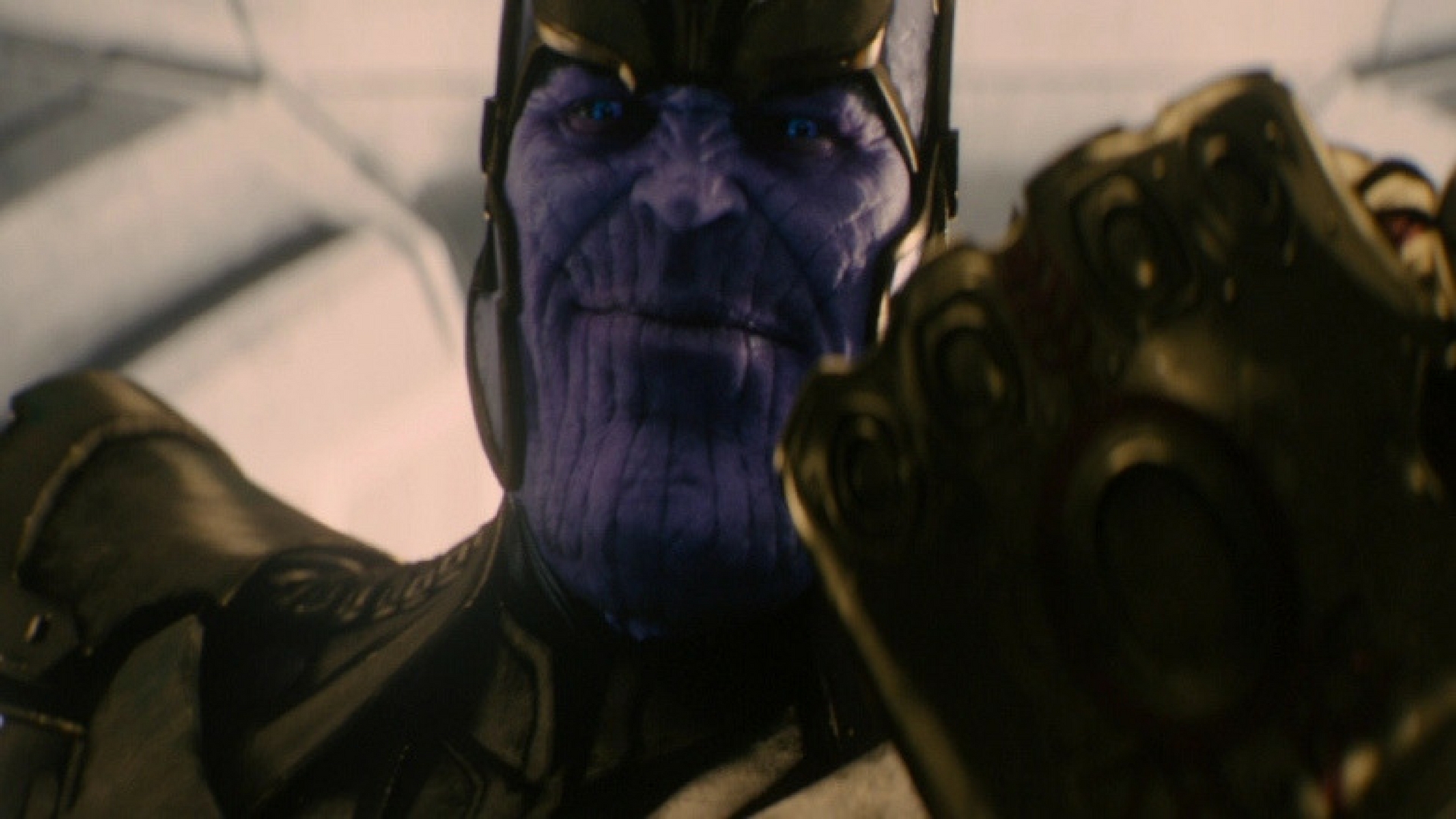
Brolin performed the dialogue and facial motion capture for Thanos during the production of Guardians of the Galaxy. In the film, Thanos sits upon his floating throne in Sanctuary, commanding his fanatical enforcer Ronan the Accuser (Lee Pace) and mediating conflicts between his adopted daughters, Gamora (Zoe Saldana) and Nebula (Karen Gillan). Although Brolin’s screen time in the movie is relatively short, his performance established the authoritative, menacing persona that would eventually anchor Avengers: Infinity War (2018) and Avengers: Endgame (2019).
The Evolution of Thanos: From Damion Poitier to Josh Brolin
Understanding who played Thanos in the MCU requires distinguishing between the character’s initial tease in 2012 and his official speaking debut in 2014. The physical portrayal evolved significantly as Marvel’s digital effects technology and narrative plans matured.
| The Avengers (2012) | Guardians of the Galaxy (2014) |
|---|---|
| Actor: Damion Poitier | Actor: Josh Brolin |
| Method: Practical Makeup | Method: Motion Capture & CGI |
| Role: Uncredited Cameo | Role: First Speaking Appearance |
Damion Poitier in The Avengers (2012)
In the mid-credits scene of Joss Whedon’s The Avengers, the alien leader known as the Other reports to his master about the defeated Chitauri invasion of New York. The master turns toward the camera with a sinister grin—marking Thanos’s cinematic debut.
In this brief shot, Thanos was played by actor and stunt performer Damion Poitier. Ironhead Studio designed practical prosthetic makeup applied to Poitier, which was then enhanced with digital effects by visual effects studio Industrial Light & Magic (ILM). At the time, Marvel had not yet cast the long-term actor for the role, as Thanos had no lines of dialogue in the scene.
The Decision to Recast for Guardians of the Galaxy
As Marvel Studios planned Phase Two and Phase Three of the MCU, executives realized Thanos would require a high-profile actor capable of carrying emotional weight across multiple blockbuster films. Kevin Feige and director James Gunn sought an actor whose performance capture could serve as the anchor for a photorealistic digital character.
In early 2014, Marvel officially cast Josh Brolin. Rather than relying on heavy physical prosthetics, Brolin performed in a performance-capture suit equipped with head-mounted camera rigs. This captured every micro-expression of his face, which visual effects artists at Digital Domain translated onto Thanos’s digital character model.
Complete Overview of Thanos Appearances in the MCU
The role of Thanos spanned nearly a decade of production, evolving from a behind-the-scenes puppet master to the central protagonist-antagonist of the climax of Phase Three.
| Film / Project | Release Year | Actor | Portrayal Method | Character Significance |
|---|---|---|---|---|
| The Avengers | 2012 | Damion Poitier | Practical Prosthetics & CGI | Mid-credits cameo establishing the cosmic threat behind Loki |
| Guardians of the Galaxy | 2014 | Josh Brolin | Performance Capture & Voice | First speaking role; establishes dynamic with Gamora, Nebula, and Ronan |
| Avengers: Age of Ultron | 2015 | Josh Brolin | Performance Capture & Voice | Mid-credits scene retrieving the Infinity Gauntlet ("I'll do it myself") |
| Avengers: Infinity War | 2018 | Josh Brolin | Advanced Motion Capture & Voice | Main antagonist; collects all six Infinity Stones and executes the Snap |
| Avengers: Endgame | 2019 | Josh Brolin | Advanced Motion Capture & Voice | Portrays both the 2018 prime Thanos and his 2014 past variant |
| What If...? (Season 1) | 2021 | Josh Brolin | Voice Acting | Animated alternate-universe variants (e.g., Good Guy Thanos in Episode 2) |
How Performance Capture Brought Josh Brolin’s Thanos to Life
Bringing Thanos to the screen in Guardians of the Galaxy and subsequent MCU films required cutting-edge technology that blended Josh Brolin’s physical acting with computer-generated imagery.
Visual Effects Rigs and Facial Capture
During shooting, Brolin wore a gray motion-capture jumpsuit along with a head-mounted camera array aimed directly at his face. Dozens of tracking dots were painted onto his skin to record facial muscle movements, eyelids, lip contours, and subtle skin shifts.
For Guardians of the Galaxy, visual effects house Digital Domain took Brolin's physical data and mapped it onto the digital sculpt of Thanos. To ensure the character felt grounded and organic rather than synthetic, artists carefully incorporated Brolin’s real-life features—such as his distinctive chin structure, eye movements, and vocal cadence—into the alien character model.
Evolution in Infinity War and Endgame
While Guardians of the Galaxy showcased early iterations of this technology, Marvel Studios and visual effects vendors Digital Domain and Wētā FX refined the process for Avengers: Infinity War and Avengers: Endgame.
The visual effects teams utilized software called Medusa and Masquerade, developed to capture high-resolution facial scans and dynamic movement at an unprecedented level of detail. This allowed Brolin’s nuanced emotional performance—ranging from paternal grief over Gamora to philosophical fanaticism—to translate directly to the screen without feeling lost under layers of digital animation.
Thanos’s Role and Narrative Importance in Guardians of the Galaxy
While Thanos’s total screen time in Guardians of the Galaxy is around two minutes, his presence drives the entire plot of the film and establishes key storylines for the wider Marvel Cinematic Universe.
- THANOS (Sanctuary)
- RONAN THE ACCUSER (Enforcer / Rival)
- THE ORB / POWER STONE
- ADOPTED DAUGHTERS (Gamora & Nebula)
- RONAN THE ACCUSER (Enforcer / Rival)
- Establishing the Cosmic Power Hierarchy: The scene on Sanctuary showcases Ronan the Accuser, a terrifying Kree warlord, visibly intimidated in Thanos's presence. When Ronan’s spokesman, the Other, berates Ronan, Ronan snaps the Other's neck—yet Thanos remains unfazed, instantly reminding Ronan of his subordinate position.
- Developing Gamora and Nebula’s Backstory: The film introduces the tragic upbringing of Gamora and Nebula. Both were taken from their home planets by Thanos, cybernetically altered, and forced to compete against each other. This dynamic fuels Gamora’s betrayal of Thanos and Nebula’s deep-seated resentment, driving character arcs that spanned multiple films.
- The Quest for the Infinity Stones: Guardians of the Galaxy explicitly identifies the mysterious Orb as an Infinity Stone (specifically, the Power Stone). Thanos’s agreement to destroy Xandar in exchange for Ronan bringing him the Orb reveals his underlying ambition to collect all six stones.
Did Josh Brolin Play Other Characters in the Marvel Universe?
A common point of confusion among film audiences is Josh Brolin’s double casting in Marvel film properties during 2018.
In May 2018—just weeks after playing Thanos in Avengers: Infinity War—Brolin appeared as Cable (Nathan Summers) in 20th Century Fox’s Deadpool 2.
At the time, 20th Century Fox operated as an independent studio holding the film rights to the X-Men and Deadpool franchises. Because Deadpool 2 was produced separately from Marvel Studios’ MCU, Brolin was able to star in both major Marvel-licensed projects simultaneously. Following the acquisition of 21st Century Fox by The Walt Disney Company in 2019, the X-Men rights returned to Marvel Studios, making Brolin one of the few actors to portray two major Marvel comic book characters on screen in the same year.
Frequently Asked Questions
Did Damion Poitier play Thanos in Guardians of the Galaxy?
No. Damion Poitier only played Thanos in the uncredited mid-credits cameo of The Avengers in 2012. By the time production began on Guardians of the Galaxy (2014), Marvel Studios had cast Josh Brolin to play the character using voice acting and motion-capture technology.
Why did Marvel recast Thanos after The Avengers?
Damion Poitier was cast as a physical stand-in and stunt performer for a short, non-speaking cameo when Marvel had not yet finalized long-term narrative plans for Thanos. Once the character was set to take on a prominent speaking role in Guardians of the Galaxy and lead future Avengers films, Marvel Studios recruited established actor Josh Brolin to provide both performance capture and voice acting.
Is Josh Brolin the voice of Thanos in animated Marvel projects?
Josh Brolin returned to voice Thanos in Season 1 of the Marvel Studios animated series What If...? (2021) on Disney+, portraying alternate-timeline versions of the character. However, in other animated series and video games (such as Marvel's Avengers or Guardians of the Galaxy: The Telltale Series), Thanos has been voiced by other voice actors, including Isaac C. Singleton Jr. and Liam O'Brien.
Did Sean Gunn stand in for Thanos on set in Guardians of the Galaxy?
No. While actor Sean Gunn performed on-set motion capture for Rocket Raccoon and played Kraglin in Guardians of the Galaxy, Josh Brolin personally recorded the facial capture and vocal lines for Thanos on set and in sound stages for the film.
How many films did Josh Brolin appear in as Thanos?
Josh Brolin portrayed Thanos in four live-action MCU films: Guardians of the Galaxy (2014), Avengers: Age of Ultron (2015, mid-credits scene), Avengers: Infinity War (2018), and Avengers: Endgame (2019). He also voiced variants of the character in the animated series What If...? (2021).
Recommended Next Steps for MCU Fans and Researchers
To further explore how Thanos was brought to life across the Marvel Cinematic Universe, consider these resources and viewing paths:
- Watch the Key MCU Phase Two Transitions: Compare Thanos’s uncredited cameo at the end of The Avengers (2012) directly with his scene in Guardians of the Galaxy (2014) to see the physical shift from practical prosthetics to Josh Brolin's performance capture.
- Explore Behind-the-Scenes Featurettes: Search for official visual effects breakdowns from studios like Digital Domain and Wētā FX detailing how facial capture technology translated Josh Brolin's acting into the final CGI character model.
- Review Thanos's Complete Narrative Arc: Follow the chronological order of his physical appearances (Guardians of the Galaxy $\rightarrow$ Avengers: Age of Ultron $\rightarrow$ Avengers: Infinity War $\rightarrow$ Avengers: Endgame) to observe how his character design and visual effects fidelity evolved over time.
Image Gallery