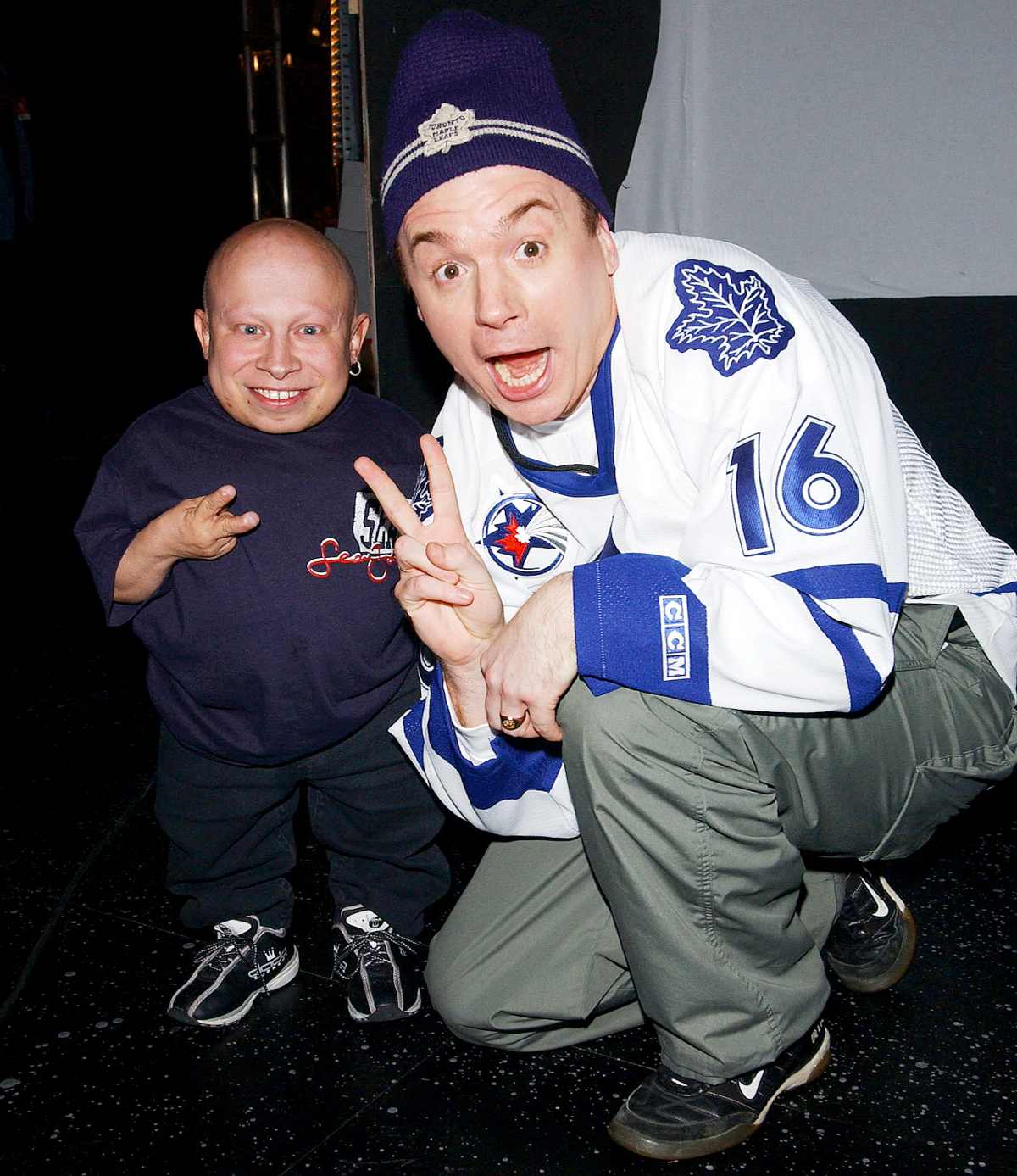
Verne Troyer and Mike Myers: The Story Behind Comedy’s Most Iconic Duo
Verne Troyer and Mike Myers formed one of cinema’s most memorable comedic partnerships through the Austin Powers film franchise. Playing Mini-Me alongside Myers’ Dr. Evil, Troyer’s remarkable physical comedy transformed a secondary rol...
Verne Troyer and Mike Myers formed one of cinema’s most memorable comedic partnerships through the Austin Powers film franchise. Playing Mini-Me alongside Myers’ Dr. Evil, Troyer’s remarkable physical comedy transformed a secondary role into a global pop-culture phenomenon, establishing a lasting professional bond and deep mutual respect between the two actors.
Contents
The Origin of Mini-Me: How Mike Myers and Verne Troyer Met
When writer and star Mike Myers was developing the script for Austin Powers: The Spy Who Shagged Me (1999) alongside director Jay Roach, he sought to expand the absurd universe established in the 1997 original film, Austin Powers: International Man of Mystery. One of Myers' core comedic concepts for the sequel was to give the megalomaniacal antagonist, Dr. Evil, an exact clone created to be "one-eighth his size." The character, named Mini-Me, was designed as a mute, fiercely loyal, and aggressive sidekick who echoed Dr. Evil’s every move.
Finding an actor capable of bringing this concept to life was a significant casting challenge. The role required someone under three feet tall who possessed the physical stamina for stunt work, exceptional comedic timing, and the rare ability to mirror Myers’ subtle facial expressions without speaking a single line of dialogue.
Verne Troyer, who stood at 2 feet 8 inches due to cartilage-hair hypoplasia dwarfism, was already working in Hollywood as a stunt double and performer, having appeared in films such as Baby’s Day Out (1994) and Men in Black (1997). When Troyer auditioned for Myers and Roach, his performance immediately set him apart. Troyer did not merely act small; he matched Myers' intense screen presence, replicating Dr. Evil’s signature pinky-to-mouth gesture, sinister glares, and erratic head tilts with absolute precision. Myers recognized instantly that Troyer possessed the rare gift of high-level physical mimicry, securing Troyer the role that would redefine his career.
The Mechanics of Physical Comedy: Dr. Evil and Mini-Me
The comedic success of Dr. Evil and Mini-Me rested entirely on synchronization and contrast. Mike Myers, a veteran of Saturday Night Live and Second City, is known for his intense preparation and mastery of character detail. For the duo's scenes to work, Troyer had to align his performance seamlessly with Myers' erratic, improvisational delivery.
- Dr. Evil Gesture / Mini-Me Replicant Action
- Signature Pinky Gesture (Executed simultaneously)
- Maniacal Laughter Chorus (Muted pitch matching)
- Subversive Physical Attacks (Targeting Scott Evil)
Non-verbal acting is widely considered one of the most demanding disciplines in performance art. Because Mini-Me had no spoken lines, Troyer had to convey a wide range of emotions—jealousy toward Dr. Evil’s biological son Scott Evil (played by Seth Green), unyielding devotion to Dr. Evil, pure malice toward Austin Powers, and childlike mischief—using only eyes, posture, and facial muscle movements.
Key Moments of Cinematic Synergy
- "Just the Two of Us" Duet: In one of the franchise's most iconic sequences, Dr. Evil sings a parody of Bill Withers’ "Just the Two of Us" to Mini-Me. Troyer’s performance—playing a miniature piano, sitting on Myers’ lap, and bobbing his head in perfect rhythm—created a comedic contrast that resonated globally.
- The Scott Evil Rivalry: The physical altercations between Troyer and Seth Green provided a continuous source of slapstick comedy. Troyer approached these scenes with full commitment, performing aggressive physical humor that treated Mini-Me not as a joke, but as a genuinely menacing force.
- Synchronized Gestures: Whether turning around in swivel chairs, biting their knuckles, or offering identical scowls to their henchmen, Myers and Troyer operated as a singular comedic organism.
The dynamic relied on spoofing classic James Bond tropes—specifically Ernst Stavro Blofeld and his lap cat, as well as the villainous henchman Nick Nack (played by Hervé Villechaize) from The Man with the Golden Gun (1974). However, Myers and Troyer elevated the trope from simple homage into a unique comedic dynamic that surpassed its original inspiration.
Test Screenings and Script Rewrites: How Troyer Saved Mini-Me
The original script for Austin Powers: The Spy Who Shagged Me handled Mini-Me's arc very differently than the final release. In the initial draft, Mini-Me was written as a temporary gag meant to be killed off before the climax of the film, meeting his demise in a space pod ejection sequence.
However, when Jay Roach and Mike Myers screened early cuts of the movie for test audiences, the reaction fundamentally altered the franchise's trajectory. Audiences did not just laugh at Mini-Me; they fell in love with Troyer’s portrayal. When test viewers realized Mini-Me was slated to die, the room's energy dropped dramatically, with viewers actively voicing disappointment.
Recognizing Troyer’s star-making impact, Myers and Roach authorized immediate re-edits and reshoots. They excised Mini-Me’s death scene entirely, ensuring the character survived to return in future installments.
When Austin Powers in Goldmember was released in 2002, Mini-Me was given an expanded storylines. The sequel inverted the dynamic: after Dr. Evil turns his affection toward a newly villainous Scott Evil, Mini-Me feels betrayed, switches allegiances, and becomes Austin Powers’ sidekick. This shift required Troyer to perform scenes opposite Myers playing Austin Powers rather than Dr. Evil, proving Troyer’s versatility as he pivoted from dark, scheming villainy to heroic, lighthearted physical comedy.
Performance Overview Across Collaborations
The professional relationship between Verne Troyer and Mike Myers expanded beyond the immediate filming of the Austin Powers movies into promotional appearances, media tours, and broader pop-culture homages.
| Feature / Project | Release Year | Roles Involved | Box Office / Reach | Key Highlights & On-Set Dynamics |
|---|---|---|---|---|
| Austin Powers: The Spy Who Shagged Me | 1999 | Mike Myers: Dr. Evil, Austin Powers, Fat BastardVerne Troyer: Mini-Me | $312 million worldwide | Introduce the Mini-Me character; script rewritten after test audiences demanded Mini-Me survive the ending. |
| Austin Powers in Goldmember | 2002 | Mike Myers: Dr. Evil, Austin Powers, Fat Bastard, GoldmemberVerne Troyer: Mini-Me | $296 million worldwide | Mini-Me switches sides to team up with Austin; features extended prison break and dance sequences. |
| Ludacris - "Number One Spot" Music Video | 2005 | Verne Troyer: Mini-Me personaMike Myers: Concept inspiration | MTV Video Music Award Nominee | Pop-culture continuation of the character, incorporating iconic moves developed alongside Myers. |
| Jimmy Kimmel Live! Tribute Segment | 2018 | Mike Myers: Self (Guest)Verne Troyer: Retrospective Footage | National Broadcast | Myers delivers an emotional tribute detailing Troyer’s craft, work ethic, and impact on physical comedy. |
Life Beyond the Franchise and Pop-Culture Impact
The explosive success of Austin Powers made Verne Troyer a global figure almost overnight. Prior to working with Myers, performers with dwarfism were rarely given roles that anchored major box-office franchises or generated such extensive merchandising, ranging from action figures to national commercial campaigns.
Troyer frequently acknowledged that working with Myers altered his career trajectory completely. Following his breakout performance, Troyer secured high-profile roles, including Griphook the Goblin in Harry Potter and the Sorcerer's Stone (2001) and starring roles in Terry Gilliam's The Imaginarium of Doctor Parnassus (2009).
For his part, Myers consistently pushed back against any media narratives that reduced Troyer to a stunt double or a simple novelty. In press interviews throughout the 2000s, Myers routinely highlighted Troyer’s technical skill as an actor:
"Verne was a fantastic actor, a master of physical comedy, and a great friend. To perform without words and convey that much emotion and humor requires incredible artistry."
The character of Mini-Me entered the lexicon of modern comedy, giving rise to parodies across television shows like The Simpsons, Family Guy, and South Park. The synergy between Myers' broad vocal performance and Troyer's silent physical acting established a reference point for dynamic comedy duos in contemporary film.
Mike Myers’ Tribute and Legacy Following Troyer’s Death
On April 21, 2018, Verne Troyer passed away at the age of 49. His death sparked a wave of tributes from fans, co-stars, and filmmakers across the entertainment industry.
Mike Myers issued an immediate public statement honoring his late co-star, reflecting on Troyer's positive nature and professional mastery:
"Verne was the consummate professional and a beacon of positivity for those of us who had the honor of working with him. It is a sad day, but I hope he is in a better place. He will be greatly missed."
Shortly after, during an emotional appearance on Jimmy Kimmel Live! in May 2018, Myers spoke at length about his friendship with Troyer. Myers recounted behind-the-scenes stories from the Austin Powers set, explaining how Troyer routinely performed his own dangerous physical stunts despite the toll it took on his body. Myers became visibly moved while describing how audiences responded to Troyer's talent, reiterating that the franchise would never have achieved its cultural stature without Troyer's contributions.
Myers noted that Troyer shattered industry preconceptions about what actors with physical differences could achieve in mainstream Hollywood blockbusters. Rather than being confined to background roles, Troyer stood center stage alongside one of the largest comedic figures of his generation, delivering a performance that remains universally recognized.
Frequently Asked Questions
How did Verne Troyer get the role of Mini-Me in Austin Powers?
Verne Troyer was cast after an extensive audition process led by writer-star Mike Myers and director Jay Roach. The production team needed an actor under three feet tall who possessed high-level physical comedy skills and stunt experience. Troyer impressed Myers during auditions by flawlessly mimicking Dr. Evil's mannerisms, facial expressions, and body language without speaking.
Was Mini-Me originally supposed to die in The Spy Who Shagged Me?
Yes. In the original script, Mini-Me was written to be launched into space in an escape pod and killed off near the end of the film. However, during early test screenings, audience reactions to Troyer’s performance were overwhelmingly positive, and viewers expressed dismay over the character's death. Myers and Roach immediately shot new footage and re-edited the film to ensure Mini-Me survived.
Did Verne Troyer speak any lines in the Austin Powers movies?
No, Mini-Me was entirely mute throughout his appearances in the Austin Powers films. Troyer’s entire performance was delivered through facial expressions, body language, physical slapstick, and synchronized movements alongside Mike Myers.
What other films did Verne Troyer and Mike Myers work on together?
While their most famous collaboration was the Austin Powers series (The Spy Who Shagged Me in 1999 and Goldmember in 2002), both actors remained closely linked through media appearances, television retrospectives, and promotional campaigns tied to the franchise.
How did Mike Myers react to Verne Troyer’s passing in 2018?
Mike Myers released an official statement calling Troyer a "consummate professional" and a "beacon of positivity." He later delivered a tribute on Jimmy Kimmel Live!, praising Troyer’s acting skills, physical bravery on set, and personal warmth, stating that Troyer’s performance was central to the success of the Austin Powers movies.
Summary of Legacy
The collaboration between Verne Troyer and Mike Myers remains a hallmark of modern physical comedy. By blending Myers' character creation with Troyer's non-verbal acting precision, the duo created a classic cinematic pairing. Film historians and comedy enthusiasts continue to study their work as an example of how physical synchronization, commitment to character, and actor chemistry can elevate spoof comedy into enduring pop culture history.
Image Gallery