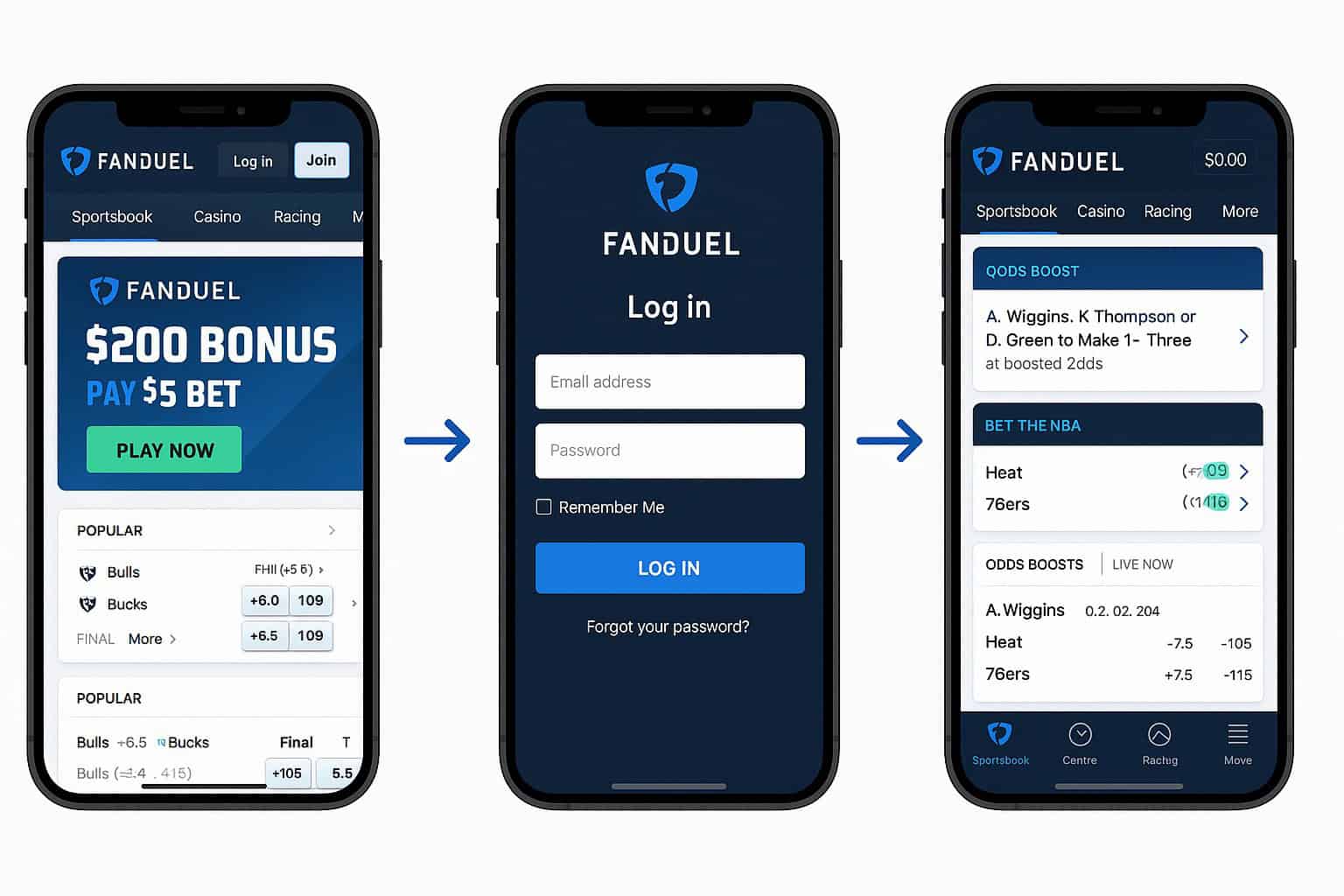
How FanDuel Sports Works: A Comprehensive Guide to Sportsbook and DFS Operations
FanDuel operates as a dual-platform ecosystem featuring a legal Sportsbook for fixed-odds wagering and a Daily Fantasy Sports (DFS) platform for contest-based competition. Users register, undergo identity verification, deposit funds, a...
FanDuel operates as a dual-platform ecosystem featuring a legal Sportsbook for fixed-odds wagering and a Daily Fantasy Sports (DFS) platform for contest-based competition. Users register, undergo identity verification, deposit funds, and place stakes on sporting outcomes or draft virtual rosters within specific salary caps to compete for prize pools.
Contents
The FanDuel brand has evolved from a pioneer in the fantasy sports space into one of the largest regulated gambling operators in North America. As of 2026, it remains a dominant force in the industry, offering a seamless integration between traditional sports betting and fantasy contests. Understanding how FanDuel works requires a breakdown of its two primary products, the underlying technology that ensures legal compliance, and the financial mechanisms governing deposits and payouts.
The Two Pillars: Sportsbook vs. Daily Fantasy Sports (DFS)
While often accessed through the same brand interface, the FanDuel Sportsbook and FanDuel DFS are distinct products with different mechanics, legal statuses, and strategies.
How the FanDuel Sportsbook Works
The Sportsbook is a traditional "bookmaker" service. Here, FanDuel sets "odds" on specific sporting events, and users bet against those odds. If your prediction is correct, FanDuel pays you based on the established price at the time of the bet.
- Fixed-Odds Wagering: When you place a bet, the potential payout is locked in. Even if the odds change later for other bettors, your contract with the sportsbook remains the same.
- The "Vig" or "Juice": This is how the Sportsbook makes money. FanDuel adds a small commission into the odds. For example, in a standard point spread bet where both sides have an equal chance, you might see odds of -110. This means you must bet $110 to win $100. The $10 difference is the house's edge.
- Bet Types: FanDuel offers a massive variety of markets, including Moneylines (who will win), Point Spreads (the margin of victory), Totals (over/under on points scored), and Prop Bets (specific player or team milestones).
How FanDuel DFS Works
Daily Fantasy Sports is a "peer-to-peer" competition. Rather than betting against the house, you are competing against other users.
- Salary Cap Model: Every player (athlete) is assigned a "salary" based on their projected performance. Users are given a virtual budget (typically $60,000 for NFL) to draft a full roster. You cannot exceed this budget, which forces you to find "value" picks rather than just selecting the best superstars.
- Scoring: Your team earns points based on real-world statistics (touchdowns, yards, goals, etc.). The users with the highest cumulative scores at the end of the day or week win prizes from the total pool.
- The Rake: FanDuel takes a percentage of the entry fees (usually 10-15%) as an administrative fee, and the remainder is distributed as prize money.
The User Journey: From Registration to Payout
To use either platform, a user must navigate a highly regulated onboarding process. Because sports betting and DFS are governed by state laws in the U.S., FanDuel employs strict verification protocols.
1. Registration and KYC Verification
Upon signing up, users must provide their full name, date of birth, physical address, and the last four digits of their Social Security Number. This is part of the Know Your Customer (KYC) requirements mandated by state regulators to prevent fraud, money laundering, and underage gambling. As of 2026, these systems are largely automated, but manual document uploads (like a driver's license) may be required if the automated check fails.
2. Geolocation Technology
FanDuel's Sportsbook only works in states where it is legally licensed. To enforce this, the app uses Geofencing technology. If you are using a mobile device, the app requires access to your GPS. On a desktop, you often need to download a browser plugin that verifies your location via nearby Wi-Fi signals. If you cross a state border into a jurisdiction where FanDuel is not licensed, the "Place Bet" button will automatically disable.
3. Funding the Account
Users can deposit funds using various methods, including debit cards, bank transfers (ACH), PayPal, and Venmo. It is important to note that many credit card issuers treat gambling deposits as "cash advances," which may incur high interest rates and fees. FanDuel keeps user funds in accounts separate from their operational capital, a requirement of state gaming commissions to ensure player protection.
Understanding Common Betting Mechanics
For those focusing on the Sportsbook, the platform utilizes several unique features that differentiate it from competitors.
Same Game Parlays (SGP)
FanDuel was a pioneer of the Same Game Parlay. This allows users to combine multiple bets from a single game—such as the Knicks to win, Jalen Brunson to score 30+ points, and the total points to go over 215. Because these outcomes are often correlated, FanDuel uses a specialized pricing engine to calculate the odds, which are generally higher than a single bet but come with increased risk.
Live Betting and Cash Out
FanDuel provides "Live" or "In-play" betting, where odds update every few seconds based on the action on the field. If a team falls behind early, their moneyline odds will become "longer" (higher payout), reflecting their decreased chance of winning.
The Cash Out feature allows users to settle a bet before the event is over. If your team is winning but you are nervous about a comeback, FanDuel may offer you a portion of your potential winnings to close the bet early. Conversely, if your bet is losing, you may be offered a small "buy back" to mitigate your losses.
| Feature | Sportsbook | Daily Fantasy Sports (DFS) |
|---|---|---|
| Primary Opponent | The House (FanDuel) | Other Users |
| Pricing Model | Fixed Odds (Moneyline, Spreads) | Salary Cap ($60k Budget) |
| Revenue Source | The "Vig" (Commission on odds) | The "Rake" (Entry fee percentage) |
| Legal Status | Varies by state; highly regulated | Legal in most states as "skill-based" |
| Outcome Based On | Final game results/scores | Individual player statistics |
| Duration | Single game or season-long | Daily or single-slate |
The Technology of Odds Calculation
The odds seen on FanDuel are not arbitrary. They are generated by complex mathematical models that incorporate historical data, player injuries, weather conditions, and "market action."
When a large amount of money is bet on one side of a game, FanDuel may adjust the odds to encourage betting on the other side. This is called "balancing the book." The goal of the sportsbook is ideally to have an equal amount of risk on both sides, allowing them to simply collect the "vig" regardless of who wins. This is why you might see a point spread move from -3.5 to -4.0 even if no new injury news has been released; it is a reaction to the money flowing into the system.
Compliance and Responsible Gaming
As a regulated entity, FanDuel is required to integrate Responsible Gaming (RG) tools directly into the user interface. These work by allowing users to set proactive limits on their behavior:
- Deposit Limits: Restricting how much money can be put into the account daily, weekly, or monthly.
- Wager Limits: Capping the amount that can be staked on a single bet.
- Time Limits: Limiting the number of hours per day the app can be used.
- Self-Exclusion: A legal process where a user can ban themselves from the platform for a period ranging from one year to a lifetime.
These features are overseen by state agencies such as the New York State Gaming Commission or the Pennsylvania Gaming Control Board. Failure to maintain these standards can result in massive fines or the loss of an operating license.
FAQs About How FanDuel Works
Is FanDuel Sportsbook the same as the Fantasy app?
No, they are generally two separate apps in most app stores, though they share the same account login and "wallet" in many states. Your balance in the DFS app can often be used in the Sportsbook app, provided you are in a state where both are legal. However, the mechanics of how you win money differ significantly between the two.
How does FanDuel verify my location?
FanDuel uses a combination of GPS data, Wi-Fi triangulation, and IP address analysis. On mobile devices, you must enable "Precise Location" services. If you are using a VPN or a proxy server to hide your location, the app will detect the software and block you from placing bets to ensure compliance with state borders.
Why do the odds change after I look at them?
Odds are dynamic and reflect the current state of the "market." If a star player is suddenly ruled out with an injury, or if a "sharp" (professional) bettor places a six-figure wager on one side, FanDuel will adjust the odds instantly. Your bet is only locked in once you receive a digital "bet slip" confirmation.
How long does it take to get paid?
Withdrawal times vary by method. Electronic transfers like PayPal or Venmo are often processed within 24 hours. "Online Banking" transfers typically take 1–3 business days, while physical checks mailed to your address can take up to 10 business days. FanDuel must also perform internal security reviews on large wins before releasing funds.
What happens if a game is canceled or postponed?
In the Sportsbook, most bets are "voided" if a game is canceled or postponed beyond a certain timeframe (usually 24–48 hours), and your stake is returned to your balance. In DFS, if a player's game is canceled, they receive zero points. Users are typically responsible for swapping out players from canceled games before the "lock" time.
Practical Recommendations
If you are new to FanDuel, the most effective way to start is by utilizing the Responsible Gaming tools before placing your first wager. Set a deposit limit that aligns with your entertainment budget. For those interested in the Sportsbook, focus on "straight bets" (moneylines and spreads) before moving into complex parlays, as the house edge is significantly lower on single-game outcomes. For DFS players, starting with "50/50" or "Double Up" contests—where the top half of the field wins—provides a much higher mathematical probability of success than large-field tournaments with thousands of entries.
Image Gallery