How to Choose Mirror Chrome Gel Nail Polish
To choose the best mirror chrome gel nail polish, prioritize high pigment density and a "liquid chrome" formulation for the most reflective, streak-free finish. Ensure the product is HEMA-free for safety and compatible with your existi...
To choose the best mirror chrome gel nail polish, prioritize high pigment density and a "liquid chrome" formulation for the most reflective, streak-free finish. Ensure the product is HEMA-free for safety and compatible with your existing LED/UV lamp. For a true mirror effect, select a polish that specifically requires a non-wipe top coat.
Contents
Selecting a mirror chrome gel nail polish in 2026 is significantly different than it was a decade ago. The market has evolved from messy loose powders to sophisticated liquid suspensions and specialized gel hybrids that offer a genuine "liquid metal" look. Achieving a professional-grade reflection requires more than just picking a pretty bottle; it involves understanding the chemistry of the pigments, the viscosity of the gel, and the compatibility of the curing system.
Understanding the Reflective Chemistry of Chrome Gel
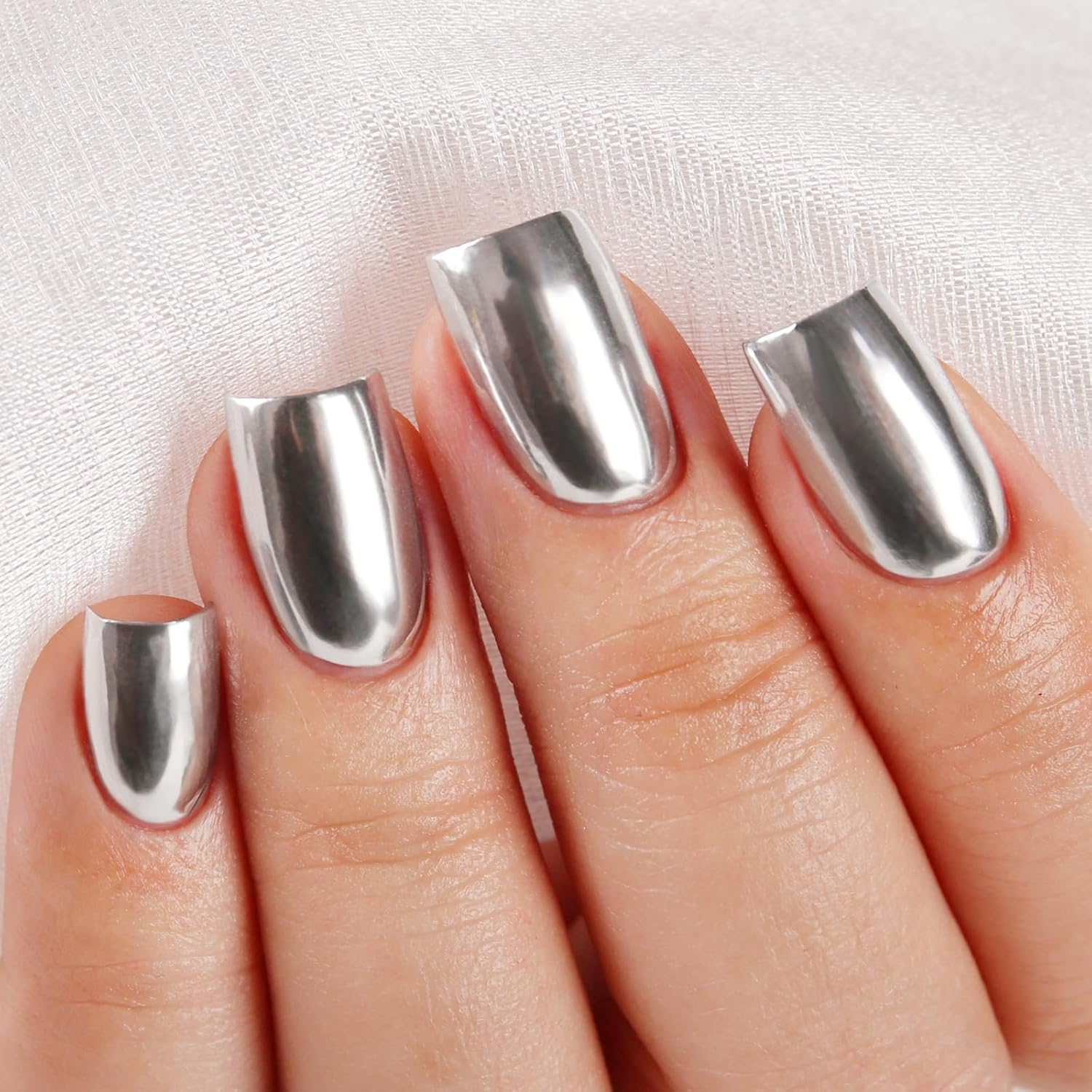
The primary differentiator between a standard metallic polish and a true mirror chrome gel is the type and size of the pigment used. Standard metallic polishes use mica or larger aluminum flecks that scatter light in multiple directions, creating a shimmer rather than a reflection. Mirror chrome, however, utilizes vacuum-metallized pigments (VMP). These are microscopic, flat platelets of aluminum or other metals that, when applied correctly, lay perfectly flat on the nail surface.
When you are choosing a product, look for technical specifications regarding particle size. The smaller and more uniform the particles, the more "fluid" the reflection will appear. In 2026, premium brands often advertise "nano-chrome" technology, which minimizes the visible graininess often associated with cheaper metallic gels.
Furthermore, the "carrier" or the gel base itself must have excellent self-leveling properties. If the gel does not level out perfectly before it enters the LED lamp, the microscopic metallic platelets will settle at different angles, breaking the mirror effect and resulting in a "frosted" or "satin" look instead of a high-shine reflection.
Key Selection Criteria for Mirror Chrome Gels
When evaluating various brands and formulations, you must weigh several factors to ensure the product meets both aesthetic and functional requirements.
Pigment Density and Opacity
A high-quality mirror chrome gel should offer full opacity in one to two thin coats. If a polish requires three or more coats to cover the natural nail or a base color, it increases the thickness of the manicure, which can lead to premature peeling or a "bulky" appearance. Check for "one-coat" certifications in professional product descriptions. High pigment density ensures that the metallic platelets are packed tightly enough to form a continuous reflective surface.
Formula Stability and Suspension
Metallic pigments are heavier than standard color pigments and tend to settle at the bottom of the bottle. When choosing a chrome gel, the bottle design and the inclusion of mixing beads are vital. Superior formulas use advanced suspension resins that prevent the metal particles from clumping. If a product requires excessive shaking or feels "gritty" upon application, it is a sign of poor formulation that will likely result in a streaky finish.
HEMA-Free and Hypoallergenic Standards
By 2026, consumer awareness regarding nail health has reached an all-time high. The presence of Hydroxyethyl methacrylate (HEMA) is a major concern due to its potential to cause skin sensitization and allergic reactions. When choosing your mirror chrome gel, prioritize HEMA-free or "10-free" formulations. These products are engineered to provide the same durability and shine without the harsh monomers that can damage the nail bed over time. You can verify safety standards through the Personal Care Products Council or similar regulatory bodies.
Liquid Chrome vs. Traditional Burnishing Powders
The term "chrome gel" can sometimes be ambiguous, referring to either a pre-mixed gel polish or a liquid-to-powder system. Understanding which one fits your workflow is essential for making the right purchase.
- Pre-mixed Chrome Gel Polish: This is applied like a traditional gel polish and cured under a lamp. While convenient, these often provide a "metallic" finish rather than a true "mirror" finish because the gel resins can slightly dull the reflective platelets.
- Liquid Chrome (The 2026 Standard): This is a specialized liquid that you apply over a cured, non-wipe top coat. It evaporates quickly, leaving behind a layer of chrome pigment that you then buff or "burnish" with a silicone tool or sponge. This method consistently provides the highest level of specular reflection.
- Solid Chrome Palettes: Similar to eyeshadow, these are compressed pigments. They are excellent for travel and minimize waste, but they require a very specific "tacky" stage of the base gel to adhere correctly.
Comparison of Chrome Product Types
| Feature | Pre-mixed Gel Polish | Liquid Chrome Suspension | Burnishing Powder |
|---|---|---|---|
| Reflection Level | Moderate (Metallic) | High (Mirror) | High (Mirror) |
| Application Mess | Low | Low to Moderate | High |
| Durability | High | High (if sealed) | Moderate |
| Ease of Use | Very Easy | Moderate | Requires Practice |
| Common Use | Full Color Sets | Detail Work/Full Mirror | Artistic Gradient/Ombre |
The Role of the Base Color and Top Coat
You cannot choose a mirror chrome gel in isolation; you must consider the system it belongs to. The "mirror" effect is a result of light reflecting off the chrome layer and passing back through a clear top coat.
Selecting the Base Color
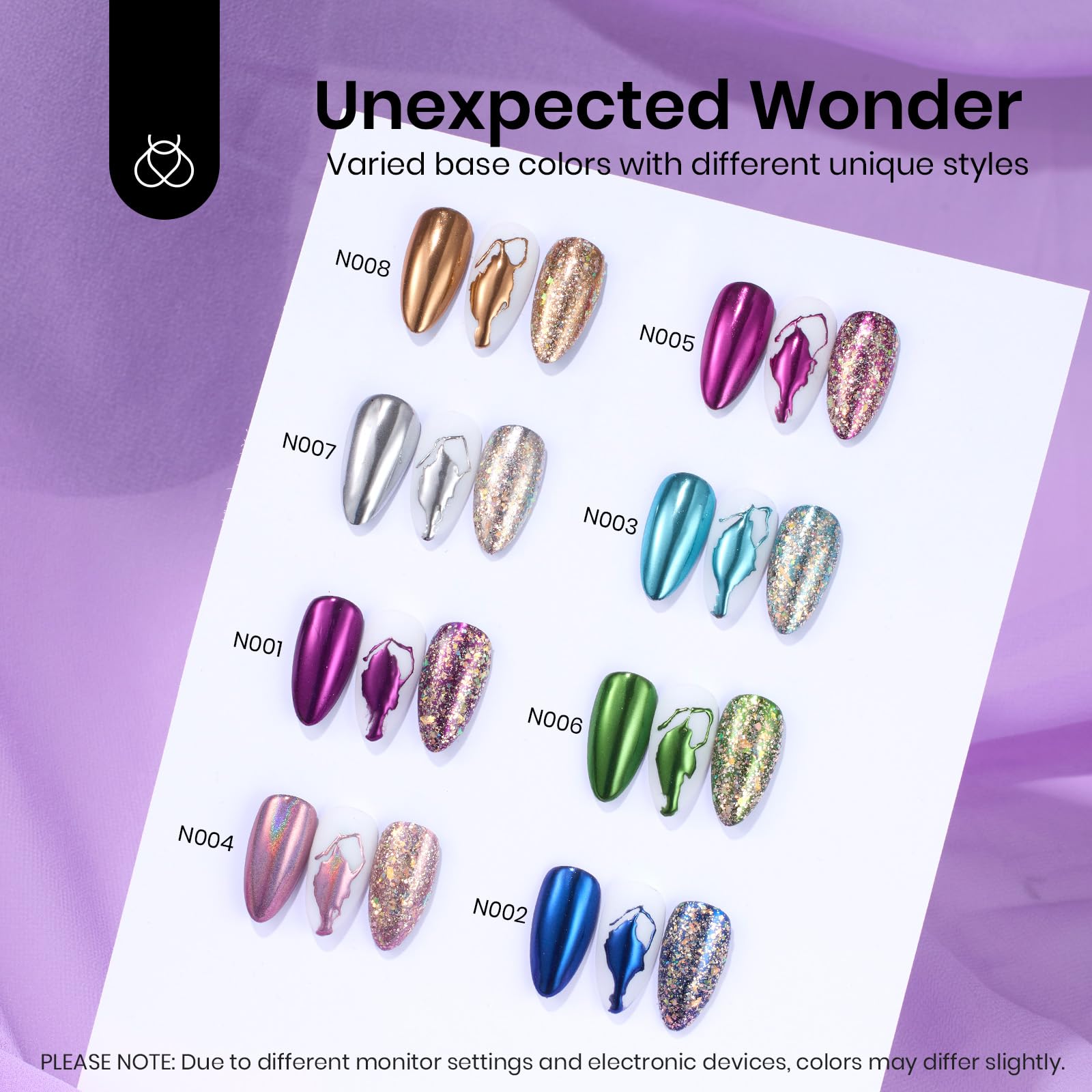
Traditionally, mirror chrome is applied over a black gel base. This is because black absorbs all other light frequencies, allowing the metallic reflection of the chrome to stand out with maximum contrast. However, if you are looking for "Rose Gold" or "Champagne" chrome, choosing a color-matched base (like a nude or pink) can shift the tone of the chrome. When purchasing your polish, check if the manufacturer recommends a specific base color to achieve the advertised result.
The Importance of the Non-Wipe Top Coat
The quality of the mirror finish depends almost entirely on the surface it is applied to. You must choose a Non-Wipe (No-Wipe) Top Coat that cures to a perfectly smooth, glass-like finish. If the top coat has any texture or "tackiness" (inhibition layer) after curing, the chrome will look dull or grainy. Furthermore, the final sealing top coat must be "chrome-safe." Some standard top coats contain solvents that can dissolve or "eat" the chrome pigment, turning your mirror finish into a dull grey.
Equipment Compatibility and Curing Times
Before purchasing a mirror chrome gel, verify that your UV/LED lamp provides the correct wavelength and wattage. Most 2026 chrome formulations are optimized for 365nm-405nm dual-wavelength LED lamps.
- Under-curing: If the base layer is under-cured, the chrome will sink into the gel, losing its shine.
- Over-curing: If the non-wipe top coat is over-cured, it becomes too hard and slick, and the chrome pigment will not "grab" the surface, leading to bald spots.
Always look for brands that provide specific curing schedules (e.g., "Cure for 30 seconds in a 48W lamp"). If a brand does not provide these details, it may be difficult to achieve a consistent mirror effect.
Common Mistakes When Selecting Chrome Polish
Avoid the trap of choosing based on price alone. Low-cost chrome gels often use industrial-grade aluminum rather than cosmetic-grade metallized pigments. This results in a finish that looks more like silver paint than a mirror.
Another mistake is ignoring the viscosity of the gel. For mirror chrome, you want a thinner viscosity. Thick gels tend to trap air bubbles, and even a microscopic bubble will be magnified once the reflective chrome layer is applied over it. A thin, fluid gel ensures a level surface that acts as a perfect substrate for reflection.
Frequently Asked Questions
Why does my mirror chrome look like glitter instead of a solid mirror?
This usually occurs because the pigment particle size is too large or the base layer was not smooth enough. To fix this, ensure you are using a high-quality "liquid chrome" and that your non-wipe top coat is cured perfectly to a glass finish before application.
How long should a mirror chrome gel manicure last?
With proper selection of a high-adhesion base and a strong sealing top coat, a mirror chrome manicure should last 14 to 21 days. The most common cause of premature wear is "edge wear," where the chrome rubs off the tips. Choosing a "free-edge" primer or a specific chrome-sealing top coat can prevent this.
Can I use mirror chrome gel over regular nail polish?
Generally, no. Mirror chrome pigments require the rigid, smooth surface of a cured gel to achieve the mirror effect. Regular nail polish is too soft and dries too slowly, which causes the chrome pigments to sink and dull.
Is mirror chrome gel difficult to remove?
Mirror chrome gel is removed using the same "soak-off" method as standard gel polish. However, because it often involves multiple layers (base, color, top coat, chrome, and final top coat), it may require an extra 5 minutes of soaking in acetone.
Does the wattage of my lamp matter for chrome?
Yes. A lamp with at least 48 watts is recommended for mirror chrome to ensure the non-wipe top coat reaches the exact state of "dryness" needed for the pigment to adhere without sinking.
Final Recommendation
When making your final selection, prioritize a Liquid Chrome System over a standard metallic gel polish if a true mirror finish is your goal. Brands that offer a complete system—including a specialized base, a non-wipe top coat, and the chrome suspension—are generally more reliable than mixing and matching products from different manufacturers. Always check for HEMA-free labels to ensure your manicure is as safe as it is beautiful.
Image Gallery